

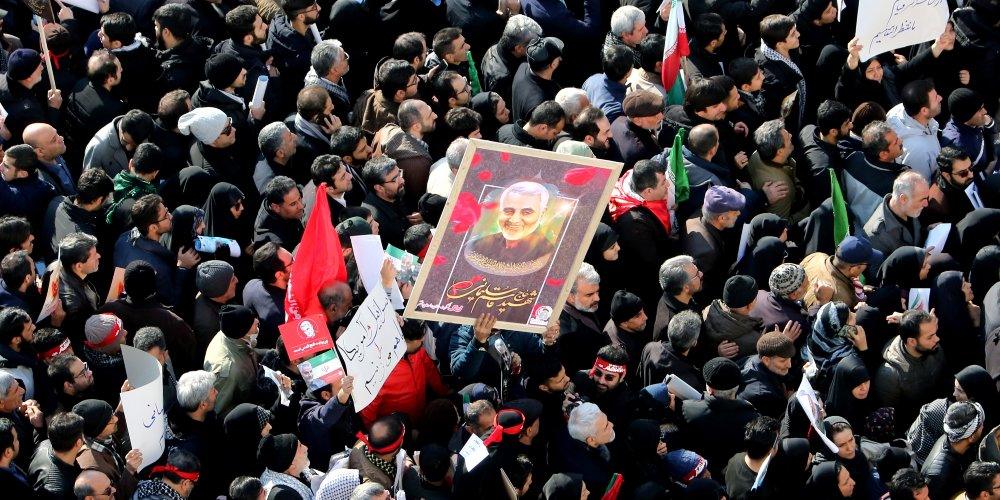
- Protests in Iran began on December 28, 2025, initially sparked by economic collapse, soaring inflation, and the rial’s sharp devaluation.
- Demonstrations have spread nationwide, occurring in over 200 cities across 26 provinces as of January 8, 2026.
- Unrest has entered its twelfth day, with reports of protests in major cities like Tehran, Isfahan, Mashhad, and smaller towns, including strikes in bazaars and Kurdish regions.
- Rights groups report at least 36 protesters killed and over 2,000 arrested since the protests started, with security forces using live ammunition, tear gas, and hospital raids.
- Protesters have chanted slogans like “Death to Khamenei,” “Neither Gaza nor Lebanon, my life for Iran,” and calls for regime change, including pro-Pahlavi voices.
- Reports indicate the regime has deployed approximately 800-850 fighters from Iraqi Shia militias, including Kata’ib Hezbollah and Badr Organization, and possibly Hezbollah-linked forces to assist in suppression.
- These foreign fighters reportedly entered Iran via border crossings, disguised as pilgrims or directly, signaling doubts about the loyalty of domestic security forces.
- Supreme Leader Ali Khamenei has distinguished between acceptable protests and “rioting,” vowing not to yield to enemies.
- U.S. President Donald Trump has threatened intervention if security forces continue lethal crackdowns on protesters.
- Kurdish organizations have called for a nationwide general strike on January 8, 2026.
- Internet access has been heavily restricted in protest hotspots, with disruptions to communication and organization.
- Some reports suggest contingency planning by regime officials, including potential escape plans and asset movements.
Protests across Iran have entered their twelfth day, with demonstrations now reported in over 200 cities spanning 26 provinces. What began as scattered outbursts in Tehran over economic hardships has ballooned into widespread clashes, fueled by skyrocketing inflation and the rial’s plunge against the dollar.
Videos from Hamedan show streets littered with burning debris and overturned dumpsters, while in northern regions, crowds have torn down the national flag in defiance. Rights groups estimate at least 38 deaths and more than 2,200 arrests, painting a picture of a nation pushed to its breaking point by years of mismanagement and iron-fisted rule.
The regime’s response has turned to outside help, secretly bringing in around 850 fighters from Hezbollah, Iraqi Shia militias, and groups linked to the Quds Force. These reinforcements crossed the border under the guise of religious pilgrimages, gathering at a base in Ahvaz before fanning out to hotspots like Kermanshah and Lorestan.
Independent sources confirm roughly 800 Iraqi fighters from outfits such as Kataib Hezbollah and the Badr Organization have joined the fray, a move that echoes Tehran’s long history of relying on proxies to do its dirty work. Opposition voices claim protesters have seized control of two western cities, though the government enforces internet blackouts and curfews to stifle reports.
Supreme Leader Ali Khamenei faces chants of “Death to Khamenei” ringing through the streets, a direct challenge to his authority. In a sign of internal strain, the army chief issued warnings to the U.S. and Israel against interfering, suggesting paranoia about external meddling amid the chaos. Yet, deploying Arabic-speaking militias—reminiscent of allegations from past uprisings like 2009—hints at doubts over the loyalty of Iran’s own forces. Some whisper that this outsourcing reveals cracks in the regime’s foundation, perhaps exacerbated by renewed U.S. sanctions that have crippled the economy further.
Iran expert Lisa Daftari points out the pattern: “This is nothing new for the regime. It is the logical extension of a playbook the ruling clerics have used since 1979 to outsource repression to ideologically loyal militias and then integrate them into the state’s coercive infrastructure.”
She adds that by treating its people like regional battlefields, the mullahs show their disregard for ordinary Iranians, blurring lines between domestic control and foreign adventurism.
Behnam Ben Taleblu, a senior fellow at the Foundation for Defense of Democracies, echoes this: “Since protests dating back to 2009, there were always allegations of Arabic being heard on the street. As the contest between the state and the street continues to heat up, all eyes will be on Iran’s security forces to see if they defect or disobey orders to crack down. The problem is, so is the regime. And to that end, the Islamic Republic may have devised a failsafe for itself against popular anger. Foreign proxies.”
Recent developments add fuel to the fire. Kurdish organizations have called for a nationwide general strike today, urging unity against the regime. While protest activity dipped slightly earlier this week, the involvement of militias could reignite tensions, especially in ethnic minority areas. Tehran has tried to ease economic pressures by threatening suppliers against hoarding or price gouging, but such measures feel like bandaids on a gaping wound.
This unrest doesn’t exist in a vacuum. Iran’s arming of proxies like Hezbollah in Lebanon, militias in Iraq, and rebels in Yemen continues unabated, even as it preaches regional peace. Critics see a double game: suppressing dissent at home while exporting instability abroad, possibly to divert attention or secure alliances. Some speculate deeper ties, like Iran’s operations in Venezuela alongside Hezbollah, could be targeted next under renewed U.S. pressure, weakening the regime’s global network.
For many Iranians, this moment recalls biblical tales of pharaohs clinging to power amid plagues of hardship, oppressing their people while ignoring cries for justice. The regime’s history of persecuting religious minorities, including Christians, only amplifies the sense of moral decay. If defections grow or international isolation deepens, the mullahs’ hold might finally slip, opening doors to real change.
As the world watches, the protests test not just Iran’s rulers but the resolve of freedom-loving nations. With militias now in the mix, the risk of broader violence looms, potentially spilling over borders and destabilizing the Middle East further. Yet, in the faces of those braving the streets, there’s a glimmer of hope that persistence could topple even the most entrenched tyrants.
Two Storms, One Harvest

Every food crisis in living memory has been a one-shock event. The 2008 price spike was a commodity bubble. The 2020 shortages were a logistics failure. The 2022 grain scare was a war on one exporter’s ports. Each time, the system bent, adjusted, and recovered, and each time the experts assured us afterward that global markets are simply too big and too diversified to fail.
What nobody in Washington seems eager to discuss is that 2026 is shaping up to be something the modern food system has never actually faced. Two independent shocks, one climatic and one geopolitical, are converging on the same harvest cycle at the same time. Not sequentially. Simultaneously.
Start with the weather. The Pacific Ocean is currently building toward what forecasters now openly call a record event. NOAA’s Climate Prediction Center puts the odds of at least a strong El Niño near 88 percent, with roughly two in three odds it reaches “very strong” status, the tier reserved for perhaps three or four events in the entire satellite era. Every major global model now projects a median peak in Super El Niño territory, and most of them project it exceeding the 2015-16 event, which until now held the modern record. Sea surface anomalies were already brushing the super threshold in mid-July, months before these events normally peak. The atmosphere has already shifted into El Niño mode, and the event is forecast to crest in late fall and early winter.
This is not about “climate change.” It’s about the standard cycles of weather, and the cycle we’re currently in is one that has likely devastated societies in the past. We’re better prepared as a society today, but not all Americans are equally prepared.
Serious households have started doing the quiet math on their own. Grocery bills tell part of the story, and the forecast maps tell the rest, which is why long-term food storage has moved from fringe hobby to mainstream line item in the family budget, with established suppliers like Heaven’s Harvest seeing demand from people who five years ago would have rolled their eyes at the idea. That instinct is not paranoia. It is pattern recognition, and the pattern is worth walking through carefully.
Editor’s Note: Heaven’s Harvest IS a sponsor, but the warnings of this article are real and would be written even if we didn’t have a survival food sponsor. With that said, those who take advantage of what they offer can use promo code “Patriot” for 15% off.
The Fertilizer Clock Is Already Running
While the Pacific warms, the second shock has been unfolding in the Strait of Hormuz. The conflict with Iran turned the world’s most important energy chokepoint into a contested waterway, and the consequences reach far beyond the gas pump. Roughly a third of global fertilizer trade moves through Hormuz, and the disruption sent urea prices up 86 percent year over year by March, with a 53 percent jump in a single month.
The World Bank projects energy prices rising about 24 percent in 2026 and fertilizer about 31 percent. By its own accounting, fertilizer prices ran 35 percent higher in the first five months of this year than the same period last year.
Here is the mechanism the nightly news will not explain. Fertilizer is not a grocery item. It is a time-delayed input. The nitrogen a farmer in Iowa or Punjab could not afford to apply this spring does not show up as a problem this spring. It shows up as a thinner harvest six to twelve months later.
The World Bank’s own food security brief concedes that the effects of reduced applications earlier this season “are likely to become visible only later in harvest outcomes.” Translate that from institutional language into plain English and it means this. The damage is already done, it is already in the ground, and we are simply waiting for it to arrive on the shelf.
Now check the calendar. Six to twelve months from the spring planting season lands us squarely in late 2026 and early 2027. Which is precisely when the strongest El Niño in the instrumental record is forecast to peak, bringing its signature droughts to Southeast Asia, Australia, southern Africa, northern Brazil, and South Asia, the very regions that grow the world’s rice, sugar, and oilseeds.
The World Bank warns openly that a strong El Niño “could disrupt multiple crop belts simultaneously” on top of the conflict-driven input costs. Their baseline projection assumes the Middle East disruptions ease by autumn. What in the last two years of Middle East history suggests that assumption is safe?
The System Has No Slack Left
The comfortable answer is that global markets always adjust. But adjustment requires slack, and the slack is gone. Global cereal production is expected to decline from last year’s records even before El Niño does its work. The UN World Food Programme, hardly a den of right-wing preppers, is calling this the most significant disruption to its supply chains since Covid and the invasion of Ukraine, and its supply chain director put the stakes bluntly.
Today’s supply chain challenges are tomorrow’s hunger crisis.
There is also a political dimension that markets cannot price. When food gets scarce, governments do not behave like economists. They behave like politicians. Export bans, hoarding mandates, and panic buying at the national level turned the modest rice shortfall of 2008 into a global crisis, and analysts are already warning that import-dependent nations are the first dominoes.
The 2015-16 Super El Niño, a far weaker event than what is now forecast, threw tens of millions into food stress across Africa and Asia. This one is projected to be stronger, and it arrives with fertilizer already rationed by price and shipping lanes already contested by missiles.
What Joseph Knew
Scripture does not treat preparation for lean years as faithlessness. It treats it as wisdom delivered in advance to those willing to act on it.
Behold, there come seven years of great plenty throughout all the land of Egypt: And there shall arise after them seven years of famine; and all the plenty shall be forgotten in the land of Egypt.
Joseph did not respond to that warning with a hashtag or a committee. He stored grain during the years of abundance, and when the famine came, Egypt stood while its neighbors begged. The lesson is not that famine is certain. It is that the time to prepare is precisely when preparation still looks optional.
Nobody who filled a pantry in a year of plenty has ever regretted it, and nobody standing in an empty aisle has ever been glad he waited for certainty.
None of this calls for panic, and panic is the enemy of sound judgment anyway. It calls for the same unglamorous prudence our grandparents considered ordinary. Keep some cash margin, know your local growers, and put real food in deep storage while it is cheap and available, because the entire arc of this story is that cheap and available is a closing window.
Families looking for a straightforward place to start can visit Heaven’s Harvest and use promo code Patriot for 15 percent off long-term storable food. The forecasts may yet soften, the strait may yet reopen, and we should pray they do. But hope is a fine thing to hold and a foolish thing to eat.

REAL CIA Shah & Awe threat: http://www.arkofcrisis.com/id52.html