

Although commonly used, Max Weber’s definition of the state—an entity that has a monopoly on the legitimate use of force within a given geographical area—can mislead people into thinking that the state is the only or even the primary reason for security and order. This is illustrated in the trends in the nonstate provision of security, as revealed by my Google alert for the phrase “private police.” Lately, incidents of car and bike theft have led individuals to either organize themselves to prevent and respond to it or hire private security to do so.
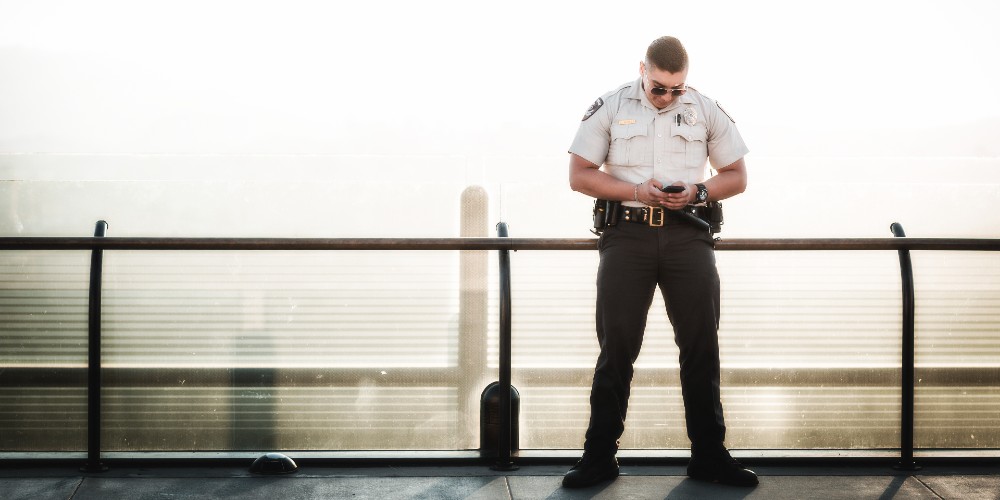
One example is a gas station in Philadelphia (a city that has frequently been in the news lately due to growing crime problems, having set a new personal record for annual murders) that has hired security armed with rifles to protect patrons, mainly from car jackings, since motorists are especially vulnerable to attack while pumping gas.
One thing I found notable from a Fox News interview of the head of security Chief Andre Boyer (other than the fact that journalists at a “conservative” outlet are just as clueless as other journalists about what an AR15 is) is his response to a question about whether he and his agents will intervene when witnessing a crime in progress. Chief Boyer responds, “We have to. We have a contract to protect our clients and our clients’ assets.”
As I have noted previously, the fact that voluntarily hired security has a contractual obligation to provide services to the people who pay them is in stark contrast to government police. On multiple occasions, the US Supreme Court has opined that US citizens have no constitutional right to police protection and officers cannot be held legally liable for failing to protect them. You must pay them under penalty of law, but they are not required to provide anything in return.
Also noteworthy is a comment the interviewer makes that “the number one job of the government, whatever level, whether federal, state, local, is to keep their citizens safe. So, if you’re hiring an outside agency that’s a clear indicator that government is failing its people.” Regarding the first part of that statement, Judge Andrew Napolitano would strongly disagree: it is not the job of the government (if it is to have any job at all) to keep you safe but rather to keep you free.
Regarding the second part of that statement, the interviewer gives far too much credit to the government. To say categorically that any hiring of private security means the state is failing to do its job assumes godlike powers on the part of the state. As mentioned above, it is wrong to assume that the state’s threat of capturing and punishing lawbreakers is primarily responsible for the peace and orderliness we enjoy under normal circumstances. Perhaps since there are an estimated three to four people employed in private security for every government police officer, the Fox News interviewer would consider this proof that the government cannot do its number one job and is unfit to exist.
Car theft is not only a major issue in Philly but in Portland, Oregon, as well. Both cities are experiencing historic highs in crime. In response to the explosion of car theft in Portland, a Facebook group named “PDX Stolen Cars” was formed to crowdsource locating stolen vehicles. According to the founder of the Facebook group, Titan Crawford, “I had found a stolen car in my neighborhood. I knew it was stolen. I contacted the police and they said there’s not a whole lot we can do right now. So I was like, ‘Well see if I can do something.’”
Mr. Crawford has been disillusioned of the idea that the government is the ultimate protector of property rights: “It would be cool if the city could do this and I didn’t have to.” I imagine many people thought the same thing about government schools. Fortunately, an increasing number of parents are able to get some of their tax money back to send kids to a school of their choice. Instead of being taxed to pay for police services they don’t receive, perhaps some residents of Portland would be interested in “police choice.”
Burlington, Vermont, is having a similar experience with bike thefts, along with the Facebook groups created to deal with it because the government police are too busy. They are too busy to deal not only with bike thefts but property destruction, retail larceny, assaults by homeless people in parks, and open-air drug markets (financed by stolen bikes). And, as elsewhere, residents have found that they are on their own in dealing with these things.
One might point out that another common theme among these cities is the fact that their politicians all committed to “defunding the police” to some degree. This movement, while short-lived and ultimately overstated in how much budgets were cut, was successful in reducing police staffing and recruitment. Does the corresponding rise in crime and disorder indicate, then, that government police are crucial in maintaining order?
No. Rather, the lesson one should take from the “defund the police” experience (to the extent that one believes that it was a misguided, if not horrible, idea) is that it is an outcome that is only possible when policing is under political control. It was not a case of individuals deciding to abstain from buying when they no longer wanted a particular service.
The taxpayer-funded monopoly on policing became even less effective without leaving any more money in taxpayers’ pockets. Drawing another parallel with government schools, which closed without returning the taxpayers’ money, several cities cut police funding and staffing while keeping the money that taxpayers ostensibly paid for that purpose. It truly is only the government that can take your money, barely provide a service they’ve monopolized, and then insist on how necessary they are for the provision of that service.
Now, especially with the rise of the Soros-funded district attorneys, Americans are realizing that they are responsible for their own safety and security. This function, like the education of their children, cannot be outsourced to the government. The silver lining is that, as people build parallel institutions, the less dependent upon government they become and the more obvious the overstatement of the state’s necessity for order becomes. This is a necessary step for getting us on the road to rediscovery of an ethos of liberty and self-reliance.
About the Author
Tate Fegley is Chair of Business and Economics at Montreat College and Research Fellow at the Independent Institute.

Article cross-posted from Mises.
Starting the Day With a Scripture-Inspired Roast Helps Center Your Thoughts on Eternal Truths Amid Temporal Pressures
The world can seem chaotic, especially right after we wake up. Many believers start their mornings reaching for something familiar — a hot cup of coffee — yet end up settling for mediocre brews that do little more than deliver a caffeine jolt. The daily grind of life, with its endless distractions, news cycles, and responsibilities, can leave even the most faithful feeling spiritually parched alongside their physical fatigue. What if your morning ritual could do more than wake you up? What if it could ground you in truth, nourish your body with exceptional quality, and quietly advance a kingdom purpose at the same time?
That’s the promise — and the reality — behind Promised Grounds Coffee. This Christian-founded company doesn’t just roast beans; it approaches every step as an act of worship and discipleship. By selecting only the top 10% of specialty-grade beans, ethically sourced from dedicated farmers in Central and South America, and small-batch roasting them with reverence in Austin, Texas, Promised Grounds delivers what many describe as the best coffee available — never burnt, never bland, but rich with origin stories and layered flavors that honor God’s creation.
From the vibrant Psalm 27 Roast (a light, bright medium option) to the bold yet peaceful 2 Timothy 1:7 Decaf, each bag carries a Scripture verse that turns your daily pour into a gentle reminder of faith. And through their Ounce Per Ounce Promise, every ounce of coffee you enjoy provides an equal ounce of clean water to families in need via partnership with Filter of Hope — literally brewing hope for body and soul, one cup at a time.
The challenge for today’s Christians runs deeper than finding a decent cup. In an age of convenience-driven consumerism, it’s easy to support companies that dilute values or remain silent on matters of faith. Many believers want their everyday choices — from what they drink to how they spend — to reflect discipleship rather than just convenience. Promised Grounds solves this by weaving Christian excellence into the entire process: beans nurtured with prayerful stewardship by farming families, roasted as an offering rather than a commodity, and packaged with Bible verses to encourage a mindset of gratitude and purpose from the first sip. Reviewers consistently praise the smooth, rich profiles — whether enjoyed black in a drip maker, iced on a warm day, or shared in fellowship — noting how the quality stands toe-to-toe with premium secular brands while delivering something far more meaningful.
This integration of faith and flavor addresses a real need in Christian households and ministries. Busy parents, church leaders, and remote workers alike report that starting the day with a Scripture-inspired roast helps center their thoughts on eternal truths amid temporal pressures. The coffee’s exceptional character — bright citrus notes in lighter roasts or deep chocolate undertones in bolder ones — comes from meticulous selection and careful roasting that respects the bean’s natural gifts rather than masking them. It’s the kind of coffee that elevates a simple quiet time, fuels productive workdays, or sparks meaningful conversations when shared at Bible studies or outreach events. And because it’s ethically sourced with integrity, every purchase supports sustainable livelihoods for farmers who treat their crops like family harvests.
For those leading churches or small groups, the impact multiplies. Promised Grounds offers bundles and options perfect for hospitality ministries, turning ordinary coffee service into an opportunity to point people toward the living water of Christ. Imagine greeting visitors with a warm cup whose very bag carries God’s Word — a subtle yet powerful witness that aligns with the Great Commission. The company’s Texas roots and commitment to “brewing hope” resonate especially with believers who value American enterprise paired with global compassion.
Of course, quality alone isn’t enough if the experience feels out of reach. Promised Grounds keeps it accessible with practical perks like free shipping on orders over $40, sample sets for discovering favorites, and thoughtful add-ons such as faith-themed mugs. Whether you prefer whole beans for fresh grinding, grounds for convenience, or even bulk options for larger households and ministries, the result is consistently superior coffee that makes discipleship feel integrated rather than added on.
As you consider how to align even the smallest habits with your walk with God, Promised Grounds Coffee stands out as a refreshing solution. It tackles the dual problems of subpar daily sustenance and disconnected consumption by offering a product that genuinely excels in taste while advancing a mission of clean water, farmer dignity, and scriptural encouragement. Believers who make the switch often describe it as more than a beverage upgrade — it becomes part of their rhythm of gratitude, a daily invitation to remember that every good gift comes from above.
If you’re ready to transform your mornings (and perhaps your church gatherings) with coffee that honors both exceptional craftsmanship and Christian values, I encourage you to explore what Promised Grounds has to offer. One sip at a time, you’ll be nourishing your body, refreshing your spirit, and participating in something far greater — all while enjoying what truly is among the best coffee available.
