



The U.S. dollar is used by nations for international transactions because it is a stable currency that is easily convertible all over the globe and because resources like oil are priced in dollars. However, will the US dollar be replaced with BRICS currencies in the near future?
To compete with the US currency, BRICS members demand cross-border payments in BRICS currencies.

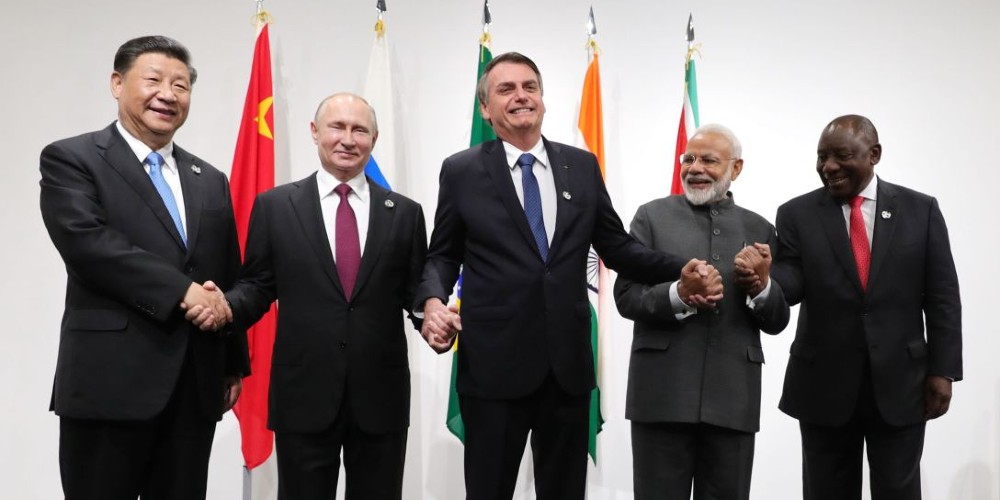
On June 23, a summit was conducted by the BRICS, an acronym for Brazil, Russia, India, China, and South Africa. The event, which was presided over by Chinese President Xi Jinping, was one in a long line of BRICS cooperation activities that started on June 6 with the second meeting of central bank governors and finance ministers and ended on June 28 with the second meeting of the committee of senior energy officials.
“We should also expand BRICS cooperation on cross-border payment and credit rating to facilitate trade, investment, and financing among our countries,” said Xi in his opening remarks.
He continued by reiterating the commitment of the Chinese Communist Party (CCP) to collaborating with the BRICS countries in order to realize the CCP’s vision of the Global Development Initiative (GDI).
In April 2022, Chinese Foreign Minister Wang Yi introduced the GDI to the UN as a CCP-led global development plan. The U.N. welcomed it, and more than 100 states have expressed their support. On the U.N. platform, the Group of Friends of the GNI was founded. More than 50 nations have joined thus far. According to the CCP, using a non-dollar payment system that is headed by China will facilitate the progress it is urging.
The XIV BRICS Summit Beijing Declaration, which was released on June 23, outlines the objectives for the following year and calls for continued cooperation on “the BRICS Payments Task Force (BPTF) as a platform for exchanging experience and knowledge, and welcomes the central banks’ further cooperation on the payments track.”
Vladimir Putin of Russia and Chinese President Xi Jinping both urged for other forms of payment to diminish the dominance of the US dollar in world trade and US control over the SWIFT system.
Bankers and economists in BRICS nations, according to the Chinese state-run newspaper Global Times, have suggested that the group “expand national currency settlements and lending to counter the US’ weaponization of the dollar.”
Putin advocated for creating a global reserve currency based on a basket of currencies in his speech to the BRICS meeting, according to TASS, a Russian news agency, on June 22.
“The BRICS and other interested nations need to talk about setting up their own independent global financial system – whether it would be based on the Chinese currency or they will agree on something different,” said Sergey Storchak, chief banker of the Russian bank VEB.RF, to Global Times on June 21. One of the organizations that has been sanctioned and cut off from the SWIFT international payment network in the United States is VERB.RF.
Regarding currency, Xi, Putin, and the bankers from VEB.RF have three main grievances. They object to the U.S. dollar’s hegemonic position as a reserve currency. They oppose the use of the dollar as the standard for international payments. And they face danger from having to use the US SWIFT system, which is dependent on US banks, to make international payments.
The U.S. dollar is used by nations for international transactions because it is a stable currency that is easily convertible all over the globe and because resources like oil are priced in dollars. The BRICS currencies are not thought to be fully convertible. Even though the Chinese yuan has restricted convertibility, it is an international currency because it is a reserve drawing right (SDR) currency of the International Monetary Fund (IMF).
In addition to the dollar’s strength and convertibility, central banks around the world keep U.S. dollars as a significant portion of their foreign exchange reserves owing to the dollar’s value in resolving international trade. Other nations do not want to maintain reserves in the South African rand, Brazilian real, Indian rupee, or Russian ruble because they are all comparatively weaker currencies.

The BRICS currencies would only be relevant in commerce with the country of origin if international settlement arrangements could be negotiated among the BRICS nations. To put it another way, even while South Africa and India might agree to settle their trade in rupees, it is improbable that other countries would accept rupees in trade with South Africa. In addition, many of the BRICS nations have sizable foreign debt that must be repaid in dollars rather than rupees.
As a result, South Africa would be holding a large amount of rupees that could only be used for commerce with India. To complicate matters, South Africa would expose itself to currency valuation risk by retaining the rupees in reserve.
Due to its speed, accuracy, and safety, the U.S. SWIFT system is used by international traders to execute cross-border payments. The fact that it connects with major banks in more than 100 countries is what makes it convenient. Although China and Russia have made an effort to develop SWIFT substitutes, neither system is compatible with banks in Western countries.
Therefore, the BRICS countries will rely on the SWIFT unless the rest of the world agrees to utilize the Chinese or Russian system. The issue of what currency to use for international trade would still exist even if a Chinese or Russian payment system were to be agreed upon.
Perhaps the most sensible currency for the BRICS countries to use for domestic commerce is the Chinese yuan. The Chinese Cross-Border Interbank Payment System (CIPS) is now configured to handle yuan commerce. However, the other BRICS countries would be handing over U.S. control of their cross-border trade to CCP control by consenting to do business in yuan and through the CIPS, something they might not be comfortable with.
Putin and Russian bankers have suggested using a basket of currencies as an alternative. The SDR of the IMF, which consists of a basket of global currencies comprising the US dollar, euro, yuan, Japanese yen, and British pound, is the inspiration for this concept. SDRs are transferable and can be kept in reserve. The BRICS would presumably create a basket of its five currencies, although this would hardly help the issues associated with the BRICS countries trading in their local currencies. Other nations would not wish to keep a BRICS currency reserve basket. And finally, transactions involving a basket of BRICS currencies would not be supported by the US SWIFT system.


That was the goal of the European Union – to create a pseudo-nation, with a currency that could replace the US Dollar.
A currency backed by multiple failed economies is never going to be stable or valuable enough to ACTUALLY replace the US Dollar – even if they try to.