


Before COVID-19, “polio” was perhaps the condition carrying the strongest cultural baggage as a trigger for parental and societal fears, thanks to years of branding that included images of children immured in cumbersome iron lungs.
For both polio and COVID-19, the public panic fomented by the media served the underlying medical-pharmaceutical agenda of promoting mass vaccination.
Even back in the pre-polio-vaccine days of 1937, an anonymous editorialist for the Journal of the American Medical Association (JAMA) sought to put cases of polio-attributed paralysis — relatively rare — in perspective, suggesting, “Without the overemphasis in the press the vast majority of people would not have been concerned by the few hundreds of cases among many millions of people.”
The JAMA editorialist also berated officials for stoking polio fears, arguing that “panic appears in the minds of the public” in part because poliomyelitis “is a visibly crippling disease,” but also because the panic “is frequently reflected in the statements and actions of public officials.”
In 1996, Politico satirized media fear-mongering in a hilarious critique of “Mad Panic Disease (MPD) in reporters and its human form Crikey-Jesus-look-at-this-story-on-the-front-page Disease (CJD),” mock-reassuring readers that the “World Headline Organisation (WHO)” and the “Scaremongering and Vacillation Committee (SVC)” would be taking the matter in hand.
Judging by recent news reports and government actions, however, the Scaremongering and Vacillation Committee is preparing us for a new epoch of polio alarmism, one that stands to serve the same purpose as the earlier waves of browbeating by media and officials — namely, to steer a frightened public toward further vaccination.
It’s all in the sewage
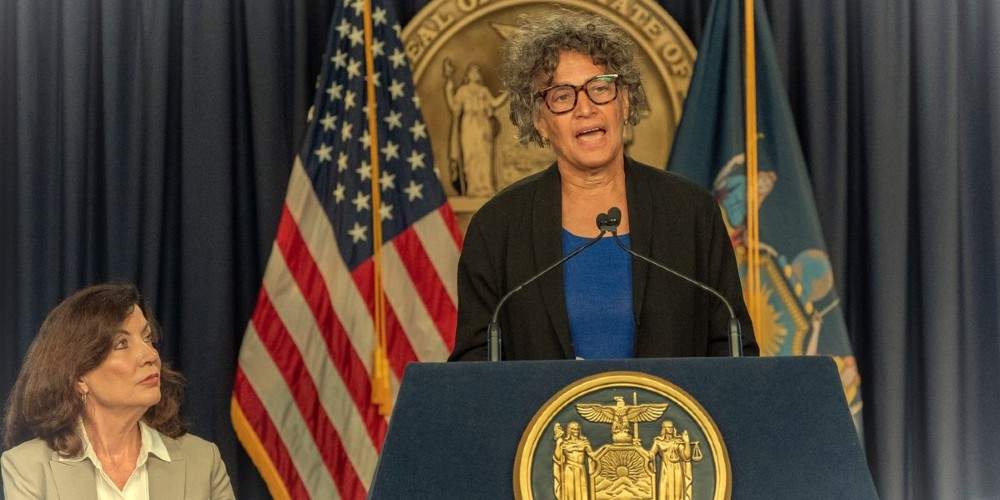
This past summer in New York, officials asserted a link between a single case of adult paralysis and genetic fragments in sewage samples purportedly matching oral polio vaccine components.
Although the U.S. does not administer oral polio vaccines, the conventional theory is that individuals who receive oral doses in other countries pose a “shedding” risk that can leave detectable vaccine-related genetic material in stool samples and sewage.
On this tenuous basis, New York’s governor on Sept. 9 declared a state disaster.
Disasters turn out to be a handy means of “opening up more vaccine resources,” including resources to go after New York counties where, from the state’s perspective, polio vaccination rates are too low.
Thus, the state is deputizing “midwives, pharmacists, emergency medical workers and other health care workers” to administer polio vaccines and boosters to virtually all and sundry, including children and babies who have not yet started the polio vaccination series; adults who are either unvaccinated, partially vaccinated or “unsure whether they received the vaccine”; and individuals (such as healthcare providers and wastewater treatment workers) deemed to be at “increased risk.”
In London, meanwhile, health authorities are aggressively pushing polio boosters citywide for 1- through 9-year-olds on the basis of suspect sewage samples alone — with no cases of the disease.
U.K. officials described the vaccination campaign as “a precautionary measure.”
And in Israel, where authorities pronounced polio the cause of a 3-year-old’s paralysis earlier this year, multiple cities suddenly reported “traces” of polio in sewage, prompting media hype about “spread” and exhortations for children and teens ages 7 through 17 years to get the oral polio vaccine.

Sewage shenanigans?
New York, London and Jerusalem were three of the jurisdictions that imposed the harshest COVID-19 restrictions and pushed the COVID-19 jabs the hardest — showing themselves to be willing agents for tyranny disguised as a health emergency.
At a time when large segments of the public have awakened to the dangers of the COVID-19 shots and more parents than ever are questioning childhood vaccines, is this influential triumvirate’s drum-beating about a possible polio resurgence — including calls for widespread polio vaccination — a mere coincidence?
At the very least, the provocative sewage claims by these powers-that-be should be scrutinized.
An explication of sewage surveillance gives credit to an early-2000s study in Helsinki as one of the first to effectively use sewage to snitch on putative polioviruses.
However, it was the oral polio vaccine that furnished the basis for the experiment:
“Scientists flushed a polio vaccine down a toilet 20 kilometres [about 12 miles] away from a wastewater treatment plant. The researchers then collected wastewater samples … over four days, and showed they could still detect the vaccine after 800 million litres of wastewater had passed through the system.”
What was it about the hardy vaccine that seemingly and scarily allowed it to resist millions of flushes?
The researchers didn’t ask, though a 2021 study showing bioaccumulation of “rotavirus vaccine strains” in oysters suggests the question remains pertinent.
Instead, public health authorities decided to add wastewater monitoring to their disease (not vaccine) surveillance toolkit.
The fallible PCR, again
Wastewater experts admit their surveillance techniques are fallible and far from reliable.
Earlier this year, Tufts University professor Amy Rosenberg cautioned that analysis of wastewater “is a chemically and biologically complex process” involving “multiple steps that are difficult to standardize and that require systematic controls,” with wastewater often containing “compounds that can interfere” with the principal method used to spot pathogens.
That “principal method,” since the 1990s, is the very same polymerase chain reaction (PCR) technique abused to such an extent during COVID-19 as to now be roundly denounced as “useless.”
Rosenberg also noted “privacy and ethical concerns,” describing, then glossing over, the potential for misuse if wastewater data are linked with identifiable genetic or personal data — linkages that may be enabled by concurrent social media analysis or intelligence from geographic information systems.
In a paper published in August 2021, a group of 70 international experts also bemoaned the lack of “harmonized” quality assurance/quality control procedures, admitting that false or “inconclusive” results could conceivably cause “policymakers, public health officials, and the public to lose confidence” in the utility of wastewater monitoring.
However, there seems to be little risk of rejection by public health officials.
Au contraire, using the coronavirus as the excuse, the Centers for Disease Control and Prevention (CDC) enthusiastically is positioning wastewater surveillance as a “new frontier for public health,” at the same time that leading schools of public health are declaring it the “next frontier” specifically in the fight against polio.
And water scientists who can see which way the funding winds are blowing are rushing to endorse sewage monitoring despite the pitfalls they readily acknowledge, with Rosenberg calling for its further development and expansion and supporting Harry-Potter-style “constant vigilance.”
Others even helpfully point out how officials could easily use wastewater analyses to justify “isolation practices” and implementation of stay-at-home directives, masking, social distancing or other “mitigation measures” — never mind that COVID-19 conclusively demonstrated the arbitrariness and lack of science behind such measures.
Paralysis by any other name …
As Children’s Health Defense has pointed out in other articles, “There is, and always was, ample evidence to suggest that poisoning — whether by lead arsenate, DDT, or later, the toxic ingredients in polio vaccines themselves — is the most credible explanation for the paralytic symptoms and deaths that were labeled as ‘polio.’”
Ditto for the “polio-like illnesses” and deaths chalked up to “acute flaccid myelitis” and “acute flaccid paralysis,” which, like polio, authorities conveniently blame on lurking viruses rather than finger chemical — or vaccine — culprits.
For children presenting with severe respiratory illness, the CDC is even recommending healthcare providers make testing for these other viruses “a typical part of their diagnostic routine” using — what else? — PCR methods.
If public health officials were truly concerned about sewage and what it can tell us, why not focus on addressing “the health issues associated with long-term simultaneous exposure to a large number of pharmaceutical products” — including the active ingredients and metabolites of non-steroidal anti-inflammatory drugs, cardiovascular drugs, antidepressants and antipsychotics — “known to partially survive the conventional process of wastewater treatment?”
In some settings, upgrading sewage systems — as part of classic water, sanitation and hygiene interventions — could also make a critical difference.
Instead, having rated polio a “Public Health Emergency of International Concern” in 2014, the WHO chose to grant Emergency Use Listing status in late 2020 to an unlicensed oral polio vaccine funded by Bill Gates — and other experts are calling for “guarantee mechanisms” to incentivize the expansion of the polio vaccine supply chain.
In short, bolstered by effective fear appeals — “persuasive messages that attempt to arouse fear by emphasizing the potential danger and harm that will befall individuals if they do not adopt the messages’ recommendations” — the vaccine gravy train appears poised to keep on rolling on.
Three Reasons a Coffee Gift Set From This Christian Company Is Perfect for Christmas

When you’re searching for a Christmas gift that’s meaningful, useful, and rooted in faith, you don’t want to settle for anything generic. This season is filled with noise — mass-produced products, last-minute picks, and trends that fade as quickly as they appear. But one gift stands apart because it blends genuine quality with a message that matters: a coffee gift set from Promised Grounds Coffee.
This small Christian-owned company has become a favorite among believers who want to support faith-driven businesses while giving friends and family something they’ll actually enjoy. Here are three reasons a Promised Grounds Coffee gift set may be the most thoughtful and impactful present you give this year.
1. It’s Truly Delicious Coffee
Too many “gift-worthy” coffees look beautiful in the package but disappoint when the cup is poured. Promised Grounds takes the opposite approach — exceptional taste first, thoughtful presentation second.
Their beans are sourced with care, roasted in small batches, and crafted to bring out a rich, smooth flavor profile that appeals to both casual drinkers and true coffee lovers. Whether someone enjoys bold, dark roasts or lighter, more delicate blends, every sip reflects quality that stands shoulder-to-shoulder with the biggest specialty brands.
Simply put: this coffee is good. Really good. Some say it’s absolutely fantastic. If you want a gift that won’t be re-gifted, ignored, or shoved in a cabinet, this is it.
2. It Spreads the Word While Serving a Real Purpose
There are many Christian gifts that are meaningful… but not exactly practical. There are also useful gifts that have nothing to do with faith. Promised Grounds Coffee bridges both worlds beautifully.
Each gift set delivers an encouraging, faith-centered message through its packaging and presentation — a simple but powerful reminder of God’s goodness during the Christmas season. The cups are especially popular and serve as a daily reminder of the blessings from our Lord. At the same time, the product itself is something people will actually use and appreciate every single day.
It’s a gift that uplifts the spirit and fills the mug. A gift that points loved ones toward Scripture while still being part of the normal rhythm of life. And in a culture that increasingly pushes faith to the margins, giving a gift that quietly but confidently honors Christ can make a deeper impact than you might expect.
3. It’s Affordable, Valuable, and Elegantly Presented
Many people want to give something meaningful without breaking their Christmas budget. Promised Grounds Coffee strikes that perfect balance — the sets look and feel premium, but the price remains accessible.
The packaging is classy, clean, and gift-ready, making it ideal for:
- Family members of all ages
- Co-workers or employees
- Church friends or small-group leaders
- Hosts, neighbors, and last-minute gift needs
It’s the kind of gift that feels more expensive than it is — and more thoughtful than most of what you’ll find on store shelves.
The Perfect Blend of Faith, Flavor, and Christmas Cheer
A coffee gift set from Promised Grounds Coffee checks every box: a gift that tastes amazing, conveys your faith, supports a Christian business, and brings daily enjoyment to the person who receives it. In a season when so many gifts are forgotten, this one stands out for all the right reasons.
If you want a Christmas present that reflects your values and delivers genuine joy, Promised Grounds Coffee is the perfect place to start.

I wouldn’t doubt there is a resurgence of polio just the same as TB has reappeared because of the wide open border.
All these libtard parents are too stupid to realize they are putting their kids health in jeopardy sending them to public schools that are the illegal’s petri dish.