

STORY AT-A-GLANCE
- In October 2022, the World Health Organization (WHO) announced a new initiative called One Health Joint Plan of Action
- The plan was launched by the Quadripartite, which, in addition to WHO, includes the Food and Agriculture Organization of the United Nations (FAO), the United Nations Environment Programme (UNEP) and the World Organisation for Animal Health (WOAH)
- The World Health Organization already has too much power; this new initiative will only give it more
- The One Health Joint Plan of Action combines multiple globalist organizations and synchronizes their plans, while at the same time combining their resources and power to create a global superpower
- Decentralized health care and pandemic planning makes sense, as both medicine and government work best when individualized and locally oriented. As it stands, however, the opposite global agenda is being applied
In October 2022, the World Health Organization (WHO) announced a new initiative called One Health Joint Plan of Action. The plan was launched by the Quadripartite, which, in addition to WHO, consists of the:1
- Food and Agriculture Organization of the United Nations (FAO)
- United Nations Environment Programme (UNEP)
- World Organisation for Animal Health (WOAH, founded as OIE)
The World Health Organization already has too much power. This new initiative amounts to taking multiple globalist organizations and synchronizing their plans, while at the same time combining their resources and power to create a One Health plan.
“The Quadripartite will join forces to leverage the needed resources in support of the common approach to address critical health threats and promote the health of people, animals, plants and the environment,” according to a WHO press release.2 One can only imagine what this really means, particularly as they highlight “emerging and re-emerging zoonotic epidemics.”3
What Is the One Health Joint Plan of Action?
On paper, WHO states the One Health Joint Plan of Action (OH JPA) “seeks to improve the health of humans, animals, plants, and the environment, while contributing to sustainable development.”4 Its five-year plan, which spans 2022 to 2026, intends to expand capacities in six One Health areas:5
- Health systems
- Emerging and re-emerging zoonotic epidemics, endemic zoonotic
- The environment
- Neglected tropical and vector-borne diseases
- Food safety risks
- Antimicrobial resistance
The plan includes a technical document “informed by evidence, best practices and existing guidance,” which covers a set of actions intended to advance One Health at global, regional and national levels.
“These actions notably include the development of an upcoming implementation guidance for countries, international partners, and non-state actors such as civil society organizations, professional associations, academia and research institutions,” a WHO press release reads.6 In other words, the ultimate goal is to create rules to be followed on a global scale, including the following “operational objectives”:7
- Providing a framework for collective and coordinated action to mainstream the One Health approach at all levels
- Providing upstream policy and legislative advice and technical assistance to help set national targets and priorities
- Promoting multinational, multi-sector, multidisciplinary collaboration, learning and exchange of knowledge, solutions and technologies
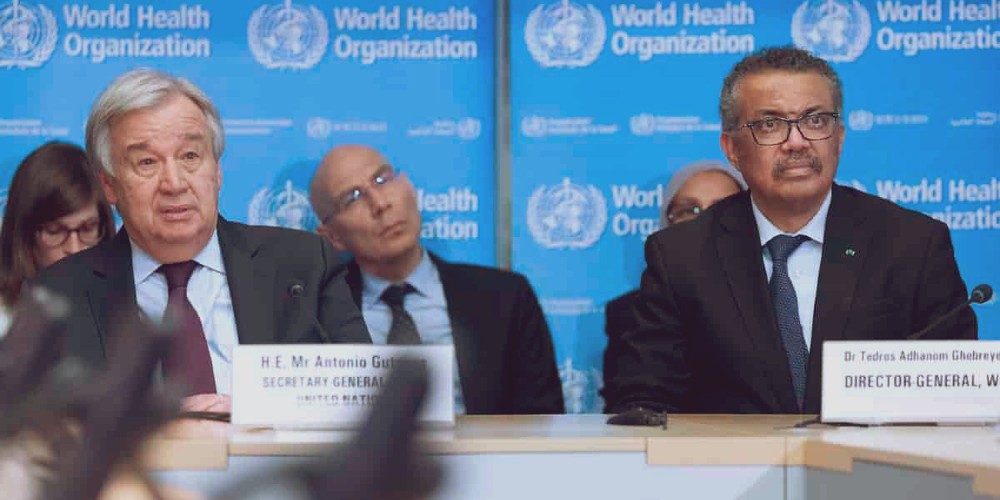
WOAH director general Dr. Monique Eloit stated, “Using a One Health lens that brings all relevant sectors together is critical to tackle global health threats, like monkeypox, COVID-19 and Ebola.”8 Meanwhile, WHO Director-General Dr. Tedros Adhanom Ghebreyesus repeated the rhetoric that a “One Health” approach would be necessary to save the world:9
“It’s clear that a One Health approach must be central to our shared work to strengthen the world’s defences against epidemics and pandemics such as COVID-19. That’s why One Health is one of the guiding principles of the new international agreement for pandemic prevention, preparedness and response, which our Member States are now negotiating.”
Is WHO Trying to Preserve the Status Quo?
Timing-wise, WHO’s One Health Joint Plan of Action announcement may be serving the purpose of covering up the lab origins of SARS-CoV-2, so they can continue to go into caves and other areas, dig up new, or unknown, viruses and bring them back into densely populated areas where high-security biosafety laboratories are typically located.
WHO’s investigation into COVID-19’s origin was a “fake” investigation from the start. China was allowed to hand pick the members of WHO’s investigative team, which included Peter Daszak, Ph.D., who has close professional ties to the Wuhan Institute of Virology (WIV).
The inclusion of Daszak on this team virtually guaranteed the dismissal of the lab-origin theory, and in February 2021, WHO cleared WIV and two other biosafety level 4 laboratories in Wuhan, China of wrongdoing, saying these labs had nothing to do with the COVID-19 outbreak.10
Molecular biologist Richard Ebright, Ph.D., laboratory director at the Waksman Institute of Microbiology and member of the Institutional Biosafety Committee of Rutgers University and the Working Group on Pathogen Security of the state of New Jersey, called out the members of the WHO-instigated investigative team as “participants in disinformation.”11
Only after backlash, including an open letter signed by 26 scientists demanding a full and unrestricted forensic investigation into the pandemic’s origins,12 did WHO enter damage control mode, with Ghebreyesus and 13 other world leaders joining the U.S. government in expressing “frustration with the level of access China granted an international mission to Wuhan.”13
Of note, according to Robert F. Kennedy Jr. in his book “Vax-Unvax,”14 of which I received a preview copy, Ghebreyesus was chosen to be WHO’s director general by Bill Gates — not because of his qualifications, as Tedros has no medical degree and a background that includes accusations of human rights violations, but due to this loyalty to Gates.

Gates, through his billions in donations to WHO, has significant leverage over WHO’s decisions. So who is ultimately controlling WHO’s One Health Joint Plan of Action and its initiatives aimed at further controlling global health and society?
Trust WHO? Watch This to Learn About the Real WHO
Giving WHO and its cronies more global control is a bad idea. Decentralized health care and pandemic planning — moving from the global and federal levels to the state and local levels — makes sense, as both medicine and government work best when individualized and locally oriented. As it stands, however, the opposite global agenda is being applied.
If there were any doubt, watch TrustWHO, above, a documentary film produced by Lilian Franck that delves into the corruption behind the preeminent organization that’s being trusted with public health. In it you’ll learn that industry influences, from Big Tobacco to the nuclear industry and pharmaceuticals, dictated WHO’s global agenda from the start.
WHO’s 2009 H1N1 pandemic response was heavily influenced by the pharmaceutical industry. Many are also unaware that WHO signed an agreement with the International Atomic Energy Agency (IAEA), which is “promoting peaceful use of atomic energy,” in 1959, making it subordinate to the agency in relation to ionizing radiation. WHO works closely with IAEA and has downplayed health effects caused by the Chernobyl and Fukushima nuclear disasters.15
WHO’s Strong Allegiance to China
If history is any indication, WHO’s assembly of global superpowers striving to control everything from health to the environment is not going to act in the public’s best interest. During the COVID-19 pandemic, WHO acted to protect its allegiance to China above all else — including public health.
According to a Sunday Times investigation published in August 2021, WHO’s allegiance to China was secured years earlier, when China secured WHO votes to ensure its candidates would become director-general. Further:16

“The WHO leadership prioritized China’s economic interests over halting the spread of the virus when Covid-19 first emerged. China exerted ultimate control over the WHO investigation into the origins of Covid-19, appointing its chosen experts and negotiating a backroom deal to water down the mandate.”
Its China ties played a “decisive role” in the course of the pandemic. On January 28, 2020, four weeks after Taiwan had alerted WHO that a mysterious respiratory illness was spreading in China, WHO had not yet taken action and continued to praise China.
Ghebreyesus even praised China for their transparency and said the Chinese president had “shown ‘rare leadership’ and deserved ‘gratitude and respect’ for acting to contain the outbreak at the epicenter,” the Sunday Times reported. “These ‘extraordinary steps’ had prevented further spread of the virus, and this was why, he said, there were only ‘a few cases of human-to-human transmission outside China, which we are monitoring very closely.’”17
Speaking with the Sunday Times, Ebright said it was this close connection that ultimately steered the course of the pandemic:18
“Not only did it have a role; it has had a decisive role. It was the only motivation. There was no scientific or medical or policy justification for the stance that the WHO took in January and February 2020. That was entirely premised on maintaining satisfactory ties to the Chinese government.
So at every step of the way, the WHO promoted the position that was sought by the Chinese government … the WHO actively resisted and obstructed efforts by other nations to implement effective border controls that could have limited the spread or even contained the spread of the outbreak.
It is impossible for me to believe that the officials in Geneva, who were making those statements, believed those statements accorded with the facts that were available to them at the time the statements were made. It’s hard not to see that the direct origin of that is the support of the Chinese government for Tedros’s election as director-general …
This was a remarkably high return on [China’s] investment with the relatively small sums that were invested in supporting his election. It paid off on a grand scale for the Chinese government.”
WHO Goes All in on Global Superpower Plan
It’s already clear that WHO’s usefulness as a guardian of public health needs to be reevaluated. Now, it stands to become even more powerful. Rather than learning anything from the course of the pandemic response, it seems they’re willing to risk it all and continue following what got us into this mess in the first place. Only now, they’ll be doing so with additional collaborative powers.
The One Health Joint Plan of Action’s continued focus on “zoonotic epidemics,” when evidence strongly suggests SARS-CoV-2 came from a lab,19 is revealing. So, too, are its claims that only One Health can save us from “ecosystem degradation, food system failures, infectious diseases and antimicrobial resistance.”20
The disturbing part is One Health sounds like a fairy tale that will lead to a utopian society. In reality, the “health” it’s spreading isn’t health like you’re thinking, but rather health in the form of whatever product, technology or globalist agenda they’re pushing. By joining forces, they become that much harder to overcome — and they’re already moving ahead on financing and plans for “implementation.”
According to WHO, “Efforts by just one sector or specialty cannot prevent or eliminate infectious disease and other complex threats to One Health … Building on existing structures and agreements, mechanisms for coordinated financing are under development to support the plan’s implementation.”21
Article cross-posted from Dr. Mercola’s Substack.
Two Storms, One Harvest

Every food crisis in living memory has been a one-shock event. The 2008 price spike was a commodity bubble. The 2020 shortages were a logistics failure. The 2022 grain scare was a war on one exporter’s ports. Each time, the system bent, adjusted, and recovered, and each time the experts assured us afterward that global markets are simply too big and too diversified to fail.
What nobody in Washington seems eager to discuss is that 2026 is shaping up to be something the modern food system has never actually faced. Two independent shocks, one climatic and one geopolitical, are converging on the same harvest cycle at the same time. Not sequentially. Simultaneously.
Start with the weather. The Pacific Ocean is currently building toward what forecasters now openly call a record event. NOAA’s Climate Prediction Center puts the odds of at least a strong El Niño near 88 percent, with roughly two in three odds it reaches “very strong” status, the tier reserved for perhaps three or four events in the entire satellite era. Every major global model now projects a median peak in Super El Niño territory, and most of them project it exceeding the 2015-16 event, which until now held the modern record. Sea surface anomalies were already brushing the super threshold in mid-July, months before these events normally peak. The atmosphere has already shifted into El Niño mode, and the event is forecast to crest in late fall and early winter.
This is not about “climate change.” It’s about the standard cycles of weather, and the cycle we’re currently in is one that has likely devastated societies in the past. We’re better prepared as a society today, but not all Americans are equally prepared.
Serious households have started doing the quiet math on their own. Grocery bills tell part of the story, and the forecast maps tell the rest, which is why long-term food storage has moved from fringe hobby to mainstream line item in the family budget, with established suppliers like Heaven’s Harvest seeing demand from people who five years ago would have rolled their eyes at the idea. That instinct is not paranoia. It is pattern recognition, and the pattern is worth walking through carefully.
Editor’s Note: Heaven’s Harvest IS a sponsor, but the warnings of this article are real and would be written even if we didn’t have a survival food sponsor. With that said, those who take advantage of what they offer can use promo code “Patriot” for 15% off.
The Fertilizer Clock Is Already Running
While the Pacific warms, the second shock has been unfolding in the Strait of Hormuz. The conflict with Iran turned the world’s most important energy chokepoint into a contested waterway, and the consequences reach far beyond the gas pump. Roughly a third of global fertilizer trade moves through Hormuz, and the disruption sent urea prices up 86 percent year over year by March, with a 53 percent jump in a single month.
The World Bank projects energy prices rising about 24 percent in 2026 and fertilizer about 31 percent. By its own accounting, fertilizer prices ran 35 percent higher in the first five months of this year than the same period last year.
Here is the mechanism the nightly news will not explain. Fertilizer is not a grocery item. It is a time-delayed input. The nitrogen a farmer in Iowa or Punjab could not afford to apply this spring does not show up as a problem this spring. It shows up as a thinner harvest six to twelve months later.
The World Bank’s own food security brief concedes that the effects of reduced applications earlier this season “are likely to become visible only later in harvest outcomes.” Translate that from institutional language into plain English and it means this. The damage is already done, it is already in the ground, and we are simply waiting for it to arrive on the shelf.
Now check the calendar. Six to twelve months from the spring planting season lands us squarely in late 2026 and early 2027. Which is precisely when the strongest El Niño in the instrumental record is forecast to peak, bringing its signature droughts to Southeast Asia, Australia, southern Africa, northern Brazil, and South Asia, the very regions that grow the world’s rice, sugar, and oilseeds.
The World Bank warns openly that a strong El Niño “could disrupt multiple crop belts simultaneously” on top of the conflict-driven input costs. Their baseline projection assumes the Middle East disruptions ease by autumn. What in the last two years of Middle East history suggests that assumption is safe?
The System Has No Slack Left
The comfortable answer is that global markets always adjust. But adjustment requires slack, and the slack is gone. Global cereal production is expected to decline from last year’s records even before El Niño does its work. The UN World Food Programme, hardly a den of right-wing preppers, is calling this the most significant disruption to its supply chains since Covid and the invasion of Ukraine, and its supply chain director put the stakes bluntly.
Today’s supply chain challenges are tomorrow’s hunger crisis.
There is also a political dimension that markets cannot price. When food gets scarce, governments do not behave like economists. They behave like politicians. Export bans, hoarding mandates, and panic buying at the national level turned the modest rice shortfall of 2008 into a global crisis, and analysts are already warning that import-dependent nations are the first dominoes.
The 2015-16 Super El Niño, a far weaker event than what is now forecast, threw tens of millions into food stress across Africa and Asia. This one is projected to be stronger, and it arrives with fertilizer already rationed by price and shipping lanes already contested by missiles.
What Joseph Knew
Scripture does not treat preparation for lean years as faithlessness. It treats it as wisdom delivered in advance to those willing to act on it.
Behold, there come seven years of great plenty throughout all the land of Egypt: And there shall arise after them seven years of famine; and all the plenty shall be forgotten in the land of Egypt.
Joseph did not respond to that warning with a hashtag or a committee. He stored grain during the years of abundance, and when the famine came, Egypt stood while its neighbors begged. The lesson is not that famine is certain. It is that the time to prepare is precisely when preparation still looks optional.
Nobody who filled a pantry in a year of plenty has ever regretted it, and nobody standing in an empty aisle has ever been glad he waited for certainty.
None of this calls for panic, and panic is the enemy of sound judgment anyway. It calls for the same unglamorous prudence our grandparents considered ordinary. Keep some cash margin, know your local growers, and put real food in deep storage while it is cheap and available, because the entire arc of this story is that cheap and available is a closing window.
Families looking for a straightforward place to start can visit Heaven’s Harvest and use promo code Patriot for 15 percent off long-term storable food. The forecasts may yet soften, the strait may yet reopen, and we should pray they do. But hope is a fine thing to hold and a foolish thing to eat.
