

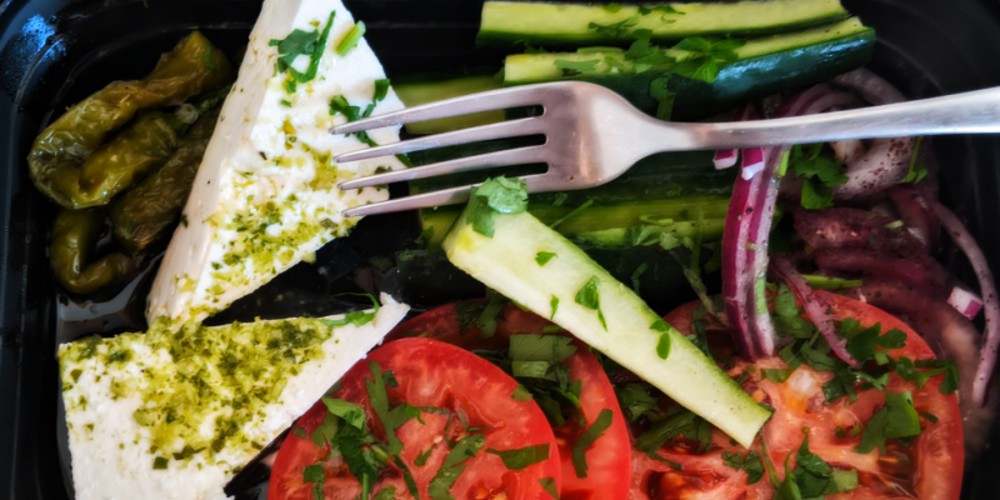
As a lot of you know, I’ve been living in Europe for the past six months. But not “fancy” Europe. No Paris, no London, no Berlin, no Milan. Instead, I’m sticking to the less expensive and many would argue, less sophisticated Balkan countries. I’ve learned a lot from this research-heavy trip and one thing that particularly applies to preparedness is traditional food.
Sure, they’ve got modern bistros in Sofia and spicy Thai bowls in Bucharest, but my goal is not to be “fancy” – it’s to eat what local folks eat. So I focus on traditional restaurants, farmer’s markets, bakeries, and the like to stay fed. And if you pay attention when you do this, there’s a lot you can learn from traditional diets.
I always lose weight when I spend time in Europe. Part of it is probably due to the walking – I don’t have a car here, and my feet are my transportation. But the other part is the healthy, balanced local cuisine that isn’t soaked in glyphosate or tainted with genetic science. I notice an immediate difference in how my joints feel and in my energy levels. And this is all without restricting food or cutting out entire dietary groups. It’s simply eating normal food like a normal person.
Let me be perfectly clear: I’m not suggesting you need to slave for hours in the kitchen over every single meal. A lot of these things are not particularly labor intensive, and there are always shortcuts you can take while maintaining the level of nutrition that is just a part of traditional food.
Here are a few observations. These probably aren’t earth-shattering, but I hope you find them of interest.
Preserved produce is part of many meals.
In Bulgaria, a meal is not complete without a smokey dollop of lutenitsa. This is a sauce that is predominantly made from red peppers and also contains tomato, eggplant, onion, and carrot. The veggies are grilled or roasted then pureed into a sauce that is used as a condiment for meat and french fries and is also spread on a piece of fresh, warm crusty bread. It also plays a starring role in meat and cheese platters. You can make it fresh each time, or make a huge batch and pressure bath can it for some tasty vitamin C in the winter. (A lot of sites will tell you that it’s ok to water bath can this – I wouldn’t. The eggplant and peppers are too low-acid to be safely processed in a water bath.) There’s a very similar sauce to this in Bosnia and Serbia called ajvar, which does not have tomatoes and eggplant in it.
In Romania, it seems that a meal is not complete unless it contains pickles – or muraturi. It’s a catch-all word that could land any number of pickled items on your plate. Often it’s the green cucumber pickles we’re familiar with when titling an item a pickle, but it could just as easily be beets, cabbage, or even a mix of veggies that have been brined. I’ve even seen menus with what translates to “pickle salad” – and this is simply a bowl of pickles of some description. What we’d consider pickles in America are called specifically pickled cucumbers. Here’s a traditional Transylvanian pickle recipe. and here’s a video about pickling veggies. I was never a fan of pickles until having the Romanian ones, and maybe I’ve just been Stockholmed into liking them.
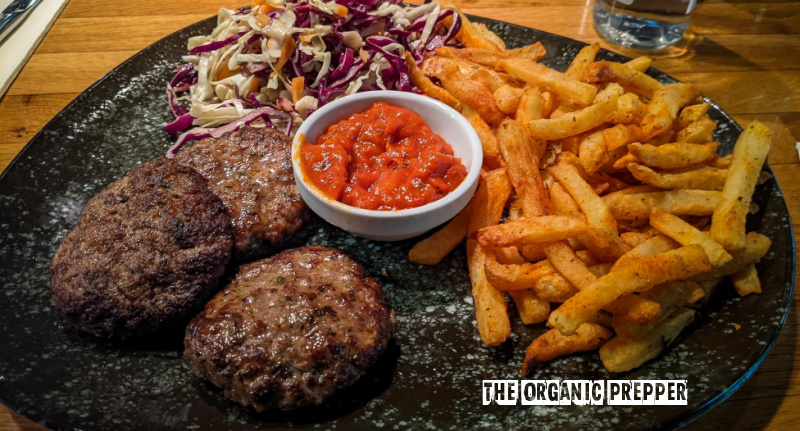
Carbs are king.
Folks in this part of the world are NOT afraid of carbs. If you said that you ate low-carb here they would look at you with confusion and offer you another potato. There is not a meal in sight in a traditional restaurant that doesn’t have at least one filling, delicious carbohydrate.
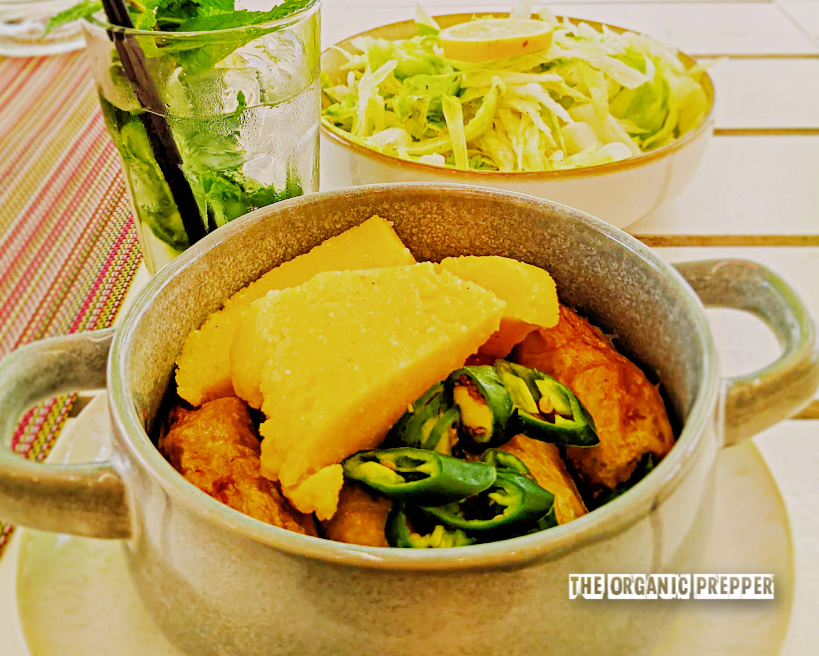
I went to a roadside tavern in Transylvania and ordered a meal that contained smoked meat, cheese, potatoes, AND polenta. It was baked in a clay dish and served as hot as the surface of the sun. There was a side of bread and butter, and of course, a bowl of pickles. It fueled me through a long afternoon of climbing ten billion steep tiny steps while touring a medieval castle and was absolutely delicious.
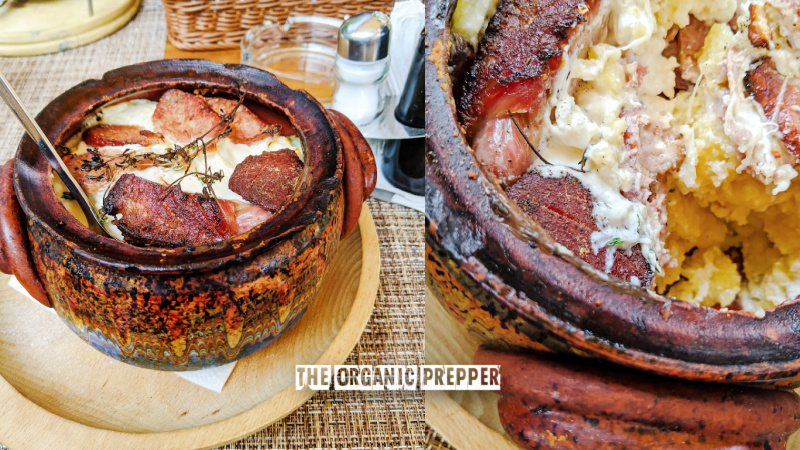
But there’s more to carbs than just giving you energy. They’re cheap and filling, and during difficult times this is more important than ever. As well, if times are tough, there’s a very good chance you’ll be doing a whole lot more physical activity and you’ll need that energy.
You may be thinking, “Carbs are the devil,” or “I’m diabetic, you idiot!” Well if you feel strongly about it, you don’t have to eat them. If you have a health contraindication, you shouldn’t eat them. But be sure you are cutting them out for the right reasons. Whole food should not be scary, and this is a very American way of looking at nutrition.
Dairy is delicious.
I don’t do a whole lot of dairy in the US. I eat occasional cheese because it’s CHEESE, but I use oat milk in my coffee and can’t even remember the last time I had a glass of milk as a beverage.
On my travels, however, avoiding dairy is no easy option. If you asked for oat milk at the cafe they’d look at you in confusion and probably bring you a bowl of oatmeal with milk. You can get a whole lot of different kinds of dairy milk at the grocery store, however, that aren’t always available in the US. Cow’s milk at various levels of pasteurization. Goat’s milk. Sheep milk. If you want a kind of milk, you can generally find it. What they don’t have is half-and-half and other concoctions like that. You can get your milk at 05, 1.5%, or 3.7%.
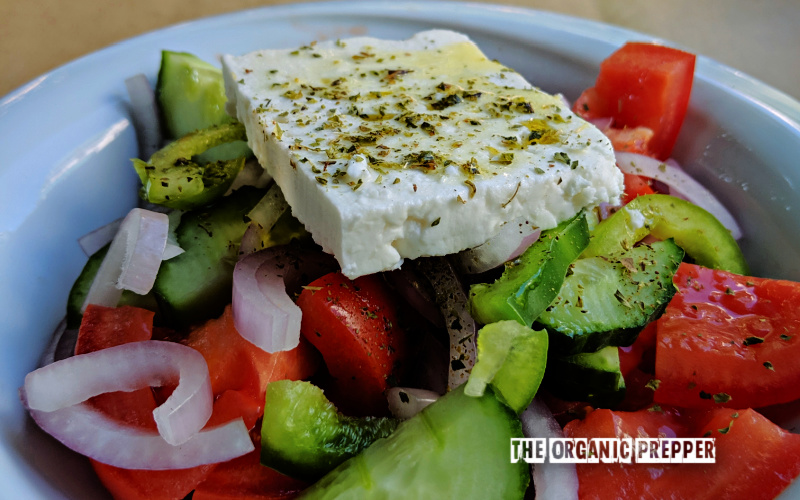
It’s used liberally in food too. Decadent creamy sauces, rich risotto, velvety polenta, and smooth whipped potatoes are served with nearly every meal. And don’t forget the cheese. Brined cheese, in particular, is very popular, and they don’t skimp on it. If you get a salad that has cheese, you get big whopping slices of it, an amount that I’d normally get for an entire week of Greek salads back home in one delicious dish.

But that isn’t all. Yogurt, sour cream, and kefir were all developed as ways to get a little more life from your dairy products. Cheese in brine can last for up to a year in a barrel in your cold room. Finding ways to use these products will add richness and flavor to your menus, even in hard times.
Bread really IS the staff of life.
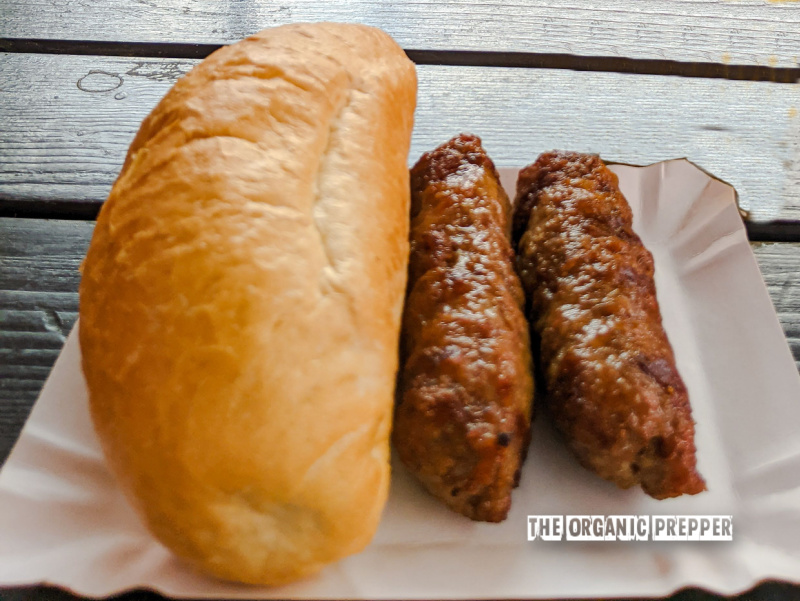
It’s pretty rare to have a meal here that isn’t served with fresh, delicious bread. The great thing about bread is that it’s filling and provides you with energy, much like our discussion of carbs above. It’s inexpensive, particularly if you’re making it yourself.
And that’s another thing. When I say bread, I’m not talking about those icky cellophane bags from the grocery store shelf. I’m talking about bread that will actually mold in 3 days, and believe me, that’s the kind you want. It shows that every single iota of nutrition hasn’t been filtered out by a processing plant. They sell that kind of bread, but it very clearly says on the label, “TOAST” because Europeans don’t believe it’s fit for any other purpose.
You can make a dish of soup or stew go a whole lot further if you put a rustic loaf of bread on the table with it, and people will look at the meal in a completely different way with this simple addition. So, not only is it filling – it’s also the difference between something that seems sparse and something that makes people excited to sit down for the meal.
Sip on this.
How do you spot the American in the restaurant?
They’ve got a soda pop in front of them.

Sure, these countries have Coca-Cola and local sodas available, but most commonly, local folks drink the following:
- Water (still or sparkling)
- Coffee/tea
- Beer
- Wine
Going back in time, aside from the sparkling water, these are pretty traditional drinks. As a prepper, these are drinks you can acquire, store, or make. And if you stop buying fruity drinks and soda pop, your screaming grocery budget will thank you.
Simple is better.
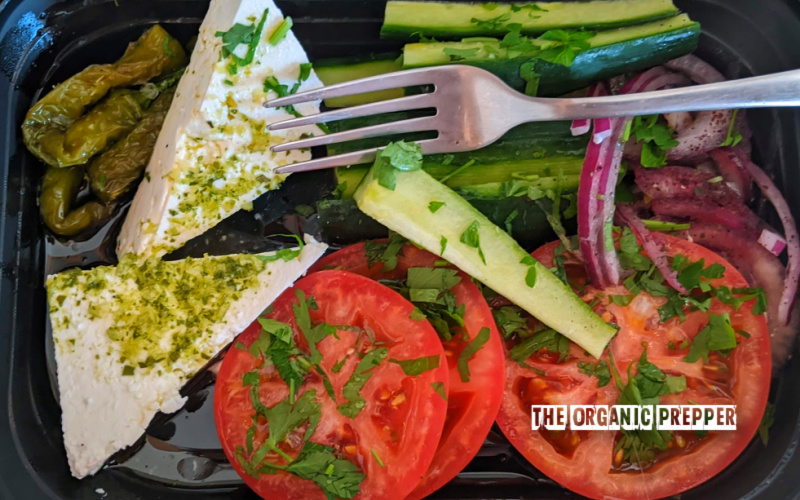
When the ingredients are high-quality and best of all, fresh, you don’t NEED to be fancy. They’ll speak for themselves. Maybe add a few seasonings like herbs or sliced jalapenos, but you don’t need tons of added “stuff” or dips. Salad dressing is, most of the time, oil and vinegar that you put on yourself at the table. I was a bit confused as to why all my salads were dry until I realized this. Some salads don’t even need dressing due to the fresh and fabulous ingredients.
I’ve never eaten so much fresh parsley and oregano in my entire life. Back home, we use it mostly as a little garnish, but here it’s chopped up and used liberally to add freshness to a dish.
You can order a bowl of strawberries at a restaurant, and they’re just plain, delicious sliced berries with no syrup or whipped cream. Fresh sliced veggies have chopped herbs and a drizzle of high-quality olive oil. Carbs are topped with butter and black pepper.
If your food is good enough, it can stand on its own. Meals don’t need to be five courses of fancy. A delicious main dish and simple buttered potatoes with a side of fresh veggies is filling and delicious. And there’s nary a Lipton Sidekicks saucy pasta or rice in sight. There aren’t any additives. It’s like stuff your Grandma would’ve served your Grandpa before our kitchens became experiments in industrial food.
Could it be time to rethink the meals you serve?
Traditional Food for thought
Over here, you don’t see a lot of vegans and vegetarians. Nobody I’ve encountered eats low-carb or grain-free, or dairy-free. In fact, if you try and order those types of meals in restaurants, they’ll look at you oddly. They’ll nod, and sometimes they’ll try to accommodate you (but not always – there’s a culture of you’ll-get-what-you-get here). I’ve certainly loosened up and simply try to go with the flow and not be too picky.
These things aren’t particularly “foreign” either. They just go back to a time that is largely forgotten in most of the US. This is how our grandparents ate before food became an industrialized product. We, as preppers, are all about the throwbacks – perhaps we need to uncomplicate food and revisit the past.
I hope this missive about traditional food inspires you to look at your diet a little differently if this isn’t how you eat right now. I know that I fully intend to bring home recipes and ideas that I’ve collected, as I’ve done over the years after being influenced by my time in Mexico and other places. Perhaps some of these foods will make their way to your own tables or give you some ideas for your garden goodies.
Do you eat traditional food? What are some of your favorites? How about foods from other countries or cultures? Can you see how you might apply some of this to preparedness? Let’s discuss it in the comments section.
About Daisy
Daisy Luther is a coffee-swigging, adventure-seeking, globe-trotting blogger. She is the founder and publisher of three websites. 1) The Organic Prepper, which is about current events, preparedness, self-reliance, and the pursuit of liberty; 2) The Frugalite, a website with thrifty tips and solutions to help people get a handle on their personal finances without feeling deprived; and 3) PreppersDailyNews.com, an aggregate site where you can find links to all the most important news for those who wish to be prepared. Her work is widely republished across alternative media and she has appeared in many interviews.
Daisy is the best-selling author of 5 traditionally published books, 12 self-published books, and runs a small digital publishing company with PDF guides, printables, and courses at SelfRelianceand Survival.com You can find her on Facebook, Pinterest, Gab, MeWe, Parler, Instagram, and Twitter.
Article cross-posted from The Organic Prepper.
Sound off about this article and follow my Late Prepper Substack.

Two Storms, One Harvest

Every food crisis in living memory has been a one-shock event. The 2008 price spike was a commodity bubble. The 2020 shortages were a logistics failure. The 2022 grain scare was a war on one exporter’s ports. Each time, the system bent, adjusted, and recovered, and each time the experts assured us afterward that global markets are simply too big and too diversified to fail.
What nobody in Washington seems eager to discuss is that 2026 is shaping up to be something the modern food system has never actually faced. Two independent shocks, one climatic and one geopolitical, are converging on the same harvest cycle at the same time. Not sequentially. Simultaneously.
Start with the weather. The Pacific Ocean is currently building toward what forecasters now openly call a record event. NOAA’s Climate Prediction Center puts the odds of at least a strong El Niño near 88 percent, with roughly two in three odds it reaches “very strong” status, the tier reserved for perhaps three or four events in the entire satellite era. Every major global model now projects a median peak in Super El Niño territory, and most of them project it exceeding the 2015-16 event, which until now held the modern record. Sea surface anomalies were already brushing the super threshold in mid-July, months before these events normally peak. The atmosphere has already shifted into El Niño mode, and the event is forecast to crest in late fall and early winter.
This is not about “climate change.” It’s about the standard cycles of weather, and the cycle we’re currently in is one that has likely devastated societies in the past. We’re better prepared as a society today, but not all Americans are equally prepared.
Serious households have started doing the quiet math on their own. Grocery bills tell part of the story, and the forecast maps tell the rest, which is why long-term food storage has moved from fringe hobby to mainstream line item in the family budget, with established suppliers like Heaven’s Harvest seeing demand from people who five years ago would have rolled their eyes at the idea. That instinct is not paranoia. It is pattern recognition, and the pattern is worth walking through carefully.
Editor’s Note: Heaven’s Harvest IS a sponsor, but the warnings of this article are real and would be written even if we didn’t have a survival food sponsor. With that said, those who take advantage of what they offer can use promo code “Patriot” for 15% off.
The Fertilizer Clock Is Already Running
While the Pacific warms, the second shock has been unfolding in the Strait of Hormuz. The conflict with Iran turned the world’s most important energy chokepoint into a contested waterway, and the consequences reach far beyond the gas pump. Roughly a third of global fertilizer trade moves through Hormuz, and the disruption sent urea prices up 86 percent year over year by March, with a 53 percent jump in a single month.
The World Bank projects energy prices rising about 24 percent in 2026 and fertilizer about 31 percent. By its own accounting, fertilizer prices ran 35 percent higher in the first five months of this year than the same period last year.
Here is the mechanism the nightly news will not explain. Fertilizer is not a grocery item. It is a time-delayed input. The nitrogen a farmer in Iowa or Punjab could not afford to apply this spring does not show up as a problem this spring. It shows up as a thinner harvest six to twelve months later.
The World Bank’s own food security brief concedes that the effects of reduced applications earlier this season “are likely to become visible only later in harvest outcomes.” Translate that from institutional language into plain English and it means this. The damage is already done, it is already in the ground, and we are simply waiting for it to arrive on the shelf.
Now check the calendar. Six to twelve months from the spring planting season lands us squarely in late 2026 and early 2027. Which is precisely when the strongest El Niño in the instrumental record is forecast to peak, bringing its signature droughts to Southeast Asia, Australia, southern Africa, northern Brazil, and South Asia, the very regions that grow the world’s rice, sugar, and oilseeds.
The World Bank warns openly that a strong El Niño “could disrupt multiple crop belts simultaneously” on top of the conflict-driven input costs. Their baseline projection assumes the Middle East disruptions ease by autumn. What in the last two years of Middle East history suggests that assumption is safe?
The System Has No Slack Left
The comfortable answer is that global markets always adjust. But adjustment requires slack, and the slack is gone. Global cereal production is expected to decline from last year’s records even before El Niño does its work. The UN World Food Programme, hardly a den of right-wing preppers, is calling this the most significant disruption to its supply chains since Covid and the invasion of Ukraine, and its supply chain director put the stakes bluntly.
Today’s supply chain challenges are tomorrow’s hunger crisis.
There is also a political dimension that markets cannot price. When food gets scarce, governments do not behave like economists. They behave like politicians. Export bans, hoarding mandates, and panic buying at the national level turned the modest rice shortfall of 2008 into a global crisis, and analysts are already warning that import-dependent nations are the first dominoes.
The 2015-16 Super El Niño, a far weaker event than what is now forecast, threw tens of millions into food stress across Africa and Asia. This one is projected to be stronger, and it arrives with fertilizer already rationed by price and shipping lanes already contested by missiles.
What Joseph Knew
Scripture does not treat preparation for lean years as faithlessness. It treats it as wisdom delivered in advance to those willing to act on it.
Behold, there come seven years of great plenty throughout all the land of Egypt: And there shall arise after them seven years of famine; and all the plenty shall be forgotten in the land of Egypt.
Joseph did not respond to that warning with a hashtag or a committee. He stored grain during the years of abundance, and when the famine came, Egypt stood while its neighbors begged. The lesson is not that famine is certain. It is that the time to prepare is precisely when preparation still looks optional.
Nobody who filled a pantry in a year of plenty has ever regretted it, and nobody standing in an empty aisle has ever been glad he waited for certainty.
None of this calls for panic, and panic is the enemy of sound judgment anyway. It calls for the same unglamorous prudence our grandparents considered ordinary. Keep some cash margin, know your local growers, and put real food in deep storage while it is cheap and available, because the entire arc of this story is that cheap and available is a closing window.
Families looking for a straightforward place to start can visit Heaven’s Harvest and use promo code Patriot for 15 percent off long-term storable food. The forecasts may yet soften, the strait may yet reopen, and we should pray they do. But hope is a fine thing to hold and a foolish thing to eat.
