

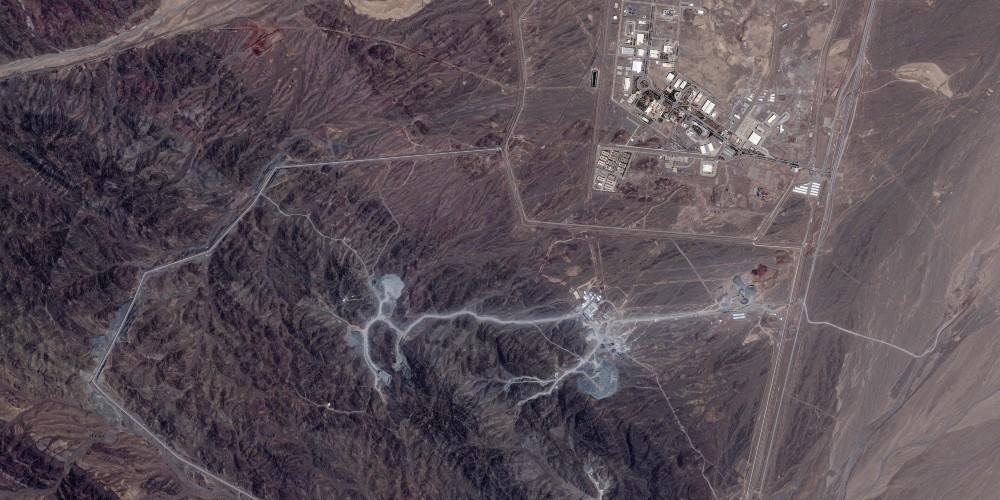
(The Epoch Times)—U.S. President Donald Trump is increasingly weighing new U.S. military action against a suspected Iranian nuclear site situated within a fortified mountain facility known as Pickaxe Mountain.
Asked during a July 21 White House meeting about reports that centrifuges for uranium enrichment had been moved into Pickaxe Mountain, Trump said “it doesn’t mean anything” unless uranium has also been moved into the facility. Still, the president indicated that he intends to order strikes on the facility.
“If I thought they could do something about it, I would never say that,” he said. “But we’ll be hitting that area pretty soon, and very heavily.”
Trump’s recent comments about the Pickaxe Mountain facility come as U.S. forces have resumed regular strikes on Iran following the collapse of a ceasefire agreement.
With the Iran war approaching the five-month mark, U.S. lawmakers on both sides of the aisle have pressed the Trump administration for more details about its military objectives and have sought to halt the conflict until the president obtains direct congressional approval for the campaign.
What Is Pickaxe Mountain?
Translated from the Persian Kuh-e Kolang Gaz La, Pickaxe Mountain is surrounded by granite geology and rises to about a mile above sea level. The mountain is situated in central Iran, about 140 miles south of the capital city of Tehran.
Iran disclosed plans to establish a new centrifuge assembly facility at Pickaxe Mountain in 2020, following suspected sabotage at another nearby assembly facility in Natanz that year.
Unlike other Iranian nuclear sites, the International Atomic Energy Agency has not been permitted to inspect the Pickaxe Mountain site.
Iran also has not publicized schematics for the Pickaxe Mountain facility, according to the Institute for Science and International Security, a Washington-based think tank that studies nuclear proliferation issues.
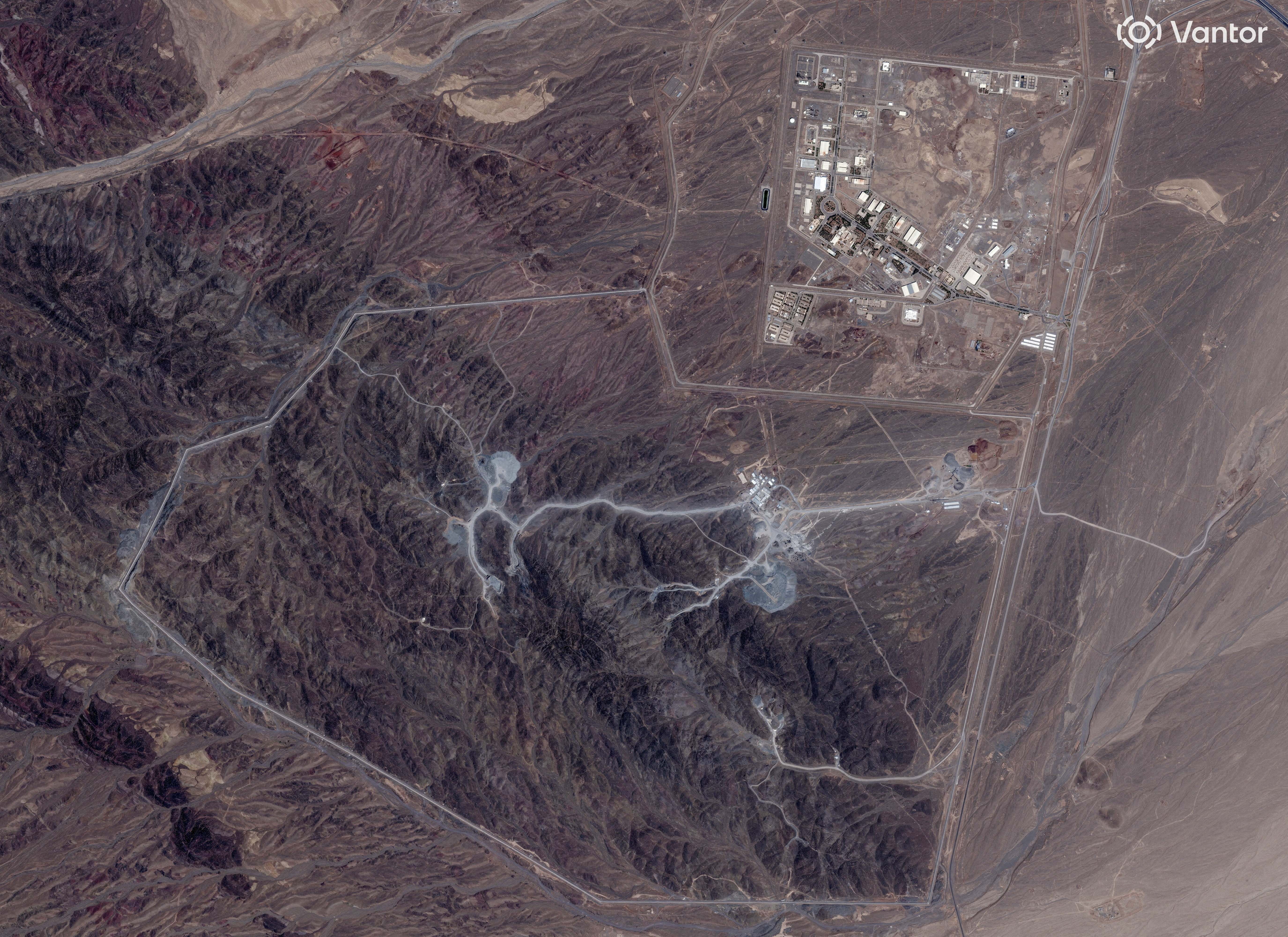
Much of what is known about the mountain facility has instead been gleaned from satellite imagery.
The facility at Pickaxe Mountain may be more than 300 feet underground, according to the Institute for Science and International Security. Noting differences in the height of the eastern and western entrances of the facility, the think tank has assessed that the facility may have multiple levels.
What’s Happening at Pickaxe Mountain?
Trump and other members of his administration have listed preventing Iran from obtaining a nuclear weapon as a key objective of the recent military operations.
Although Iranian officials have claimed that the country’s nuclear aspirations are peaceful, international observers have continued to raise doubts, and the Trump administration has called for further assurances.
Trump’s new threats to target Pickaxe Mountain come more than a year after he said U.S. forces had severely damaged all of Iran’s nuclear sites in a round of strikes on June 22, 2025.

By October 2025, the Washington-based Center for Strategic and International Studies assessed that construction efforts at Pickaxe Mountain had accelerated. The Center for Strategic and International Studies further assessed that the expanded construction effort could mean that the facility’s purpose had grown to incorporate other nuclear capabilities that were degraded during the U.S. strikes in June.
Responding to Trump’s recent comments about hitting the Pickaxe Mountain facility, Iranian Foreign Ministry spokesman Esmail Baghaei said Iran has already fully declared its nuclear activities with the International Atomic Energy Agency and no nuclear activity is taking place at Pickaxe Mountain.
What Could US Forces Do?
The location of the Pickaxe Mountain facility may pose technical challenges to any force seeking to strike it.
Asked during a July 21 Senate hearing whether the U.S. military can damage whatever may be inside the Pickaxe Mountain facility, War Secretary Pete Hegseth said, “A lot of our capabilities are classified, but if anybody in the world can reach anything on God’s green Earth, it’s the United States military.”
To attack Pickaxe Mountain, Trump may look to a similar playbook as the one used in June 2025, when B-2 Spirit stealth bombers dropped GBU-57 Massive Ordnance Penetrator bombs on the underground nuclear facilities at Fordow and Natanz.
Weighing in at 30,000 pounds, the GBU-57 is the most powerful non-nuclear bunker buster in the U.S. military arsenal.

A 2007 report by the U.S. Air Force indicated that the GBU-57 was being designed to burrow up to 200 feet underground before exploding. Whether the GBU-57 could reach the farthest depths of the Pickaxe Mountain facility is unclear.
Benjamin Ashraf, an analyst for the nuclear risk assessment organization Open Nuclear Network, recently assessed that Pickaxe Mountain’s granite geology could reduce the efficacy of conventional bunker-busting weapons.
When U.S. forces targeted Fordow last year, they dropped several GBU-57s on ventilation shafts running into the underground facility to increase the probability of success.
Andrea Stricker, who studies nuclear counterproliferation for the Foundation for Defense of Democracies, previously told Epoch Magazine in Israel that a ground operation may be warranted to address the potential threat at the Pickaxe Mountain facility.
“Western intelligence fears that the facility at Pickaxe Mountain could serve as a new Fordow-style enrichment plant—only one protected even more deeply,” Stricker said in a March interview.
In recent years, U.S. special operations troops have trained to fight alongside troops who specialize in dismantling nuclear and radiological threats.
Still, Trump may prefer to seal off the entrances to Pickaxe Mountain with heavy bombing, rather than ordering what could be a high-risk ground raid inside the facility.
Last month, the president revealed that he had considered sending special operations troops to retrieve enriched uranium from unspecified Iranian storage sites, but said he elected not to because he “didn’t want to be Jimmy Carter.”
Trump’s comment about former President Jimmy Carter was an apparent reference to the late president’s 1980 decision to order special operations forces to attempt to rescue dozens of U.S. citizens taken hostage in Iran. That Carter-era rescue mission, known as Operation Eagle Claw, ended in failure after eight U.S. service members were killed in an accident at a mission staging site inside Iran.

Starting the Day With a Scripture-Inspired Roast Helps Center Your Thoughts on Eternal Truths Amid Temporal Pressures
The world can seem chaotic, especially right after we wake up. Many believers start their mornings reaching for something familiar — a hot cup of coffee — yet end up settling for mediocre brews that do little more than deliver a caffeine jolt. The daily grind of life, with its endless distractions, news cycles, and responsibilities, can leave even the most faithful feeling spiritually parched alongside their physical fatigue. What if your morning ritual could do more than wake you up? What if it could ground you in truth, nourish your body with exceptional quality, and quietly advance a kingdom purpose at the same time?
That’s the promise — and the reality — behind Promised Grounds Coffee. This Christian-founded company doesn’t just roast beans; it approaches every step as an act of worship and discipleship. By selecting only the top 10% of specialty-grade beans, ethically sourced from dedicated farmers in Central and South America, and small-batch roasting them with reverence in Austin, Texas, Promised Grounds delivers what many describe as the best coffee available — never burnt, never bland, but rich with origin stories and layered flavors that honor God’s creation.
From the vibrant Psalm 27 Roast (a light, bright medium option) to the bold yet peaceful 2 Timothy 1:7 Decaf, each bag carries a Scripture verse that turns your daily pour into a gentle reminder of faith. And through their Ounce Per Ounce Promise, every ounce of coffee you enjoy provides an equal ounce of clean water to families in need via partnership with Filter of Hope — literally brewing hope for body and soul, one cup at a time.
The challenge for today’s Christians runs deeper than finding a decent cup. In an age of convenience-driven consumerism, it’s easy to support companies that dilute values or remain silent on matters of faith. Many believers want their everyday choices — from what they drink to how they spend — to reflect discipleship rather than just convenience. Promised Grounds solves this by weaving Christian excellence into the entire process: beans nurtured with prayerful stewardship by farming families, roasted as an offering rather than a commodity, and packaged with Bible verses to encourage a mindset of gratitude and purpose from the first sip. Reviewers consistently praise the smooth, rich profiles — whether enjoyed black in a drip maker, iced on a warm day, or shared in fellowship — noting how the quality stands toe-to-toe with premium secular brands while delivering something far more meaningful.
This integration of faith and flavor addresses a real need in Christian households and ministries. Busy parents, church leaders, and remote workers alike report that starting the day with a Scripture-inspired roast helps center their thoughts on eternal truths amid temporal pressures. The coffee’s exceptional character — bright citrus notes in lighter roasts or deep chocolate undertones in bolder ones — comes from meticulous selection and careful roasting that respects the bean’s natural gifts rather than masking them. It’s the kind of coffee that elevates a simple quiet time, fuels productive workdays, or sparks meaningful conversations when shared at Bible studies or outreach events. And because it’s ethically sourced with integrity, every purchase supports sustainable livelihoods for farmers who treat their crops like family harvests.
For those leading churches or small groups, the impact multiplies. Promised Grounds offers bundles and options perfect for hospitality ministries, turning ordinary coffee service into an opportunity to point people toward the living water of Christ. Imagine greeting visitors with a warm cup whose very bag carries God’s Word — a subtle yet powerful witness that aligns with the Great Commission. The company’s Texas roots and commitment to “brewing hope” resonate especially with believers who value American enterprise paired with global compassion.
Of course, quality alone isn’t enough if the experience feels out of reach. Promised Grounds keeps it accessible with practical perks like free shipping on orders over $40, sample sets for discovering favorites, and thoughtful add-ons such as faith-themed mugs. Whether you prefer whole beans for fresh grinding, grounds for convenience, or even bulk options for larger households and ministries, the result is consistently superior coffee that makes discipleship feel integrated rather than added on.
As you consider how to align even the smallest habits with your walk with God, Promised Grounds Coffee stands out as a refreshing solution. It tackles the dual problems of subpar daily sustenance and disconnected consumption by offering a product that genuinely excels in taste while advancing a mission of clean water, farmer dignity, and scriptural encouragement. Believers who make the switch often describe it as more than a beverage upgrade — it becomes part of their rhythm of gratitude, a daily invitation to remember that every good gift comes from above.
If you’re ready to transform your mornings (and perhaps your church gatherings) with coffee that honors both exceptional craftsmanship and Christian values, I encourage you to explore what Promised Grounds has to offer. One sip at a time, you’ll be nourishing your body, refreshing your spirit, and participating in something far greater — all while enjoying what truly is among the best coffee available.
