

When even a correspondent from NPR is standing on the streets of Caracas describing the scene as “absolutely surreal” — and reporting that ordinary Venezuelans say “a weight has been lifted” — that is not a media story. That is a verdict on two decades of socialist tyranny, and on the American president who finally ended it.
NPR correspondent Eyder Peralta traveled to Venezuela in early March and reported his findings on air Friday, speaking with host Steve Inskeep on Morning Edition. What he described was not the chaos that critics of the Trump administration’s January operation had predicted. It was something closer to the first gasp of air from a country that had nearly suffocated.
“You go out on the streets and people here tell you that they feel like a weight has been lifted,” Peralta told his audience. For a network not known for charitable coverage of President Trump’s foreign policy moves, the report carried remarkable weight — not because NPR endorsed the operation, but because its own correspondent could not ignore what his eyes and ears were telling him.
The backdrop to Peralta’s visit is one of the most audacious military and law enforcement operations in modern American history. In the early hours of January 3, 2026, U.S. Armed Forces launched Operation Absolute Resolve — a large-scale strike across northern Venezuela that suppressed air defenses and sent an assault force directly into Maduro’s compound at Fuerte Tiuna, Venezuela’s largest military complex, in the heart of Caracas. Nicolás Maduro and his wife, Cilia Flores, were captured, transported to the USS Iwo Jima, and then flown to New York City to face narco-terrorism, drug trafficking, and weapons charges that had been building in federal court since 2020. President Trump announced the operation publicly that morning from Mar-a-Lago.
“This was one of the most stunning, effective and powerful displays of American military might and confidence in American history,” he said. There were no American casualties.
Maduro had been in power since 2013, succeeding his ideological godfather Hugo Chávez. His tenure was defined by economic collapse, political imprisonment, mass emigration, and the transformation of a once-wealthy oil state into a country where millions went hungry. By the time Trump took office for his second term, nearly eight million Venezuelans had fled the country. The regime had rigged a presidential election in July 2024 so blatantly — declaring Maduro the winner despite opposition vote tallies showing his challenger Edmundo González had won by a landslide — that international observers refused to validate the result.
González fled to exile in Spain. The Biden administration recognized him as Venezuela’s legitimate president-elect but took no action to remove the man illegitimately occupying the office. That distinction mattered. Knowing something is wrong and doing nothing about it is its own kind of decision.
Trump’s administration spent 2025 methodically tightening the noose. The reward for Maduro’s capture was doubled to $50 million in August 2025. U.S. warships assembled in the Caribbean in what Trump described as the largest armada ever gathered in the history of South America. A series of military strikes against alleged drug-trafficking vessels between September and December 2025 killed more than 115 people.
The U.S. designated Maduro’s Cartel of the Suns — a network of government and military corruption operating through Venezuelan state structures — as a Foreign Terrorist Organization. By the time Operation Absolute Resolve was launched, the groundwork had been laid for years. The Justice Department subsequently released a legal opinion concluding that neither U.S. nor international law constrained the president’s authority to order the operation.
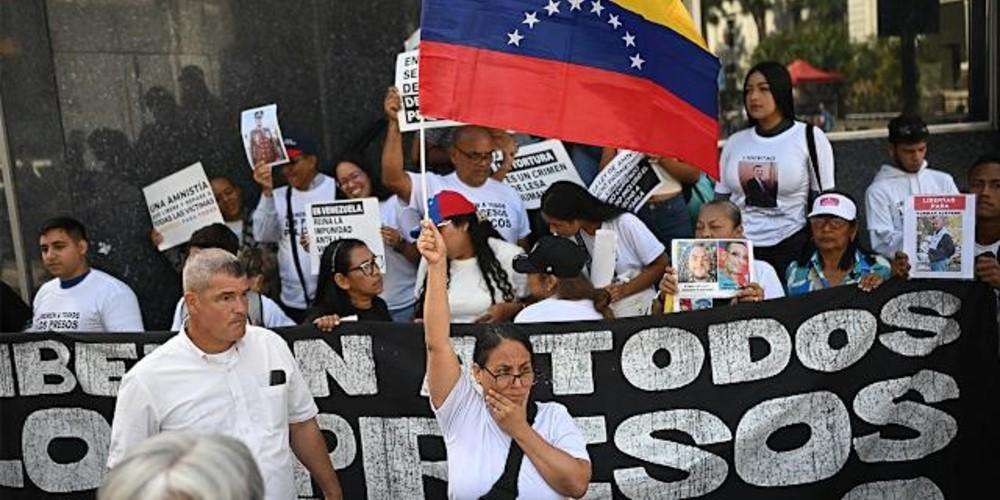
Back on the streets of Caracas in early March, NPR’s Peralta found something the foreign policy establishment had long insisted was impossible without a years-long diplomatic process: visible, public hope. Opposition groups were holding open meetings. Protesters gathered outside the justice ministry to demand the release of political prisoners. Peralta recounted meeting Edward Ocariz, a former political prisoner who had personally endured the regime’s punishment. Standing publicly, Ocariz taunted the government that had once jailed him: “They call us traitors,” he said, “but look at them now. Now it’s them who are not only kneeling, but sleeping with the United States.”
Peralta noted that Ocariz believed the U.S. intervention was “regrettable” as a matter of principle, but acknowledged that something good had come from it — and he was able to say so out loud without fear of being dragged back to a cell. That single detail captures what years of diplomatic communiqués never could.
Peralta also noted something striking about Caracas’s international airport: the signs are posted in Spanish, Russian, Arabic, and Chinese. That is a map of Maduro’s alliances — the countries whose influence had turned Venezuela into something between a client state and a staging ground for adversarial interests in the Western Hemisphere.
China was a major buyer of sanctioned Venezuelan oil. Russia provided military and intelligence support. Cuba had embedded personnel so deeply in Venezuelan security services that Havana confirmed 32 of its citizens were killed during the January operation. The airport signage was, as Peralta put it, a reminder of “just where this country was facing a few months ago.” That picture has changed rapidly.
Interior Secretary Doug Burgum traveled to Venezuela in early March to begin forging what the administration has described as a strategic partnership with the interim government now led by former Vice President Delcy Rodríguez, who was sworn in after the National Assembly convened following Maduro’s removal. The focus is significant: Venezuela sits atop the world’s largest proven oil reserves — an estimated 300 billion barrels, roughly 17 percent of global totals — and also possesses rare earth minerals that the United States has historically depended on China to supply.
Peralta noted that Burgum described a future in which American companies extract those minerals, breaking U.S. reliance on Beijing in a sector critical to technology and defense manufacturing. “A win-win,” Burgum called it. President Trump, for his part, summarized the situation in characteristically direct terms: “Venezuela is working.”
The State Department formalized the relationship on Thursday, announcing the restoration of full diplomatic and consular relations with the interim Venezuelan government. That is a significant development. For years, the U.S. had operated without an ambassador in Caracas and dealt with Venezuela through third parties and sanctions. A restored diplomatic relationship signals that Washington considers the current transition legitimate and intends to remain engaged — not just militarily, but economically and politically.
The political prisoner question looms large over any honest accounting of where Venezuela goes from here. Peralta observed protesters calling for the release of those still held. The Maduro government, at its peak, imprisoned journalists, judges, opposition politicians, and ordinary citizens who crossed the wrong official. Many remain incarcerated under the interim government. The speed and sincerity with which those cases are addressed will say a great deal about whether this transition produces a genuinely free Venezuela or simply exchanges one set of power arrangements for another.
The Trump administration has stated that restoring democracy is a long-term goal, while its immediate priorities involve security, energy, and migration — the practical architecture of the relationship. Those two tracks are not in conflict, but they require separate attention.
There is also the matter of María Corina Machado, the Nobel Peace Prize-winning opposition leader who received roughly 72 percent approval from Venezuelans in a March 2025 poll. Trump initially dismissed her, saying at his January 3 press conference that she “doesn’t have the support or the respect within the country.” Her allies pushed back sharply, with adviser David Smolansky calling her “the most trusted leader in Venezuela.”
A subsequent White House meeting between Trump and Machado was scheduled. How the administration navigates the relationship between the interim government it has empowered and the democratic opposition that actually commands the country’s popular loyalty will be one of the defining questions of this story going forward. Getting Maduro out was the hard part. Getting the politics right is the long part.
What Peralta’s NPR report captured — perhaps unintentionally — is the difference between a country living under a boot and a country that has had the boot removed. Street protests. Public meetings. A former political prisoner standing in an open space and saying things he could not have said six weeks earlier without facing arrest. These are not small things. In countries that have never lost their freedom, it is easy to forget how much courage it takes to speak plainly in public when the wrong words can end your life or your liberty. The Venezuelans Peralta spoke with were not dancing in the streets over American intervention as such. Several noted their ambivalence about the means. But the weight that had been lifted — that part was not ambivalent at all.
For years, critics of American foreign policy insisted that military intervention in Venezuela would destabilize the hemisphere, inflame anti-American sentiment across Latin America, set dangerous international precedents, and leave the Venezuelan people worse off. Some of those concerns were not unreasonable on paper. What Peralta found on the ground in Caracas, however, was not destabilization. It was the cautious, fragile, tentative reopening of a society that had been sealed shut. The protests. The smiles. The man who had been in prison, standing outside the justice department, saying what he thought. These are early days, and history offers no guarantees. But as first reports from a liberated country go, the one filed by an NPR correspondent who landed expecting something more complicated is about as telling as it gets.
President Trump framed Venezuela explicitly as a model — the template for what he called regime change done right. Whether that model travels to Cuba or Nicaragua, as some GOP lawmakers have suggested, remains to be seen. What is no longer speculative is that it worked in Venezuela, at least in its first phase.
Maduro is awaiting trial in New York. His wife faces the same charges. The airport in Caracas still has signs in Russian and Arabic and Chinese, but they feel, for the first time in a long time, like relics of a government that no longer exists — rather than a promise of the one that does.
Starting the Day With a Scripture-Inspired Roast Helps Center Your Thoughts on Eternal Truths Amid Temporal Pressures
The world can seem chaotic, especially right after we wake up. Many believers start their mornings reaching for something familiar — a hot cup of coffee — yet end up settling for mediocre brews that do little more than deliver a caffeine jolt. The daily grind of life, with its endless distractions, news cycles, and responsibilities, can leave even the most faithful feeling spiritually parched alongside their physical fatigue. What if your morning ritual could do more than wake you up? What if it could ground you in truth, nourish your body with exceptional quality, and quietly advance a kingdom purpose at the same time?
That’s the promise — and the reality — behind Promised Grounds Coffee. This Christian-founded company doesn’t just roast beans; it approaches every step as an act of worship and discipleship. By selecting only the top 10% of specialty-grade beans, ethically sourced from dedicated farmers in Central and South America, and small-batch roasting them with reverence in Austin, Texas, Promised Grounds delivers what many describe as the best coffee available — never burnt, never bland, but rich with origin stories and layered flavors that honor God’s creation.
From the vibrant Psalm 27 Roast (a light, bright medium option) to the bold yet peaceful 2 Timothy 1:7 Decaf, each bag carries a Scripture verse that turns your daily pour into a gentle reminder of faith. And through their Ounce Per Ounce Promise, every ounce of coffee you enjoy provides an equal ounce of clean water to families in need via partnership with Filter of Hope — literally brewing hope for body and soul, one cup at a time.
The challenge for today’s Christians runs deeper than finding a decent cup. In an age of convenience-driven consumerism, it’s easy to support companies that dilute values or remain silent on matters of faith. Many believers want their everyday choices — from what they drink to how they spend — to reflect discipleship rather than just convenience. Promised Grounds solves this by weaving Christian excellence into the entire process: beans nurtured with prayerful stewardship by farming families, roasted as an offering rather than a commodity, and packaged with Bible verses to encourage a mindset of gratitude and purpose from the first sip. Reviewers consistently praise the smooth, rich profiles — whether enjoyed black in a drip maker, iced on a warm day, or shared in fellowship — noting how the quality stands toe-to-toe with premium secular brands while delivering something far more meaningful.
This integration of faith and flavor addresses a real need in Christian households and ministries. Busy parents, church leaders, and remote workers alike report that starting the day with a Scripture-inspired roast helps center their thoughts on eternal truths amid temporal pressures. The coffee’s exceptional character — bright citrus notes in lighter roasts or deep chocolate undertones in bolder ones — comes from meticulous selection and careful roasting that respects the bean’s natural gifts rather than masking them. It’s the kind of coffee that elevates a simple quiet time, fuels productive workdays, or sparks meaningful conversations when shared at Bible studies or outreach events. And because it’s ethically sourced with integrity, every purchase supports sustainable livelihoods for farmers who treat their crops like family harvests.
For those leading churches or small groups, the impact multiplies. Promised Grounds offers bundles and options perfect for hospitality ministries, turning ordinary coffee service into an opportunity to point people toward the living water of Christ. Imagine greeting visitors with a warm cup whose very bag carries God’s Word — a subtle yet powerful witness that aligns with the Great Commission. The company’s Texas roots and commitment to “brewing hope” resonate especially with believers who value American enterprise paired with global compassion.
Of course, quality alone isn’t enough if the experience feels out of reach. Promised Grounds keeps it accessible with practical perks like free shipping on orders over $40, sample sets for discovering favorites, and thoughtful add-ons such as faith-themed mugs. Whether you prefer whole beans for fresh grinding, grounds for convenience, or even bulk options for larger households and ministries, the result is consistently superior coffee that makes discipleship feel integrated rather than added on.
As you consider how to align even the smallest habits with your walk with God, Promised Grounds Coffee stands out as a refreshing solution. It tackles the dual problems of subpar daily sustenance and disconnected consumption by offering a product that genuinely excels in taste while advancing a mission of clean water, farmer dignity, and scriptural encouragement. Believers who make the switch often describe it as more than a beverage upgrade — it becomes part of their rhythm of gratitude, a daily invitation to remember that every good gift comes from above.
If you’re ready to transform your mornings (and perhaps your church gatherings) with coffee that honors both exceptional craftsmanship and Christian values, I encourage you to explore what Promised Grounds has to offer. One sip at a time, you’ll be nourishing your body, refreshing your spirit, and participating in something far greater — all while enjoying what truly is among the best coffee available.
