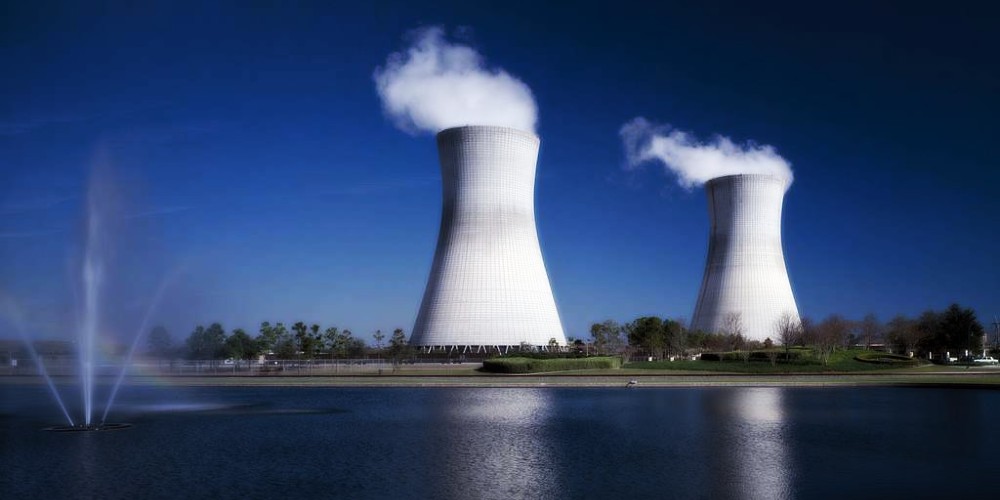
In the high-stakes world of energy production, nuclear power remains one of the most promising technologies for meeting global demand while minimizing emissions. Yet, as Christopher Koopman and Eli Dourado explain in their Wall Street Journal piece, the Nuclear Regulatory Commission (NRC) has become a regulatory quagmire stifling innovation. The recent lawsuit from Texas, Utah, and Last Energy, aimed at curbing the NRC’s overreach, could mark a turning point for the future of small modular reactors (SMRs)—an innovation too vital to be obstructed by bureaucratic inertia.
A Regulatory Regime Frozen in the Cold War Era
The Atomic Energy Act of 1954 was crafted with the foresight to distinguish between different types of nuclear reactors based on their risk profiles. Reactors that could pose significant national security or public health risks would require federal oversight. Yet, this sensible framework was gutted in 1956 when the Atomic Energy Commission, the NRC’s predecessor, decided that all nuclear reactors, regardless of their size or risk, must undergo the same suffocating regulatory process.
This one-size-fits-all approach persists today, resulting in absurdities like the regulation of the teaching reactor at Texas A&M University—a reactor so small it couldn’t even power a single LED bulb. As Koopman and Dourado point out, even the NRC itself concedes that research reactors like these pose no meaningful safety risk. Nevertheless, they are subjected to the same licensing gauntlet as gigawatt-scale power plants.
The Small Modular Reactor Revolution
Small modular reactors are a game-changer for nuclear power. Unlike the sprawling nuclear plants of the mid-20th century, SMRs are compact, produce a fraction of the energy of traditional plants (around 20 megawatts or less), and are equipped with modern safety features. For instance, Last Energy’s reactor design operates within a 12-inch steel-walled container, making a radioactive release virtually impossible—even in the worst imaginable scenario.
Last Energy’s design operates entirely inside a container with 12-inch steel walls that has no credible mode of radioactive release even in the worst reasonable scenario.
Even in such a scenario, according to the plaintiffs, radiation exposure would be less than a tenth what the NRC has deemed too safe to require regulation in other contexts—and less than 1/800th of a routine abdominal CT scan.
Yet, these remarkable advancements are stymied by the NRC’s outdated and burdensome licensing process. NuScale, another SMR innovator, spent over $500 million and more than two million hours of labor just to get its design certified. That’s before applying for an operational license, which will only multiply the costs. […]
— Read More: wattsupwiththat.com
JD’s manually curated links for God-fearing MAGA patriots