

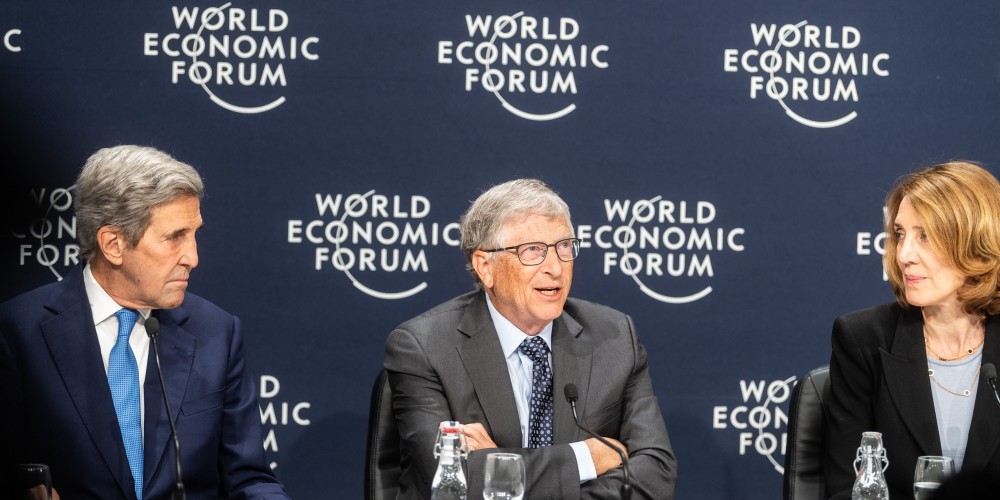
The escalating regulatory attack on agricultural producers from Holland and the United States to Sri Lanka and beyond is closely tied to the United Nations’ “Agenda 2030” Sustainable Development Goals and the U.N.’s partners at the World Economic Forum (WEF), numerous experts told The Epoch Times.
Indeed, several of the U.N.’s 17 Sustainable Development Goals (SDGs) are directly implicated in policies that are squeezing farmers, ranchers, and food supplies around the world.
High-level Chinese Communist Party (CCP) members within the U.N. system helped create the SDGs and are currently helping lead the organization’s implementation of the global plan, The Epoch Times has previously documented.
If left unchecked, multiple experts said, the U.N.-backed sustainability policies on agriculture and food production would lead to economic devastation, shortages of critical goods, widespread famine, and a dramatic loss of individual freedoms.
Already, millions of people worldwide are facing dangerous food shortages, and officials around the world say those are set to get worse as the year goes on. There is an agenda behind it all, experts told The Epoch Times.
Even private land ownership is in the crosshairs, as global food production and the world economy are transformed to meet the global sustainability goals, U.N. documents reviewed by The Epoch Times show. As explained by the U.N. on its SDG website, the goals adopted in 2015 “build on decades of work by countries and the U.N.”
One of the earliest meetings defining the “sustainability” agenda was the U.N. Conference on Human Settlements known as Habitat I, which adopted the Vancouver Declaration.
The agreement stated that “land cannot be treated as an ordinary asset controlled by individuals” and that private land ownership is “a principal instrument of accumulation and concentration of wealth, therefore contributes to social injustice.”
“Public control of land use is therefore indispensable,” the U.N. declaration said, a prelude to the World Economic Forum’s now infamous “prediction” that by 2030, “you’ll own nothing.”
Numerous U.N. agencies and officials have outlined their vision of “sustainability” since then, including calls for drastic restrictions on energy, meat consumption, travel, living space, and material prosperity.
Experts interviewed by The Epoch Times say that some of the world’s wealthiest and most powerful corporate leaders are working with communists in China and elsewhere in an effort to centralize control over food production and crush independent farmers and ranchers.
The WEF, a network of major multinational businesses that collaborates closely with the CCP, is a “strategic partner” of the U.N. on Agenda 2030.
The increasing regulation of food production and even efforts to shut many farms and ranches come as officials around the world such as U.S. President Joe Biden and U.N. World Food Programme chief David Beasley warn of looming food shortages worldwide.
But instead of easing restrictions and encouraging more production, Western governments and many governments dependent on aid are clamping down even harder.

Dutch farmers, already at the breaking point, have responded this summer with massive nationwide protests. That followed violent unrest in Sri Lanka tied to food shortages caused by government policy.
Governments and international organizations have cited various pretexts for the policies, ranging from increasing “sustainability” and protecting various flora and fauna, to promoting “economic justice” and even returning lands to aboriginal peoples.
According to critics of the policies, though, the goal isn’t to preserve the environment or fight climate change at all. Instead, the experts warn that the “sustainability” narrative and the other justifications are a tool to gain control over food, agriculture, and people.
“The end goal of these efforts is to reduce sovereignty on both individual nations and people,” said Craig Rucker, president of the Committee for a Constructive Tomorrow (CFACT), a public policy organization specializing in environmental and development issues.
“The intent for those pushing this agenda is not to save the planet, as they purport, but to increase control over people,” he told The Epoch Times, adding that the goal is to centralize power at the national and even international level.
UN Sustainable Development Goals—Agenda 2030
The U.N. Sustainable Development Goals, often referred to as Agenda 2030, were adopted in 2015 by the organization and its member states as a guide to “transforming our world.” Hailed as a “master plan for humanity” and a global “declaration of interdependence” by top U.N. officials, the 17 goals include 169 targets involving every facet of the economy and life.

“All countries and all stakeholders, acting in collaborative partnership, will implement this plan,” declares the preamble to the document, repeatedly noting that “no one will be left behind.”
Among other elements, the U.N. plan calls for national and international wealth redistribution in Goal 10, as well as “fundamental changes in the way that our societies produce and consume goods and services.”
Using government to transform all economic activity is a critical part of the SDGs, with Goal 12 demanding “sustainable consumption and production patterns.”
Among the specific targets outlined in Goal 12 are several directly linked to agricultural policies that undermine food production. These include “sustainable management and efficient use of natural resources.”
Perhaps more importantly, the document demands “environmentally sound management of chemicals and all wastes throughout their life cycle, in accordance with agreed international frameworks.”
As a result, people and especially farmers must “significantly reduce their release to air, water, and soil in order to minimize their adverse impacts on human health and the environment.”
Other SDGs that are directly tied to what critics have called the “war on farmers” include Goal 14, which addresses “marine pollution of all kinds, in particular from land-based activities, including … nutrient pollution.” The U.N. regularly describes agriculture and food production as a threat to the ocean.
The U.N. Food and Agriculture Organization (FAO), led by former CCP Vice Minister of Agriculture and Rural Affairs Qu Dongyu, is helping to lead the charge.
In its 2014 report “Building a Common Vision for Sustainable Food and Agriculture: Principles and Approaches,” the U.N. agency calls for drastic restrictions on the use of fertilizers, pesticides, emissions, and water in the agricultural sector.
As an example of how agriculture must be reformed to be considered sustainable by the U.N., the FAO report declares that “excessive use of nitrogen fertilizer is a major cause of water pollution and greenhouse gas emissions.”
The Rome-based FAO didn’t respond to a request for comment. Another of the 17 SDGs with a direct impact on agriculture and food production is Goal 2, with its calls for “sustainable agriculture” and “sustainable food production.”
Goal 6, meanwhile, calls for “sustainable management of water,” which includes various targets involving agricultural water use and runoff.
Because U.N. leaders see agriculture and food production as key contributors to what they call manmade climate change, Goal 13 is important, too. It calls for governments to “integrate climate change measures into national policies, strategies, and planning.”
Goal 15, which deals with sustainable use of terrestrial ecosystems, also has multiple targets that affect agriculture and food production. All over the world, national and regional governments are working with U.N. agencies to implement these sustainability goals in agriculture and other sectors.
For instance, responding to U.N. biodiversity agreements, the European Union has enacted various U.N.-backed biodiversity programs such as Natura 2000 and the EU Biodiversity Strategy for 2030, which have been cited by the Dutch government and others in their agricultural policies.
The U.N. also boasts publicly about its role in imposing the SDGs in Sri Lanka and other nations suffering from food shortages and economic calamities linked to the very same global sustainability programs. Around the world, almost every national government says it’s incorporating the SDGs into its own laws and regulations.
World Economic Forum ‘Partnership’
Alongside the U.N. are various “stakeholders” that are critical to implementing sustainable development policies through “public-private partnerships.”
At the heart of that effort is the WEF, which since 2020 has been pushing a total transformation of society known as the “Great Reset.” In 2019, the WEF signed a “strategic partnership” with the U.N. to advance Agenda 2030 within the global business community.
The official agreement defined “areas of cooperation to deepen institutional engagement and jointly accelerate the implementation of the 2030 Agenda for Sustainable Development.”
Many of the key officials behind Agenda 2030, including top U.N. leaders such as current Secretary-General António Guterres—a self-proclaimed socialist—have also been working with the WEF for decades.
Meanwhile, the WEF has been explicit with its goals. It recently launched a “Food Action Alliance” (FAA) that acknowledges on its website that Agenda 2030 “informs the ambition of the FAA to provide an enduring and long-term platform for multi-stakeholder action on food systems to meet the SDGs.”
Alongside the U.N.’s “Food Systems Summit” in September 2021, the WEF’s FAA released a report outlining its own “leadership agenda for multi-stakeholder collaboration to transform food systems.”
Among other elements, the document summarizes the FAA’s insights on “supporting transformative food system partnerships, and its value proposition beyond the UN Food Systems Summit 2021 towards achieving the UN Sustainable Development Goals.”
The WEF’s public concern with transforming agriculture and the food supply goes back over a decade, at least.
In partnership with various companies, the WEF released a 2010 report outlining a “new vision for agriculture” that included a “roadmap for stakeholders.” Many of the world’s largest food companies that dominate the market and own countless popular brands are involved.
The WEF’s website is packed with information purporting to justify a total transformation of the food supply by “stakeholders.”
“As global food systems become increasingly interconnected, effective coordination among a diverse set of stakeholders will be required,” WEF says on its “Strategic Intelligence” platform, frequently citing the FAO as its source.
“The potential to craft new, systemic approaches to food systems that include a diverse array of stakeholders presents opportunities to help sustainably feed the world well into the future.”
The organization’s frequent references to “stakeholders” refers to governments, companies, and so-called nongovernmental organizations that are often funded by those same companies and governments. They are all working together on the issue.
For instance, the WEF boasts that it has brought corporate giants such as Coca-Cola and Unilever into the fold toward promoting a “more sustainable future.”
The Rockefeller Foundation, which recently released a report on how to “Reset the Table” and “Transform the U.S. Food System,” is also a key player. The WEF’s “Food Innovation Hubs” around the world are set to be a major part of this global transformation.
Speaking to the World Economic Forum on “transforming food systems and land use” at last year’s Davos Agenda Week, Dutch Prime Minister Mark Rutte announced that the Netherlands would host the “Global Coordinating Secretariat of the World Economic Food Innovation Hubs.”
The secretariat, he said, “will connect all other Food Innovation Hubs” in order to facilitate creating “the partnerships we need.”
Neither the WEF nor the Rockefeller Foundation responded to requests for comment on their role in Agenda 2030 and on the agricultural policies being pursued around the world.
Other organizations and entities involved in the push include powerful tax-exempt foundations such as the Gates Foundation, the EU-style regional governments proliferating around the world, and various groups funded by them.
Squeezing Farmers—and the Food Supply
All over the globe, U.N. SDG-aligned government policies are squeezing farmers—especially smaller, independent producers unable to absorb the added costs of added regulation and control.
Celebrating U.N. sustainability ideas, recently ousted Sri Lankan President Gotabaya Rajapaksa announced at the U.N. COP26 climate summit in 2021 that his government was banning chemical fertilizers and pesticides.
“Sri Lanka recently restricted the imports of chemical fertilizers, pesticides, and weedicides due to public health concerns, water contamination, soil degradation, and biodiversity impacts,” Rajapaksa told world leaders, to widespread acclaim.
“Although opposed by entrenched lobbies, this has created opportunities for innovation and investment into organic agriculture that will be healthier and more sustainable in future.”
In reality, even though they were promptly rolled back, the policies produced catastrophic food shortages, widespread hunger, and eventually a popular revolt that ousted the president and his government.
In 2019, the socialist Sri Lankan government also partnered with the U.N. Environment Programme to establish the U.N. Global Nitrogen Campaign, which promotes the U.N.-backed policies on nitrogen that are now proliferating worldwide.
In the Netherlands, headquarters for the WEF’s “Food Innovation Hub” secretariat, authorities are imposing nitrogen policies that are expected to decimate the nation’s highly productive agricultural sector. The plans also include widespread expropriation of farms.

“The expropriation plans of the cabinet are a downright declaration of war on the agricultural sector,” said Dutch Member of Parliament Gideon van Meijeren, of the Forum for Democracy party, as cited by De Dagelijkse Standaard. “Under false pretenses, farmers are being robbed of their land, centuries-old farms are being demolished and farmers’ families are being totally destroyed.”
Experts warned of dangerous consequences stemming from such sustainability policies including food shortages, skyrocketing prices, social unrest, and more.
“You can glimpse the green, sustainable future by beholding Holland and Sri Lanka now,” Bonner Cohen, a senior fellow at the National Center for Public Policy Research, told The Epoch Times.
And yet, the agenda is spreading rapidly. Canadian federal authorities last week announced similar restrictions on fertilizers and nitrogen after restrictions on energy production were put in place, sparking outrage from provincial officials and farmers.
In Ireland, the United Kingdom, and other European nations, various government entities are also working to slash agricultural production under sustainability programs.
Meanwhile, aside from continuing with policies that pay farmers not to grow food, the Biden administration is seeking to impose WEF-backed “Environmental, Social, Governance” metrics and reporting on companies through the U.S. Securities and Exchange Commission.
Farm associations and more than 100 members of Congress argue that the plan would bankrupt owners of small and medium-size farms unable to comply with climate reporting requirements to do business with public firms, even as the world moves toward widespread food shortages. In part, experts say the insistence on these sorts of policies is because those imposing them are largely insulated from the damage they are causing.
“Global elites in government, transnational organizations, corporate boardrooms—well represented in the WEF—are so caught up in their climate virtue signaling, from which many hope to benefit financially through investments in green energy, that they are slow to notice that they are completely detached from reality,” said National Center for Public Policy Research’s Cohen, who specializes in environmental issues.
“Few of those imposing regulations on farmers have ever set foot on a farm. By virtue of the power and wealth these people already have, they are shielded from the consequences of the misguided policies they impose on the rest of the world. That burden is borne by ordinary people around the world, about whom the Davos crowd and their partners in crime know nothing.”
Small, Independent Farms at Risk: Experts
Sri Lanka’s disaster offers a preview of what will happen to the United States and Europe if policymakers continue to follow the U.N. sustainability agenda, according to Sterling Burnett, who holds a doctorate in environmental ethics and leads the nonprofit Heartland Institute’s Arthur B. Robinson Center on Climate and Environmental Policy.
“It’s not a war on farming; it’s a war on small farming and independent farmers,” he told The Epoch Times. “It’s a war in support of elite, large-scale agricultural industries.”
Even though the U.N. SDGs speak of helping “small-scale food producers,” Burnett argued that independent farms and ranches are in the U.N.’s crosshairs to help consolidate control over the food supply. Policymakers are “in the pocket” of major corporate interests including Conagra, BlackRock, State Street, Vanguard, and others, he said.
“They would just as soon have all their small competitors put out of business,” he said, echoing concerns expressed by numerous other experts.
BlackRock CEO Larry Fink, whose firm manages more money than any other company in the world, “wants to impose his values on companies using other people’s money,” Burnett said.
Fink, who serves on the board of the powerful Council on Foreign Relations and works closely with the WEF, is a key architect of the push to impose “environmental, social, governance” metrics on U.S. companies.
“This is the super-rich foisting their values on the rest of us,” said Burnett, pointing to those he says are happy to work with communists on the effort.
“As far as the World Economic Forum is concerned, you can’t have a Great Reset if you don’t reset the food supply, because food is necessary to everybody,” he said. “Stalin recognized this: Whoever controls the food controls the people. Same with energy.”
As prices soar and farmers go bankrupt, major corporations, in league with governments and international organizations, will pick up the pieces. In the meantime, as seen recently in Sri Lanka, hungry people pushed to the brink are likely to react.
“People were not starving on January 6,” said Burnett, referring to the Jan. 6, 2021, protest and breach at the U.S. Capitol. “The supply chain crisis is happening, shelves are already going empty, and when people are hungry, they will not sit around and do nothing.”
American Policy Center founder and President Tom DeWeese, a leading expert on and critic of U.N. notions of sustainability, warned that the war on farmers was part of a broader agenda to strip people of freedom.
“Always in the past, when tyrannical forces wanted to rule the world, they built armies and invaded, broke things, killed people, and forced subjugation,” DeWeese told The Epoch Times. “We are now dealing with a diabolical force that has figured out a way to get us to voluntarily surrender our liberties and help them subjugate us.
“What could be such a powerful tool? The threat of Environmental Armageddon,” he said, pointing to the climate-change narrative as the prime example.
Citing numerous U.N. officials and documents, DeWeese says the agenda isn’t to save the climate, but to transform the planet and centralize control over the populace.
Aside from the U.N. and the WEF, major companies such as Vanguard and BlackRock are working to take over and control the food supply, he said. Already, a handful of companies in which those two investment firms are top shareholders dominate the global food and beverage industry. By taking over the farming, they will control it all.
“The goal is to have total control over food production,” he said, noting that they seek to own all seeds and even grow synthetic meat in facilities already being backed financially by Bill Gates and other billionaires.
Genetically engineered crops are high on the agenda, too. The U.N., the WEF, and others are also moving forward with promoting insects and weeds as food. Across the Western world, insect protein production facilities are popping up rapidly.
But it gets even darker, DeWeese says.
“If people are starving, they are much easier to subjugate,” he said, adding that depopulation and control over humanity have been on the agenda of global elites for decades.
The “war on farmers” also comes amid what critics have described as a government-backed “war on energy” that’s affecting agriculture and virtually every other sector.
This includes limiting energy exploration, shutting down power plants, charging special fees and taxes, and other policies that have resulted in rapidly rising costs across the Western world, although not in places such as China.
The experts interviewed by The Epoch Times urged Americans to resist the war on farmers and the U.N.-backed sustainability policies using a variety of means. These include getting involved politically, adopting different shopping habits, finding alternative sources of food such as local farmers, and other measures.
Officials at the U.N. didn’t respond to requests for comment.
Article Cross-posted from our premium news partners at The Epoch Times.
Starting the Day With a Scripture-Inspired Roast Helps Center Your Thoughts on Eternal Truths Amid Temporal Pressures
The world can seem chaotic, especially right after we wake up. Many believers start their mornings reaching for something familiar — a hot cup of coffee — yet end up settling for mediocre brews that do little more than deliver a caffeine jolt. The daily grind of life, with its endless distractions, news cycles, and responsibilities, can leave even the most faithful feeling spiritually parched alongside their physical fatigue. What if your morning ritual could do more than wake you up? What if it could ground you in truth, nourish your body with exceptional quality, and quietly advance a kingdom purpose at the same time?
That’s the promise — and the reality — behind Promised Grounds Coffee. This Christian-founded company doesn’t just roast beans; it approaches every step as an act of worship and discipleship. By selecting only the top 10% of specialty-grade beans, ethically sourced from dedicated farmers in Central and South America, and small-batch roasting them with reverence in Austin, Texas, Promised Grounds delivers what many describe as the best coffee available — never burnt, never bland, but rich with origin stories and layered flavors that honor God’s creation.
From the vibrant Psalm 27 Roast (a light, bright medium option) to the bold yet peaceful 2 Timothy 1:7 Decaf, each bag carries a Scripture verse that turns your daily pour into a gentle reminder of faith. And through their Ounce Per Ounce Promise, every ounce of coffee you enjoy provides an equal ounce of clean water to families in need via partnership with Filter of Hope — literally brewing hope for body and soul, one cup at a time.
The challenge for today’s Christians runs deeper than finding a decent cup. In an age of convenience-driven consumerism, it’s easy to support companies that dilute values or remain silent on matters of faith. Many believers want their everyday choices — from what they drink to how they spend — to reflect discipleship rather than just convenience. Promised Grounds solves this by weaving Christian excellence into the entire process: beans nurtured with prayerful stewardship by farming families, roasted as an offering rather than a commodity, and packaged with Bible verses to encourage a mindset of gratitude and purpose from the first sip. Reviewers consistently praise the smooth, rich profiles — whether enjoyed black in a drip maker, iced on a warm day, or shared in fellowship — noting how the quality stands toe-to-toe with premium secular brands while delivering something far more meaningful.
This integration of faith and flavor addresses a real need in Christian households and ministries. Busy parents, church leaders, and remote workers alike report that starting the day with a Scripture-inspired roast helps center their thoughts on eternal truths amid temporal pressures. The coffee’s exceptional character — bright citrus notes in lighter roasts or deep chocolate undertones in bolder ones — comes from meticulous selection and careful roasting that respects the bean’s natural gifts rather than masking them. It’s the kind of coffee that elevates a simple quiet time, fuels productive workdays, or sparks meaningful conversations when shared at Bible studies or outreach events. And because it’s ethically sourced with integrity, every purchase supports sustainable livelihoods for farmers who treat their crops like family harvests.
For those leading churches or small groups, the impact multiplies. Promised Grounds offers bundles and options perfect for hospitality ministries, turning ordinary coffee service into an opportunity to point people toward the living water of Christ. Imagine greeting visitors with a warm cup whose very bag carries God’s Word — a subtle yet powerful witness that aligns with the Great Commission. The company’s Texas roots and commitment to “brewing hope” resonate especially with believers who value American enterprise paired with global compassion.
Of course, quality alone isn’t enough if the experience feels out of reach. Promised Grounds keeps it accessible with practical perks like free shipping on orders over $40, sample sets for discovering favorites, and thoughtful add-ons such as faith-themed mugs. Whether you prefer whole beans for fresh grinding, grounds for convenience, or even bulk options for larger households and ministries, the result is consistently superior coffee that makes discipleship feel integrated rather than added on.
As you consider how to align even the smallest habits with your walk with God, Promised Grounds Coffee stands out as a refreshing solution. It tackles the dual problems of subpar daily sustenance and disconnected consumption by offering a product that genuinely excels in taste while advancing a mission of clean water, farmer dignity, and scriptural encouragement. Believers who make the switch often describe it as more than a beverage upgrade — it becomes part of their rhythm of gratitude, a daily invitation to remember that every good gift comes from above.
If you’re ready to transform your mornings (and perhaps your church gatherings) with coffee that honors both exceptional craftsmanship and Christian values, I encourage you to explore what Promised Grounds has to offer. One sip at a time, you’ll be nourishing your body, refreshing your spirit, and participating in something far greater — all while enjoying what truly is among the best coffee available.
