

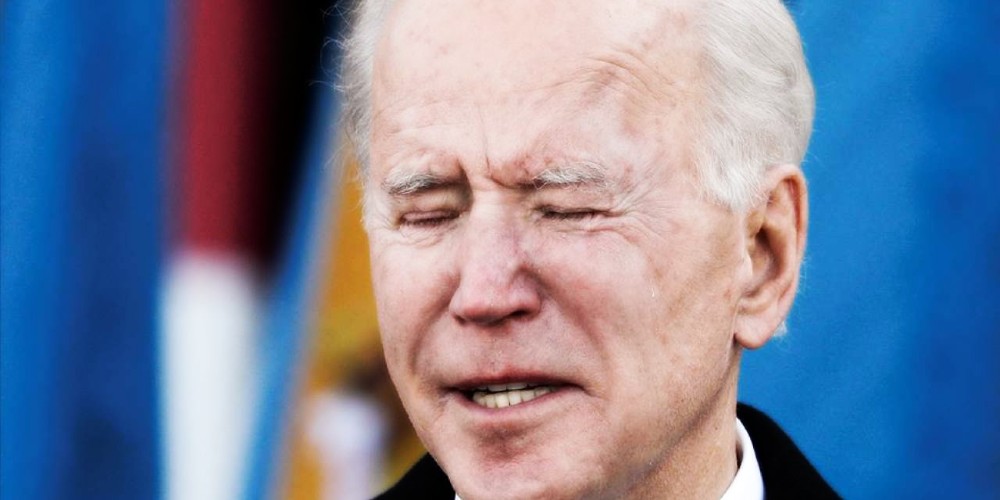
- While President Joe Biden continues to lag behind former President Trump in national and battleground state polls, his poll numbers are even worse on several key issues he’ll need to gain ground on to win reelection.
- Biden is polling behind Trump on key questions on who voters benefited from most while in office, who they trust to handle top issues and who they believe is best fit to serve another term, according to recent polling.
- “All of these polls point to voters having already decided against Biden on the current merits,” Jon McHenry, a GOP polling analyst and vice president at North Star Opinion Research, told the Daily Caller News Foundation. “They just don’t think he’s up to the job, whether we’re asking about traits like stamina and sharpness or about policies like the economy and immigration.”
 (Daily Caller)—As President Joe Biden continues to poll behind former President Donald Trump for a potential head-to-head matchup in 2024, recent surveys indicate he is also faring much worse than the Republican on issues that are most important to voters.
Trump has been trending ahead of Biden in national and crucial battleground state polls a year out from a hypothetical rematch, and is currently up by 3.2 points in the RealClearPolitics (RCP) average. Additionally, Biden is down by double digits against Trump on questions of basic presidential competency, including the handling of voters’ top issues and concerns over the Democrat’s age, according to recent polling data.
“He should be worried, and Democrats more generally should be worried,” Dr. Charles Bullock, elections expert and political science professor at the University of Georgia, told the Daily Caller News Foundation. “The kinds of issues that Biden is trailing Trump on seem to be the issues that are foremost on most peoples’ minds.”
A Wall Street Journal survey released on Dec. 9 found that only 23% of voters believe Biden’s policies have helped them, compared to nearly 50% who said the same of Trump’s administration.
Ron Faucheux, president of nonpartisan polling firm President of Clarus Research Group, believes this statistic is “the worst omen for Biden,” and told the DCNF “this contrast is deadly” ahead of 2024.
“When Democrats decided to package their economic policies under the single label, ‘Bidenomics,’ it backfired, and gave a name to something voters neither liked nor trusted,” Faucheux said.
Inflation has spiked under the Biden administration, which many critics attribute to the president’s record spending advanced by congressional Democrats. The Inflation Reduction Act, the American Rescue Plan, the Infrastructure Investment and Jobs Act and other pieces of Biden’s economic agenda are responsible for green-lighting trillions in spending.
The WSJ poll found that Biden was down by double digits against Trump on who voters trust to handle issues relating to the economy and inflation, as well as immigration, crime and the wars in Ukraine and Israel.
Recent battleground state polling has affirmed the national surveys, finding that Biden is far behind Trump on key issues voters are concerned about going into election year.
A Morning Consult/Bloomberg survey published Thursday shows that across seven swing states — Arizona, Georgia, Wisconsin, Michigan, Pennsylvania, Nevada and North Carolina — 51% of voters said the country’s economy was better off under Trump compared to 34% under Biden. The numbers were nearly identical when asked if they’re better off financially now than they were when Trump was president.
Trump also scored double-digits higher than Biden on who the electorate trusts to handle the economy, crime and immigration — which voters said were some of the most pressing issues to them ahead of 2024, according to the Morning Consult/Bloomberg poll.
CNN/SSRS polls in Michigan and Georgia released Monday indicated Trump scored far ahead of Biden for their respective “policy decisions on major issues.”
Another battleground state poll, conducted by Redfield & Wilton Strategies in Arizona, Georgia, Florida, North Carolina, Michigan and Pennsylvania, yielded similar results. In all of the states, Trump was ahead of Biden by double digits on issues concerning who “can get the economy going again” and “who will be tough on China.”
“The voters see the same decline for our country where we look weak. Where the economy’s bad, where our enemies are taking advantage of this weakness, and you’ve got a world where you’ve got really bad wars in Ukraine and now in the Middle East, and Biden can’t stop it,” John McLaughlin, CEO and partner of McLaughlin & Associates, which works closely with the Trump campaign, told the DCNF. “The sooner the election happens, the better off the voters will be, and the better off the country will be.”

Biden is also lagging far behind Trump on who voters believe are better fit to serve another term, given the current and former presidents are 81 and 77 years old, respectively.
Trump led Biden 45% to 29% on the question of who “is mentally up for the job” in the WSJ poll, and was ahead by 34 points on “physical stamina.”
An Economist/YouGov survey released Wednesday found that 55% of voters believe Biden’s health and age would “severely limit his ability to do the job,” while only 26% said the same of Trump.
The battleground state polls yielded similar results on the president’s sharpness, stamina and physical and mental health.
Bullock argued that Trump has been successful in messaging on the age issue, noting his “Sleepy Joe” nickname for Biden, posing a sharp contrast between the two men.
“It has taken hold, and it’s been augmented by some things, like when Biden stumbles or falls or that sort of thing,” Bullock told the DCNF. “Well, that kind of underscores, or reinforces, the message that Trump has been putting out.”

Additionally, polling suggests Trump fares better on some personal attributes that are essential to the presidency.
The Economist/YouGov poll found that only 36% of voters believe Biden is a strong leader, compared to nearly 60% who said the same of Trump. Biden was also down by double digits on questions of who the stronger leader is and who knows how to get things done in nearly all of the swing states Redfield & Wilton Strategies surveyed.
“All of these polls point to voters having already decided against Biden on the current merits,” Jon McHenry, a GOP polling analyst and vice president at North Star Opinion Research, told the DCNF. “They just don’t think he’s up to the job, whether we’re asking about traits like stamina and sharpness or about policies like the economy and immigration.”
The last time an incumbent president had nearly as low of an approval rating going into an election year as Biden does, it was Jimmy Carter in November 1979, according to Gallup. Biden’s most recent job performance score was at 37% in November, which is 3 points lower than Carter’s was just a year before he lost to Republican Ronald Reagan by nearly 10 points.
“As we move closer to the start of 2024, this may be the last opportunity for Biden to question his own political assumptions —and to decide not to run,” said Faucheux. “That would be the lighting strike that changes everything.”
The RCP average for a 2024 national Democratic and Republican primary, based on the most recent polling, indicates Biden and Trump are leading their respective fields with 68% and 60% support, respectively.
Neither Biden nor Trump’s campaigns responded to the DCNF’s requests for comment.
All content created by the Daily Caller News Foundation, an independent and nonpartisan newswire service, is available without charge to any legitimate news publisher that can provide a large audience. All republished articles must include our logo, our reporter’s byline and their DCNF affiliation. For any questions about our guidelines or partnering with us, please contact [email protected].
Starting the Day With a Scripture-Inspired Roast Helps Center Your Thoughts on Eternal Truths Amid Temporal Pressures
The world can seem chaotic, especially right after we wake up. Many believers start their mornings reaching for something familiar — a hot cup of coffee — yet end up settling for mediocre brews that do little more than deliver a caffeine jolt. The daily grind of life, with its endless distractions, news cycles, and responsibilities, can leave even the most faithful feeling spiritually parched alongside their physical fatigue. What if your morning ritual could do more than wake you up? What if it could ground you in truth, nourish your body with exceptional quality, and quietly advance a kingdom purpose at the same time?
That’s the promise — and the reality — behind Promised Grounds Coffee. This Christian-founded company doesn’t just roast beans; it approaches every step as an act of worship and discipleship. By selecting only the top 10% of specialty-grade beans, ethically sourced from dedicated farmers in Central and South America, and small-batch roasting them with reverence in Austin, Texas, Promised Grounds delivers what many describe as the best coffee available — never burnt, never bland, but rich with origin stories and layered flavors that honor God’s creation.
From the vibrant Psalm 27 Roast (a light, bright medium option) to the bold yet peaceful 2 Timothy 1:7 Decaf, each bag carries a Scripture verse that turns your daily pour into a gentle reminder of faith. And through their Ounce Per Ounce Promise, every ounce of coffee you enjoy provides an equal ounce of clean water to families in need via partnership with Filter of Hope — literally brewing hope for body and soul, one cup at a time.
The challenge for today’s Christians runs deeper than finding a decent cup. In an age of convenience-driven consumerism, it’s easy to support companies that dilute values or remain silent on matters of faith. Many believers want their everyday choices — from what they drink to how they spend — to reflect discipleship rather than just convenience. Promised Grounds solves this by weaving Christian excellence into the entire process: beans nurtured with prayerful stewardship by farming families, roasted as an offering rather than a commodity, and packaged with Bible verses to encourage a mindset of gratitude and purpose from the first sip. Reviewers consistently praise the smooth, rich profiles — whether enjoyed black in a drip maker, iced on a warm day, or shared in fellowship — noting how the quality stands toe-to-toe with premium secular brands while delivering something far more meaningful.
This integration of faith and flavor addresses a real need in Christian households and ministries. Busy parents, church leaders, and remote workers alike report that starting the day with a Scripture-inspired roast helps center their thoughts on eternal truths amid temporal pressures. The coffee’s exceptional character — bright citrus notes in lighter roasts or deep chocolate undertones in bolder ones — comes from meticulous selection and careful roasting that respects the bean’s natural gifts rather than masking them. It’s the kind of coffee that elevates a simple quiet time, fuels productive workdays, or sparks meaningful conversations when shared at Bible studies or outreach events. And because it’s ethically sourced with integrity, every purchase supports sustainable livelihoods for farmers who treat their crops like family harvests.
For those leading churches or small groups, the impact multiplies. Promised Grounds offers bundles and options perfect for hospitality ministries, turning ordinary coffee service into an opportunity to point people toward the living water of Christ. Imagine greeting visitors with a warm cup whose very bag carries God’s Word — a subtle yet powerful witness that aligns with the Great Commission. The company’s Texas roots and commitment to “brewing hope” resonate especially with believers who value American enterprise paired with global compassion.
Of course, quality alone isn’t enough if the experience feels out of reach. Promised Grounds keeps it accessible with practical perks like free shipping on orders over $40, sample sets for discovering favorites, and thoughtful add-ons such as faith-themed mugs. Whether you prefer whole beans for fresh grinding, grounds for convenience, or even bulk options for larger households and ministries, the result is consistently superior coffee that makes discipleship feel integrated rather than added on.
As you consider how to align even the smallest habits with your walk with God, Promised Grounds Coffee stands out as a refreshing solution. It tackles the dual problems of subpar daily sustenance and disconnected consumption by offering a product that genuinely excels in taste while advancing a mission of clean water, farmer dignity, and scriptural encouragement. Believers who make the switch often describe it as more than a beverage upgrade — it becomes part of their rhythm of gratitude, a daily invitation to remember that every good gift comes from above.
If you’re ready to transform your mornings (and perhaps your church gatherings) with coffee that honors both exceptional craftsmanship and Christian values, I encourage you to explore what Promised Grounds has to offer. One sip at a time, you’ll be nourishing your body, refreshing your spirit, and participating in something far greater — all while enjoying what truly is among the best coffee available.

I swear we live in a nation of simpleton mentally–challenged clowns!!!
We sane folk with an IQ above a Pet Rock observed election fraud in 2020, 2022, 2023 and these nimrods yak and yak about polls —- are they demented?!
Brownstone Institute people, not the sharpest tools in the shed, claim to be “conservatives” but live in fear of being classified by that CIA designation: “conspiracy theorists” — — they write articles about CISA’s EI–ISAC and censorship, but neglect to figure out the “EI” stands for ELECTION INFRASTRUCTURE!? (Same applies to the lowbrows at Heritage and Manhattan Institute; must be in a competition for a Special Ed Award?!)
A regular bunch of Sherlocks they aren’t!!!
Word up, Ameritards and 4Fers: Trump signed the CISA Act of 2018 — try reading it some time to figure out what I said, because that dingaling who signed that in 2018 sure cannot!!!
Reading is FUNDAMENTAL — try it some time!
Best description for this article?
Meat puppets talking about meat puppets!
Need to hold out for some 101—year—old candidates for prez???
Demoncrats cheat . Full stop. The only way we can win is to flood the machines with votes . Overwhelm them by having the 100 million evangelicals VOTE this time, or maybe the 100 million patriots a lot of which did not show up to vote either. You may not like his tweets but in every metric the country was better off. I’m not sure if the country will last another year.
Polls today are designed to influence, not reflect, public opinion. Like everything from government, media, academia, and corporate America, lies prevail with an eye toward deception. JoeBama Briben’s support is probably 15-20 points lower than any poll claims.