

- An estimated 99% of the components making up whole food are a complete mystery. The U.S. Department of Agriculture’s (USDA) National Nutrient Database for Standard Reference details 188 nutritional components of food, including 38 flavonoids, yet scientists estimate there are more than 26,000 different biochemicals in our food.
- We know even less about the constituents of processed foods and synthetic foods, which falsely claim to be “equivalents” to whole foods, such as “animal-free meats” or “animal-free milk.”
- Scientists cannot create equivalence when they don’t even know what 85% or more of the whole food they’re trying to replicate consists of.
- A paper published in the April issue of Animal Frontiers warns that cultured products are not nutritionally equivalent to the meats they’re intended to replace.
- A May report by the Food and Agriculture Organization concluded there are at least 53 potential health hazards associated with lab-grown meat, including the possibility of contamination with heavy metals, microplastics, nanoplastics and chemicals, allergenic additives, toxic components, antibiotics and prions.
(Mercola)—Do you know what’s in the food you eat? Remarkable as it may seem, 99% of the components making up whole food are a complete mystery. As reported by New Scientist in July 2020:
“We know next to nothing about the vast majority of compounds in our diet … ‘Our understanding of how diet affects health is limited to 150 key nutritional components,’ says Albert-László Barabási at Harvard Medical School, who coined the term nutritional dark matter.
“‘But these represent only a small fraction of the biochemicals present in our food’ … The idea that food is a rich and complex mix of biochemicals is hardly news.
“Even the well-known macronutrients — proteins, carbohydrates and fats — are hugely diverse. There’s also a vast supporting cast of micronutrients: minerals, vitamins and other biochemicals, many of which are only present in minuscule quantities, but which can still have profound health effects.”
The official source of nutritional information is the USDA’s National Nutrient Database for Standard Reference. It lists the composition of hundreds of thousands of foods, but it’s not as detailed as you might imagine.
In all, it details only 188 nutritional components, including 38 flavonoids, yet scientists estimate there are more than 26,000 different biochemicals in our food.
As noted by New Scientist: “With the USDA as your guide, 99.5% of the components in food are a mystery,” and as noted by Barabási, “It would be foolish to dismiss 99.5% of the compounds we eat as unimportant … We will not really understand how we get sick if we don’t solve this puzzle.”
Searching for nutritional ‘dark matter’
Disturbed by the information gap, an international team of researchers started working on a more comprehensive database a decade ago called FooDB, which as of 2020 contained information on some 70,000 nutritional compounds.
Yet even this database still has a long way to go. An estimated 85% of the nutritional components listed remain unquantified, meaning they know a food contains a particular component, but they don’t know how much.
The health implications of most compounds also remain largely unknown. New Scientist notes:
“This is also true of individual micronutrients. ‘Consider beta-carotene,’ says Barabási. ‘It tends to be positively associated with heart disease, according to epidemiological studies, but studies adding beta-carotene to the diet do not show health benefits. One potential reason is that beta-carotene never comes alone in plants; about 400 molecules are always present with it. So epidemiology may be detecting the health implications of some other molecule.’
“Another probable cause is the effect of the microbiome on dark nutrients, says [FooDB founder David] Wishart. ‘Most dark nutrients are chemically transformed by your gut bacteria.’
“That’s probably why studies on the benefits of different foods give relatively ambiguous results. We don’t properly control for the variation in gut microflora, or our innate metabolism, which means different people get different doses of metabolites from their food.”
Processed foods are an even greater mystery
The reason I started with that background is because we know even less about the constituents of processed foods and synthetic foods that ignorantly claim to be “equivalents” to whole foods, such as “animal-free meats” or “animal-free milk.”
Food processing alone will often alter the composition of bioactive molecules in a food and hence the food’s impact on health, but today, processed foods also contain a wide array of synthetic chemicals that, prior to the modern era, were never part of the human diet.
As such, they pose incredible risks to long-term health and well-being. Processed foods may also have intergenerational effects.
“How can scientists create equivalence when they don’t even know what 85% or more of the whole food they’re trying to replicate consists of?”
In recent years, the idea that we can simply replace whole foods with synthetic, genetically modified or lab-grown alternatives that are wholly equivalent to the original food has taken root. In reality, that’s simply impossible.
How can scientists create equivalence when they don’t even know what 85% or more of the whole food they’re trying to replicate consists of?
Common sense will tell you they can’t. It might look, smell and even taste similar, but the micronutrient composition will be entirely different, and as a result, the health effects will be incomparable as well.

Animal-free equivalence is a PR fraud
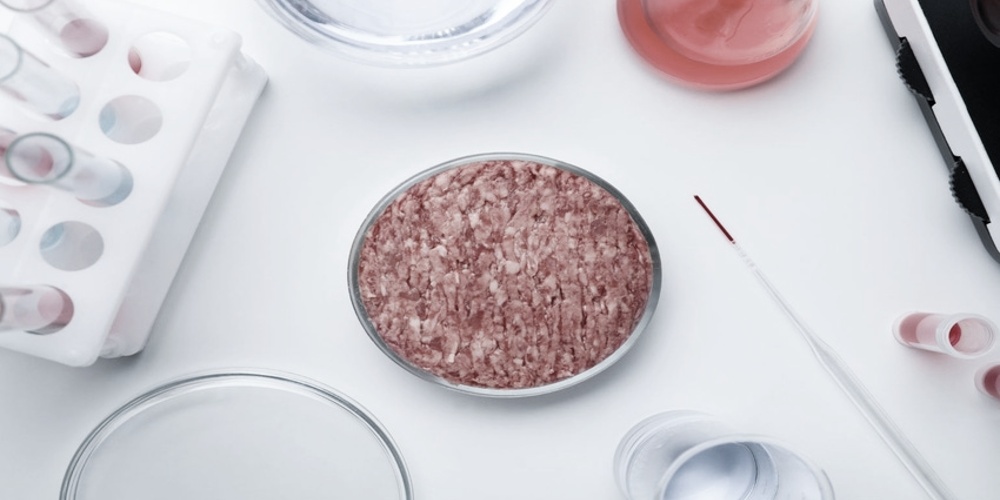
Take cultured meat, for example. It’s said to be equivalent to real animal meat because it’s grown from animal cells. The cells are then grown in a nutrient solution inside a bioreactor until they become a meat-like slab.
Similarly, Bored Cow animal-free milk is a dairy alternative made with whey protein obtained through a fermentation process, plant-based fats (in lieu of milk fats), citrus fiber (for creaminess) and added vitamins and minerals.
Defenders of cultured meat insist that this product is not “fake meat” but “actual meat,” the only difference is that no animal had to be slaughtered to create it.
Cultured meat and other synthetic foods are also said to be more environmentally friendly. But nothing could be further from the truth. Their impact is far more akin to that of the pharmaceutical industry than the food industry.
According to a recent “cradle-to-gate life cycle” analysis, the lab-grown meat industry produces anywhere from four to 25 times more CO2 than traditional animal husbandry.
Based on this assessment, each kilo of cultured meat produces anywhere from 542 pounds (246 kilos) to 3,325 pounds (1,508 kg) of carbon dioxide emissions, making the climate impact of cultured meat four to 25 times greater than that of conventional beef.

And this information is only provided to refute those who believe the global warming fallacy.
As noted by the authors, investors have poured billions of dollars into the animal cell-based meat sector based on the theory that cultured meat is more environmentally friendly than beef. However, according to these researchers, that hype is based on flawed analyses of carbon emissions.
Cultured meat is also the epitome of ultra-processed food and therefore likely to cause health problems like those caused by other ultra-processed foods, such as obesity, cardiovascular diseases, Type-2 diabetes, metabolic syndrome, irritable bowel syndrome, cancer, mental health problems and increased all-cause mortality.
A paper published in the April issue of Animal Frontiers also warned that there are several implications of cell-based meat that need to be considered but aren’t, including the fact that cultured products are not nutritionally equivalent to the meats they’re intended to replace.
The claim that no animals are killed in the process is also false. At present, most cultured or cell-based meats are created by growing animal cells in a solution of fetal bovine serum, which is made from the blood of unborn calves. In short, pregnant cows are slaughtered to drain the unborn fetus of its blood.
Is it safe to eat tumors?
There are also many unanswered questions surrounding safety. For example, to get the cell cultures to grow, some companies are using immortalized cells, which technically speaking are precancerous and/or fully cancerous. (Other companies use embryonic stem cells or cells from living animals.)
The reason for using immortalized cells is that normally behaving cells cannot divide forever. Most cells will only multiply a few dozen times before they become senescent (old) and die.
This won’t work when your intention is to grow thousands of pounds of tissue from a small number of cells, hence they use immortalized cells that have no off switch for their replication and can divide indefinitely.
Meat substitutes cultured in this way could therefore be thought of as tumors, seeing how the flesh is entirely made up of precancerous or cancerous cells. Is it safe to eat tumors? We don’t know.
Massachusetts Institute of Technology biologist Robert Weinberg, Ph.D., has proposed that humans can’t get cancer from these cells because they’re not human cells and therefore cannot replicate inside your body. However, there’s no long-term research to back this theory.
Dietary headaches to come
It’s also important to realize that the nutritional composition and safety of synthetic foods will vary depending on the brand.
When you’re dealing with beef, for example, the meat from one cow will be relatively identical to that of any other cow (one major exception being the way they’re raised and fed).
One wild-caught salmon is comparable to any other wild-caught salmon and each russet potato is more or less identical to every other russet potato.
However since each synthetic food brand uses proprietary ingredients and processes, no two will have identical composition or safety, so even if one is eventually proven safe and nutritious, those results cannot be applied to any other brand.
This variance has the potential to create major problems in the future when all sorts of foods have been replaced with synthetic non-equivalents.
How do you determine which cultured beef, chicken or salmon brand might be best for you? How will you devise a sensible diet plan when every food comes in myriad variations of varying composition and safety?
Synthetic foods pose unique food-safety hazards
Many synthetic food proponents claim lab-created food will bypass a host of food-safety problems, but the converse is far more likely to be true. Sure, beef, for example, can be contaminated during processing, packaging, transport or storage, or during the cooking process.
But in cultured meat, every ingredient and processing step brings with it the potential of contamination and any of the hundreds of ingredients could have toxic effects, alone or in synergy.
Indeed, an in-depth analysis of the available evidence by the Food and Agriculture Organization of the United Nations and a World Health Organization expert panel, published in May, concluded there are at least 53 potential health hazards associated with lab-grown meat.
Among them are the possibility of contamination with heavy metals, microplastics, nanoplastics and chemicals, allergenic additives, toxic components, antibiotics and prions.
What’s more, some of the ingredients that go into synthetic biology like cultured meat are regulated as “non-detectable manufacturing aids,” and you won’t even know what they are. Israeli startup Profuse Technology, for example, has developed a growth media supplement that massively encourages protein growth.
As reported by Food Navigator Europe in an article titled, “Cultivated Meat ‘Breakthrough’: Media Supplement Achieves Full Muscle Maturation on Scaffold Within 48 Hours,” the supplement reduces the time to grow filets and steaks by 80% and augments the protein in the final product by a factor of five.
An unsustainable model
The cultured meat process also produces toxic biowaste — a problem that doesn’t exist in conventional agriculture and food processing. In the video above, Alan Lewis, vice president of government affairs for Natural Grocers, reviews what goes into the making of synthetic biology.
The starting ingredients are typically cheap sugars and fats derived from genetically engineered corn and soy, grown in environmentally destructive monocultures with loads of herbicides, pesticides and synthetic fertilizers.
As a result, they’re loaded with chemical residues. Hundreds of other ingredients may then be added to the ferment to produce the desired end product, such as a certain protein, color, flavor or scent.
The most often used microorganism in the fermentation process is E. coli which has been gene-edited to produce the desired compound through its digestive process.
The microorganism must also be antibiotic-resistant since it needs to survive the antibiotics used to kill off other undesirable organisms in the vat.
As a result, antibiotic-resistant organisms also become integrated into the final product, and the types of foodborne illness that might be caused by gene-edited antibiotic-resistant E. coli and its metabolites are anyone’s guess.
In addition to the desired target metabolite, these gene-edited organisms may also spit out non-target metabolites with unknown environmental consequences and health effects. But that’s not all. Once the target organisms are extracted, what’s left over is hazardous biowaste.
While traditional fermentation processes, such as the making of beer, produce waste products that are edible by animals, compostable and pose no biohazard, the biowaste from these synthetic biology ferments must first be deactivated and then must be securely disposed of. It cannot go into a landfill.
Protect your health by avoiding ‘frankenfoods’
Making food that requires genetically modified organisms inputs and produces more CO2 than conventional farming and hazardous biowaste to boot is hardly a sustainable model.
But then again, synthetic biology and processed foods are not being pushed out of true concern for sustainability.
If that was the goal, everyone would be looking at regenerative agriculture where every part of the system supports and sustains other parts, thereby eliminating the need for chemical inputs, radically reducing water needs while optimizing yields.
No, synthetic biology is pursued because it is a formidable control mechanism. Those who own all the synthetic food production will control the world in a very literal sense. To learn more about this plot for control, see “The Fake ‘Food as Medicine’ Agenda.”
In short, the globalists already own and control most of the carbohydrates grown in the world today. By replacing real animal foods with patented lab-made protein alternatives, they’ll have unprecedented power to control the world’s population.
It’ll also grant them greater control over people’s health. It’s already known that the consumption of ultra-processed food contributes to disease, and the benefactor of ill health is Big Pharma.
The processed food industry has spent many decades driving chronic illness that is then treated with drugs rather than a better diet. Synthetic foods will likely be an even bigger driver or chronic ill health and early death.
The fact is, fake meat and dairy cannot replace the complex mix of nutrients found in grass-fed beef and dairy, and it’s likely that consuming ultra-processed meat and milk alternatives may lead to many of the same health issues that are caused by a processed food diet.
So, if you want to really protect your health and the environment, skip pseudo foods that require patents and stick to those found in nature instead.

Two Storms, One Harvest

Every food crisis in living memory has been a one-shock event. The 2008 price spike was a commodity bubble. The 2020 shortages were a logistics failure. The 2022 grain scare was a war on one exporter’s ports. Each time, the system bent, adjusted, and recovered, and each time the experts assured us afterward that global markets are simply too big and too diversified to fail.
What nobody in Washington seems eager to discuss is that 2026 is shaping up to be something the modern food system has never actually faced. Two independent shocks, one climatic and one geopolitical, are converging on the same harvest cycle at the same time. Not sequentially. Simultaneously.
Start with the weather. The Pacific Ocean is currently building toward what forecasters now openly call a record event. NOAA’s Climate Prediction Center puts the odds of at least a strong El Niño near 88 percent, with roughly two in three odds it reaches “very strong” status, the tier reserved for perhaps three or four events in the entire satellite era. Every major global model now projects a median peak in Super El Niño territory, and most of them project it exceeding the 2015-16 event, which until now held the modern record. Sea surface anomalies were already brushing the super threshold in mid-July, months before these events normally peak. The atmosphere has already shifted into El Niño mode, and the event is forecast to crest in late fall and early winter.
This is not about “climate change.” It’s about the standard cycles of weather, and the cycle we’re currently in is one that has likely devastated societies in the past. We’re better prepared as a society today, but not all Americans are equally prepared.
Serious households have started doing the quiet math on their own. Grocery bills tell part of the story, and the forecast maps tell the rest, which is why long-term food storage has moved from fringe hobby to mainstream line item in the family budget, with established suppliers like Heaven’s Harvest seeing demand from people who five years ago would have rolled their eyes at the idea. That instinct is not paranoia. It is pattern recognition, and the pattern is worth walking through carefully.
Editor’s Note: Heaven’s Harvest IS a sponsor, but the warnings of this article are real and would be written even if we didn’t have a survival food sponsor. With that said, those who take advantage of what they offer can use promo code “Patriot” for 15% off.
The Fertilizer Clock Is Already Running
While the Pacific warms, the second shock has been unfolding in the Strait of Hormuz. The conflict with Iran turned the world’s most important energy chokepoint into a contested waterway, and the consequences reach far beyond the gas pump. Roughly a third of global fertilizer trade moves through Hormuz, and the disruption sent urea prices up 86 percent year over year by March, with a 53 percent jump in a single month.
The World Bank projects energy prices rising about 24 percent in 2026 and fertilizer about 31 percent. By its own accounting, fertilizer prices ran 35 percent higher in the first five months of this year than the same period last year.
Here is the mechanism the nightly news will not explain. Fertilizer is not a grocery item. It is a time-delayed input. The nitrogen a farmer in Iowa or Punjab could not afford to apply this spring does not show up as a problem this spring. It shows up as a thinner harvest six to twelve months later.
The World Bank’s own food security brief concedes that the effects of reduced applications earlier this season “are likely to become visible only later in harvest outcomes.” Translate that from institutional language into plain English and it means this. The damage is already done, it is already in the ground, and we are simply waiting for it to arrive on the shelf.
Now check the calendar. Six to twelve months from the spring planting season lands us squarely in late 2026 and early 2027. Which is precisely when the strongest El Niño in the instrumental record is forecast to peak, bringing its signature droughts to Southeast Asia, Australia, southern Africa, northern Brazil, and South Asia, the very regions that grow the world’s rice, sugar, and oilseeds.
The World Bank warns openly that a strong El Niño “could disrupt multiple crop belts simultaneously” on top of the conflict-driven input costs. Their baseline projection assumes the Middle East disruptions ease by autumn. What in the last two years of Middle East history suggests that assumption is safe?
The System Has No Slack Left
The comfortable answer is that global markets always adjust. But adjustment requires slack, and the slack is gone. Global cereal production is expected to decline from last year’s records even before El Niño does its work. The UN World Food Programme, hardly a den of right-wing preppers, is calling this the most significant disruption to its supply chains since Covid and the invasion of Ukraine, and its supply chain director put the stakes bluntly.
Today’s supply chain challenges are tomorrow’s hunger crisis.
There is also a political dimension that markets cannot price. When food gets scarce, governments do not behave like economists. They behave like politicians. Export bans, hoarding mandates, and panic buying at the national level turned the modest rice shortfall of 2008 into a global crisis, and analysts are already warning that import-dependent nations are the first dominoes.
The 2015-16 Super El Niño, a far weaker event than what is now forecast, threw tens of millions into food stress across Africa and Asia. This one is projected to be stronger, and it arrives with fertilizer already rationed by price and shipping lanes already contested by missiles.
What Joseph Knew
Scripture does not treat preparation for lean years as faithlessness. It treats it as wisdom delivered in advance to those willing to act on it.
Behold, there come seven years of great plenty throughout all the land of Egypt: And there shall arise after them seven years of famine; and all the plenty shall be forgotten in the land of Egypt.
Joseph did not respond to that warning with a hashtag or a committee. He stored grain during the years of abundance, and when the famine came, Egypt stood while its neighbors begged. The lesson is not that famine is certain. It is that the time to prepare is precisely when preparation still looks optional.
Nobody who filled a pantry in a year of plenty has ever regretted it, and nobody standing in an empty aisle has ever been glad he waited for certainty.
None of this calls for panic, and panic is the enemy of sound judgment anyway. It calls for the same unglamorous prudence our grandparents considered ordinary. Keep some cash margin, know your local growers, and put real food in deep storage while it is cheap and available, because the entire arc of this story is that cheap and available is a closing window.
Families looking for a straightforward place to start can visit Heaven’s Harvest and use promo code Patriot for 15 percent off long-term storable food. The forecasts may yet soften, the strait may yet reopen, and we should pray they do. But hope is a fine thing to hold and a foolish thing to eat.
