

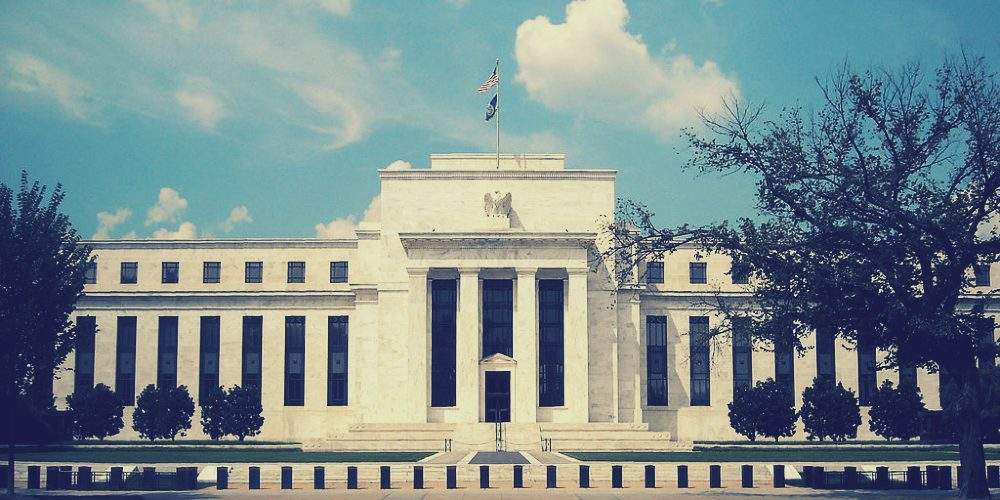
Two large regional banks failed within a period of only two days, Silicon Valley Bank (SVB) on March 10, and Signature Bank on March 12. Both banks had a combined aggregate asset size of $319 billion as of Dec. 31, 2022, with SVB and Signature ranked as the 16th- and 29th-largest banks in the United States, respectively, based on total assets of $209 billion for SVB and $110 billion for Signature.
The failure of SVB is the second-largest bank failure in U.S. history, behind only the failure Washington Mutual in September 2008. So, are the failures of SVB and Signature only isolated problems without systemic contagion, or do they represent the proverbial canary in the coal mine, warning of greater systemic troubles ahead? Here is a summary of the causes behind the failures of both banks, the response by the federal banking regulators, and the potential consequences.
Impact of Federal Reserve Policies
The Fed’s policy of artificially low interest rates and massive purchases of U.S. government debt since 2008, especially since 2020, has encouraged banks and businesses to engage in speculative activities that have not been driven by true market forces. This macro-financial environment can lull banks into a false sense of acceptable market and interest-rate risk.
With interest rates near zero from March 2020 to March 2022, along with an extraordinary 41 percent increase in the M2 money supply during that time period, the Consumer Price Index (CPI) reached a 41-year high in 2022. This prompted the Fed to abruptly change course in March 2022 with rapid increases in its Fed Funds Rate from 0.25 percent to 4.75 percent in February 2023. Such a swift increase in interest rates over the past year would require banks to adjust their asset-liability management to protect against interest-rate duration mismatches between assets and liabilities, known in banking terms as “duration risk.”
In the case of SVB, it was guilty of gross mismanagement of its duration risk over the past year, as it reported an abnormally high 41 percent of its total assets in Held-to-Maturity (HTM) securities, amounting to $91 billion at the end of 2022. These HTM securities, while mostly long-term U.S. government securities with little or no credit risk, had substantial duration risk in a rising-interest-rate environment, as fixed-rate securities fall in price when interest rates rise. This is how SVB got hammered, as it was forced to sell its HTM securities at big losses to cover the run-on-cash withdrawals by its deposit customers in the days leading up to its closure.
Flawed Regulatory Ratios for Assessing Bank Capital
Thomas Hoenig, a former head of the Federal Reserve Bank of Kansas City and former vice chair of the Federal Deposit Insurance Corporation (FDIC), made insightful comments in a March 17 article in the Wall Street Journal. He said that the use of the government-derived “risk-weighted capital” in evaluating a bank’s capital position is a major problem because it does not describe real, tangible capital. In the case of SVB, Hoenig notes in a March 10 article that SVB’s regulatory risk-rated “Tier 1 Capital Ratio” was around 16 percent, a presumably safe capital position, but the more market-realistic “Tangible Capital-to-Asset Ratio” was only around 5 percent. Hoenig is concerned that the use of risk-weighted capital ratios, adopted by bank regulators around the world in 2014, will lead to more problems in the banking sector. Hoenig makes this point in his Wall Street Journal article.
“The other thing about risk weight,” Hoenig said, “is that it’s a political process. It’s not a market process. The market no longer determines capital in the banking, industry. It’s now politicians, lobbyists and the regulators who have to battle it out among themselves. Therefore, you get these nonmarket solutions like risk-weighted capital. And banks are incentivized to increasingly leverage their balance sheets.”
Questionable Bank Regulator Oversight
The deposit runs that occurred with both SVB and Signature Bank raise serious questions about the competence and/or possibly even the corrupt complicity of the regulators with oversight responsibility for the two banks. While the management of the two banks appropriately deserve blame for their failures, the relevant bank regulators also need to be held accountable for missing obvious regulatory red flags from such large banks well in advance of their failures.
In addition to the asset-liability duration mismatch at both banks, other red flags included abnormally high growth rates and concentrations in risky business sectors (green energy technology startups at SVB and crypto exposures at Signature) and extraordinarily high amounts of uninsured deposits.
Looking at data for the end of 2022, SVB had only 12.5 percent of its total deposits within the FDIC-insured limit of $250,000 per deposit account, which indicates that a whopping $151.5 billion of its total deposits of $173.1 billion were uninsured. A similar situation existed at Signature Bank, with only 10.3 percent of its total deposits of $88.6 billion under FDIC deposit insurance, indicating $79.5 billion in uninsured deposits. Thus, the combined uninsured deposits of both failed banks amounted to $231 billion, which should have alerted the banking regulators of duration risk and potential liquidity risk.
It is unclear at this point how these regulatory red flags were missed by the relevant regulators. The primary financial regulators for SVB and Signature Bank were their respective district Federal Reserve banks, i.e. the Federal Reserve Bank of San Francisco (SF Fed) for SVB and the Federal Reserve Bank of New York (NY Fed) for Signature. The FDIC was also involved in its traditional role as regulatory supervisor over the banks’ deposit insurance. The state banking regulators in California and New York also conduct bank examinations.
Because of the unexpected large-scale deposit run on Silicon Valley Bank that resulted in its failure, Federal Reserve Chair Jerome Powell announced on March 13 that the Fed’s vice chair for supervision, Michael Barr, would lead a six-week review of the Fed’s regulatory supervision surrounding SVB. The Fed has committed to releasing Barr’s report by May 1.
Concerning Reactions by Federal Banking Regulators
The response to the failures of SVB and Signature Bank, and more recently to the troubled First Republic Bank, is extremely concerning for several reasons.
- Bailout of Uninsured Deposits: The decision of federal regulators (the U.S. Treasury, the Federal Reserve, and the FDIC) to guarantee funds for all depositors of both failed banks makes a mockery of the FDIC’s $250,000 deposit-insurance limit and signals a new acceptance by the federal regulators to bail out all depositors in any bank failure. This effectively means that the FDIC will now be expected to cover all of the deposits in the U.S. banking system.
At the end of 2022, the FDIC’s Deposit Insurance Fund (“DIF”) was $128 billion in comparison to the $17.7 trillion in total bank deposits in the entire U.S. banking system. The total deposits of SVB alone ($173 billion on Dec. 31, 2022) are enough to wipe out the entire balance of the DIF. So, how will deposits in excess of the Deposit Insurance Fund be funded? On March 12, a joint statement by U.S. Treasury Department, the Federal Reserve, and the FDIC announced that any losses to the DIF would be recovered by a “special assessment on banks.” Such a special assessment means that the entire U.S. banking system will need to raise fees and/or charge higher interest rates on its customers in order to cover the cost of the newly mandated special assessment to cover the mismanagement of failed banks.

- Creation of a New Emergency Lending Program for Banks: On March 12, the Federal Reserve announced the creation of a new emergency lending program for banks, the “Bank Term Funding Program” or “BTFP.” This new program will allow banks to obtain cash from the Fed’s discount window with one-year term loans backed by collateral comprising U.S. government securities. In addition to providing yet more government support to the banking system, the BTFP also allows banks to pledge their collateral at par. This is another misguided Fed policy action, as it allows banks to offload securities with below-par market values onto the Fed at par value. This will not only encourage less prudent risk management by banks, but will also likely result in further expansion of the Fed’s already massive $8.6 trillion balance sheet.
Within the first three days of its start, banks had already borrowed $11.9 billion from the new BTFP. For the week ending March 17, banks had borrowed another $148.2 billion from the Fed’s 90-day discount window, the largest weekly amount since September 2008.
- Inability to Sell the Failed Banks: Typically, the FDIC will have a buyer lined up ahead of the closing of a failed bank, typically another bank in good standing, but, as of Monday, the assets of neither bank have been sold. The market rumors indicate that the FDIC has, in fact, received several expressions of interest from legitimate institutional buyers, but they have been rejected by the FDIC Board. It is unclear why the FDIC has been rejecting interest from apparently legitimate buyers. Some market observers have speculated that it is due to the political ideology of the current FDIC Board, as it opposes mergers or acquisitions that lead to larger banks.
- Evidence of Political Corruption: When the FDIC initially announced the closure of SVB on March 10, it stated that uninsured depositors would not be covered in accordance with standard FDIC practice. However, just two days later on March 12, the FDIC did a complete reversal, stating that all uninsured depositors would be covered. The federal regulators justified taking this abrupt action by calling it a “systemic risk exception,” despite neither SVB nor Signature Bank having been designated as systemically important banks by the Federal Reserve.
This has led to scrutiny over the profile of the uninsured depositors at both banks and is revealing some noteworthy political connections. For example, the Intercept reported that Democratic California Gov. Gavin Newsom has been a client of SVB for many years and is associated with at least five bank accounts at SVB, including the accounts of three winery companies he owns. As for Signature Bank, it could not be more ironic that former Rep. Barney Frank (D-MA), coauthor of the largest banking reform bill in history, the Dodd-Frank Act of 2010, has been serving on the board of directors of Signature since 2015 and has earned compensation of over $2.4 million. Multiple media reports indicate that both SVB and Signature have been heavy donors to the Democrat Party and that uninsured depositors at both banks include other high-profile names that have been big donors to Democrats. Thus, evidence of possible political corruption behind the uninsured depositor bailouts of both banks needs to be thoroughly investigated (but don’t hold your breath).
Consequential Impact on Moral Hazard
The unprecedented bailout of $231 billion in uninsured deposits at two large regional banks, plus a new Federal Reserve emergency bank lending program with weak collateral requirements, will lead to yet more moral hazard in an American financial system already accustomed to being bailed out by the federal government. It also throws out the much-heralded objective of the 2010 Dodd-Frank Act to eliminate “Too Big To Fail” government bailouts in the U.S. financial system.
Contagion Outlook
It remains to be seen whether the failures of SVB and Signature will result in any significant financial contagion into other banks and financial institutions. However, the two failures clearly affected New Republic Bank, which subsequently suffered $70 billion in deposit withdrawals. This triggered the collaboration of 11 of the largest U.S. commercial banks to transfer $30 billion in deposits to New Republic to save it from the same bank-run failure that SVB and Signature experienced. An important banking sector metric of concern is the explosive growth in unrealized losses in 2022. At the end of 2022, the U.S. banking sector held $620 billion in unrealized losses. This may indicate that more turmoil lies ahead for the U.S. banking sector. Stay tuned.
This article originally appeared on the American Spectator.

Steve Dewey
Steve Dewey is a retired federal financial regulator and managing director of the Bastiat Society of Washington, D.C. He is also the founder of GeoFinancial Trends, LLC, and writes on Substack.
This article was originally published on FEE.org. Read the original article.

Two Storms, One Harvest

Every food crisis in living memory has been a one-shock event. The 2008 price spike was a commodity bubble. The 2020 shortages were a logistics failure. The 2022 grain scare was a war on one exporter’s ports. Each time, the system bent, adjusted, and recovered, and each time the experts assured us afterward that global markets are simply too big and too diversified to fail.
What nobody in Washington seems eager to discuss is that 2026 is shaping up to be something the modern food system has never actually faced. Two independent shocks, one climatic and one geopolitical, are converging on the same harvest cycle at the same time. Not sequentially. Simultaneously.
Start with the weather. The Pacific Ocean is currently building toward what forecasters now openly call a record event. NOAA’s Climate Prediction Center puts the odds of at least a strong El Niño near 88 percent, with roughly two in three odds it reaches “very strong” status, the tier reserved for perhaps three or four events in the entire satellite era. Every major global model now projects a median peak in Super El Niño territory, and most of them project it exceeding the 2015-16 event, which until now held the modern record. Sea surface anomalies were already brushing the super threshold in mid-July, months before these events normally peak. The atmosphere has already shifted into El Niño mode, and the event is forecast to crest in late fall and early winter.
This is not about “climate change.” It’s about the standard cycles of weather, and the cycle we’re currently in is one that has likely devastated societies in the past. We’re better prepared as a society today, but not all Americans are equally prepared.
Serious households have started doing the quiet math on their own. Grocery bills tell part of the story, and the forecast maps tell the rest, which is why long-term food storage has moved from fringe hobby to mainstream line item in the family budget, with established suppliers like Heaven’s Harvest seeing demand from people who five years ago would have rolled their eyes at the idea. That instinct is not paranoia. It is pattern recognition, and the pattern is worth walking through carefully.
Editor’s Note: Heaven’s Harvest IS a sponsor, but the warnings of this article are real and would be written even if we didn’t have a survival food sponsor. With that said, those who take advantage of what they offer can use promo code “Patriot” for 15% off.
The Fertilizer Clock Is Already Running
While the Pacific warms, the second shock has been unfolding in the Strait of Hormuz. The conflict with Iran turned the world’s most important energy chokepoint into a contested waterway, and the consequences reach far beyond the gas pump. Roughly a third of global fertilizer trade moves through Hormuz, and the disruption sent urea prices up 86 percent year over year by March, with a 53 percent jump in a single month.
The World Bank projects energy prices rising about 24 percent in 2026 and fertilizer about 31 percent. By its own accounting, fertilizer prices ran 35 percent higher in the first five months of this year than the same period last year.
Here is the mechanism the nightly news will not explain. Fertilizer is not a grocery item. It is a time-delayed input. The nitrogen a farmer in Iowa or Punjab could not afford to apply this spring does not show up as a problem this spring. It shows up as a thinner harvest six to twelve months later.
The World Bank’s own food security brief concedes that the effects of reduced applications earlier this season “are likely to become visible only later in harvest outcomes.” Translate that from institutional language into plain English and it means this. The damage is already done, it is already in the ground, and we are simply waiting for it to arrive on the shelf.
Now check the calendar. Six to twelve months from the spring planting season lands us squarely in late 2026 and early 2027. Which is precisely when the strongest El Niño in the instrumental record is forecast to peak, bringing its signature droughts to Southeast Asia, Australia, southern Africa, northern Brazil, and South Asia, the very regions that grow the world’s rice, sugar, and oilseeds.
The World Bank warns openly that a strong El Niño “could disrupt multiple crop belts simultaneously” on top of the conflict-driven input costs. Their baseline projection assumes the Middle East disruptions ease by autumn. What in the last two years of Middle East history suggests that assumption is safe?
The System Has No Slack Left
The comfortable answer is that global markets always adjust. But adjustment requires slack, and the slack is gone. Global cereal production is expected to decline from last year’s records even before El Niño does its work. The UN World Food Programme, hardly a den of right-wing preppers, is calling this the most significant disruption to its supply chains since Covid and the invasion of Ukraine, and its supply chain director put the stakes bluntly.
Today’s supply chain challenges are tomorrow’s hunger crisis.
There is also a political dimension that markets cannot price. When food gets scarce, governments do not behave like economists. They behave like politicians. Export bans, hoarding mandates, and panic buying at the national level turned the modest rice shortfall of 2008 into a global crisis, and analysts are already warning that import-dependent nations are the first dominoes.
The 2015-16 Super El Niño, a far weaker event than what is now forecast, threw tens of millions into food stress across Africa and Asia. This one is projected to be stronger, and it arrives with fertilizer already rationed by price and shipping lanes already contested by missiles.
What Joseph Knew
Scripture does not treat preparation for lean years as faithlessness. It treats it as wisdom delivered in advance to those willing to act on it.
Behold, there come seven years of great plenty throughout all the land of Egypt: And there shall arise after them seven years of famine; and all the plenty shall be forgotten in the land of Egypt.
Joseph did not respond to that warning with a hashtag or a committee. He stored grain during the years of abundance, and when the famine came, Egypt stood while its neighbors begged. The lesson is not that famine is certain. It is that the time to prepare is precisely when preparation still looks optional.
Nobody who filled a pantry in a year of plenty has ever regretted it, and nobody standing in an empty aisle has ever been glad he waited for certainty.
None of this calls for panic, and panic is the enemy of sound judgment anyway. It calls for the same unglamorous prudence our grandparents considered ordinary. Keep some cash margin, know your local growers, and put real food in deep storage while it is cheap and available, because the entire arc of this story is that cheap and available is a closing window.
Families looking for a straightforward place to start can visit Heaven’s Harvest and use promo code Patriot for 15 percent off long-term storable food. The forecasts may yet soften, the strait may yet reopen, and we should pray they do. But hope is a fine thing to hold and a foolish thing to eat.
