

The Great Santini is a compelling cinematic character sketch of Bull Meechum, a fictional American fighter jet pilot during peacetime: a warrior without a war and therefore a misfit in polite society. At the movie’s end, Bull is killed when his jet catches fire during a practice flight. Before his aircraft crashes, Bull skillfully, heroically maneuvers the plane away from peoples’ homes, saving lives.
At the conclusion of Bull’s graveside memorial service, his fellow fighter pilot, Col. Virgil Hedgepath, concisely eulogizes his larger-than-life colleague by saying, “I’ll like the world less without Bull. It’ll be a duller, more colorless place.”
After seeing how so many people have overreacted during the pandemic, I’ll also like the world less: Canada, Australia, New Zealand and much of Europe, but especially the US, because I’ve seen American Coronamania up close. I say this sincerely and literally, without intending any of Col. Hedgepath’s tribute.
Many Americans have shown that they’re gullible group-thinkers who lack critical thinking skills.
It was obviously scientifically unsound to begin, even for “for two weeks,” locking down hundreds of millions of healthy people—for the first time in history—in response to a respiratory virus, to mask an entire population, to test, on a mass scale, healthy people—with a method that delivered 90% false positives—and to require young, healthy people to take unnecessary, often damaging shots, when the virus threatened only a small, clearly identifiable, older, unhealthier slice of the population.
The media’s fearmongering and the internal inconsistencies, arbitrariness and cynical opportunism of the government’s lockdowns, masks, testing and “vaccine” edicts couldn’t have been more obvious. Some, like me, said so. But a majority embraced and aggressively promoted this lunacy.
Many Americans are mentally ill.
Many Americans are detached from reality. It was clear in March, 2020 that over 99.7% of Americans under 65 were at no risk of Coronavirus-driven death. Yet, many irrationally supported closing down society, hid behind leaky masks, obsessively washed their hands well after the surface spread myth had been debunked, ordered groceries, elatedly posted Facebook photos of cards showing that they took unneeded, experimental injections, and hectored everyone else to inject. A previously veiled epidemic of American mental illness has been laid bare. Residual mask-wearing likely correlates with, and reveals, the 20% of Americans who’ve been swallowing tons of antidepressants and/or anti-anxiety meds for the past several decades.
Per Psychologist Mattias Desmet, mass psychosis swept the US, Canada and Europe because many people lacked a life purpose and close social connections. Coronamania gave them a cause in which to believe and an anti-virus tribe to which to belong.
Americans didn’t consider that restructuring daily life and the economy to placate the mentally ill is not ultimately doing that cohort, or the society at large, a favor. We can feel sorry for the mentally ill, but sane adults should govern.
Americans have no tolerance for rational discourse.
I could find no one who would engage in a sustained discussion in which they would justify their pro-lockdown, pro-mask, pro-injection position by answering basic questions while citing basic facts. This absence of inquiry and the brainwashed intolerance for dialogue enabled and sustained Coronamania.
This should be the new American lawn sign: “Debate Has No Home Here.”
Most Americans can’t withstand peer pressure.
Many who perceived Coronamania’s disconnection from reality withheld their opinion because they were afraid of being disliked. The desire for social approval shapes liberal behavior. The Emperors—Fauci, Birx and their cronies—clearly Wore No Clothes but zero liberals were willing to say so; it was the worst instance of groupthink in history. The “progressive” mob cheered smug fools like Colbert and Kimmel—who haughtily promoted the harmful shots—because they were afraid that their peers might cast a side-eye at them if they had the temerity to question the pop culture narrative. Many Americans are sheep with a mean streak.
Coronamania has shown, once again, that the minority is often right. Most Americans supported the lockdowns, masks, tests and vaxxes. None of these measures has helped. Each has caused much harm.
Americans are headline readers of cheesy and plainly biased news sources, and they readily internalize slogans and labels.
Most Americans derive their mistaken worldviews from Twitter, YahooNews, GoogleNews, HuffPost, TV network news, the NY Times, CNN and NPR. During Coronamania, they have trusted these absurdly biased fearmongers and ignored what their own eyes should have told them. Many bought the “Crush the Curve” and “We’re all in this together” propaganda. Further, they believed in the shots simply because they were called “vaccines” and were hyped as “safe and effective.”
Many still uncritically believe the litany of media-fed Coronamania lies. They naively assume that because someone appears on a screen under the aegis of some media brand, they’re telling the truth.

Americans are virtue signalers.
We’ve become a culture in which being “nice” means acting as if you care about people when you really don’t. Doing so enables people to feel better about themselves.
Americans like to think they’re helping others, as long as it doesn’t inconvenience themselves. For example, many who professed to care about old people have seldom visited them in nursing homes.
Throughout Coronamania, the virtue signalers didn’t consider the costs to other peopleof the WEF Lockdowns, Mask Theater, Testfest or Vaxx-a-thon. Laptoppers didn’t care what lockdowns and vaxx mandates did to blue collar workers, business owners or people trying to find work or have a social life.
They probably never knew that the Covid response has directly cost the government over $50,000 per family; far more, even adjusted for inflation, than the cost of America’s involvement in World War II. The respective returns on investment are not comparable.
Today’s young people, afraid of a virus, would have cowered in fear of the Nazis and Japanese; if the young people of the 1940s had a 2020 mindset, Europe. Asia and America would have easily been conquered. If 18th Century Americas were as timid as today’s Americans, British monarchs would still rule us. Invading Normandy during WWII or battling barefoot in the snow during the Revolutionary War? No way. Somebody might get hurt or sick, or even die. Those who fought in such wars were much younger, had many more vital years to lose and were far more likely to die than were those infected with SARS-Cov2.
Many Americans are politically tribal demagogues and closet authoritarians.
Not only did the majority demonstrate an unawareness of science and risk assessment and a child-like faith in government and media; they vilified those who saw that Coronamania was a politically opportunistic scam. The media also aggressively censored Scamdemic critics in order to justify such chicanery as mail-in voting and vaxx passports. Coronamania exposed the “liberal” drive to control other people.

Democrat pols and partisans exploited the fear and latent authoritarianism of their rank and file. We who perceived the lockdown, mask, testing and vaxx scams won’t forget that many labeled us “Grandma Killers,” stole irreplaceable experiences from America’s youth in order to win an election and sought to take away the livelihoods of those who sensibly refused to inject.
Americans arrogantly and foolishly think humans can control everything, including the transmission of a submicroscopic airborne virus, the likes of which have always existed.
How many lockdown supporters could have explained the underlying rationale for lockdowns? Did they think that a virus would simply get frustrated at being walled off from humans and permanently vanish into the ether? It made no sense. But neither the bought media nor most people ever asked such basic questions.
Americans have an abiding, misplaced faith in anything medical.
Med/Pharma is the dominant American religion; Americans believe in it more fervently than they believe in God. Med/Pharma is far better funded than all of the US churches, mosques, synagogues and temples combined. Med/Pharma endlessly dips its big bucket into a vast, deep river of dollars derived from medical insurance and massive government subsidies.
With its over-reliance on ventilators and ineffective anti-virals and its suppression of simpler, more effective and affordable remedies, the medical industry mismanaged the Covid response. Covid was simple-mindedly seen as only a medical problem; the social, psychological and economic effects of the Coronamania “public health” interventions were ignored. Americans, including Trump, foolishly trusted a small group of highly overrated, narrowly focused, politically motivated, fame-tripping MDs to govern, and transmogrify, a germophobic nation.
American wealth often does not reflect skill or hard work.
The Scamdemic economy has been a clear example of crony capitalism and overspending on medical testing and treatments. The test administrators and vaxx manufacturers and distributors, and the media that promoted the vaxxes, made tens of billions of dollars without taking any risks, because the government funded vaxx research and promotion/coercion. Ultimately, the vaxx developers demonstrated no special skill. The jabs have already failed and appear to have caused many deaths and other injuries. The worst effects are likely yet to come.
Moreover, Net retailers and big box stores have profited wildly as small, independent merchants were shut down. Government workers, including teachers, stayed home for a year or two. Not only were they fully paid, they also accrued pension credits.
Americans are passive and conflict-averse.
Many Americans believed the government because, well, they were the government, and were therefore official and legitimate. Because bureaucrats wore business attire— plus scarves—and stood behind seal-bearing podiums, people thought the bureaucrats wouldn’t lie; but they did lie, repeatedly. The Faucist clown show continues, with the Misinformer-in-Chief now ludicrously crusading against “misinformation,” at least when he’s not too sick—after being quadruple-jabbed and double-Paxlovid-ed—to appear in public.
Some citizens were astute enough to detect the lockdowns’ and shots’ craziness but were too timid to protest. Too few workers were willing to use their bargaining power and tell their employers that they wouldn’t inject an experimental substance to thwart an illness that did not threaten them. If only 20% of people in a given line of work had stood their anti-jab ground, the mandaters would have been defeated and humiliated.
Americans are terrified of death, even to the point of wrecking the lives of many others in an ineffective response to a very slight threat to themselves.
Old, unhealthy people sometimes die. It’s how life is. If you weren’t old or unhealthy, Covid presented functionally zero risk. Americans need to stop insincerely acting as if death at any age is unacceptable, acknowledge the challenges that extended old age presents and do the best with their vital years. And lose some weight.
Americans lack basic pattern recognition and an awareness of history or basic science.
Many Americans ignored obvious, early survival statistics showing that the virus only threatened those who were already not long for this world.
Those who trusted the government’s, media’s and Pharma industry’s representations regarding Coronavirus stats or the shots either never knew about or have forgotten such expert-driven misadventures as the Vietnam War, the carb-heavy food pyramid, and the wide array of wonder drugs and wonder chemicals that have caused vast environmental harm and been the subjects of many class-action lawsuits because those substances ended up killing or permanently harming people. Anyone who has paid attention during the past sixty years knows that the “experts” have often been very wrong. The CDC/NIH, et al. deserved none of the deference they received.
Americans have a very short-term orientation and short memories.
They didn’t see the vast harm that the lockdowns, school closures or vaxxes would plainly cause. The Covid overreaction has sharply increased depression, overdoses, weight gain, social division and educational inequality and has caused impoverishing inflation and even starvation abroad. These effects will last indefinitely.
Many Americans will conveniently forget that Coronamania worsened each of these problems. I won’t.
Americans are unwilling to admit they were wrong.
The lockdowns/school closures, masking, testing and vaxxing were all clearly ineffective and deeply damaging. Many who stridently supported these measures are still in denial about these measures’ failure. For example, disregarding very high pre-vaxx survival rates, those who became infected after injecting seem programmed to recite that, without the shots, their illnesses would have turned out much worse.
Others, channeling St. Peter, now, or will soon, falsely deny their prior support for the above-listed interventions. Jersey switching.
Still others are taking refuge in the bankrupt position that no one could have known the lockdowns, masks, tests and shots wouldn’t work and would cause far more harm than good. It was obvious from Day 1 that this would be so.
No one I know has admitted that they were gullible and didn’t rationally evaluate, in March 2020, the Coronavirus response, or that politics or peer pressure muddled their thinking. None has expressed contrition for the vast, deep harm his or her Coronamania complicity caused.
I like America much less than I did 27 months ago. It has been, and will be, hard to take seriously, to trust the judgment or to value the character of, people who have exhibited the traits listed above. On the third Independence Day since Coronamania began, “The Land of the Free and the Home of the Brave” is another empty slogan.
About the Author
Mark Oshinskie is an attorney, athlete, artist, agricultor, and advocate.
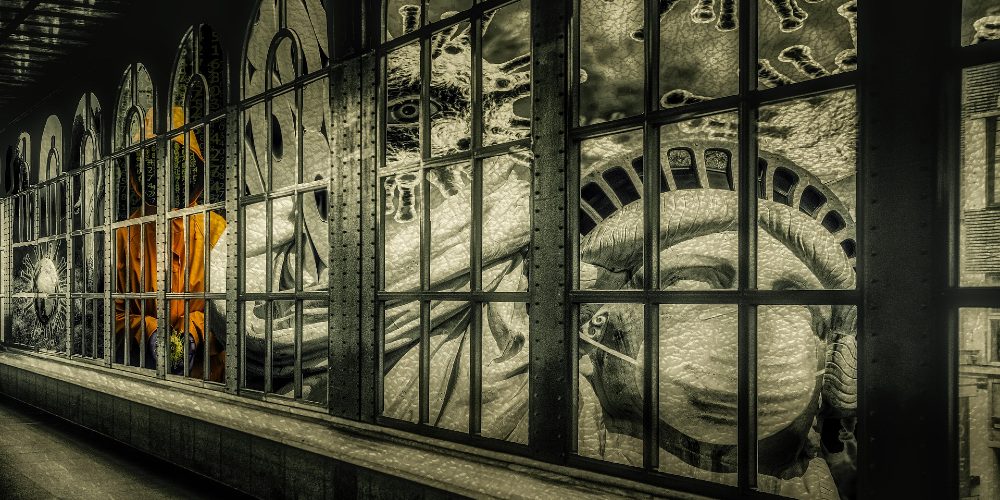
Image by KCB1805 from Pixabay. Article cross-posted from Brownstone Institute.

Starting the Day With a Scripture-Inspired Roast Helps Center Your Thoughts on Eternal Truths Amid Temporal Pressures
The world can seem chaotic, especially right after we wake up. Many believers start their mornings reaching for something familiar — a hot cup of coffee — yet end up settling for mediocre brews that do little more than deliver a caffeine jolt. The daily grind of life, with its endless distractions, news cycles, and responsibilities, can leave even the most faithful feeling spiritually parched alongside their physical fatigue. What if your morning ritual could do more than wake you up? What if it could ground you in truth, nourish your body with exceptional quality, and quietly advance a kingdom purpose at the same time?
That’s the promise — and the reality — behind Promised Grounds Coffee. This Christian-founded company doesn’t just roast beans; it approaches every step as an act of worship and discipleship. By selecting only the top 10% of specialty-grade beans, ethically sourced from dedicated farmers in Central and South America, and small-batch roasting them with reverence in Austin, Texas, Promised Grounds delivers what many describe as the best coffee available — never burnt, never bland, but rich with origin stories and layered flavors that honor God’s creation.
From the vibrant Psalm 27 Roast (a light, bright medium option) to the bold yet peaceful 2 Timothy 1:7 Decaf, each bag carries a Scripture verse that turns your daily pour into a gentle reminder of faith. And through their Ounce Per Ounce Promise, every ounce of coffee you enjoy provides an equal ounce of clean water to families in need via partnership with Filter of Hope — literally brewing hope for body and soul, one cup at a time.
The challenge for today’s Christians runs deeper than finding a decent cup. In an age of convenience-driven consumerism, it’s easy to support companies that dilute values or remain silent on matters of faith. Many believers want their everyday choices — from what they drink to how they spend — to reflect discipleship rather than just convenience. Promised Grounds solves this by weaving Christian excellence into the entire process: beans nurtured with prayerful stewardship by farming families, roasted as an offering rather than a commodity, and packaged with Bible verses to encourage a mindset of gratitude and purpose from the first sip. Reviewers consistently praise the smooth, rich profiles — whether enjoyed black in a drip maker, iced on a warm day, or shared in fellowship — noting how the quality stands toe-to-toe with premium secular brands while delivering something far more meaningful.
This integration of faith and flavor addresses a real need in Christian households and ministries. Busy parents, church leaders, and remote workers alike report that starting the day with a Scripture-inspired roast helps center their thoughts on eternal truths amid temporal pressures. The coffee’s exceptional character — bright citrus notes in lighter roasts or deep chocolate undertones in bolder ones — comes from meticulous selection and careful roasting that respects the bean’s natural gifts rather than masking them. It’s the kind of coffee that elevates a simple quiet time, fuels productive workdays, or sparks meaningful conversations when shared at Bible studies or outreach events. And because it’s ethically sourced with integrity, every purchase supports sustainable livelihoods for farmers who treat their crops like family harvests.
For those leading churches or small groups, the impact multiplies. Promised Grounds offers bundles and options perfect for hospitality ministries, turning ordinary coffee service into an opportunity to point people toward the living water of Christ. Imagine greeting visitors with a warm cup whose very bag carries God’s Word — a subtle yet powerful witness that aligns with the Great Commission. The company’s Texas roots and commitment to “brewing hope” resonate especially with believers who value American enterprise paired with global compassion.
Of course, quality alone isn’t enough if the experience feels out of reach. Promised Grounds keeps it accessible with practical perks like free shipping on orders over $40, sample sets for discovering favorites, and thoughtful add-ons such as faith-themed mugs. Whether you prefer whole beans for fresh grinding, grounds for convenience, or even bulk options for larger households and ministries, the result is consistently superior coffee that makes discipleship feel integrated rather than added on.
As you consider how to align even the smallest habits with your walk with God, Promised Grounds Coffee stands out as a refreshing solution. It tackles the dual problems of subpar daily sustenance and disconnected consumption by offering a product that genuinely excels in taste while advancing a mission of clean water, farmer dignity, and scriptural encouragement. Believers who make the switch often describe it as more than a beverage upgrade — it becomes part of their rhythm of gratitude, a daily invitation to remember that every good gift comes from above.
If you’re ready to transform your mornings (and perhaps your church gatherings) with coffee that honors both exceptional craftsmanship and Christian values, I encourage you to explore what Promised Grounds has to offer. One sip at a time, you’ll be nourishing your body, refreshing your spirit, and participating in something far greater — all while enjoying what truly is among the best coffee available.
