

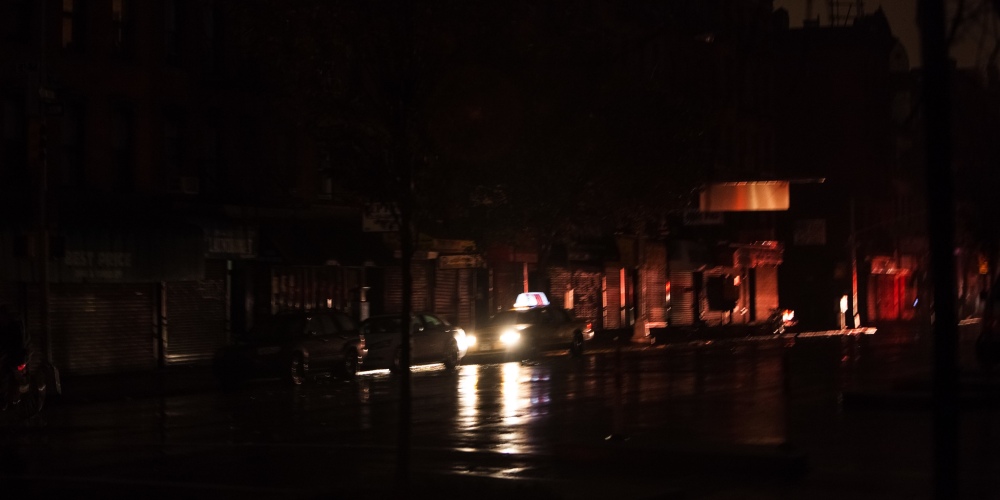
For some reason, consumer demand for electricity is expected to skyrocket this summer. And this, we are told, will lead to blackouts all across the country.
Utility companies are already bracing for impact as they all seem to just know that energy usage will reach an all-time high in the coming months, leaving millions without power in the dead of the summer heat.
The powers that be say that it is warmer than usual in some parts of the country, which they are already blaming for future blackouts. (Related: Rolling blackouts are expected to sweep the entire country this year.)
“Federal agencies responsible for power reliability, like the Federal Energy Regulatory Commission (FERC), have warned that grids in the western half of the country could face reliability issues this summer as consumers crank up air conditioners to escape the heat,” claims a report from Refinitiv data.
As energy equipment breaks down over the summer, power companies say they probably will not have the spare parts or other resources necessary to fix it fast enough to keep the power on – supposedly because of the heat.
The Electric Reliability Council of Texas (ERCOT), which mismanaged the infamous Texas blackouts of early 2021, says it is already asking customers to cut back on their energy use and turn up their air conditioning units after six power plants shut down back in May during an alleged heatwave.
How do they know for sure that nationwide blackouts are coming?
Another event in Ohio that was blamed on a “storm” left some 200,000 homes and businesses without power. The grid operator there said it had to intentionally shut down power in some areas to prevent remaining lines from becoming overloaded.
There sure are a lot of this mysterious incidents happening at once, almost as if someone is testing the grid to see how easy it is to knock out at a later date, which they already appear to be planning for in advance.
They already introduced us to the “Great Reset” followed by “Reset the Table.” Is this the part where they reset the energy supply and force everyone into darkness as part of some bizarre initiation into the New World Order?
Or, it could just be that America’s energy system is now so overloaded and mismanaged, coupled with a forced transition into “green” energy, that the systems currently in existence are simply unable to handle the load whenever it gets a little bit hot or rains.
According to Ralph Izzo, head of the New Jersey-based Public Service Enterprise Group (PSEG), energy utilities are having to be frugal with their replacement parts inventories in order to avoid running out in the event of a weather emergency – or even just a few consecutive days of heavy heat.
“You don’t want to deplete your inventory because you don’t know when that storm is coming, but you know it’s coming … If we have successive days of 100-degree-heat, those pole top transformers, they start popping like Rice Krispies, and we would not have the supply stack to replace them,” he is quoted as saying.
Nick Akins, head of the Ohio-based grid operator AEP, added that many utility operators are changing their maintenance habits as well.
“We’re doing a lot more splicing, putting cables together, instead of laying new cable because we’re trying to maintain our new cable for inventory when we need it,” Akins says.

In the comment section at RT, one person was quick to point out that perhaps the United States should stop sending billions of dollars to Ukraine and instead “fix the country.”
“But no profit is as good as war,” this person added.
The latest news about the energy situation in America can be found at PowerGrid.news.
Sources for this article include:
- RT.com
- NaturalNews.com
- NATURAL NEWS
- Image by Dan Nguyen via Flickr, CC BY-NC 2.0

Two Storms, One Harvest

Every food crisis in living memory has been a one-shock event. The 2008 price spike was a commodity bubble. The 2020 shortages were a logistics failure. The 2022 grain scare was a war on one exporter’s ports. Each time, the system bent, adjusted, and recovered, and each time the experts assured us afterward that global markets are simply too big and too diversified to fail.
What nobody in Washington seems eager to discuss is that 2026 is shaping up to be something the modern food system has never actually faced. Two independent shocks, one climatic and one geopolitical, are converging on the same harvest cycle at the same time. Not sequentially. Simultaneously.
Start with the weather. The Pacific Ocean is currently building toward what forecasters now openly call a record event. NOAA’s Climate Prediction Center puts the odds of at least a strong El Niño near 88 percent, with roughly two in three odds it reaches “very strong” status, the tier reserved for perhaps three or four events in the entire satellite era. Every major global model now projects a median peak in Super El Niño territory, and most of them project it exceeding the 2015-16 event, which until now held the modern record. Sea surface anomalies were already brushing the super threshold in mid-July, months before these events normally peak. The atmosphere has already shifted into El Niño mode, and the event is forecast to crest in late fall and early winter.
This is not about “climate change.” It’s about the standard cycles of weather, and the cycle we’re currently in is one that has likely devastated societies in the past. We’re better prepared as a society today, but not all Americans are equally prepared.
Serious households have started doing the quiet math on their own. Grocery bills tell part of the story, and the forecast maps tell the rest, which is why long-term food storage has moved from fringe hobby to mainstream line item in the family budget, with established suppliers like Heaven’s Harvest seeing demand from people who five years ago would have rolled their eyes at the idea. That instinct is not paranoia. It is pattern recognition, and the pattern is worth walking through carefully.
Editor’s Note: Heaven’s Harvest IS a sponsor, but the warnings of this article are real and would be written even if we didn’t have a survival food sponsor. With that said, those who take advantage of what they offer can use promo code “Patriot” for 15% off.
The Fertilizer Clock Is Already Running
While the Pacific warms, the second shock has been unfolding in the Strait of Hormuz. The conflict with Iran turned the world’s most important energy chokepoint into a contested waterway, and the consequences reach far beyond the gas pump. Roughly a third of global fertilizer trade moves through Hormuz, and the disruption sent urea prices up 86 percent year over year by March, with a 53 percent jump in a single month.
The World Bank projects energy prices rising about 24 percent in 2026 and fertilizer about 31 percent. By its own accounting, fertilizer prices ran 35 percent higher in the first five months of this year than the same period last year.
Here is the mechanism the nightly news will not explain. Fertilizer is not a grocery item. It is a time-delayed input. The nitrogen a farmer in Iowa or Punjab could not afford to apply this spring does not show up as a problem this spring. It shows up as a thinner harvest six to twelve months later.
The World Bank’s own food security brief concedes that the effects of reduced applications earlier this season “are likely to become visible only later in harvest outcomes.” Translate that from institutional language into plain English and it means this. The damage is already done, it is already in the ground, and we are simply waiting for it to arrive on the shelf.
Now check the calendar. Six to twelve months from the spring planting season lands us squarely in late 2026 and early 2027. Which is precisely when the strongest El Niño in the instrumental record is forecast to peak, bringing its signature droughts to Southeast Asia, Australia, southern Africa, northern Brazil, and South Asia, the very regions that grow the world’s rice, sugar, and oilseeds.
The World Bank warns openly that a strong El Niño “could disrupt multiple crop belts simultaneously” on top of the conflict-driven input costs. Their baseline projection assumes the Middle East disruptions ease by autumn. What in the last two years of Middle East history suggests that assumption is safe?
The System Has No Slack Left
The comfortable answer is that global markets always adjust. But adjustment requires slack, and the slack is gone. Global cereal production is expected to decline from last year’s records even before El Niño does its work. The UN World Food Programme, hardly a den of right-wing preppers, is calling this the most significant disruption to its supply chains since Covid and the invasion of Ukraine, and its supply chain director put the stakes bluntly.
Today’s supply chain challenges are tomorrow’s hunger crisis.
There is also a political dimension that markets cannot price. When food gets scarce, governments do not behave like economists. They behave like politicians. Export bans, hoarding mandates, and panic buying at the national level turned the modest rice shortfall of 2008 into a global crisis, and analysts are already warning that import-dependent nations are the first dominoes.
The 2015-16 Super El Niño, a far weaker event than what is now forecast, threw tens of millions into food stress across Africa and Asia. This one is projected to be stronger, and it arrives with fertilizer already rationed by price and shipping lanes already contested by missiles.
What Joseph Knew
Scripture does not treat preparation for lean years as faithlessness. It treats it as wisdom delivered in advance to those willing to act on it.
Behold, there come seven years of great plenty throughout all the land of Egypt: And there shall arise after them seven years of famine; and all the plenty shall be forgotten in the land of Egypt.
Joseph did not respond to that warning with a hashtag or a committee. He stored grain during the years of abundance, and when the famine came, Egypt stood while its neighbors begged. The lesson is not that famine is certain. It is that the time to prepare is precisely when preparation still looks optional.
Nobody who filled a pantry in a year of plenty has ever regretted it, and nobody standing in an empty aisle has ever been glad he waited for certainty.
None of this calls for panic, and panic is the enemy of sound judgment anyway. It calls for the same unglamorous prudence our grandparents considered ordinary. Keep some cash margin, know your local growers, and put real food in deep storage while it is cheap and available, because the entire arc of this story is that cheap and available is a closing window.
Families looking for a straightforward place to start can visit Heaven’s Harvest and use promo code Patriot for 15 percent off long-term storable food. The forecasts may yet soften, the strait may yet reopen, and we should pray they do. But hope is a fine thing to hold and a foolish thing to eat.

How will I plug in my electric car?
That my friend is a feature not a bug.
Same way you always do, it just won’t charge…
All planned to make more sheeple
Who would have though we could go from energy independence to a “soft grid” in only a few short months. Do you think politics is to blame? Inquiring minds want to know
I rather think “Jews” are to blame.
More like DemocRATs.
Fear trumps politics.
Yup this is ALL Planned.
They have to destroy America so they can build back better (HaHa)
It is all by design. 81 million ballots wanted this.
Yeah because “voting” is actually real.
Cookoo, cookoo!
The shortage of Transformers worldwide has been in the news. Look it up. It’s 1 of our biggest problems!
Are you ready yet to consider the possibility that the cabal actually CAN control and dictate the weather through a CIA/Military controlled system?
Maybe if we just send our tax dollars directly to the arms manufactuers and the war logistical system, then we could forgo the wars. Oh, wait! I forgot about the push for depopulation. Wars are the most efficient way. The profits to be reaped and the money laundering opportunities are beyond belief. What was I thinking?
And who controls the CIA?
Satan
we winter in the Philippines. The electric power there has improved a lot with concrete poles and upgraded/new transformers and cables. Ten years ago you could count on regular “brownouts” which varied between melted equipment and load shifting on an under sized supply system. America is going backwards towards Third World power – deja vu all over again, all to fight a fictional danger of AGW because of plant food – CO2.
It’s been years and years since we’ve known the grid is weak and needed to be hardened, yet here we are.
No effort has been made by our government (though Trump did issue an order to do so).
EMP- poof, there we go.
The man who yells at the clouds aka: Biden and the dem’s WEF handlers are racing to make America into a third world country before the mid terms happen which could be more of the same old steal unless the uniparty fixes that problem soon. “You’ll own nothing and eat bugs and you’ll like it”, Say’s them.
The censorship really sucks here.
Considering we get 100 comments per article linking to malware, viagra, or work from home schemes, I hope you can accept my apologies for making your comment wait 11 minutes before being approved.
We do NOT censor any comments that are not trying to hack people through malware or con them with Pakistani get-rich-quick blogspot schemes. There are plenty of sites that will allow you to post immediately and intermingle your thoughts with spam.
thank you
The only people that will easily survive a long blackout are preppers. Yeah, those crazy people that wear tinfoil hats and stockpile large amounts of potable water and non-perishable food. They are the same kooks that spend thousands on battery backup systems and electricity generators (and lots of fuel). They are the ones buying guns and ammo (just in case).
All those millions of blue voting idiots, living in large cities, are going to turn the cities into warzones fighting over basic necessities that preppers already have. It’s not going to be pretty.
Unfortunately, this is one issue that has been brought up a few times in America, yet it has been taken off the back burner and allowed to spoil. The sun is approximately 109 times larger than earth and is ramping up for a sunspot maximum. We all better hope and pray that the sun continues to direct most of its ejecta away from earth because one carrington event could start electrical lines on fire and put us back in the candle age. The last event occurred in 1859 alighting the nighttime sky with an aurora seen all the way in Florida.
Save the planet and push your electric car
Biden’s is letting in the third world populations. We didn’t vote for him. That is going to increase demand. What good are all those windmills?