

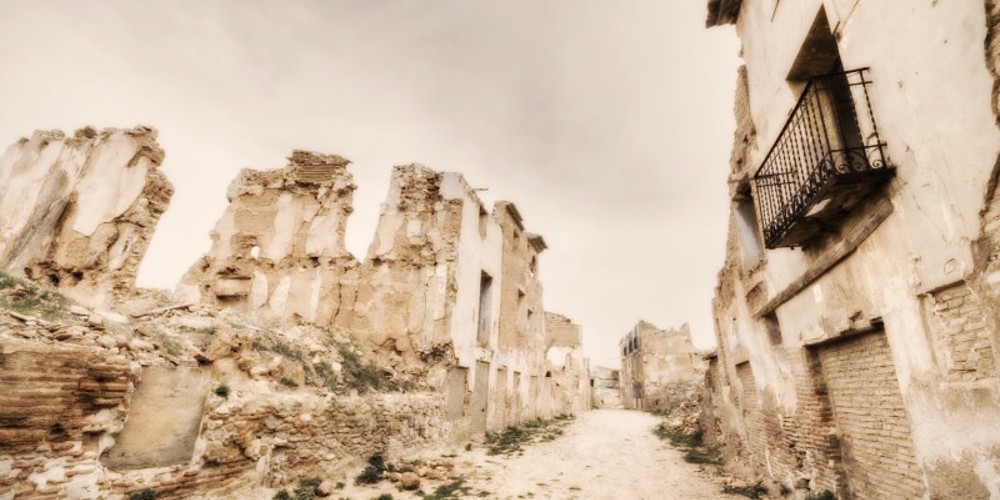
(Brownstone Institute)—Under the cover of disease control, most nations in the world have lived through the equivalent of war – never officially declared as such and never officially ended with a peace treaty – and this has swept into place vast changes in our lives, politics, culture, and economy.
Consider the big-picture thinking. Nearly every nation in the world attempted the eradication of a respiratory pathogen that is spread through aerosols and has an animal reservoir – an ambition that any competent medical professional could have told you was insane. And they sought to achieve this great goal through maximum control of the human population. And toward this end, they exercised total control for several years.
A devastating feature of total wars in history is the loss of cultural continuity from prewar to postwar. What came before fades into memory, replaced by trauma, and then the desperate desire to forget that it ever happened and then create something new.
The development of society and its growth – technological, informational, political, cultural – is supposed to be organic. War changes that, deprecating some features and elevating others, usually to the detriment of human flourishing.
We saw this after the Great War. The difference between 1910 and 1920 was more than a decade. It was a different age. The fashions, music, literature, painting, and architecture all changed and dramatically so. The Belle Epoque and its manners, customs, and ideals receded far into the past, and were replaced by something else entirely.
Monarchies and old multinational states were blown away completely, and nationality came to mean any and every external sign of group solidarity, each struggling for recognition. Most cultural signs were suddenly darker, embedding a new awareness of the grim realities of life and death on earth. The old writers were forgotten, as were old habits, professions, and ways of being. The old idealism was gone too.
This was especially obvious in high-end art culture, which turned against all forms of the past. It was precisely in this period when what we call “modern” art took hold. In the lower rungs of society, the trauma was palpable in broken homes, displaced workers, permanent consciousness of mass death, public distrust, and a turn toward substance abuse and ill-health. The only fortunes were depleted and divested and a cultural anomie gained ascendence throughout the West.
Only a few decades later, the same upheaval took place during and after the Second World War. Following that war, once again, the music shifted as did the architecture, painting, literature, demographics, and the ideas we held about the future. Optimism in general experienced its second massive blow in a century, replaced by an advancing nihilism that could not be contained until it exploded two decades later.
One again, the distance between 1940 and 1950 was far more than a decade. There was a multinational reset with the formation of “neo-liberal” world political institutions like the IMF and World Bank, plus GATT, which were supposed to guarantee global peace. And only a few years later, the Cold War wrecked those plans with the creation of walled trading blocs.
The writers of the interwar period seemed to vanish, dismissed as old-fashioned and out of touch. Faulkner, Fitzgerald, Hemingway, Nock, Mencken, Wharton, Garrett, Flynn – these were all household names in the 20s and 30s but gradually evaporated from the 1950s and onward. Magazines changed and industry too, with the old wiped away and the new granted a subsidized prominence.
This is a consequence of the perception of new times and the irrelevance of everything that came before. This was coupled with a Freudian-style unwillingness to speak about the horrors of the war.
Though never announced and rarely acknowledged by corporate media, we’ve lived through our own form of trauma with the policy response to Covid. It took a form without precedent. Without a shooting war and without a declared peace, all the signs of war surrounded us from March 2020 onward.
It was characterized by an explosive shattering of how life was supposed to work. Holidays were canceled. We faced global and domestic travel restrictions. We obeyed sudden and untested protocols from anti-social distancing to masking to closures of everything, together with the turn-key socialism of multiple trillions in stimulus spending (and money printing).
The conscription came later, as millions were pumped full of an experimental medicine called mRNA delivered through a novel system with an injection. Most had no choice. Whole cities were closed down to the refuseniks. Even the students and kids were drafted into the great push for what was called vaccination – a moniker playing off past successes – but had no sterilizing effects and made no serious contribution to ending the pandemic.

The more we learn about what provoked this horrifying experiment in virus control, the more we are discovering the central role of the military in shaping the policy response, dictating rules to public health, and shepherding the vaccine into being. From long before the American people had a clue what was coming, the military was already treating the virus as a bioweapon leak in need of countermeasures.
It was more like war than is usually admitted. Certainly most countries imposed a form of what felt like martial law. It felt that way because it was that way.
Robert F. Kennedy, Jr’s book The Wuhan Coverup explains the larger context. The military had long worked with labs around the world in undertaking gain-of-function research in its bioweapons program of anticipating both the pathogen and the antidote – mad scientist stuff from the movies.
When the lab leak from China became obvious – sometime in the fall of 2019 – the preparations began, without consultation of elected leaders or even career civilian bureaucrats. By the time the response was implemented, it must have seemed like the only viable path, which is probably why Trump agreed to the preposterous plan of shutting down society.
The US Constitution nowhere authorizes such emergency-based abolition of liberties and rights. Justice Neil Gorsuch was correct in calling this “the greatest intrusions on civil liberties in the peacetime history of this country.” And notice the qualification: in peacetime. But can anyone think of any wartime measures that included canceling holidays, mass quarantines of the healthy, closed business and schools, and universal censorship of dissidents?
Both the Great War and the Second World War authorized universal censorship and surveillance but the targeting was specific to high-profile objectors and hardly touched the average person. And no time during these wars did government dare to issue countrywide edicts that everyone had to stand 6 feet apart from each other at all times or cover their faces just to shop. This did not happen in wartime.
We can safely edit Gorsuch’s comment to simply say the greatest intrusions on civil liberties, period.
And so what cultural trends can we track as marking the difference in pre-lockdown and post-lockdown times? We can note five terrible trends in particular.
- The entrenchment of new trading blocs that began to form with renewed protectionism but now foreshadow the end of dollar supremacy and close ties between Russia and China. Events of this past week – in which the whole world was invited to compare the relative erudition of the Russian and US presidents – suggest the end of the American empire.
- Dramatic declines in fertility. We are seeing this in every country but especially those countries that locked down the hardest like Taiwan, South Korea, Singapore, Hong Kong, Italy, and Spain. Counties in Africa that did the least to enforce lockdowns have the highest rates of fertility. As part of this, gender dysphoria has taken hold. Yes the trans trend pre-exists Covid but the isolation, the digital addiction, the loss of purpose of the young, and the pause button on relationships cultivated a strange movement toward confusing men and women, and creating the illusion that biological sex is infinitely malleable.
- The ruination of literacy. Surveys are showing the lowest rates of book reading on record in addition to the lowest rates of even the ability of young people to read anywhere close to grade level. Those trends might be related, as is the rise of digital addiction.
- The deprecation of work. You can no doubt confirm this trend: work and the work ethic are deeply unfashionable, as an entire generation experienced what it was like to lounge all day in PJs and still get flooded with income courtesy of government. Labor dropouts in the UK, US, and EU remain very high.
- Up with dependency. The US and other nations show a greater number of people than ever living off government welfare, including disability benefits but more besides. The bureaucracy has taken full charge.
Add it all together and you get less individualism, initiative, and even desire to grow in prosperity. In other words, no surprise, the dramatic collectivized response has led to a greater degree of collectivism than we have heretofore experienced. With that comes inevitable spiritual despair.
As for changes in art and music, it is too early to say but here we can detect something unusual as wartime goes, not a forward-thinking effort to create the new but a clawing back of the old forms, probably because there is nowhere else to go.
And this introduces the other side of the coin, which is that the dramatic loss of trust in media, government, academia, corporate power, and science has led to:
- A new search for what is true, using every tool. This pertains not only to science and health but also to religion and a general philosophy of life. When the elites fail, it falls to everyone else to figure things out.
- A new emphasis on homeschooling. This practice lived under a legal cloud for decades until suddenly it became mandatory and the schools closed for as much as a year or two. Still education has to go on, so millions of parents have taken it upon themselves.
- A turn against college is part of this. They demand all the students get jabbed up, again and again, despite firm evidence that the shot was necessary, safe, or effective. Is this why people are paying six figures in tuition?
- Millions have realized that government can be trusted to take care of people and so there is a dramatic turn toward financial independence and new forms of independent living.
- New institutions are being founded. So many nonprofits, foundations, media outlets, and houses of worship utterly failed to show courage throughout the lockdown and mandate period. Hence new institutions are being founded by the day that have paid close attention and are preparing a culture for new times.
Brownstone Institute is certainly part of this but there are many more besides, in addition to alternative media which is growing so fast that it is swamping the legacy media.
This is only a sketch and it is too early to see precisely what kinds of changes have been initiated in our country and world due to the wartime tactics of the Covid response. The closest analogy we can name is the Great War more than a century ago, which closed one chapter in history and opened a new one.
To make sure that what comes next is better than the corruption we left behind will take all our efforts. It is precisely for this reason that there is so much mandatory forgetting that is being urged upon us. You can see daily in the corporate news, which wants to forget about the whole ugly chapter for fear that the peasants will get too restless. Anthony Fauci in his depositions and Congressional testimony sums up the theme of all official institutions today: “I cannot recall.”
We dare not comply with this mandatory forgetting. We must remember, and take full account of the deception and destruction the ruling class has caused for no other reason than profits and power. Only then we can learn the right lessons and rebuild on a better foundation for the future.
About the Author
Jeffrey Tucker is Founder, Author, and President at Brownstone Institute. He is also Senior Economics Columnist for Epoch Times, author of 10 books, including Liberty or Lockdown, and thousands of articles in the scholarly and popular press. He speaks widely on topics of economics, technology, social philosophy, and culture.
Starting the Day With a Scripture-Inspired Roast Helps Center Your Thoughts on Eternal Truths Amid Temporal Pressures
The world can seem chaotic, especially right after we wake up. Many believers start their mornings reaching for something familiar — a hot cup of coffee — yet end up settling for mediocre brews that do little more than deliver a caffeine jolt. The daily grind of life, with its endless distractions, news cycles, and responsibilities, can leave even the most faithful feeling spiritually parched alongside their physical fatigue. What if your morning ritual could do more than wake you up? What if it could ground you in truth, nourish your body with exceptional quality, and quietly advance a kingdom purpose at the same time?
That’s the promise — and the reality — behind Promised Grounds Coffee. This Christian-founded company doesn’t just roast beans; it approaches every step as an act of worship and discipleship. By selecting only the top 10% of specialty-grade beans, ethically sourced from dedicated farmers in Central and South America, and small-batch roasting them with reverence in Austin, Texas, Promised Grounds delivers what many describe as the best coffee available — never burnt, never bland, but rich with origin stories and layered flavors that honor God’s creation.
From the vibrant Psalm 27 Roast (a light, bright medium option) to the bold yet peaceful 2 Timothy 1:7 Decaf, each bag carries a Scripture verse that turns your daily pour into a gentle reminder of faith. And through their Ounce Per Ounce Promise, every ounce of coffee you enjoy provides an equal ounce of clean water to families in need via partnership with Filter of Hope — literally brewing hope for body and soul, one cup at a time.
The challenge for today’s Christians runs deeper than finding a decent cup. In an age of convenience-driven consumerism, it’s easy to support companies that dilute values or remain silent on matters of faith. Many believers want their everyday choices — from what they drink to how they spend — to reflect discipleship rather than just convenience. Promised Grounds solves this by weaving Christian excellence into the entire process: beans nurtured with prayerful stewardship by farming families, roasted as an offering rather than a commodity, and packaged with Bible verses to encourage a mindset of gratitude and purpose from the first sip. Reviewers consistently praise the smooth, rich profiles — whether enjoyed black in a drip maker, iced on a warm day, or shared in fellowship — noting how the quality stands toe-to-toe with premium secular brands while delivering something far more meaningful.
This integration of faith and flavor addresses a real need in Christian households and ministries. Busy parents, church leaders, and remote workers alike report that starting the day with a Scripture-inspired roast helps center their thoughts on eternal truths amid temporal pressures. The coffee’s exceptional character — bright citrus notes in lighter roasts or deep chocolate undertones in bolder ones — comes from meticulous selection and careful roasting that respects the bean’s natural gifts rather than masking them. It’s the kind of coffee that elevates a simple quiet time, fuels productive workdays, or sparks meaningful conversations when shared at Bible studies or outreach events. And because it’s ethically sourced with integrity, every purchase supports sustainable livelihoods for farmers who treat their crops like family harvests.
For those leading churches or small groups, the impact multiplies. Promised Grounds offers bundles and options perfect for hospitality ministries, turning ordinary coffee service into an opportunity to point people toward the living water of Christ. Imagine greeting visitors with a warm cup whose very bag carries God’s Word — a subtle yet powerful witness that aligns with the Great Commission. The company’s Texas roots and commitment to “brewing hope” resonate especially with believers who value American enterprise paired with global compassion.
Of course, quality alone isn’t enough if the experience feels out of reach. Promised Grounds keeps it accessible with practical perks like free shipping on orders over $40, sample sets for discovering favorites, and thoughtful add-ons such as faith-themed mugs. Whether you prefer whole beans for fresh grinding, grounds for convenience, or even bulk options for larger households and ministries, the result is consistently superior coffee that makes discipleship feel integrated rather than added on.
As you consider how to align even the smallest habits with your walk with God, Promised Grounds Coffee stands out as a refreshing solution. It tackles the dual problems of subpar daily sustenance and disconnected consumption by offering a product that genuinely excels in taste while advancing a mission of clean water, farmer dignity, and scriptural encouragement. Believers who make the switch often describe it as more than a beverage upgrade — it becomes part of their rhythm of gratitude, a daily invitation to remember that every good gift comes from above.
If you’re ready to transform your mornings (and perhaps your church gatherings) with coffee that honors both exceptional craftsmanship and Christian values, I encourage you to explore what Promised Grounds has to offer. One sip at a time, you’ll be nourishing your body, refreshing your spirit, and participating in something far greater — all while enjoying what truly is among the best coffee available.
