

When Assemblymember Evan Low, the principal author of California Assembly Bill 2098, told the California Senate Committee that his bill was “really straightforward, very straightforward,” many of us in the gallery failed to restrain ourselves from expressing our incredulity.
He delivered this statement at the conclusion of a hearing that had lasted over an hour, during which it seemed no two Senators on the committee had the same idea of how the law would operate. Assemblymember Low had struggled to respond to questions from the committee and had often resorted to simply reading the text of the bill. That June 26 hearing presented the only time any legislators questioned the bill during its entire passage through the legislative process.
Assembly Bill 2098 would empower the Medical Board of California to go after the licenses of physicians who disseminate “misinformation” or “disinformation” regarding Covid-19. The bill in its latest iteration defines misinformation as “false information that is contradicted by contemporary scientific consensus contrary to the standard of care.” The inscrutability of this definition lies at the core of the bill’s opponents concerns.
No clear scientific consensus exists with respect to this novel virus, and even if it did, it may be proven incorrect later. Without clear guidance regarding what would constitute “misinformation,” physicians can only guess if they risk losing their licenses for expressing their good-faith disagreements with positions of public health officials. Even if in practice, the Medical Board only applied the law to speech that the First Amendment does not protect, the law’s vagueness would render it unconstitutional, because it would tend to cause doctors to censor themselves.
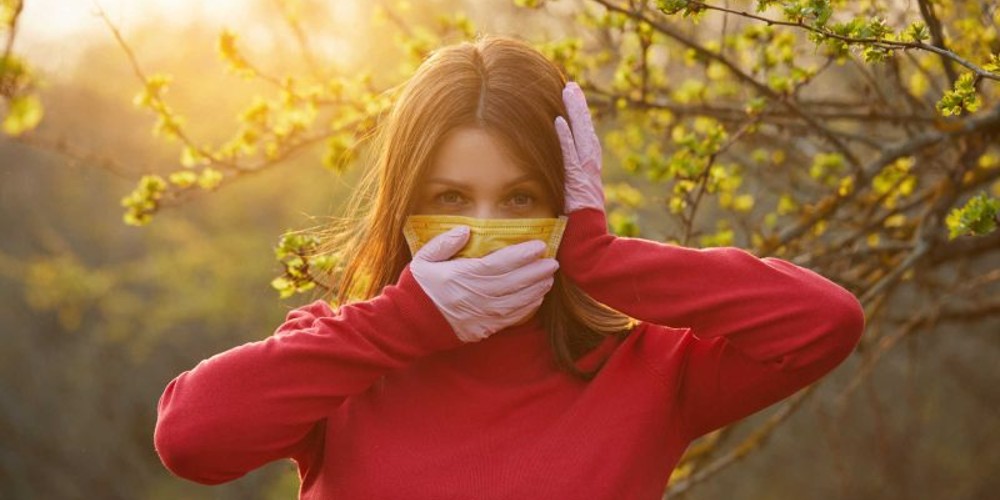
The million-dollar question remains unanswered: Who would be targeted by Assembly Bill 2098? On one hand, the California Medical Association, the bill’s sponsor, cites the example of doctors who call “into question public health efforts such as masking” as creating the need for this bill. Likewise, the taxpayer-funded lobbying group County Health Executives Association of California decries “a small minority of medical professionals” who have led some Californians to “reject public health measures such as masking and physical distancing.”
The analysis of the bill from the Senate committee, in discussing the need for this bill, cited the example of the state of Florida refusing to take action against the license of Florida Surgeon General for, among other things, “question[ing] the value of face masks in preventing the spread of the pandemic.” The idea that the effectiveness of masks in preventing the spread of Covid is part of the “contemporary scientific consensus” confirms physicians’ fears that they would risk discipline for questioning any edict from public health on Covid.
On the other hand, when critics of Assembly Bill 2098 argue that questioning the effectiveness of masks falls well within the bounds of legitimate difference of opinions, proponents poo-poo their concerns about the law being applied in an overly broad way and insist that the law would only be used against truly “bad doctors.” But imbuing bureaucrats with power while trusting they will not exercise it would be incredibly foolish.
Some, such as Assemblymember Low, bill co-author Assemblymember Akilah Weber, and a representative of the California Medical Association, imply that this bill would only apply in cases of intentional harm. There is nothing in the letter of the law that limits the bill’s reach to situations where someone was harmed or where the information was disseminated knowing it was false. (Intentionally misleading would fall under the definition of “disinformation” as opposed to “misinformation.” An earlier draft of the bill mentioned harm to a patient as a factor for the Medical Board to consider.)
Members of the Medical Board of California itself have expressed confusion about how the law would be applied and withheld its support initially. MBC President Kristina Lawson, an attorney who has been a driving force behind this bill, claims to have clarity about how it would be applied but apparently is only willing to discuss the matter in private.
While most proponents say as little as possible regarding Assembly Bill 2098’s implications, one group is more vocal and less guarded in its statements. Two self-described “frontline” California doctors, Nick Sawyer and Taylor Nichols, formed No License for Disinformation (NLFD) in September 2021.
As its name suggests, the organization’s purpose is to promote policies that use the threat of medical license revocation to discourage doctors from spreading information it believes to be false. Sawyer has twice testified before legislative committees in favor of Assembly Bill 2098. NLFD’s prolific tweets and other public statements paint a dystopian picture that reflects opponents’ worst fears of the type of authoritarian regime proponents wish to impose.
NLFD pushes the idea that there is, as Sawyer described it his testimony before the Assembly committee on April 19, a “well-coordinated and well-funded network of doctors” who promote “anti-vaccine conspiracy theories, sow distrust in the Centers for Disease Control and Prevention, the federal government, and ultimately the Covid-19 vaccines.”
At the outset, note the irony that NLFD frequently criticizes “conspiracy theorists” while promoting its own conspiracy theories. And NLFD not only wants to silence those who undermine faith in public health measures, but anyone who “sows distrust” in the government. Let that sink in.
NLFD’s tweets elaborate on its conspiracy theories, which are, like most conspiracy theories, built on weak evidence that magnify tenuous connections. A recent tweet shared a long thread posted by one of its founders that purports to uncover a web of right-wing “disinformation” purveyors funded by oil money. It implicates, among others, anyone associated with the Great Barrington Declaration or Brownstone Institute and specifically names UCSF professor and doctor Vinay Prasad, journalist and author David Zweig, and Johns Hopkins epidemiologist Stefan Baral as part of this cabal.
An August 13, 2022 tweet promotes a Substack article, written by NLFD “Research Consultant” Allison Neitzel, which calls America’s Frontline Physicians, Front Line COVID-19 Critical Care Alliance, the authors of the Great Barrington Declaration, and The Unity Project the “Big 4” responsible for a “physician-led attack on public health.” NLFD has often identified these four as its primary targets, sometimes adding the American Association of Physicians and Surgeons and Urgency of Normal to its hit list. NLFD asserts, without any basis, that these groups work together.
Some of NLFD’s targets, such as the Urgency of Normal’s leadership, are mainstream physicians. NLFD dismisses them as ranging from “formerly well respected immunologists to outright frauds.” It links to a long thread from one of its founders that accuses Urgency of Normal of being part of a right-wing operation to promote an “anti-mask narrative.”
It complains that CNN gave Dr. Jeanne Noble, Associate Professor at UCSF, a platform. It retweeted a tweet calling for Dr. Lucy McBride to be reported to the medical board for opposing mask mandates in schools and responded with a link directing the public on how to do so.
It dismissed every doctor who participated in a roundtable hosted by Florida Governor DeSantis, which included Dr. Tracy Høeg, as “Covid deniers” and “disinformation doctors” and warned that no one should accept medical advice from any of them. These attacks contradict any claim that NLFD claims only wants to silence doctors who peddle dangerously false medical advice rather than those who have good-faith disagreements with official Covid policy.
The inclusion of the authors of the Great Barrington Declaration—Sunetra Gupta, Martin Kulldorff, and Jay Bhattacharya—at the top of NLFD’s hit list is puzzling. Not only does the declaration espouse a conventional viewpoint, none of the Great Barrington Declaration’s authors is a practicing physician and therefore law like Assembly Bill 2098 would not affect them.
NLFD has called out the Great Barrington Declaration around a dozen times and frequently targets Stanford professor Bhattacharya in particular (he earned a medical degree but does not practice medicine or hold a medical license). NLFD doesn’t just accuse Bhattacharya of being wrong, it accuses him of intentionally lying, calling him a “disinformation doctor” and a “prominent purveyor of Covid-19 disinformation,” accusing him of telling lies that have killed people (along with Vinay Prasad), and insinuating he should be reported for perjury. In addition to its direct attacks, NLFD has retweeted dozens of criticisms of Bhattacharya and seemed to delight in a journalist getting Twitter to temporarily suspend his account for a minor oversight.

NLFD’s messaging has an unquestionably partisan slant, despite claiming to be nonpartisan. It has posted dozens of tweets critical of the Republican Party. Some of these criticisms do not clearly relate to the organization’s mission of combating misinformation.
For example, this August 8, 2022 thread attacks Republican lawmakers for opposing a drug pricing control provision in a bill. The same day, another tweet alleges that the GOP Doctors Caucus is allied with “Pharma Bro” Martin Shkreli. They attempt to tie this issue in with their mission by asserting that Republicans in general are “affiliated with licensed physicians” spreading Covid misinformation.
In another recent example, NLFD posted a clip from 2017 accusing Rand Paul of being in cahoots with Putin. It had previously suggested that Paul should be reported to the medical board for reasons it doesn’t identify. NLFD has even branched out to opine on political issues totally unrelated to the practice of medicine, encouraging the public to report “harassment, intimidation, and threats of violence” against school board members or staff to the FBI.
NLFD has numerous posts elaborating on its idea of a right-wing, Republican-led conspiracy to spread disinformation. It uses the phrase “disinformation pipeline” to describe an alleged process by which Republicans in state legislatures deliberately harm public health by “institutionalizing disinformation” through, for example, passing laws that shield doctors from discipline for controversial Covid treatments. It claims that the overall Republican agenda is to “create fear/animosity/victimhood amongst supporters, whipping up anti-science/anti-government sentiment making them more likely to take up arms against the government.” It has asserted that “[a]ll COVID disinformation doctors are inextricably tied to Trump.”
Many of NLFD’s conspiracy theories are quite dark and disturbing. It recently retweeted a thread from its own Nick Sawyer, which argues that the United States is currently in the midst of a civil war, which goes unrecognized because it is an information war. Another recent tweet exhorts: “This is an information war, a battle for the truth, and [every] American is a soldier. Get up to speed and start fighting for evidence based reality. No one is going to do this for us.”
NLFD’s primary weapon in this imagined information war is censorship, but it also advocates for criminal prosecution for expressing the wrong ideas. It frequently encourages its followers to report physicians to their medical boards, even if they have no relationship with them. It also frequently calls on Twitter to deplatform accounts it feels say things that are untrue. But it goes even further, tagging the FBI and posting a link to the FBI tip line, asking its followers to report people for alleged misinformation.
It tags the United States Department of Justice’s Criminal Division in its tweets. It calls its targets a “threat to national security.” NLFD erroneously claims that under current California law, a physician can be criminally prosecuted for any untrue statement. NLFD wants to go far beyond having medical boards discipline licensed physicians—they want to see their enemies in jail.
Against this backdrop of NLFD’s other public statements, it’s hard to imagine how Sawyer managed to sound sincere when he told the Senate committee:
“This bill is not supposed to cause problems with physicians’ free speech around academic discussion. This bill will allow the medical board to discipline doctors who say things like the vaccines cause AIDS or that the vaccines are killing more patients than Covid, using manipulated data or that the vaccines are implanting microchips so the government can track you. I’m all for academic debate—in fact, we wouldn’t be where we are today without robust academic debate, but that’s not what this is about.”
Make no mistake—Assembly Bill 2098 is not just about protecting patient safety. That is why one member of the Medical Board of California warned that the bill would be counterproductive to the Board’s mission.
Assembly Bill 2098 was not the brainchild of Assemblymember Low or any other California lawmakers. It’s part of an effort to enact similar policies around the country, sparked in large part by a declaration from the Federation of State Medical Boards in July 2021.
California is often described as a bellwether: “As California goes, so goes the nation.” That saying rings especially true with respect to Assembly Bill 2098, given that this is a test case for a national movement and that Governor Gavin Newsom has obvious presidential aspirations.
The bill will become law on January 1 unless the governor vetoes by September 30, and even then, the Democrats who voted for the bill have sufficient numbers to override a veto. Then we will discover whether our high courts still uphold the principle of free speech or whether they will allow themselves to be co-opted by the soldiers fighting to be the arbiters of Truth.
Article cross-posted from Brownstone Institute.
Two Storms, One Harvest

Every food crisis in living memory has been a one-shock event. The 2008 price spike was a commodity bubble. The 2020 shortages were a logistics failure. The 2022 grain scare was a war on one exporter’s ports. Each time, the system bent, adjusted, and recovered, and each time the experts assured us afterward that global markets are simply too big and too diversified to fail.
What nobody in Washington seems eager to discuss is that 2026 is shaping up to be something the modern food system has never actually faced. Two independent shocks, one climatic and one geopolitical, are converging on the same harvest cycle at the same time. Not sequentially. Simultaneously.
Start with the weather. The Pacific Ocean is currently building toward what forecasters now openly call a record event. NOAA’s Climate Prediction Center puts the odds of at least a strong El Niño near 88 percent, with roughly two in three odds it reaches “very strong” status, the tier reserved for perhaps three or four events in the entire satellite era. Every major global model now projects a median peak in Super El Niño territory, and most of them project it exceeding the 2015-16 event, which until now held the modern record. Sea surface anomalies were already brushing the super threshold in mid-July, months before these events normally peak. The atmosphere has already shifted into El Niño mode, and the event is forecast to crest in late fall and early winter.
This is not about “climate change.” It’s about the standard cycles of weather, and the cycle we’re currently in is one that has likely devastated societies in the past. We’re better prepared as a society today, but not all Americans are equally prepared.
Serious households have started doing the quiet math on their own. Grocery bills tell part of the story, and the forecast maps tell the rest, which is why long-term food storage has moved from fringe hobby to mainstream line item in the family budget, with established suppliers like Heaven’s Harvest seeing demand from people who five years ago would have rolled their eyes at the idea. That instinct is not paranoia. It is pattern recognition, and the pattern is worth walking through carefully.
Editor’s Note: Heaven’s Harvest IS a sponsor, but the warnings of this article are real and would be written even if we didn’t have a survival food sponsor. With that said, those who take advantage of what they offer can use promo code “Patriot” for 15% off.
The Fertilizer Clock Is Already Running
While the Pacific warms, the second shock has been unfolding in the Strait of Hormuz. The conflict with Iran turned the world’s most important energy chokepoint into a contested waterway, and the consequences reach far beyond the gas pump. Roughly a third of global fertilizer trade moves through Hormuz, and the disruption sent urea prices up 86 percent year over year by March, with a 53 percent jump in a single month.
The World Bank projects energy prices rising about 24 percent in 2026 and fertilizer about 31 percent. By its own accounting, fertilizer prices ran 35 percent higher in the first five months of this year than the same period last year.
Here is the mechanism the nightly news will not explain. Fertilizer is not a grocery item. It is a time-delayed input. The nitrogen a farmer in Iowa or Punjab could not afford to apply this spring does not show up as a problem this spring. It shows up as a thinner harvest six to twelve months later.
The World Bank’s own food security brief concedes that the effects of reduced applications earlier this season “are likely to become visible only later in harvest outcomes.” Translate that from institutional language into plain English and it means this. The damage is already done, it is already in the ground, and we are simply waiting for it to arrive on the shelf.
Now check the calendar. Six to twelve months from the spring planting season lands us squarely in late 2026 and early 2027. Which is precisely when the strongest El Niño in the instrumental record is forecast to peak, bringing its signature droughts to Southeast Asia, Australia, southern Africa, northern Brazil, and South Asia, the very regions that grow the world’s rice, sugar, and oilseeds.
The World Bank warns openly that a strong El Niño “could disrupt multiple crop belts simultaneously” on top of the conflict-driven input costs. Their baseline projection assumes the Middle East disruptions ease by autumn. What in the last two years of Middle East history suggests that assumption is safe?
The System Has No Slack Left
The comfortable answer is that global markets always adjust. But adjustment requires slack, and the slack is gone. Global cereal production is expected to decline from last year’s records even before El Niño does its work. The UN World Food Programme, hardly a den of right-wing preppers, is calling this the most significant disruption to its supply chains since Covid and the invasion of Ukraine, and its supply chain director put the stakes bluntly.
Today’s supply chain challenges are tomorrow’s hunger crisis.
There is also a political dimension that markets cannot price. When food gets scarce, governments do not behave like economists. They behave like politicians. Export bans, hoarding mandates, and panic buying at the national level turned the modest rice shortfall of 2008 into a global crisis, and analysts are already warning that import-dependent nations are the first dominoes.
The 2015-16 Super El Niño, a far weaker event than what is now forecast, threw tens of millions into food stress across Africa and Asia. This one is projected to be stronger, and it arrives with fertilizer already rationed by price and shipping lanes already contested by missiles.
What Joseph Knew
Scripture does not treat preparation for lean years as faithlessness. It treats it as wisdom delivered in advance to those willing to act on it.
Behold, there come seven years of great plenty throughout all the land of Egypt: And there shall arise after them seven years of famine; and all the plenty shall be forgotten in the land of Egypt.
Joseph did not respond to that warning with a hashtag or a committee. He stored grain during the years of abundance, and when the famine came, Egypt stood while its neighbors begged. The lesson is not that famine is certain. It is that the time to prepare is precisely when preparation still looks optional.
Nobody who filled a pantry in a year of plenty has ever regretted it, and nobody standing in an empty aisle has ever been glad he waited for certainty.
None of this calls for panic, and panic is the enemy of sound judgment anyway. It calls for the same unglamorous prudence our grandparents considered ordinary. Keep some cash margin, know your local growers, and put real food in deep storage while it is cheap and available, because the entire arc of this story is that cheap and available is a closing window.
Families looking for a straightforward place to start can visit Heaven’s Harvest and use promo code Patriot for 15 percent off long-term storable food. The forecasts may yet soften, the strait may yet reopen, and we should pray they do. But hope is a fine thing to hold and a foolish thing to eat.
