

If you are like me, you are exhausted of the lies. Every day seems to bring new revelations about how our lives came to be upended. The connections are becoming clearer between the pandemic response and the growing economic crisis, the ballooning debt, the growth of the surveillance state, the corruption and scams, chilling absence of integrity in public life, and, with the failure of FTX, the way in which an outright financial scam was integral to the calamity.
While we await new revelations, depositions, coverups, pleas for amnesty, and bad economic news, whom can we trust? Is anyone telling the truth?
Today was Anthony Fauci’s last White House press conference, and he spoke as if life is all normal and everything is fine. It’s as if the whole disaster never happened. He never locked anyone down, he says. He is happy for any investigations, he says, because he has nothing to hide. And then he ended with a final push for everyone to get booster #5 or whatever number we are on.
It’s like we live in two universes: our own lives in which we read true things in some places, and official life, in which shills and publicists keep repeating the same nonsense over and over without flinching or providing anything like an honest account of these last three years.
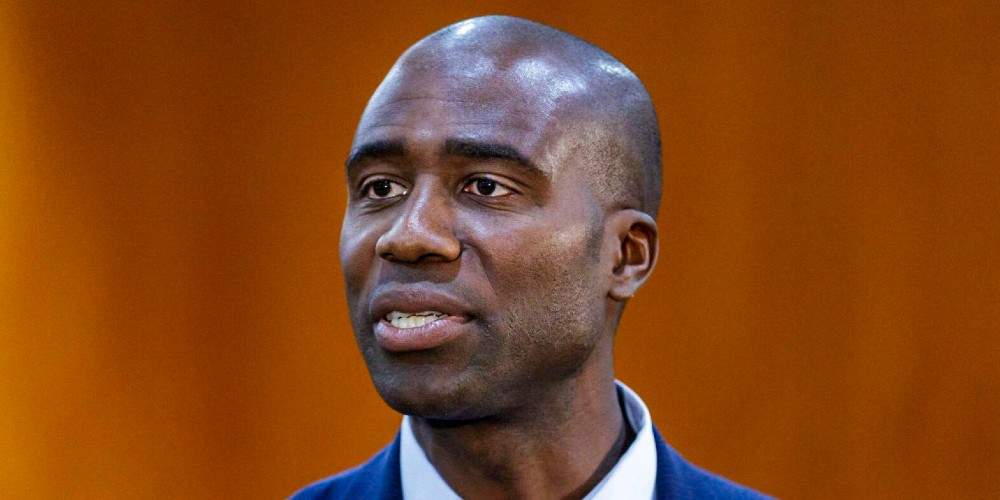
Perhaps for this reason – and also because by any historical standard this is a tremendous autobiography – reading Dr. Joseph Ladapo’s Transcend Fear is a welcome relief from the nonsense of our times. It is brutally honest. It is emotionally affecting. It is careful and precise but also deeply radical in its observations. If what’s called the “public health world” has lost touch with both the public and health, this book provides a path to restoring it. In short, it is a beautiful and inspiring experience.
Dr. Ladapo is the Surgeon General of the State of Florida, picked by Governor Ron DeSantis to forge and explain the state’s health decisions and priorities to the public in the midst of a grave crisis. He has faced down the national press time and time again with Zen-like wisdom. He seems emotionally unflappable while also sticking to the science as he understands it. He is the only public health official in the country who has been upfront about the limits of the vaccines and warned healthy young people that they don’t need them.
What we learn from this book is that he has been a warrior against pseudoscience from the very beginning of this pandemic and the government response. After the lockdowns, most scientists and health professionals fell silent, fearing reputational and financial loss. Dr. Ladapo was different, On March 24, 2020, still within the window of “15 Days to Flatten the Curve,” he wrote in USA Today:
We are fretting and we are fuming. As a country, we have been caught miserably flat-footed after receiving warnings about what lay ahead when cases of Covid-19 began exploding in Wuhan, China. Messages from local and state leaders about how to respond to the pandemic change almost daily—a sure sign they have no idea what they are doing. Shutdowns are happening here in California and in New York, and will probably spread to the rest of the nation….
Here’s the problem: Because of the (understandable) fear and hysteria of the moment, few US leaders are seriously talking about the endgame. The epidemiologic models I’ve seen indicate that the shutdowns and school closures will temporarily slow the virus’ spread, but when they’re lifted, we will essentially emerge right back where we started. And, by the way, no matter what, our hospitals will still be overwhelmed. There has already been too much community spread to prevent this inevitability.
We don’t have a totalitarian government like China, and we value our civil liberties too much to take the measures (i.e., total lockdown) that would be needed to rapidly decrease the infection rate to zero. This means that, even with shutdowns, the virus will still spread. Unfortunately, this also means that rates of “community immunity,” often referred to as “herd immunity,” will slow. As a result, we will always be vulnerable to the virus spreading rapidly again as soon as shutdown measures are lifted, unless they are immediately reimplemented—over and over and over again.
Was he the first post-lockdown voice from public health profoundly to object in a public forum of this magnitude? Perhaps so. Consider the bravery and presence of mind it required to write those sentences. The entire country was on a wartime footing with unprecedented horribles taking place. The media was screaming “Run for your lives” but most of us weren’t even allowed out of our homes to do that.
These were utterly crazy times. The whole world was going bonkers. And yet this man kept his cool.
This book explains where his cool comes from. You see, he is the son of an immigrant from Nigeria, born 1979. A math and science whiz, he attended Wake Forest and then entered Harvard Medical School. While he was involved in his studies, he noted the existence of the Kennedy School of Government and enrolled there too. On graduation day, he was granted a MD plus a PhD in public policy. So essentially: the highest credentials in two fields that this country offers. He became professor of medicine at New York University and then the University of California, Los Angeles.
The trouble was that none of his training had prepared him to deal with medical issues closer to home, namely his wife’s unrelenting migraines that often landed her in the hospital and his own underlying psychological fears of social interaction. The details are very painful and told in this book with disarming detail. Long story short: his search for answers led him toward alternative medical paths that eventually fixed both issues, and burned a lesson in his mind. Health is individual, and the right path is not the same for everyone and not always found in expertise as codified in the textbooks and institutions.

It was soon after these difficult times that the pandemic broke and, along with it, the claims that the experts had all the answers in lockdowns and eventual universal mandates for vaccination.
Dr. Ladapo had meanwhile developed the self-confidence to speak about such matters truthfully and fearlessly. And he never stopped. He wrote for every venue he could, month after month, urging an end to the lockdowns, a focus on therapeutics, attention to the science we had, and genuine concern for the health of actual individuals, who are not lab rats but people with human rights and freedom.
Even though Dr. Joseph Ladapo is obviously a hero (and one for the ages, so far as I’m concerned), the prose here is remarkably lucid, humble, and precise. That’s why I say that the humane concern in this book is an inspiration. Moreover, reading it is a form of therapy because he connects with a common sense that we all had in 2019 before the world descended into utter madness.
What’s more, this book shows a path forward not only for public health but for all of us as individuals. He urges personal reflection as the first step in recovery, overcoming whatever hidden fears we had that caused too many among us to go along with the preposterous parade of dangerous nonsense that controlled our lives for so long.
In my own view, this book is a classic of our times. Its value added is not only the author’s credentials, though he has them galore, or even how it speaks so directly to issues that have profoundly affected all our lives. Its real value is as a model of autobiography that offers lessons for all of us without exception.
We at Brownstone are deeply honored that Dr. Ladapo will be our dinner speaker at our annual conference and gala in Miami, December 3, 2022. There is still time to attend. You can register here.

I write as Dr. Fauci just finished his last press conference without offering so much as a hint of apology for what has happened. Meanwhile, I’m sure Dr. Ladapo is tending to his work in Florida where he has been charged with dealing with public health policy with honesty, truth, and wisdom. I know who gets my vote for hero of the pandemic.
About the Author
Jeffrey A. Tucker, Founder and President of the Brownstone Institute, is an economist and author. He has written 10 books, including Liberty or Lockdown, and thousands of articles in the scholarly and popular press. He writes a daily column on economics at The Epoch Times, and speaks widely on topics of economics, technology, social philosophy, and culture.
Article cross-posted from Brownstone Institute.

Two Storms, One Harvest

Every food crisis in living memory has been a one-shock event. The 2008 price spike was a commodity bubble. The 2020 shortages were a logistics failure. The 2022 grain scare was a war on one exporter’s ports. Each time, the system bent, adjusted, and recovered, and each time the experts assured us afterward that global markets are simply too big and too diversified to fail.
What nobody in Washington seems eager to discuss is that 2026 is shaping up to be something the modern food system has never actually faced. Two independent shocks, one climatic and one geopolitical, are converging on the same harvest cycle at the same time. Not sequentially. Simultaneously.
Start with the weather. The Pacific Ocean is currently building toward what forecasters now openly call a record event. NOAA’s Climate Prediction Center puts the odds of at least a strong El Niño near 88 percent, with roughly two in three odds it reaches “very strong” status, the tier reserved for perhaps three or four events in the entire satellite era. Every major global model now projects a median peak in Super El Niño territory, and most of them project it exceeding the 2015-16 event, which until now held the modern record. Sea surface anomalies were already brushing the super threshold in mid-July, months before these events normally peak. The atmosphere has already shifted into El Niño mode, and the event is forecast to crest in late fall and early winter.
This is not about “climate change.” It’s about the standard cycles of weather, and the cycle we’re currently in is one that has likely devastated societies in the past. We’re better prepared as a society today, but not all Americans are equally prepared.
Serious households have started doing the quiet math on their own. Grocery bills tell part of the story, and the forecast maps tell the rest, which is why long-term food storage has moved from fringe hobby to mainstream line item in the family budget, with established suppliers like Heaven’s Harvest seeing demand from people who five years ago would have rolled their eyes at the idea. That instinct is not paranoia. It is pattern recognition, and the pattern is worth walking through carefully.
Editor’s Note: Heaven’s Harvest IS a sponsor, but the warnings of this article are real and would be written even if we didn’t have a survival food sponsor. With that said, those who take advantage of what they offer can use promo code “Patriot” for 15% off.
The Fertilizer Clock Is Already Running
While the Pacific warms, the second shock has been unfolding in the Strait of Hormuz. The conflict with Iran turned the world’s most important energy chokepoint into a contested waterway, and the consequences reach far beyond the gas pump. Roughly a third of global fertilizer trade moves through Hormuz, and the disruption sent urea prices up 86 percent year over year by March, with a 53 percent jump in a single month.
The World Bank projects energy prices rising about 24 percent in 2026 and fertilizer about 31 percent. By its own accounting, fertilizer prices ran 35 percent higher in the first five months of this year than the same period last year.
Here is the mechanism the nightly news will not explain. Fertilizer is not a grocery item. It is a time-delayed input. The nitrogen a farmer in Iowa or Punjab could not afford to apply this spring does not show up as a problem this spring. It shows up as a thinner harvest six to twelve months later.
The World Bank’s own food security brief concedes that the effects of reduced applications earlier this season “are likely to become visible only later in harvest outcomes.” Translate that from institutional language into plain English and it means this. The damage is already done, it is already in the ground, and we are simply waiting for it to arrive on the shelf.
Now check the calendar. Six to twelve months from the spring planting season lands us squarely in late 2026 and early 2027. Which is precisely when the strongest El Niño in the instrumental record is forecast to peak, bringing its signature droughts to Southeast Asia, Australia, southern Africa, northern Brazil, and South Asia, the very regions that grow the world’s rice, sugar, and oilseeds.
The World Bank warns openly that a strong El Niño “could disrupt multiple crop belts simultaneously” on top of the conflict-driven input costs. Their baseline projection assumes the Middle East disruptions ease by autumn. What in the last two years of Middle East history suggests that assumption is safe?
The System Has No Slack Left
The comfortable answer is that global markets always adjust. But adjustment requires slack, and the slack is gone. Global cereal production is expected to decline from last year’s records even before El Niño does its work. The UN World Food Programme, hardly a den of right-wing preppers, is calling this the most significant disruption to its supply chains since Covid and the invasion of Ukraine, and its supply chain director put the stakes bluntly.
Today’s supply chain challenges are tomorrow’s hunger crisis.
There is also a political dimension that markets cannot price. When food gets scarce, governments do not behave like economists. They behave like politicians. Export bans, hoarding mandates, and panic buying at the national level turned the modest rice shortfall of 2008 into a global crisis, and analysts are already warning that import-dependent nations are the first dominoes.
The 2015-16 Super El Niño, a far weaker event than what is now forecast, threw tens of millions into food stress across Africa and Asia. This one is projected to be stronger, and it arrives with fertilizer already rationed by price and shipping lanes already contested by missiles.
What Joseph Knew
Scripture does not treat preparation for lean years as faithlessness. It treats it as wisdom delivered in advance to those willing to act on it.
Behold, there come seven years of great plenty throughout all the land of Egypt: And there shall arise after them seven years of famine; and all the plenty shall be forgotten in the land of Egypt.
Joseph did not respond to that warning with a hashtag or a committee. He stored grain during the years of abundance, and when the famine came, Egypt stood while its neighbors begged. The lesson is not that famine is certain. It is that the time to prepare is precisely when preparation still looks optional.
Nobody who filled a pantry in a year of plenty has ever regretted it, and nobody standing in an empty aisle has ever been glad he waited for certainty.
None of this calls for panic, and panic is the enemy of sound judgment anyway. It calls for the same unglamorous prudence our grandparents considered ordinary. Keep some cash margin, know your local growers, and put real food in deep storage while it is cheap and available, because the entire arc of this story is that cheap and available is a closing window.
Families looking for a straightforward place to start can visit Heaven’s Harvest and use promo code Patriot for 15 percent off long-term storable food. The forecasts may yet soften, the strait may yet reopen, and we should pray they do. But hope is a fine thing to hold and a foolish thing to eat.
