

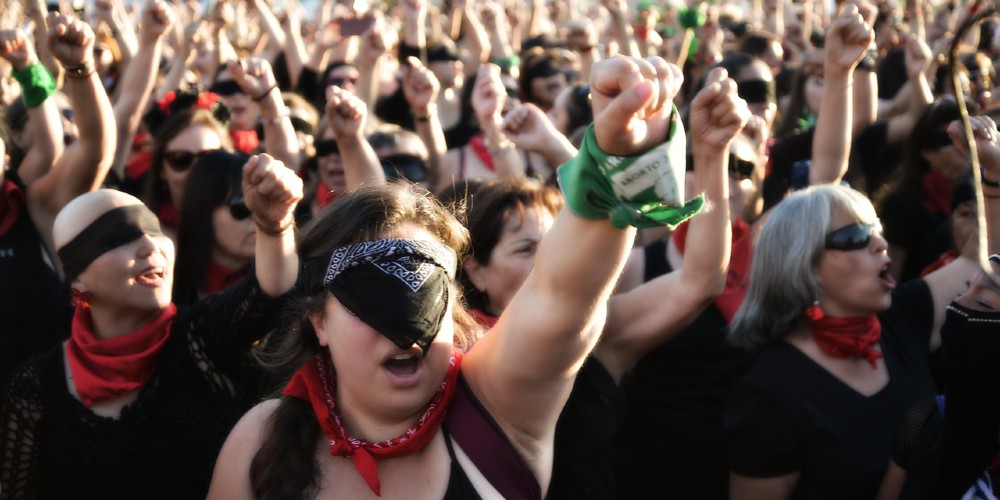
(Alt-Market)—These days we hear a lot about the concept of the “male power fantasy,” usually in reference to accusations of “toxic masculinity.” In other words, feminists and woke activists argue that the male power fantasy is a social construct that makes men aggressive, and masculine aggression is supposedly the cause of most of society’s ills.
I would point out, however, that we don’t really see men talking about or obsessing much over power these days. Instead, it’s women (mostly feminists) blithering incessantly about power, institutional power, imbalances in power and how much they want power. If I was to guess by their rantings at the root principle that inspires all of feminism it wouldn’t be “equality”, it would be the thirst for power.
It’s also important to understand that the female power fantasy looks distinctly and darkly different from the average male power fantasy and this is why so many people remain skeptical of women in authority. All we have to do is look at how they express their desires in fiction.
If one studies the archetypal ideals of the hero’s journey (a hallmark of the male power fantasy), what we almost always find are stories of self sacrifice. Power for most men is meant to be used in service to others; to protect and to provide for those who cannot protect themselves. This symbolism is found everywhere in literature, television and movies centered on powerful and popular male figures. Rather than being “toxic,” men are compelled by their inherent relationship to power to achieve something greater for all the people around them.
This is not to say that there are no men with twisted motives. History is splattered with male rulers who have abused their authority and committed a host of atrocities. These men, however, are the exception to the rule. The majority of men desire a chance at heroism and adherence to a moral code. We used to call it “chivalry”, the opposite of villainy.
The hero’s journey usually requires a struggle to attain the power that will eventually be used by the man in question. It is at least subconsciously understood that power attained without experience and wisdom leads to corruption. In other words, for men, great power comes with great responsibility.
The female power fantasy, unfortunately, is very different. For feminists in particular, great power means never having to take responsibility for anything ever.
When fictional women with power are written by women (specifically feminists) or woke activists, you will see a considerable juxtaposition when it comes to how that power is attained and used. A female power fantasy does not inspire a woman to be a hero. In fact, when feminists write protagonists they often act like villains – They tend to be selfish, narcissistic, they lack depth and lack the redeeming qualities associated with principled people. When women fantasize about power they are more likely to reflect psychopathic traits instead of nurturing feminine traits.
There is no such thing as an archetypal hero’s journey for modern women. In pop culture, female icons usually gain power automatically without any effort to earn it. They are born with magical abilities, magical or god-given talents, or they “manifest” power by sheer psychological will (the fantasy of witchcraft). They imagine what they want, and what they want is supposed to come to them magnetically. This is not just fiction to feminists; they really think this kind of magic is real.
Even in male power fantasies where a protagonist is born with certain strengths there is an immediate dilemma: How can I use this power for good and prevent it from corrupting me? This does not exist in feminist fiction. For them, power is a virtue in itself, and abusing power is always justified if it’s a woman doing it. If they resort to evil, it’s usually because of the trespasses of men. There’s always an excuse.
In the past, stories of female power usually involved women using sexuality to influence men to do their bidding (sexuality being treated like magic). But this dynamic has long perturbed feminists who enjoy the idea of sexual manipulation but don’t like the idea of women relying on men in order to project their “agency.” So, in modern times feminists have shifted female power more into a male realm, with women acting like men, using physical force like men and asserting dominance in the way they imagine men assert dominance.
They’ve abandoned the idea of merely getting close to a man’s power so they can exploit it. Instead, they now covet the institutional power within corporations and governments, believing they can cut out the “middleman” (no pun intended). This has given rise to the pervasive “girl-boss” meme in mainstream media, a bizarre construct which relies on making men look incompetent in order to make women in leadership look intelligent.
But here’s where things go awry. Women are not men and will never be capable of what men are capable of. That is to say, men can survive and thrive without women but women will never be able to survive without men. It’s a cold hard reality that feminists simply do not grasp; all feminist power relies on the charity and tolerance of men.
Woke activists like to claim with a certain tinge of glee that “the world is progressing” and say conservative men are angry because “the patriarchy is losing power.” I find this argument fascinating because it’s self-contradictory: If the patriarchy exists and men really are a monolithic power structure, then frankly there’s nothing stopping us from crushing feminists under our boots like bugs and taking all that power back.

Women, by virtue of their biology, have no power. At least not in the way that men do. Any power they think they have taken was actually GIVEN to them by men. Men allow women to have the freedoms they enjoy in the western world, there is no power struggle. I’m sure some feminists will accuse me of chauvinism here, but this is a fact – Women have equal rights and opportunities to men in the west because men want them to. If there was a patriarchy, those rights would not exist.
Just look at fundamentalist nations in Asia or the Middle East where you find REAL patriarchy. Feminists have no influence because the men in those societies do not allow them any. It just takes a flip of a switch and all the control feminists think they have gained can be confiscated in an instant. So please ladies, don’t delude yourselves and be thankful western men are inclined to appreciate and support the women around them.
The next most common argument from feminists is that women don’t actually “need men.” I think for first-wave feminists this was limited to the idea that women don’t need men for personal happiness or personal success. That’s debatable but I’m not really interested in feminists feeling affirmed in their daily lives. The problem arises with third-wave feminism and the notion that women don’t need men for anything, including the stability of society.
Lets make this clear right up front: Men built almost EVERYTHING in civilization. Men maintain almost everything in civilization. Everything you see around you, from the technology to the buildings to the roads to the utilities to the factories and to national security – It’s all built and kept running primarily by men. All those ugly but necessary jobs that women don’t want to do or are incapable of doing are done by men.
Feminists like to assert that women only need men for protection from other men. They say if men did not exist, they would be safe. This is a hilariously naive assumption and it’s only spoken by women in first-world societies where they’ve never been forced to experience true survival.
If men were to disappear tomorrow, civilization would collapse. Women might not have to worry about male aggression, but they would have to worry about functioning in an environment without any amenities or modern comforts. They would not last more than a couple weeks; the vast majority would die almost immediately.

We know this for a fact because there have been multiple survival experiments in recent years with all-women groups that ended in disaster. They are either forced to rely on male groups to survive, or, they have to tap out and leave the experiment completely. A famous example is the old Bear Grylls battle of the sexes experiment, but it’s not the only one and the results are generally the same across the board.
Feminists talk big, but they fold like wet paper when they’re placed in situations where they must legitimately struggle to live.
The world is an inhospitable place, especially without men. The feminist power fantasy relies on the notion that they are capable of doing whatever men can do. It’s simply not true, and the requirements are not limited to the physical. There is a dangerous lack of organizational ability among women, at least where completing necessary tasks is concerned.
In another famous example of an all-female experiment, in 2005 a female TV producer decided to build a media-based business from the ground up with only female employees. No men were allowed because she believed men had an easy ride. The company quickly imploded two years later due to lack of work ethic, lack of direction and infighting. The CEO admitted openly that an all-female staff was a terrible idea. She noted:
“While I stand by my initial reason for excluding male employees – because they have an easy ride in TV – if I were to do it again, I’d definitely employ men. In fact, I’d probably employ only men…”
My point is, feminists can only exist in a first world society where men have already created a safety net. These are places where men have built and maintained the majority of amenities needed for survival to such a high degree that women have very little to worry about compared to their counterparts in third-world countries.
It is within these comfort-focused environments where feminists thrive, if only because women have so much time on their hands to ponder minutia rather than being concerned about how they will eat, where they will sleep and who will keep them safe.
In a survival scenario, feminists cease to exist. They die out or they give up on feminism and seek the aid of men. It might be prudent for modern women in the west to keep this reality in mind, because first world countries have been known to fall into third world status without much warning.
If you would like to support the work that Alt-Market does while also receiving content on advanced tactics for defeating the globalist agenda, subscribe to our exclusive newsletter The Wild Bunch Dispatch. Learn more about it HERE.
Starting the Day With a Scripture-Inspired Roast Helps Center Your Thoughts on Eternal Truths Amid Temporal Pressures
The world can seem chaotic, especially right after we wake up. Many believers start their mornings reaching for something familiar — a hot cup of coffee — yet end up settling for mediocre brews that do little more than deliver a caffeine jolt. The daily grind of life, with its endless distractions, news cycles, and responsibilities, can leave even the most faithful feeling spiritually parched alongside their physical fatigue. What if your morning ritual could do more than wake you up? What if it could ground you in truth, nourish your body with exceptional quality, and quietly advance a kingdom purpose at the same time?
That’s the promise — and the reality — behind Promised Grounds Coffee. This Christian-founded company doesn’t just roast beans; it approaches every step as an act of worship and discipleship. By selecting only the top 10% of specialty-grade beans, ethically sourced from dedicated farmers in Central and South America, and small-batch roasting them with reverence in Austin, Texas, Promised Grounds delivers what many describe as the best coffee available — never burnt, never bland, but rich with origin stories and layered flavors that honor God’s creation.
From the vibrant Psalm 27 Roast (a light, bright medium option) to the bold yet peaceful 2 Timothy 1:7 Decaf, each bag carries a Scripture verse that turns your daily pour into a gentle reminder of faith. And through their Ounce Per Ounce Promise, every ounce of coffee you enjoy provides an equal ounce of clean water to families in need via partnership with Filter of Hope — literally brewing hope for body and soul, one cup at a time.
The challenge for today’s Christians runs deeper than finding a decent cup. In an age of convenience-driven consumerism, it’s easy to support companies that dilute values or remain silent on matters of faith. Many believers want their everyday choices — from what they drink to how they spend — to reflect discipleship rather than just convenience. Promised Grounds solves this by weaving Christian excellence into the entire process: beans nurtured with prayerful stewardship by farming families, roasted as an offering rather than a commodity, and packaged with Bible verses to encourage a mindset of gratitude and purpose from the first sip. Reviewers consistently praise the smooth, rich profiles — whether enjoyed black in a drip maker, iced on a warm day, or shared in fellowship — noting how the quality stands toe-to-toe with premium secular brands while delivering something far more meaningful.
This integration of faith and flavor addresses a real need in Christian households and ministries. Busy parents, church leaders, and remote workers alike report that starting the day with a Scripture-inspired roast helps center their thoughts on eternal truths amid temporal pressures. The coffee’s exceptional character — bright citrus notes in lighter roasts or deep chocolate undertones in bolder ones — comes from meticulous selection and careful roasting that respects the bean’s natural gifts rather than masking them. It’s the kind of coffee that elevates a simple quiet time, fuels productive workdays, or sparks meaningful conversations when shared at Bible studies or outreach events. And because it’s ethically sourced with integrity, every purchase supports sustainable livelihoods for farmers who treat their crops like family harvests.
For those leading churches or small groups, the impact multiplies. Promised Grounds offers bundles and options perfect for hospitality ministries, turning ordinary coffee service into an opportunity to point people toward the living water of Christ. Imagine greeting visitors with a warm cup whose very bag carries God’s Word — a subtle yet powerful witness that aligns with the Great Commission. The company’s Texas roots and commitment to “brewing hope” resonate especially with believers who value American enterprise paired with global compassion.
Of course, quality alone isn’t enough if the experience feels out of reach. Promised Grounds keeps it accessible with practical perks like free shipping on orders over $40, sample sets for discovering favorites, and thoughtful add-ons such as faith-themed mugs. Whether you prefer whole beans for fresh grinding, grounds for convenience, or even bulk options for larger households and ministries, the result is consistently superior coffee that makes discipleship feel integrated rather than added on.
As you consider how to align even the smallest habits with your walk with God, Promised Grounds Coffee stands out as a refreshing solution. It tackles the dual problems of subpar daily sustenance and disconnected consumption by offering a product that genuinely excels in taste while advancing a mission of clean water, farmer dignity, and scriptural encouragement. Believers who make the switch often describe it as more than a beverage upgrade — it becomes part of their rhythm of gratitude, a daily invitation to remember that every good gift comes from above.
If you’re ready to transform your mornings (and perhaps your church gatherings) with coffee that honors both exceptional craftsmanship and Christian values, I encourage you to explore what Promised Grounds has to offer. One sip at a time, you’ll be nourishing your body, refreshing your spirit, and participating in something far greater — all while enjoying what truly is among the best coffee available.

Great essay!!!
(Gave up on the typically repulsive, obnoxious, crass, vulgar and twisted American femtard long ago!)
In the famous directions Queen Isabella of Spain gave to her dungeon masters:
“When you castrate them, do it ever so slowly!”
Many eons ago at Lockheed Martin (then called Martin Marietta) came into contact with a female senior executive who appeared very civilized so curiously tracked her career over the years —- same EXACT anti–worker bloodthirsty trajectory as all other such types!
All these Islamic extremists and supporters of SHARIA LAW — that the femtard commies support being flown to America as ILLEGALS — seems unwise, especially as more and more are elected to political office!
Hmmmmm . . .