

In November of 2021 the political left was frothing at the mouth in anticipation of the verdict against a conservative 17-year-old named Kyle Rittenhouse, who had used a firearm in self defense against a mob of BLM supporters trying to kill him in Kenosha, Wisconsin. With the few shots Rittenhouse fired from his AR15 rifle, he managed to hit a convicted pedophile, a convicted domestic abuser, and a third assailant with a decade-long record of theft and violence. The first two died and the third survived; the rest of the mob ran away.
Statistically speaking, how was this even possible? Apparently you can’t spit in any direction at a BLM or Antifa protest without hitting a hardcore criminal, and it proves that leftist mobs are often made up of the worst kinds of people. The kind of people attracted to riot environments because of the opportunities they provide to satiate criminal tendencies, all while those psychopaths pretend to to be fighting for a cause. Rittenhouse did the world a favor that day.
When Rittenhouse was acquitted on all charges, leftists were furious. The corporate media and even the White House had spent the better part of a year trying to demonize him as a “racist” (even though no one who got shot was a minority), and a “right wing extremist.” Even now, many on the political left still argue that Rittenhouse should be punished if only because his vindication in court might lead to even more acts of “right-wing vigilantism.”
My question is, what is wrong with vigilantism? Since the media is going to conflate self defense with vigilantes, lets really get to the root of the issue here – If a person or organization is belligerently opposed to self defense and good samaritans, I have to wonder if it’s because they have their own criminal intent?
When we’re talking about the moment a threat has been presented to innocent people, is it not incumbent upon bystanders to stop that threat if they are able? There are many critics out there with malicious intent that want to turn this into a purely legal issue, but I really don’t care about that. What I care about is the moral issue; is it moral to stop a dangerous person from threatening and harming others? Or, is it morally superior to simply sit back and do nothing until the “authorities” arrive?
In the case of death of Jordan Neely, the media once again blames the people taking action to stop a violent criminal terrorizing the public rather than blaming the criminal and his behavior. The narrative trend SPECIFICALLY admonishes the concept of “vigilantism,” with outlets like ABC claiming that vigilantes “disproportionately target marginalized communities.”
In other words, according to leftists if you move to defend yourself against a criminal who is a minority, you’re probably an extremist and a racist.
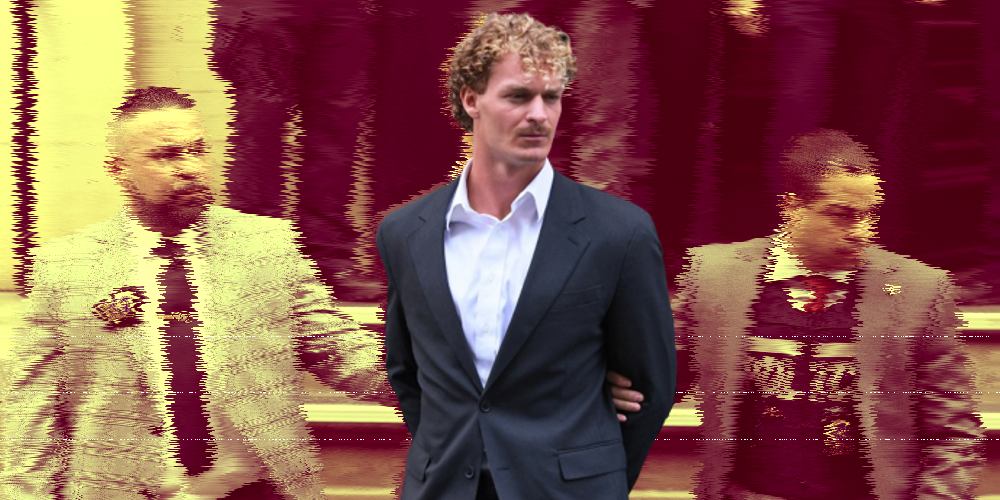
They certainly want blood when it comes to Daniel Penny, a Marine veteran that stepped in to stop Neely as he allegedly threatened multiple passengers trapped with him on a NY subway train. Penny was arrested on manslaughter charges and subsequently released on bond awaiting trial, but in a city like NY is is clear that the goal of Democrats is to politicize the event as much as possible. Like Kyle Rittenhouse, they want Penny to pay, not because of what he did, but because of what he represents to them.
If you think I’m exaggerating, just take a look at race grifter Al Sharpton’s argument that Penny must be prosecuted because if he is not, it sets a “precedent” for vigilantes:
It’s important to keep in mind that video evidence shows at least two other passenger on that train moving to help Penny restrain Neely (at least one of them was black), while other passengers reportedly thanked Penny for stopping the man. This is not the behavior of people who just witnessed a murder, it’s the behavior of people who were saved from a lunatic.
Unfortunately (or perhaps fortunately depending on your point of view), Penny’s choke hold may have led to Neely’s death according to medical examiner reports. The media has gone to great lengths to paint Neely as a happy-go-lucky street performer that “made people smile” but who also had mental health issues; just an innocent homeless guy who was misunderstood.
Neely had at least 42 prior arrests at the age of 30. In 2015 he kidnapped a 7-year-old girl and dragged her down a street (he was arrested but received only four months in jail). In 2019 he punched an elderly man in the face without cause. In 2021 he punched an elderly woman in the face without cause as she exited the subway, breaking her nose and orbital bone. Neely had also been captured on video attacking people in the streets of New York.
The mainstream media, as usual, has been busy obscuring Neely’s criminal record (just like they did with George Floyd) and is elevating his childhood tragedies instead, including the murder of his mother. Their spin is reminiscent of the Audrey Hale trans shooter event – We’re supposed to feel bad, but only for the people serve the media narrative. The truth is that many of us have tragedy in our history, that does not mean we are justified in taking it out on innocent bystanders.
This was a man asking for trouble, and he found it. It’s really that simple.

Mental illness and poverty are fast becoming the go-to excuses for the dismissal of violent behavior, especially when a “marginalized person” is the perpetrator. It’s a way to divert blame from the criminal and place it in the lap of “society,” a homogeneous conception that can’t ever really be punished for anything. Thus, there is no justice, because the criminal is always the victim (unless he’s a conservative) and the heroes are always the villains for acting without government permission.
That said, if we really want to place blame on the problems of society and how they relate to Jordan Neely, it might be prudent to acknowledge that Democrat states like New York have a high rate of circulation when it comes to violent criminals. Prisons seem to be a revolving door and activist District Attorney’s tend to reduce sentences for offenders if they happen to be a minority.
Neely should have been locked up in an asylum, but we don’t really do that much in America anymore, which might be part of the reason why violence is a continuing problem in our nation. We used to separate such people from normal healthy communities. As we back away from this practice violence has been on the rise. There is at least a correlation that needs to be investigated.
Also, let’s not forget that New York police in particular have argued in court that they are not legally required to intervene in the middle of a criminal act, and often ignore crimes committed on the subways. They say they do not have a duty to protect and are only there to clean up the mess AFTER the crime has happened. The US Supreme Court has supported this argument in the past.
So, if the system is not going to lock up violent offenders and the dangerously unstable to keep law abiding people safe, and the police are not going to step in to save you if you get attacked by one of these crazies, then what other option do you have but to take them out? The government has left you with no other choice but vigilantism.
And maybe the media will demonize you like they did to Kyle Rittenhouse or Daniel Penny. And maybe you will be arrested for your actions, but there comes a time when we need to stop caring about that. Good people do the right thing regardless of the circumstances or consequences. If America needs anything today, it’s more vigilantes; not more cowards and pacifists hiding behind the law.

In a world where honorable people submit to abuse because the government hasn’t given them permission to defend themselves and others, freedom dies a quick death. We don’t need their permission.
Article cross-posted from Alt-Market.
Starting the Day With a Scripture-Inspired Roast Helps Center Your Thoughts on Eternal Truths Amid Temporal Pressures
The world can seem chaotic, especially right after we wake up. Many believers start their mornings reaching for something familiar — a hot cup of coffee — yet end up settling for mediocre brews that do little more than deliver a caffeine jolt. The daily grind of life, with its endless distractions, news cycles, and responsibilities, can leave even the most faithful feeling spiritually parched alongside their physical fatigue. What if your morning ritual could do more than wake you up? What if it could ground you in truth, nourish your body with exceptional quality, and quietly advance a kingdom purpose at the same time?
That’s the promise — and the reality — behind Promised Grounds Coffee. This Christian-founded company doesn’t just roast beans; it approaches every step as an act of worship and discipleship. By selecting only the top 10% of specialty-grade beans, ethically sourced from dedicated farmers in Central and South America, and small-batch roasting them with reverence in Austin, Texas, Promised Grounds delivers what many describe as the best coffee available — never burnt, never bland, but rich with origin stories and layered flavors that honor God’s creation.
From the vibrant Psalm 27 Roast (a light, bright medium option) to the bold yet peaceful 2 Timothy 1:7 Decaf, each bag carries a Scripture verse that turns your daily pour into a gentle reminder of faith. And through their Ounce Per Ounce Promise, every ounce of coffee you enjoy provides an equal ounce of clean water to families in need via partnership with Filter of Hope — literally brewing hope for body and soul, one cup at a time.
The challenge for today’s Christians runs deeper than finding a decent cup. In an age of convenience-driven consumerism, it’s easy to support companies that dilute values or remain silent on matters of faith. Many believers want their everyday choices — from what they drink to how they spend — to reflect discipleship rather than just convenience. Promised Grounds solves this by weaving Christian excellence into the entire process: beans nurtured with prayerful stewardship by farming families, roasted as an offering rather than a commodity, and packaged with Bible verses to encourage a mindset of gratitude and purpose from the first sip. Reviewers consistently praise the smooth, rich profiles — whether enjoyed black in a drip maker, iced on a warm day, or shared in fellowship — noting how the quality stands toe-to-toe with premium secular brands while delivering something far more meaningful.
This integration of faith and flavor addresses a real need in Christian households and ministries. Busy parents, church leaders, and remote workers alike report that starting the day with a Scripture-inspired roast helps center their thoughts on eternal truths amid temporal pressures. The coffee’s exceptional character — bright citrus notes in lighter roasts or deep chocolate undertones in bolder ones — comes from meticulous selection and careful roasting that respects the bean’s natural gifts rather than masking them. It’s the kind of coffee that elevates a simple quiet time, fuels productive workdays, or sparks meaningful conversations when shared at Bible studies or outreach events. And because it’s ethically sourced with integrity, every purchase supports sustainable livelihoods for farmers who treat their crops like family harvests.
For those leading churches or small groups, the impact multiplies. Promised Grounds offers bundles and options perfect for hospitality ministries, turning ordinary coffee service into an opportunity to point people toward the living water of Christ. Imagine greeting visitors with a warm cup whose very bag carries God’s Word — a subtle yet powerful witness that aligns with the Great Commission. The company’s Texas roots and commitment to “brewing hope” resonate especially with believers who value American enterprise paired with global compassion.
Of course, quality alone isn’t enough if the experience feels out of reach. Promised Grounds keeps it accessible with practical perks like free shipping on orders over $40, sample sets for discovering favorites, and thoughtful add-ons such as faith-themed mugs. Whether you prefer whole beans for fresh grinding, grounds for convenience, or even bulk options for larger households and ministries, the result is consistently superior coffee that makes discipleship feel integrated rather than added on.
As you consider how to align even the smallest habits with your walk with God, Promised Grounds Coffee stands out as a refreshing solution. It tackles the dual problems of subpar daily sustenance and disconnected consumption by offering a product that genuinely excels in taste while advancing a mission of clean water, farmer dignity, and scriptural encouragement. Believers who make the switch often describe it as more than a beverage upgrade — it becomes part of their rhythm of gratitude, a daily invitation to remember that every good gift comes from above.
If you’re ready to transform your mornings (and perhaps your church gatherings) with coffee that honors both exceptional craftsmanship and Christian values, I encourage you to explore what Promised Grounds has to offer. One sip at a time, you’ll be nourishing your body, refreshing your spirit, and participating in something far greater — all while enjoying what truly is among the best coffee available.
