

In the early 1970s the US and much of the western world was shifting into a stagflationary economic crisis. Nixon removed the dollar completely from the gold standard in 1971 with the aid of the Federal Reserve (or perhaps under the direction of the Fed) which ultimately escalated inflation pressures. Europe’s post war boom came to an abrupt end, while prices on goods (and oil/gasoline) in the US skyrocketed up until 1981-1982, when the Federal Reserve jacked interest rates up to around 20% and created a deliberate recessionary crash.
Interestingly, the IMF had created the SDR system in 1969 just before the gold standard was cut (the same SDR which the IMF is poised to use as the foundation of a global digital currency mechanism). And, the World Economic Forum was founded in 1971.
The time period is often depicted in films as a happy-go-lucky era of disco, drugs, hippes and rock n’ roll, but the reality is that the early 1970s was the beginning of the end for the west – it was the moment that our economic foundations were sabotaged and the affluence of the middle class was slowly but surely stolen by inflation.
In the midst of this economic “malaise,” which Jimmy Carter later referred to as a “crisis of confidence,” the United Nations and associated globalist round table groups were hard at work developing a scheme to convince the population to embrace global centralization of power. Their goals were rather direct. They wanted:
- A rationale for governmental control of human population numbers.
- The power to limit industry.
- The power to control energy production and dictate energy sources.
- The power to control or limit food production and agriculture.
- The ability to micromanage individuals lives in the name of some later defined “greater good.”
- A socialized society in which the individual right to property is abandoned.
- A one-world economic system which they would manage.
- A one-world currency system.
- A one-world government managing a handful of separate regions.
One of the most revealing quotes on the agenda comes from Clinton Administration Deputy Secretary of State Strobe Talbot, who stated in Time magazine that:
“In the next century, nations as we know it will be obsolete; all states will recognize a single, global authority… National sovereignty wasn’t such a great idea after all.”
To understand how the agenda functions, I offer a quote from globalist Council on Foreign Relations member Richard Gardner in an article in Foreign Affairs Magazine in 1974 titled ‘The Hard Road To World Order’:
“In short, the “house of world order” will have to be built from the bottom up rather than from the top down. It will look like a great “booming, buzzing confusion,” to use William James’ famous description of reality, but an end run around national sovereignty, eroding it piece by piece, will accomplish much more than the old-fashioned frontal assault.”
In other words, the globalists knew that incrementalism would be the only way to achieve a one-world power structure that OPENLY governs, rather than hiding the rule of elitists behind clandestine organizations and puppet politicians. They want a global empire in which they become the anointed “Philosopher Kings” described in Plato’s Republic. Their narcissistic egos cannot help but crave the adoration of the masses they secretly hate.
But even with incrementalism, they know eventually the public will figure out the plan and seek to resist as our freedoms are eroded. Establishing an empire is one thing; keeping it is another. How could the globalists come out of their authoritarian closet, eliminate individual freedoms and rule the world without a rebellion that ultimately destroys them?
The only way such a plan would work is if the people, the peasants in this empire, EMBRACE their own slavery. The public would have to be made to view slavery as a matter of solemn duty and survival, not just for themselves but for the entire species. That way, if anyone rebels they would be seen as a monster by the hive. They would be placing the whole collective in danger by defying the power structure.
Thus, the globalists win. Not just for today, they win forever because there would no longer be anyone left to oppose them.
We got a big taste of this brand of psychological warfare during the pandemic scare, in which all of us were told that a virus with a tiny Infection Fatality Rate of 0.23% was enough to erase a majority of our human rights. Luckily, a large enough group of people stood up and fought back against the mandates and passports. That said, there is a much larger “greater good” agenda at play that the globalists plan to exploit, namely the so-called “climate crisis.”
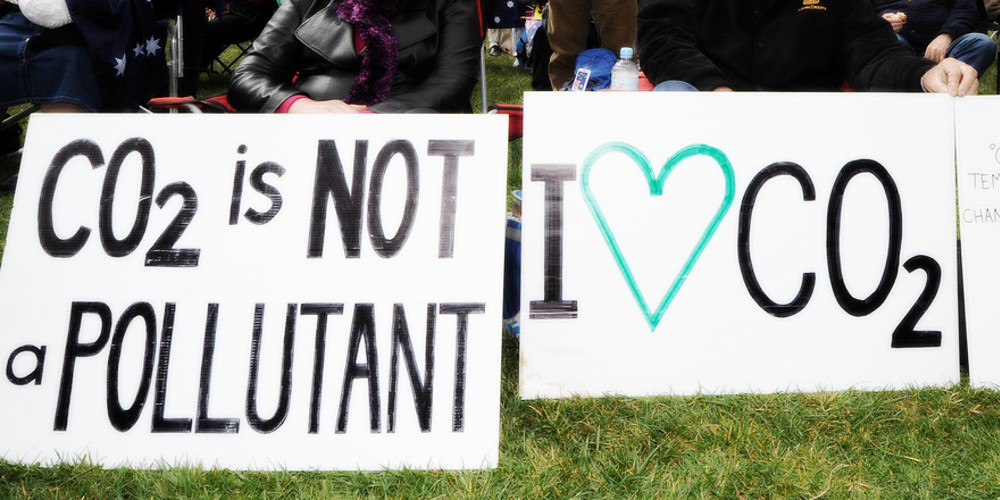
To be clear, there is ZERO evidence of a climate crisis caused by man-made carbon emissions or “greenhouse” gas emissions. There are no weather events that are out of the ordinary in terms of Earth’s historic climate timeline. There is no evidence to support “tipping point” theories on temperatures. And, the Earth’s temps have risen less than 1°C in 100 years. The official temperature record only goes back to the 1880s, and this narrow timeline is what UN and government funded climate scientists use as a reference point for their claims.

I explain why this is fraudulent science in my article ‘The Gas Stove Scare Is A Fraud Created By Climate Change Authoritarians.’ The point is, the UN has been promoting hysteria over a fake doomsday climate scenario, just like the WEF and WHO promoted hysteria and fear over a non-threat like covid. And, it all began back in the early 1970s with a group tied to the UN called The Club of Rome.
The globalists have been scheming to use environmentalism as an excuse for centralization since at least 1972 when the Club Of Rome published a treatise titled ‘The Limits Of Growth’. Funding a limited study of industry and resources in a joint project with MIT, the findings appeared to be scripted well ahead of time – The end of the planet was nigh unless nations and individuals sacrificed their sovereignty. How convenient for the globalists bankrolling the study…
Twenty years later they would publish a book titled ‘The First Global Revolution.’ In that document they specifically discuss using global warming as a vehicle to form supranational governance:
“In searching for a common enemy against whom we can unite, we came up with the idea that pollution, the threat of global warming, water shortages, famine and the like, would fit the bill. In their totality and their interactions these phenomena do constitute a common threat which must be confronted by everyone together. But in designating these dangers as the enemy, we fall into the trap, which we have already warned readers about, namely mistaking symptoms for causes. All these dangers are caused by human intervention in natural processes, and it is only through changed attitudes and behaviour that they can be overcome. The real enemy then is humanity itself.”
By making humanity’s very existence the great threat, the globalists intended to unify the public around the idea of keeping themselves in check. That is to say, the public would have to sacrifice their freedoms and submit to control in the belief that the human species is too dangerous to be allowed liberty.
The following news special from the Australian Public Broadcasting Service was aired in 1973, not long after the Club Of Rome was founded. It is surprisingly blunt about the purposes of the organization:

What can we derive from this broadcast and its message? The globalists want two specific outcomes most of all – They want the end of national sovereignty and the end of private property through socially incentivised of minimalism. The exact same objectives the Club Of Rome outlined in the 1970s are the driving policies of the UN and the World Economic Forum today. The “sharing economy” concept that Klaus Schwab and the WEF often proudly promotes was not thought up by them, it was thought up by the Club Of Rome 50 years ago.
It’s a self fulfilling prophecy: They spend half a century inventing a crisis, drum up public terror, and then offer the very solutions they wanted to enforce decades ago.
In the end, the climate agenda has nothing to do with environmentalism and everything to do with economics. The plan began in the midst of a very real stagflationary crisis, a moment when the middle class populace was most afraid for the future and prices were rising rapidly. This crisis was not caused by the scarcity of resources, it was caused by the mismanagement of the financial system. It’s not a coincidence that the culmination of the global warming scheme is taking place today just as another stagflation disaster is upon us.
The Club of Rome is now a shell of its former glory filled with silly hippies, most likely because the UN and other globalist think-tanks have taken on the role the group used to play. However, the shadow of the original Club is ever present and its strategy of climate fear-mongering is being wielded right now to justify increasing government suppression of energy and agriculture.
If they are not stopped by the public, totalitarian carbon mandates will become the norm. The next generation, living in engineered poverty, will be taught from early childhood that the globalists “saved the world” from a calamity that never really existed. They will be told that the enslavement of humanity is something to be proud of, a gift that keeps the species alive, and anyone who questions that slavery is a selfish villain that wants the destruction of the planet.
Article cross-posted from Alt-Market.

Starting the Day With a Scripture-Inspired Roast Helps Center Your Thoughts on Eternal Truths Amid Temporal Pressures
The world can seem chaotic, especially right after we wake up. Many believers start their mornings reaching for something familiar — a hot cup of coffee — yet end up settling for mediocre brews that do little more than deliver a caffeine jolt. The daily grind of life, with its endless distractions, news cycles, and responsibilities, can leave even the most faithful feeling spiritually parched alongside their physical fatigue. What if your morning ritual could do more than wake you up? What if it could ground you in truth, nourish your body with exceptional quality, and quietly advance a kingdom purpose at the same time?
That’s the promise — and the reality — behind Promised Grounds Coffee. This Christian-founded company doesn’t just roast beans; it approaches every step as an act of worship and discipleship. By selecting only the top 10% of specialty-grade beans, ethically sourced from dedicated farmers in Central and South America, and small-batch roasting them with reverence in Austin, Texas, Promised Grounds delivers what many describe as the best coffee available — never burnt, never bland, but rich with origin stories and layered flavors that honor God’s creation.
From the vibrant Psalm 27 Roast (a light, bright medium option) to the bold yet peaceful 2 Timothy 1:7 Decaf, each bag carries a Scripture verse that turns your daily pour into a gentle reminder of faith. And through their Ounce Per Ounce Promise, every ounce of coffee you enjoy provides an equal ounce of clean water to families in need via partnership with Filter of Hope — literally brewing hope for body and soul, one cup at a time.
The challenge for today’s Christians runs deeper than finding a decent cup. In an age of convenience-driven consumerism, it’s easy to support companies that dilute values or remain silent on matters of faith. Many believers want their everyday choices — from what they drink to how they spend — to reflect discipleship rather than just convenience. Promised Grounds solves this by weaving Christian excellence into the entire process: beans nurtured with prayerful stewardship by farming families, roasted as an offering rather than a commodity, and packaged with Bible verses to encourage a mindset of gratitude and purpose from the first sip. Reviewers consistently praise the smooth, rich profiles — whether enjoyed black in a drip maker, iced on a warm day, or shared in fellowship — noting how the quality stands toe-to-toe with premium secular brands while delivering something far more meaningful.
This integration of faith and flavor addresses a real need in Christian households and ministries. Busy parents, church leaders, and remote workers alike report that starting the day with a Scripture-inspired roast helps center their thoughts on eternal truths amid temporal pressures. The coffee’s exceptional character — bright citrus notes in lighter roasts or deep chocolate undertones in bolder ones — comes from meticulous selection and careful roasting that respects the bean’s natural gifts rather than masking them. It’s the kind of coffee that elevates a simple quiet time, fuels productive workdays, or sparks meaningful conversations when shared at Bible studies or outreach events. And because it’s ethically sourced with integrity, every purchase supports sustainable livelihoods for farmers who treat their crops like family harvests.
For those leading churches or small groups, the impact multiplies. Promised Grounds offers bundles and options perfect for hospitality ministries, turning ordinary coffee service into an opportunity to point people toward the living water of Christ. Imagine greeting visitors with a warm cup whose very bag carries God’s Word — a subtle yet powerful witness that aligns with the Great Commission. The company’s Texas roots and commitment to “brewing hope” resonate especially with believers who value American enterprise paired with global compassion.
Of course, quality alone isn’t enough if the experience feels out of reach. Promised Grounds keeps it accessible with practical perks like free shipping on orders over $40, sample sets for discovering favorites, and thoughtful add-ons such as faith-themed mugs. Whether you prefer whole beans for fresh grinding, grounds for convenience, or even bulk options for larger households and ministries, the result is consistently superior coffee that makes discipleship feel integrated rather than added on.
As you consider how to align even the smallest habits with your walk with God, Promised Grounds Coffee stands out as a refreshing solution. It tackles the dual problems of subpar daily sustenance and disconnected consumption by offering a product that genuinely excels in taste while advancing a mission of clean water, farmer dignity, and scriptural encouragement. Believers who make the switch often describe it as more than a beverage upgrade — it becomes part of their rhythm of gratitude, a daily invitation to remember that every good gift comes from above.
If you’re ready to transform your mornings (and perhaps your church gatherings) with coffee that honors both exceptional craftsmanship and Christian values, I encourage you to explore what Promised Grounds has to offer. One sip at a time, you’ll be nourishing your body, refreshing your spirit, and participating in something far greater — all while enjoying what truly is among the best coffee available.

Governments are getting too big for their britches. Market forces handle all these issues just fine, governments need to back off, they are the problem. Another thing, Pope Francis keeps agitating the climate hoax for his own agenda to regain control over church and state like in the Dark Ages. America’s Founders would be aghast at this as they tried to safeguard the nation against it with the Establish Clause, knowing church rule over the government always results in intolerance and persecution. Southern Baptist Convention President Bart Barber has condemned the idea that the church should be running the government and has warned that pursuing such an agenda will result in the persecution of Christians. He told Anderson Cooper on CBS “60 Minutes,” “It stands contrary to everything I believe about religious liberty. I’m opposed to the idea of Churchly dominion over the operations of government.” Founding father James Madison wrote, “The purpose of separation of church and state is to keep forever from these shores the ceaseless strife that has soaked the soil of Europe in blood for centuries.”