

(Brownstone Institute)—It is clear to me that we are increasingly being governed by an “Administrative State” instead of by our chosen representatives. Indeed, we are more and more becoming a “Regulation Nation” which is a true threat to our Constitutional Republic.
What do I mean by that? I mean that we are being governed by regulations and rules issued by administrative agencies, instead of being governed by laws duly passed by our elected officials.
Why does that matter? Because agencies are run by unelected, government bureaucrats who are beholden to nobody but the person who appointed them. They don’t care what the voters think or want or don’t want. They don’t need to care. They don’t need your vote to stay in power. They only have to appease the politician(s) who appointed them. If they just follow the yellow brick road, they will land on the other side of the rainbow.
Shockingly, some legislators are okay with this, because it allows them to escape any sort of responsibility or blame for an unpopular (or illegal) rule that is implemented by the bureaucrats sitting in the agencies (you know, the ones with no accountability to us voters). But, legislators should not only care, they should actively work to stop the Administrative State, because not only do many of these “regulations” usurp a legislator’s law-making power, but they are wholly unconstitutional!
You will remember from grade school Social Studies class that our government is comprised of three, co-equal branches: the Legislative branch (senators and assemblymembers who make our laws), the Executive branch (governors and the president who are supposed to enforce our laws), and the Judicial branch (judges and courts which adjudicate our laws). Each branch has its own powers and authorities, as bestowed upon them by our Constitution. Any power that is not delineated in our Constitution is reserved for the people. Remember my long-uttered phrase that, the Constitution was written to keep the government in check, not to keep we the people in check!
There is no fourth branch of government. There is no branch called the Administrative State. There is no authority in the Constitution to have agencies that make rules/regulations that employ the force of law. And yet, we see at the federal level as well as at the state level, Executive branches that are chock full of bloated, power-hungry agencies that have given themselves an astonishing amount of never-authorized-by-the-people power. In many cases, those powers are unconstitutional, meaning the agency did not have the authority to make the rule or do the thing they are doing (or trying to do).
Let me give you a few real-life scenarios so it’s easier to digest.
For starters, my quarantine camp lawsuit is a perfect example. For those not familiar with this case, what happened there is that the NYS Department of Health (DOH) issued an “Isolation & Quarantine Procedures” regulation. The head of the DOH is a commissioner who is appointed by the Governor. Everyone that works for the DOH is unelected. They do not need to listen to voters wants and needs. Quite presumably, if the Commissioner or any of the government workers below him don’t do the bidding of their “boss,” then their days at the DOH would surely be limited.
So, what happened in my quarantine case is that the DOH created a wholly unconstitutional regulation (Rule 2.13) that allowed them to pick and choose which New Yorkers they could lock up or lock down. That could have been forced isolation in your home, or they could have removed you from your home and put you into a quarantine facility of their choosing. For however long they wanted. With no notice. With no right to an attorney until after you were locked up. With no procedure for you to regain your freedom once you were incarcerated.
There was no age restriction, so they could have taken you, your child, your grandchild… And they didn’t even have to prove that you were sick, or that you had even been exposed to a communicable disease! Guilty until proven innocent.
The DOH gave themselves this phenomenal power. If that is unclear what I mean there, I will explain. The DOH wanted this unbridled power to be able to control 19 million New Yorkers with the stroke of a pen, but the NYS Legislature wouldn’t give it to them in the form of failed Assembly bill A416 (because the legislators knew it would be political suicide). So, the DOH simply made Rule 2.13 and gave themselves the power they wanted, anyway. No legislative consent given. No voter input had. Zilch. A clear breach of Separation of Powers. A clear affront on our Constitution. A perfect example of the “Regulation Nation” as run by an Administrative State.
This was the most unconstitutional regulation I had ever read in my 25 years of practicing law. It was an attack on the very basis of our freedom, and a dangerous chipping away at the bedrock of our free society…a government by the people, and for the people. Without question, I knew I had to stop it.
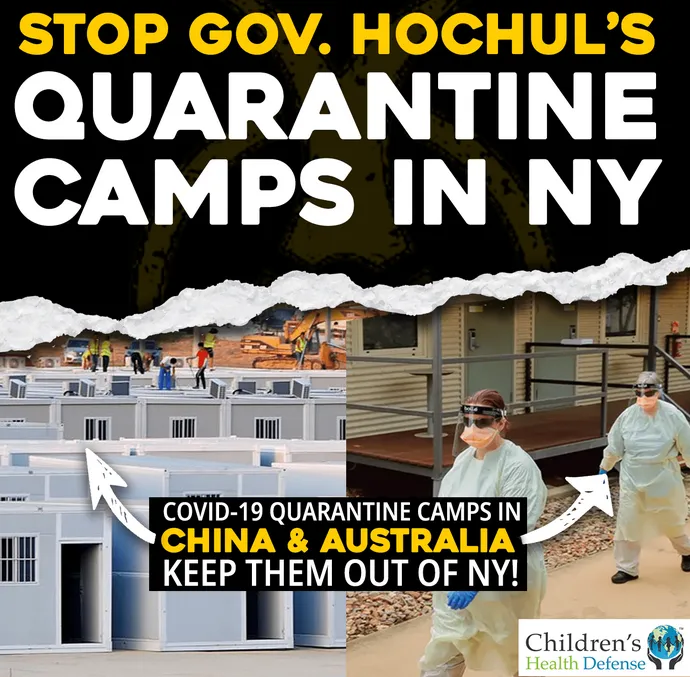
So, I sued Hochul and her DOH on behalf of a group of NYS legislators (Senator George Borrello, Assemblyman Chris Tague, Congressman Mike Lawler) together with a citizens’ group called Uniting NYS. Our argument was clear: the DOH does not possess the power to make a law, and this was surely a law, despite the fact that they called it a regulation or rule. It conflicted with the Constitution. It conflicted with NYS law. As Assemblyman Tague said at a press conference we held when we first filed our lawsuit in 2022:
This policy’s aim to forcibly isolate law-abiding citizens is reminiscent of actions taken by some of the ugliest tyrannical regimes history has ever known. It has no place standing as law here in New York, let alone anywhere in the United States. Policies as dangerous as this should be debated and scrutinized in a public setting by elected representatives, not quietly slinked through regulatory approvals.
In July 2022, the Judge ruled in our favor and struck down this stunning display of tyranny. You can read that decision here. Of course Hochul and Attorney General Letitia James appealled the court’s decision so they could try to get back that heinous power. In November of 2023, the appellate court dismissed our case for lack of standing (a true dodging of the merits of a lawsuit if I ever saw one). So, now I am appealing that calamitous decision to the Court of Appeals (our State’s highest court).

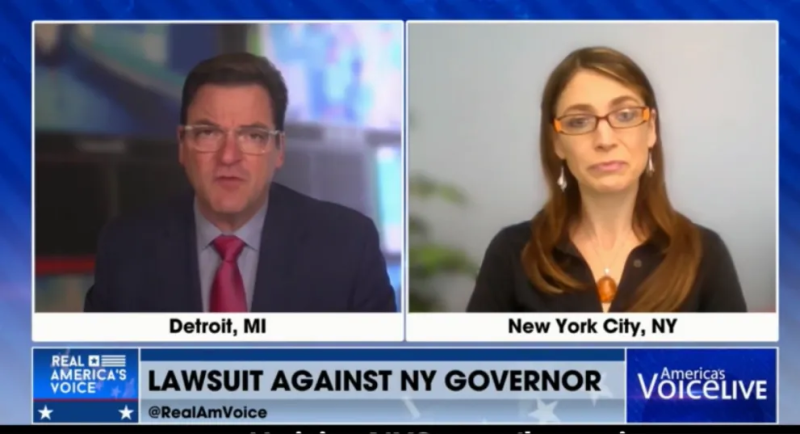
I have done numerous interviews about my quarantine lawsuit and this “Regulation Nation” phenomenon, and you can access some of those on my website, www.CoxLawyers.com. One such interview was with Steve Gruber on America’s Voice Live, and can be accessed HERE.
About the Author
Bobbie Anne, a 2023 Brownstone Fellow, is an attorney with 25 years experience in the private sector, who continues to practice law but also lectures in her field of expertise – government over-reach and improper regulation and assessments.
Starting the Day With a Scripture-Inspired Roast Helps Center Your Thoughts on Eternal Truths Amid Temporal Pressures
The world can seem chaotic, especially right after we wake up. Many believers start their mornings reaching for something familiar — a hot cup of coffee — yet end up settling for mediocre brews that do little more than deliver a caffeine jolt. The daily grind of life, with its endless distractions, news cycles, and responsibilities, can leave even the most faithful feeling spiritually parched alongside their physical fatigue. What if your morning ritual could do more than wake you up? What if it could ground you in truth, nourish your body with exceptional quality, and quietly advance a kingdom purpose at the same time?
That’s the promise — and the reality — behind Promised Grounds Coffee. This Christian-founded company doesn’t just roast beans; it approaches every step as an act of worship and discipleship. By selecting only the top 10% of specialty-grade beans, ethically sourced from dedicated farmers in Central and South America, and small-batch roasting them with reverence in Austin, Texas, Promised Grounds delivers what many describe as the best coffee available — never burnt, never bland, but rich with origin stories and layered flavors that honor God’s creation.
From the vibrant Psalm 27 Roast (a light, bright medium option) to the bold yet peaceful 2 Timothy 1:7 Decaf, each bag carries a Scripture verse that turns your daily pour into a gentle reminder of faith. And through their Ounce Per Ounce Promise, every ounce of coffee you enjoy provides an equal ounce of clean water to families in need via partnership with Filter of Hope — literally brewing hope for body and soul, one cup at a time.
The challenge for today’s Christians runs deeper than finding a decent cup. In an age of convenience-driven consumerism, it’s easy to support companies that dilute values or remain silent on matters of faith. Many believers want their everyday choices — from what they drink to how they spend — to reflect discipleship rather than just convenience. Promised Grounds solves this by weaving Christian excellence into the entire process: beans nurtured with prayerful stewardship by farming families, roasted as an offering rather than a commodity, and packaged with Bible verses to encourage a mindset of gratitude and purpose from the first sip. Reviewers consistently praise the smooth, rich profiles — whether enjoyed black in a drip maker, iced on a warm day, or shared in fellowship — noting how the quality stands toe-to-toe with premium secular brands while delivering something far more meaningful.
This integration of faith and flavor addresses a real need in Christian households and ministries. Busy parents, church leaders, and remote workers alike report that starting the day with a Scripture-inspired roast helps center their thoughts on eternal truths amid temporal pressures. The coffee’s exceptional character — bright citrus notes in lighter roasts or deep chocolate undertones in bolder ones — comes from meticulous selection and careful roasting that respects the bean’s natural gifts rather than masking them. It’s the kind of coffee that elevates a simple quiet time, fuels productive workdays, or sparks meaningful conversations when shared at Bible studies or outreach events. And because it’s ethically sourced with integrity, every purchase supports sustainable livelihoods for farmers who treat their crops like family harvests.
For those leading churches or small groups, the impact multiplies. Promised Grounds offers bundles and options perfect for hospitality ministries, turning ordinary coffee service into an opportunity to point people toward the living water of Christ. Imagine greeting visitors with a warm cup whose very bag carries God’s Word — a subtle yet powerful witness that aligns with the Great Commission. The company’s Texas roots and commitment to “brewing hope” resonate especially with believers who value American enterprise paired with global compassion.
Of course, quality alone isn’t enough if the experience feels out of reach. Promised Grounds keeps it accessible with practical perks like free shipping on orders over $40, sample sets for discovering favorites, and thoughtful add-ons such as faith-themed mugs. Whether you prefer whole beans for fresh grinding, grounds for convenience, or even bulk options for larger households and ministries, the result is consistently superior coffee that makes discipleship feel integrated rather than added on.
As you consider how to align even the smallest habits with your walk with God, Promised Grounds Coffee stands out as a refreshing solution. It tackles the dual problems of subpar daily sustenance and disconnected consumption by offering a product that genuinely excels in taste while advancing a mission of clean water, farmer dignity, and scriptural encouragement. Believers who make the switch often describe it as more than a beverage upgrade — it becomes part of their rhythm of gratitude, a daily invitation to remember that every good gift comes from above.
If you’re ready to transform your mornings (and perhaps your church gatherings) with coffee that honors both exceptional craftsmanship and Christian values, I encourage you to explore what Promised Grounds has to offer. One sip at a time, you’ll be nourishing your body, refreshing your spirit, and participating in something far greater — all while enjoying what truly is among the best coffee available.

Jackholes calling the minions of DEEP STATE the administrative state because they are TERRIFIED?!
It is NEVER the fault of the careless and apathetic Americans who can barely be bothered to vote, or research the people they elect to represent them.
Nope, it’s always somebody, or something else that is responsible.
BIYA and Shut TFU