

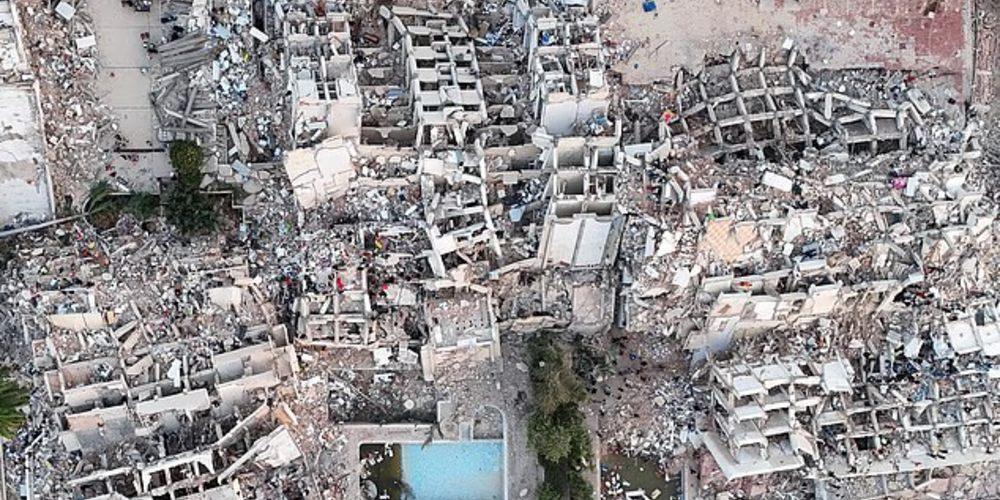
The twin earthquakes that struck Venezuela this week were not merely acts of nature—they laid bare decades of deliberate neglect and ideological folly. A magnitude 7.2 quake followed seconds later by a 7.5 temblor devastated the northern coast near Caracas, particularly La Guaira state, collapsing buildings and claiming at least 1,430 lives as of the latest reports, with tens of thousands still missing.
Rescue workers sifting through the rubble made a grim discovery: entire apartment complexes, many erected under Hugo Chávez’s “Grand Housing Mission,” were little more than facades held together by Styrofoam and thin concrete shells.
Video from the scene shows rescuers pulling apart walls with their bare hands, the interior material crumbling like packing foam. “No wonder everything crumbled like cardboard,” one rescuer remarked, as colleagues openly criticized the regime’s failures.
This catastrophe was foreseeable. Engineers and even some within the Chávez government had long warned that rushed socialist housing projects ignored seismic codes and basic engineering standards. Construction accelerated under Nicolás Maduro to meet political quotas, prioritizing propaganda over safety. The result? Pancaked high-rises and neighborhoods reduced to dust, burying families who trusted the state to provide.
Venezuela’s tragedy stands as a stark warning against centralized power that promises utopia while delivering death. The “Bolivarian Revolution” gutted the private sector, invited corruption, and left the nation ill-equipped for even routine governance, let alone disaster response.
Years of mismanagement, compounded by the regime’s isolation, meant scant heavy equipment and bureaucratic hurdles for aid workers. Interim leadership under Delcy Rodríguez declared disaster zones and restricted access, even as the 72-hour golden window for rescues closed.
The Human Cost of Ideological Hubris
Entire blocks in La Guaira vanished. A four-building complex saw three structures leveled, destroying hundreds of apartments. Survivors and volunteers clawed through debris for days before international teams arrived. Foreign rescuers, including from the United States, now labor alongside locals amid aftershocks, but the scale overwhelms. Over 3,000 injured and thousands in shelters paint a picture of a nation on its knees.
Non-government groups tracked nearly 50,000 unaccounted for, a figure that underscores the regime’s opacity. US Geological Survey models suggest the toll could climb far higher, potentially ranking among Latin America’s worst in a century. Yet the deeper failure lies not in the earth’s movement, but in leaders who built on sand—literally and figuratively.
Socialism’s track record in Venezuela offers no surprises. What began as grand promises of housing for the masses devolved into shoddy structures that could not withstand the shaking ground. Private construction withered under state control, leaving citizens vulnerable. This is the predictable fruit of a system that values loyalty over competence and central planning over reality.

Lessons in Stewardship and Truth
As the world watches, the contrast with nations that value property rights, accountability, and sound governance could not be clearer. Free societies build with durability because they answer to the people, not party dictates. Venezuela’s rulers, by contrast, rushed projects for optics, ignoring warnings from their own experts.
In the rubble lies a call to discernment. Scripture reminds us of the peril of building without foundation: “And every one that heareth these sayings of mine, and doeth them not, shall be likened unto a foolish man, which built his house upon the sand: And the rain descended, and the floods came, and the winds blew, and beat upon that house; and it fell: and great was the fall of it” (Matthew 7:26-27).
Venezuela’s leaders built upon the shifting sands of ideology, and the fall has been catastrophic.
American aid and global response offer immediate relief, but the long-term path forward requires Venezuelans to reject the lies that brought them here. True security flows from honest governance, respect for human life, and structures—both physical and moral—that endure. The Styrofoam walls stand as a monument to failure, a warning for any society tempted by similar delusions.
May the victims rest, the survivors find strength, and the world learn before the next preventable disaster strikes.

Starting the Day With a Scripture-Inspired Roast Helps Center Your Thoughts on Eternal Truths Amid Temporal Pressures
The world can seem chaotic, especially right after we wake up. Many believers start their mornings reaching for something familiar — a hot cup of coffee — yet end up settling for mediocre brews that do little more than deliver a caffeine jolt. The daily grind of life, with its endless distractions, news cycles, and responsibilities, can leave even the most faithful feeling spiritually parched alongside their physical fatigue. What if your morning ritual could do more than wake you up? What if it could ground you in truth, nourish your body with exceptional quality, and quietly advance a kingdom purpose at the same time?
That’s the promise — and the reality — behind Promised Grounds Coffee. This Christian-founded company doesn’t just roast beans; it approaches every step as an act of worship and discipleship. By selecting only the top 10% of specialty-grade beans, ethically sourced from dedicated farmers in Central and South America, and small-batch roasting them with reverence in Austin, Texas, Promised Grounds delivers what many describe as the best coffee available — never burnt, never bland, but rich with origin stories and layered flavors that honor God’s creation.
From the vibrant Psalm 27 Roast (a light, bright medium option) to the bold yet peaceful 2 Timothy 1:7 Decaf, each bag carries a Scripture verse that turns your daily pour into a gentle reminder of faith. And through their Ounce Per Ounce Promise, every ounce of coffee you enjoy provides an equal ounce of clean water to families in need via partnership with Filter of Hope — literally brewing hope for body and soul, one cup at a time.
The challenge for today’s Christians runs deeper than finding a decent cup. In an age of convenience-driven consumerism, it’s easy to support companies that dilute values or remain silent on matters of faith. Many believers want their everyday choices — from what they drink to how they spend — to reflect discipleship rather than just convenience. Promised Grounds solves this by weaving Christian excellence into the entire process: beans nurtured with prayerful stewardship by farming families, roasted as an offering rather than a commodity, and packaged with Bible verses to encourage a mindset of gratitude and purpose from the first sip. Reviewers consistently praise the smooth, rich profiles — whether enjoyed black in a drip maker, iced on a warm day, or shared in fellowship — noting how the quality stands toe-to-toe with premium secular brands while delivering something far more meaningful.
This integration of faith and flavor addresses a real need in Christian households and ministries. Busy parents, church leaders, and remote workers alike report that starting the day with a Scripture-inspired roast helps center their thoughts on eternal truths amid temporal pressures. The coffee’s exceptional character — bright citrus notes in lighter roasts or deep chocolate undertones in bolder ones — comes from meticulous selection and careful roasting that respects the bean’s natural gifts rather than masking them. It’s the kind of coffee that elevates a simple quiet time, fuels productive workdays, or sparks meaningful conversations when shared at Bible studies or outreach events. And because it’s ethically sourced with integrity, every purchase supports sustainable livelihoods for farmers who treat their crops like family harvests.
For those leading churches or small groups, the impact multiplies. Promised Grounds offers bundles and options perfect for hospitality ministries, turning ordinary coffee service into an opportunity to point people toward the living water of Christ. Imagine greeting visitors with a warm cup whose very bag carries God’s Word — a subtle yet powerful witness that aligns with the Great Commission. The company’s Texas roots and commitment to “brewing hope” resonate especially with believers who value American enterprise paired with global compassion.
Of course, quality alone isn’t enough if the experience feels out of reach. Promised Grounds keeps it accessible with practical perks like free shipping on orders over $40, sample sets for discovering favorites, and thoughtful add-ons such as faith-themed mugs. Whether you prefer whole beans for fresh grinding, grounds for convenience, or even bulk options for larger households and ministries, the result is consistently superior coffee that makes discipleship feel integrated rather than added on.
As you consider how to align even the smallest habits with your walk with God, Promised Grounds Coffee stands out as a refreshing solution. It tackles the dual problems of subpar daily sustenance and disconnected consumption by offering a product that genuinely excels in taste while advancing a mission of clean water, farmer dignity, and scriptural encouragement. Believers who make the switch often describe it as more than a beverage upgrade — it becomes part of their rhythm of gratitude, a daily invitation to remember that every good gift comes from above.
If you’re ready to transform your mornings (and perhaps your church gatherings) with coffee that honors both exceptional craftsmanship and Christian values, I encourage you to explore what Promised Grounds has to offer. One sip at a time, you’ll be nourishing your body, refreshing your spirit, and participating in something far greater — all while enjoying what truly is among the best coffee available.
