

Once again, the Trump and Biden administrations have proven that federal agencies that were initially established to protect American consumers are nothing more than conduits for deep state control, which is why it is vitally important for more states to begin shunning any and all federal control.
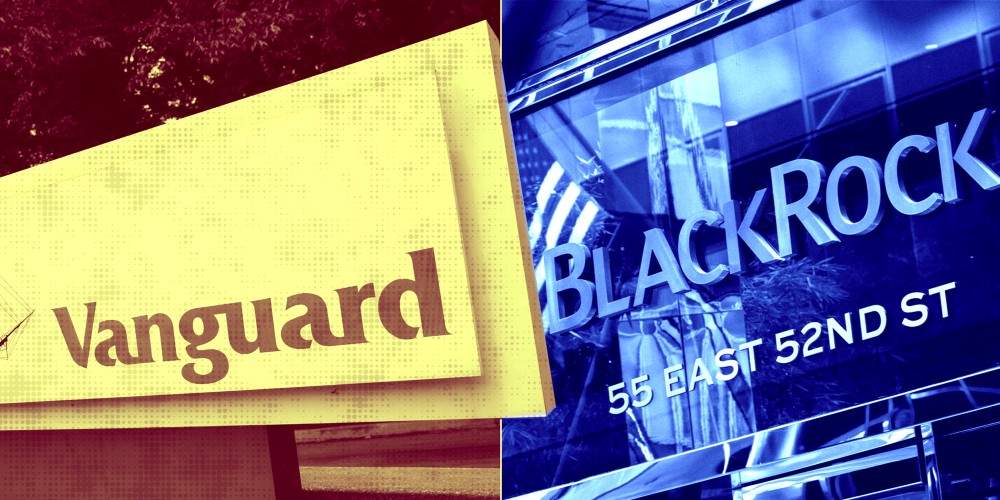
During the last two administrations, two of the world’s biggest investment managers, Blackrock and Vanguard, were allowed to purchase huge stakes in local utilities, which is a problem because in most cases around the country, there is only one utility company that serves a wide swath of the population.
In April, the Federal Energy Regulatory Commission (FERC) approved a request from BlackRock to increase its ownership up to 20 percent of a public utility’s voting shares without being deemed an “affiliate” and incurring the regulatory scrutiny and disclosures that come with that. To gain FERC approval, BlackRock and Vanguard promised they’d be “passive” investors and not use their share ownership to influence management.
Oh, well, good. They ‘promised.’ But why else buy into these utilities?
Due to the monopolistic nature of utility companies and because they hold so much importance over people’s lives, any investment of more than $10 million has to be approved by FERC. However, as The Epoch Times noted further, “BlackRock and Vanguard received blanket approval in 2019 to surpass this limit for three years, and BlackRock was just given blanket approval for another three years.”
So, that will make six total years that the federal agency set up to protect against outsized investments in utility companies has allowed outsized investments in utility companies, completely negating the agency’s purpose. And why? Money, of course — it’s always about money.
Nevertheless, the investments have begun to set off alarm bells in the offices of both conservative and liberal state attorneys general. Last month, 13 AGs petitioned FERC — obviously unsuccessfully — to deny the investment firms’ request for the three-year extension, claiming that their citizens would be harmed if the utility companies are then compelled to stop utilizing fossil fuels in lieu of wind and solar.
“Vanguard is not entitled to a blanket authorization to acquire substantial equity and voting power in utility companies,” the AGs argued.
“Vanguard’s own public commitments and other statements have at the very least created the appearance that Vanguard has breached its promises to the commission by engaging in environmental activism and using its financial influence to manipulate the activities of the utility companies in its portfolio,” the petition said. “A hearing in this matter is warranted to determine the extent to which Vanguard has violated the 2019 authorization and whether granting Vanguard a blanket authorization is contrary to the public interest.”
Some FERC officials echoed the concern. FERC Commissioner Mark Christie stated: “The claim that huge asset managers such as BlackRock, State Street, and Vanguard are merely passive investors in publicly held corporations, investing purely for the benefit of their beneficiaries—many of whom are retirees receiving pensions—is no longer credible.
“BlackRock, in particular, has been openly aggressive in using its massive financial power to influence corporate policy in areas far attenuated from the legitimate money-management goals of protecting the incomes and investment interests of its beneficiaries,” he added.
Charlie Munger, the vice chairman of Berkshire Hathaway—which is chaired by Warren Buffett—agreed, stating in February that “we have a new bunch of emperors, and they’re the people who vote the shares in the index funds. I think the world of [BlackRock CEO] Larry Fink, but I’m not sure I want him to be my emperor.”
Republican senators agree.

“A retail investor who buys an index fund does not own the stock in the fund,” said a December report by the Senate Banking Committee’s GOP members. “Those stocks instead are owned by the fund, which means the fund’s manager may vote those shares. Even though they buy that voting power with other people’s money, that voting power gives asset managers like the Big Three enormous influence.”
“What these activists have figured out is that any radical policy that they can’t get enacted through government can be advanced through corporate America by hijacking trillions of dollars in voting rights from everyday Americans’ retirement accounts,” noted Sen. Bill Hagerty (R-Tenn.).
The economy of a first-world power cannot sustain itself on wind and solar power. Just ask Germany.
Sources include:

Two Storms, One Harvest

Every food crisis in living memory has been a one-shock event. The 2008 price spike was a commodity bubble. The 2020 shortages were a logistics failure. The 2022 grain scare was a war on one exporter’s ports. Each time, the system bent, adjusted, and recovered, and each time the experts assured us afterward that global markets are simply too big and too diversified to fail.
What nobody in Washington seems eager to discuss is that 2026 is shaping up to be something the modern food system has never actually faced. Two independent shocks, one climatic and one geopolitical, are converging on the same harvest cycle at the same time. Not sequentially. Simultaneously.
Start with the weather. The Pacific Ocean is currently building toward what forecasters now openly call a record event. NOAA’s Climate Prediction Center puts the odds of at least a strong El Niño near 88 percent, with roughly two in three odds it reaches “very strong” status, the tier reserved for perhaps three or four events in the entire satellite era. Every major global model now projects a median peak in Super El Niño territory, and most of them project it exceeding the 2015-16 event, which until now held the modern record. Sea surface anomalies were already brushing the super threshold in mid-July, months before these events normally peak. The atmosphere has already shifted into El Niño mode, and the event is forecast to crest in late fall and early winter.
This is not about “climate change.” It’s about the standard cycles of weather, and the cycle we’re currently in is one that has likely devastated societies in the past. We’re better prepared as a society today, but not all Americans are equally prepared.
Serious households have started doing the quiet math on their own. Grocery bills tell part of the story, and the forecast maps tell the rest, which is why long-term food storage has moved from fringe hobby to mainstream line item in the family budget, with established suppliers like Heaven’s Harvest seeing demand from people who five years ago would have rolled their eyes at the idea. That instinct is not paranoia. It is pattern recognition, and the pattern is worth walking through carefully.
Editor’s Note: Heaven’s Harvest IS a sponsor, but the warnings of this article are real and would be written even if we didn’t have a survival food sponsor. With that said, those who take advantage of what they offer can use promo code “Patriot” for 15% off.
The Fertilizer Clock Is Already Running
While the Pacific warms, the second shock has been unfolding in the Strait of Hormuz. The conflict with Iran turned the world’s most important energy chokepoint into a contested waterway, and the consequences reach far beyond the gas pump. Roughly a third of global fertilizer trade moves through Hormuz, and the disruption sent urea prices up 86 percent year over year by March, with a 53 percent jump in a single month.
The World Bank projects energy prices rising about 24 percent in 2026 and fertilizer about 31 percent. By its own accounting, fertilizer prices ran 35 percent higher in the first five months of this year than the same period last year.
Here is the mechanism the nightly news will not explain. Fertilizer is not a grocery item. It is a time-delayed input. The nitrogen a farmer in Iowa or Punjab could not afford to apply this spring does not show up as a problem this spring. It shows up as a thinner harvest six to twelve months later.
The World Bank’s own food security brief concedes that the effects of reduced applications earlier this season “are likely to become visible only later in harvest outcomes.” Translate that from institutional language into plain English and it means this. The damage is already done, it is already in the ground, and we are simply waiting for it to arrive on the shelf.
Now check the calendar. Six to twelve months from the spring planting season lands us squarely in late 2026 and early 2027. Which is precisely when the strongest El Niño in the instrumental record is forecast to peak, bringing its signature droughts to Southeast Asia, Australia, southern Africa, northern Brazil, and South Asia, the very regions that grow the world’s rice, sugar, and oilseeds.
The World Bank warns openly that a strong El Niño “could disrupt multiple crop belts simultaneously” on top of the conflict-driven input costs. Their baseline projection assumes the Middle East disruptions ease by autumn. What in the last two years of Middle East history suggests that assumption is safe?
The System Has No Slack Left
The comfortable answer is that global markets always adjust. But adjustment requires slack, and the slack is gone. Global cereal production is expected to decline from last year’s records even before El Niño does its work. The UN World Food Programme, hardly a den of right-wing preppers, is calling this the most significant disruption to its supply chains since Covid and the invasion of Ukraine, and its supply chain director put the stakes bluntly.
Today’s supply chain challenges are tomorrow’s hunger crisis.
There is also a political dimension that markets cannot price. When food gets scarce, governments do not behave like economists. They behave like politicians. Export bans, hoarding mandates, and panic buying at the national level turned the modest rice shortfall of 2008 into a global crisis, and analysts are already warning that import-dependent nations are the first dominoes.
The 2015-16 Super El Niño, a far weaker event than what is now forecast, threw tens of millions into food stress across Africa and Asia. This one is projected to be stronger, and it arrives with fertilizer already rationed by price and shipping lanes already contested by missiles.
What Joseph Knew
Scripture does not treat preparation for lean years as faithlessness. It treats it as wisdom delivered in advance to those willing to act on it.
Behold, there come seven years of great plenty throughout all the land of Egypt: And there shall arise after them seven years of famine; and all the plenty shall be forgotten in the land of Egypt.
Joseph did not respond to that warning with a hashtag or a committee. He stored grain during the years of abundance, and when the famine came, Egypt stood while its neighbors begged. The lesson is not that famine is certain. It is that the time to prepare is precisely when preparation still looks optional.
Nobody who filled a pantry in a year of plenty has ever regretted it, and nobody standing in an empty aisle has ever been glad he waited for certainty.
None of this calls for panic, and panic is the enemy of sound judgment anyway. It calls for the same unglamorous prudence our grandparents considered ordinary. Keep some cash margin, know your local growers, and put real food in deep storage while it is cheap and available, because the entire arc of this story is that cheap and available is a closing window.
Families looking for a straightforward place to start can visit Heaven’s Harvest and use promo code Patriot for 15 percent off long-term storable food. The forecasts may yet soften, the strait may yet reopen, and we should pray they do. But hope is a fine thing to hold and a foolish thing to eat.
