


There is a certain poetic justice — the kind that not even a professional satirist could manufacture — in watching a partially recognized African nation publicly mock a sitting member of the United States Congress and volunteer to receive her as a criminal fugitive. Yet here we are.
The Republic of Somaliland, which has spent over three decades building democratic institutions without the benefit of full international recognition, looked at the latest allegations swirling around Rep. Ilhan Omar and essentially said: send her back.
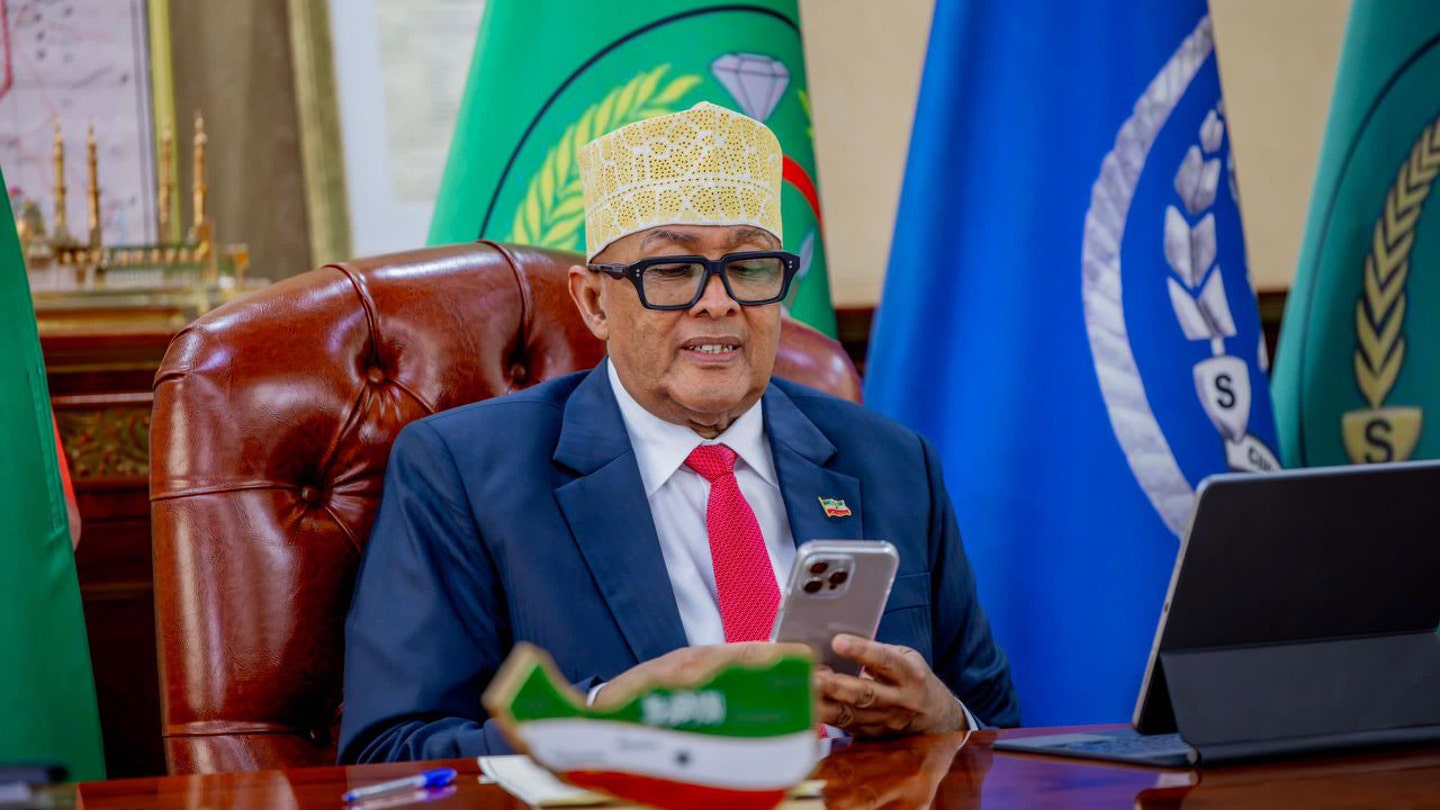
“Deportation? Please, you’re just sending the princess back to her kingdom,” Somaliland posted on X this week, after Vice President JD Vance publicly stated that he and White House advisor Stephen Miller believe Omar “definitely committed immigration fraud against the United States of America.” The Somaliland post continued with pointed invitation: “Extradition? Say the word.”
A government that the United States doesn’t even formally recognize — a scrappy, self-governing territory that has been quietly building courts, holding elections, and maintaining its own security since 1991 — is more eager to apply rule-of-law accountability to Ilhan Omar than the Democratic Party or the mainstream American press has been willing to do for the better part of a decade.
A Decade of Unanswered Questions
The allegations surrounding Omar’s 2009 marriage to Ahmed Nur Said Elmi have circulated since at least 2016, when she was still a Minnesota state representative. The central claim — that Elmi is in fact her biological brother, and that the marriage was a mechanism to secure his legal immigration status — did not emerge from partisan operatives in a dark room. It came, initially, from within the Somali community itself, surfacing on Somali community forums and eventually reaching Minneapolis community leader Abdihakim Osman, who told the Daily Mail in 2020 that he personally knew both of them while they were growing up in Minnesota and that Omar had introduced Elmi to community members as her brother from London.
Osman said Omar would tell people at the time that her sibling was looking for “papers” — a reference to immigration documents. “No one knew there had been a wedding [to Elmi] until the media turned up the marriage certificate years later,” Osman told the paper.
A three-year investigative effort by reporter David Steinberg, drawing on documents from both the United States and the United Kingdom, produced what Judicial Watch later described as significant evidence of potential marriage fraud, perjurious statements in Minnesota divorce filings, and tax return falsifications.
The Washington Examiner‘s 2019 investigation found dozens of documents containing discrepancies in Omar’s marriage statements. The FBI reportedly opened an inquiry in 2020. And yet, through all of it — through the Obama years, through two Trump terms interrupted by Biden, through Omar’s ascension to Congress and her elevation to progressive celebrity — nothing happened. No charges. No subpoenas that stuck. No accountability.
Omar’s responses over the years have followed a familiar and well-worn script. The allegations are “bigoted lies.” The accusers are racists trying to stop a Black, female Muslim from serving in Congress. The critics are “obsessed” with her. When Nancy Mace moved to subpoena Omar’s immigration records during a House Oversight hearing in January 2026, the motion was tabled — by members of both parties.
“Washington did what it always does, protect its own,” Mace observed afterward. That bipartisan protection racket is worth dwelling on. It is not merely Democrats who have shielded Omar from scrutiny. The institutional impulse to avoid the political mess of investigating a sitting congresswoman has transcended party lines. The question is whether the Vance intervention changes that calculus.

The Minnesota Backdrop Cannot Be Ignored
Vance’s fraud allegations against Omar do not exist in a vacuum. They are inseparable from what federal prosecutors have described as an “industrial-scale fraud” emanating from Minnesota’s Somali community — a network of schemes involving welfare programs, Medicaid, housing assistance, child nutrition funds, and autism therapy claims that could top $9 billion in stolen taxpayer money. Assistant U.S. Attorney Joe Thompson has been unambiguous: “The fraud is not small. It isn’t isolated. The magnitude cannot be overstated.”
Nearly 100 individuals have been charged, the vast majority of Somali descent. Federal prosecutors allege that nonprofits claimed to feed tens of thousands of nonexistent children, provided therapy for nonexistent autistic patients, housed nonexistent disabled seniors. Kickbacks were paid. Luxury goods were purchased. Money was wired overseas.
The Treasury Department has announced investigations into whether any of these funds reached al-Shabaab, an al-Qaeda affiliate designated as a foreign terrorist organization. The FBI reportedly built its case largely without cooperation from state officials, who — according to reporting from both the Minnesota Star Tribune and the Minnesota Reformer — provided “little or no evidence” to federal investigators and were “reluctant to act” out of fear of accusations of racism.
It is against this backdrop that Vance says of Omar: “I’m also worried about what did Ilhan Omar know about what was happening in the Somali community, and why was nobody looking into it until, frankly, Donald Trump came along?”

The question is pointed and legitimate. Omar represents the district with the largest Somali-American population in the country. The fraud networks operated openly and extensively within that community for years. Her response to scrutiny has been to frame all accountability efforts as bigotry — the same rhetorical move that, according to White House reporting, helped shield the fraud networks from state-level intervention for a dangerously long time.
None of this proves that Omar personally directed or participated in the welfare fraud. Vance himself acknowledged he is “not certain” of that. But his observation that we “at least need to investigate” is the bare minimum of what oversight requires. The fact that the same congresswoman who has loudly dismissed marriage fraud allegations for a decade also represents the epicenter of the nation’s largest welfare fraud scandal — and has never faced serious congressional scrutiny — is not a coincidence the American public should be expected to file away as irrelevant.

The Constitutional Dimension
Critics will argue that Vance’s statements are political persecution, that targeting a sitting member of Congress for investigation based on years-old and unproven allegations crosses constitutional lines. Those objections would carry more weight if they came from people who had not spent years demanding investigations into political opponents on far thinner pretexts. But more importantly, the constitutional argument runs in the opposite direction from where Omar’s defenders are trying to point it.
The foundation of republican self-governance is not merely that citizens elect their representatives. It is that those representatives are subject to the same law as the citizens they serve. Immigration fraud is a federal crime carrying penalties of up to five years in prison and a $250,000 fine.
Denaturalization and deportation are available remedies for those who obtained citizenship through fraud. The integrity of the immigration system — a system that Omar herself champions rhetorically — depends on those consequences being applied without exemption for the politically connected. The rule of law, as a principle, is not a shield that one may brandish to protect illegal aliens from deportation while simultaneously invoking against one’s own accountability.
What is constitutionally troubling is not the investigation of a congresswoman who may have committed federal crimes. What is troubling is the ten-year absence of such investigation — the two-tiered system of accountability that has allowed serious documented allegations to languish in perpetuity because the subject of those allegations had mastered the language of victimhood. As Proverbs 17:15 reminds us: “He that justifieth the wicked, and he that condemneth the just, even they both are abomination to the LORD.” The perversion of justice runs in both directions — in prosecuting the innocent and in immunizing the guilty.


What Accountability Looks Like
Vance said this week that the administration is “trying to figure out what the legal remedies are” and how to “build a case necessary to get some justice for the American people.” That is the right framing. Not political theater, not summary punishment, but the construction of a proper legal case through investigation, subpoena, and due process. If the evidence supports charges, charges should follow. If it does not, investigations should say so clearly and close.
What should not happen — what has happened for too long — is that the same institutional instinct toward self-protection that tabled Nancy Mace’s subpoena motion and allowed Minnesota’s fraud networks to metastasize under Tim Walz’s deliberate inattention continues to insulate Ilhan Omar from scrutiny that any private citizen would have already faced.
The Somaliland government’s sardonic offer to receive her is a diplomatic wink, not a serious extradition request. But the wit behind it lands because it captures something true: in the topsy-turvy moral universe of American progressive politics, a congresswoman who entered this country as a refugee, built a political career on the politics of grievance and anti-accountability, and has represented the ground zero of the largest welfare fraud in American history has been treated as categorically beyond legal examination. That arrangement has held long enough. Whether or not criminal charges ultimately result, the investigation Vance describes is overdue — and the American people deserve to know the truth about the woman they elected to represent them.

Starting the Day With a Scripture-Inspired Roast Helps Center Your Thoughts on Eternal Truths Amid Temporal Pressures
The world can seem chaotic, especially right after we wake up. Many believers start their mornings reaching for something familiar — a hot cup of coffee — yet end up settling for mediocre brews that do little more than deliver a caffeine jolt. The daily grind of life, with its endless distractions, news cycles, and responsibilities, can leave even the most faithful feeling spiritually parched alongside their physical fatigue. What if your morning ritual could do more than wake you up? What if it could ground you in truth, nourish your body with exceptional quality, and quietly advance a kingdom purpose at the same time?
That’s the promise — and the reality — behind Promised Grounds Coffee. This Christian-founded company doesn’t just roast beans; it approaches every step as an act of worship and discipleship. By selecting only the top 10% of specialty-grade beans, ethically sourced from dedicated farmers in Central and South America, and small-batch roasting them with reverence in Austin, Texas, Promised Grounds delivers what many describe as the best coffee available — never burnt, never bland, but rich with origin stories and layered flavors that honor God’s creation.
From the vibrant Psalm 27 Roast (a light, bright medium option) to the bold yet peaceful 2 Timothy 1:7 Decaf, each bag carries a Scripture verse that turns your daily pour into a gentle reminder of faith. And through their Ounce Per Ounce Promise, every ounce of coffee you enjoy provides an equal ounce of clean water to families in need via partnership with Filter of Hope — literally brewing hope for body and soul, one cup at a time.
The challenge for today’s Christians runs deeper than finding a decent cup. In an age of convenience-driven consumerism, it’s easy to support companies that dilute values or remain silent on matters of faith. Many believers want their everyday choices — from what they drink to how they spend — to reflect discipleship rather than just convenience. Promised Grounds solves this by weaving Christian excellence into the entire process: beans nurtured with prayerful stewardship by farming families, roasted as an offering rather than a commodity, and packaged with Bible verses to encourage a mindset of gratitude and purpose from the first sip. Reviewers consistently praise the smooth, rich profiles — whether enjoyed black in a drip maker, iced on a warm day, or shared in fellowship — noting how the quality stands toe-to-toe with premium secular brands while delivering something far more meaningful.
This integration of faith and flavor addresses a real need in Christian households and ministries. Busy parents, church leaders, and remote workers alike report that starting the day with a Scripture-inspired roast helps center their thoughts on eternal truths amid temporal pressures. The coffee’s exceptional character — bright citrus notes in lighter roasts or deep chocolate undertones in bolder ones — comes from meticulous selection and careful roasting that respects the bean’s natural gifts rather than masking them. It’s the kind of coffee that elevates a simple quiet time, fuels productive workdays, or sparks meaningful conversations when shared at Bible studies or outreach events. And because it’s ethically sourced with integrity, every purchase supports sustainable livelihoods for farmers who treat their crops like family harvests.
For those leading churches or small groups, the impact multiplies. Promised Grounds offers bundles and options perfect for hospitality ministries, turning ordinary coffee service into an opportunity to point people toward the living water of Christ. Imagine greeting visitors with a warm cup whose very bag carries God’s Word — a subtle yet powerful witness that aligns with the Great Commission. The company’s Texas roots and commitment to “brewing hope” resonate especially with believers who value American enterprise paired with global compassion.
Of course, quality alone isn’t enough if the experience feels out of reach. Promised Grounds keeps it accessible with practical perks like free shipping on orders over $40, sample sets for discovering favorites, and thoughtful add-ons such as faith-themed mugs. Whether you prefer whole beans for fresh grinding, grounds for convenience, or even bulk options for larger households and ministries, the result is consistently superior coffee that makes discipleship feel integrated rather than added on.
As you consider how to align even the smallest habits with your walk with God, Promised Grounds Coffee stands out as a refreshing solution. It tackles the dual problems of subpar daily sustenance and disconnected consumption by offering a product that genuinely excels in taste while advancing a mission of clean water, farmer dignity, and scriptural encouragement. Believers who make the switch often describe it as more than a beverage upgrade — it becomes part of their rhythm of gratitude, a daily invitation to remember that every good gift comes from above.
If you’re ready to transform your mornings (and perhaps your church gatherings) with coffee that honors both exceptional craftsmanship and Christian values, I encourage you to explore what Promised Grounds has to offer. One sip at a time, you’ll be nourishing your body, refreshing your spirit, and participating in something far greater — all while enjoying what truly is among the best coffee available.
