

STORY AT-A-GLANCE
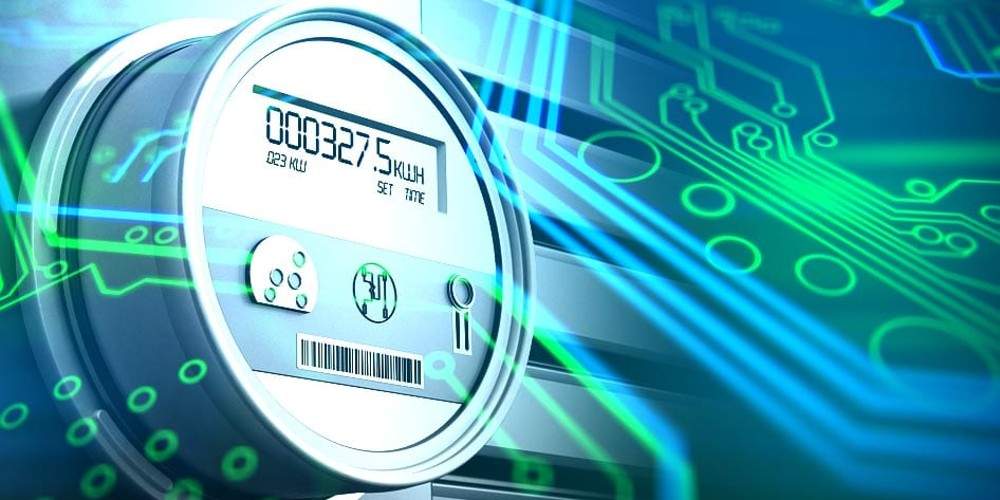
- Smart meters measure and record electricity usage at least every hour, if not more, and provide the data to the utility company and consumer at least once a day
- The data from smart meters reveal far more than you might think — and could even be used against you to control your individual energy use or, one day, to help ensure “net zero” compliance
- Smart meters do more than measure your energy usage; they’re also capable of distinguishing what type of energy you’re using, such as doing laundry or watching TV
- It’s an intensely personal form of surveillance — one that could easily be used against you, including to scrutinize your energy usage and even ration your energy
- Smart meters should also be avoided because they’re yet another source of electromagnetic fields, which include radio frequencies from smart meters, cellphones and Wi-Fi, and dirty electricity
- If you can, opt out of receiving a smart meter; be aware that you will likely be charged an extortion fee, in the form of one-time and monthly charges, to do so
Many people have embraced the convenience of wireless devices in their homes, but these devices come at a price — your privacy and your health. With each smart device that you welcome to your home — such as connected alarm clocks, vehicles, refrigerators and doorbells — another layer of your personal life is revealed and your health is sabotaged by the EMFs.
This is certainly true of smart meters, which are officially known in the U.S. as advanced metering infrastructure (AMI) installations. In 2020, 102.9 million such smart meters were installed by U.S. electric utilities, about 88% of them in personal residences.1 AMI meters measure and record electricity usage at least every hour, if not more, and provide the data to the utility company and consumer at least once a day.
According to the U.S. Energy Information Administration, “AMI installations range from basic hourly interval meters to real-time meters with built-in two-way communication that is capable of recording and transmitting instantaneous data.”2
What could be wrong with transmitting every last detail about your real-time energy usage to an energy company? Those data reveal far more than you might think — and could even be used against you to control your individual energy use or, one day, to help ensure “net zero” compliance.
Smart Meters Aren’t There for Your Benefit
Before smart meters were widely available, your electricity usage was recorded by a meter reader, who would visit your property once a month and manually record your energy usage. Now, this data is tracked at hourly or half-hour intervals, which energy companies are billing as a way to save you, the customer, money. The U.K.’s Shell Energy, which describes smart meters as “the future of energy,” notes:3
“Smart meters bring a whole host of benefits: they’ll tell you how much you’re spending in real time, which means there are no nasty surprises when your bill turns up … But, perhaps best of all, smart meters give you real-time information on your energy use.
They let you know exactly how much it’s costing you to boil that kettle or charge your phone. Armed with this knowledge, you can make a more informed decision about whether to turn up the heating, or put another load in the tumble dryer.
… Smart meters are set to revolutionize the way we use electricity. They make it easier for suppliers like us to offer cheaper, off-peak rates for, say, charging your electric car. They tell us more about how you use your energy, which means we can offer you more suitable tariffs. It may be that, one day, you’re offered cheaper electricity on sunny or windy days, when clean energy is easier to come by.”
Smart Energy International also describes Comarch’s smart metering systems as a solution for “remote and automatic measurement of media consumption.” Note that their smart meters once only measured electricity and now are available for other utilities, including water, gas and heat, “the consumption of which should be constantly monitored.”4
Using the tactic of manufacturing fear, they spin smart meters as a necessity so that energy companies can keep close tabs on consumption and step in when needed:5
“A whole new era of readings has come. Smart metering systems provide companies in the utilities sector with the ability to monitor media supply networks and efficiently respond to current events. Data can be obtained even from meters that are difficult to access and those located at long distances from each other. They are sent periodically, informing the end-user about the reading, transmission data, and possible failures and errors.
This makes it possible to send teams almost immediately where they are needed at any given time. All this is to respond as quickly as possible if a problem arises.”
If They Control the Energy, They Control You
The technocratic elite, including both BlackRock CEO Larry Fink and Bill Gates, are pushing for “net zero” carbon emissions.6 While BlackRock is busy buying up houses, Gates is hard at work amassing farmland and is now the largest owner of farmland in the U.S.7
Gates is pushing for drastic, fundamental changes by 2030, including widespread consumption of fake meat, adoption of next generation nuclear energy and growing a fungus as a new type of nutritional protein.8 The deadline Gates has given to reach net zero emissions is 2050,9 and smart meters are already being positioned as an essential part of this plan. According to Shell Energy:10
“Indeed, the government considers smart meters key to the UK cutting its emissions and reaching net-zero by 2050. The Department for Business, Energy and Industrial Strategy has worked out that, if we all switch to smart meters, the UK can knock 45 million tonnes off its carbon emissions — the equivalent of taking 26 million cars off the road for a year.”
But according to many experts, including Vandana Shiva, new conditionalities are being created through net zero “nature-based” solutions in order to force the world to accept a new food and agricultural system, along with a new wave of colonization in the name of sustainability. Navdanya’s report, “Earth Democracy: Connecting Rights of Mother Earth to Human Rights and Well-Being of All,” explains:11
“… ‘Net Zero’ is a new strategy to get rid of small farmers … through the burden of fake carbon accounting. Carbon offsets and the new accounting trick of ‘net zero’ does not mean zero emissions. It means the rich polluters will continue to pollute and also grab the land and resources of those who have not polluted — indigenous people and small farmers — for carbon offsets.”
In other words, the elite will continue to consume resources as always, including indulgences like polluting private jets, but will be able to purchase carbon credits to offset the emissions they create.12 Meanwhile, the average person will face increasing scrutiny of their energy usage, to the point that it may one day be rationed in the name of “climate compliance.”
Will Smart Meters Be Used to Ration Energy Use?
Smart meters do more than measure your energy usage. They’re also capable of distinguishing what type of energy you’re using. So they know if you’re doing a load of laundry, watching TV or have left your home for the day. While this might not sound nefarious on the surface, it’s an intensely personal form of surveillance — one that could easily be used against you, including to ration your energy. Journalist Abby Martin explains:13
“If the notion about what you are doing and when you are doing isn’t disturbing enough — it’s worse. These devices are capable of regulating, controlling and even rationing your energy use. Take this example, you are running your fans in the hot summer months and the power company decides you are using too much power, they will take it upon themselves to lower it regardless of the consumer willing to pay for the extra usage.

A point to consider is what these companies will do with this information. Once this is shared with law enforcement, it can and it will be used against you. Cops will be able to know what you are doing in the privacy of your own home.
Secondly these companies can sell this information of our daily lives for data mining and advertising. It is disturbing at so many levels but these little surveillance units are being implemented across the country without the public’s consent and in many cases without their knowledge of being installed.”
It’s Time to ‘Think the Unthinkable’
It’s unthinkable that the powers that be could be intent on increasing surveillance and control, to the point that even your energy usage is under their thumb, but as GBNews host Neil Oliver put it in the video above, it’s time to “think the unthinkable”:14
“People raised to trust the powers that be, who have assumed, like I once did, that the state, regardless of its political flavor at any given moment, is essentially benevolent and well meaning, will naturally try to keep that assumption of benevolence in mind to make sense of what’s going on around them.
People like us, you and me, raised in the understanding that we are free, that we have inalienable rights and that the institutions of this country have our best interests at heart will tend to tie ourselves in knots rather than contemplate the idea those authorities may actually be working against us now.
… We are no longer being treated as individuals entitled to make the most of our lives, but as a barn full of battery hens — just another product to be bought and sold, sold down the river … treat yourself to the gift of understanding that the powers that be fully intend we should have less heat and less fuel, and that in the planned future only the rich will have cars anyway. The plan is not to fix it. The plan is to break it and leave it broken.
… If net zero and the rest was about the good of the planet and not about clearing the beaches and skies of scum like us, don’t you think those sainted politicians and A-listers would be lighting the way for us by their own example?”
Another Problem With Smart Meters — EMFs
Even if you put aside the surveillance and privacy issues and their potential for abuse, smart meters should be avoided because they’re yet another source of electromagnetic fields, which include radio frequencies from smart meters, cellphones and Wi-Fi. Smart meters also have the additional challenge of emitting dirty electricity which consists of transient voltage spikes as a result of switching mode power supplies. Adverse health effects linked to these EMF exposures include:15
- Excess oxidative stress
- Opening your blood-brain barrier, allowing toxins to enter your brain
- DNA damage and altered microbiome
- Impaired proton flow and ATP production
- Altered cellular function due to excessive charge
One way to reduce your exposure is to refuse smart meters as long as you can. Note that some states already prohibit opt-outs while others allow them but will charge you an extortion fee, in the form of one-time and monthly charges, to do so. According to the National Conference of State Legislatures:16
“In almost every case, customers who elect to opt-out of smart meter installation are charged to do so — often through a one-time “set-up fee,” followed by monthly fees associated with the cost of sending out meter-readers. The fees can vary considerably. A utility in Rhode Island charges a one-time fee of $27, while a Texas utility’s one-time fee is $171. The monthly fees range from around $9 to $32.”
If you can afford to do so, opting out will protect both your privacy and your health from this unnecessary intrusion. Alternatively, you can shield the meters with kits available online but those will not reduce the dirty electricity produced by the meters.

- 1, 2 U.S. Energy Information Administration, FAQs
- 3, 10 Shell Energy, Smart meters and the future of energy
- 4, 5 Smart Energy International May 15, 2020
- 6 YouTube June 25, 2021
- 7 Fortune March 13, 2021
- 8 ZeroHedge February 16, 2021
- 9 Fox Business February 21, 2021
- 11 Navdanya, Earth Rights Are Human Rights
- 12 Forbes January 21, 2020
- 13 Matthew Bell August 24, 2016
- 14 GBNews, Neil Oliver August 14, 2022, 1:00 to 4:44
- 15 Createhealthyhomes.com, Electromagnetic Fields: Modern Health Hazard? (PDF)
- 16 National Conference of State Legislatures, Smart Meter Opt-Out Policies August 20, 2019
Two Storms, One Harvest

Every food crisis in living memory has been a one-shock event. The 2008 price spike was a commodity bubble. The 2020 shortages were a logistics failure. The 2022 grain scare was a war on one exporter’s ports. Each time, the system bent, adjusted, and recovered, and each time the experts assured us afterward that global markets are simply too big and too diversified to fail.
What nobody in Washington seems eager to discuss is that 2026 is shaping up to be something the modern food system has never actually faced. Two independent shocks, one climatic and one geopolitical, are converging on the same harvest cycle at the same time. Not sequentially. Simultaneously.
Start with the weather. The Pacific Ocean is currently building toward what forecasters now openly call a record event. NOAA’s Climate Prediction Center puts the odds of at least a strong El Niño near 88 percent, with roughly two in three odds it reaches “very strong” status, the tier reserved for perhaps three or four events in the entire satellite era. Every major global model now projects a median peak in Super El Niño territory, and most of them project it exceeding the 2015-16 event, which until now held the modern record. Sea surface anomalies were already brushing the super threshold in mid-July, months before these events normally peak. The atmosphere has already shifted into El Niño mode, and the event is forecast to crest in late fall and early winter.
This is not about “climate change.” It’s about the standard cycles of weather, and the cycle we’re currently in is one that has likely devastated societies in the past. We’re better prepared as a society today, but not all Americans are equally prepared.
Serious households have started doing the quiet math on their own. Grocery bills tell part of the story, and the forecast maps tell the rest, which is why long-term food storage has moved from fringe hobby to mainstream line item in the family budget, with established suppliers like Heaven’s Harvest seeing demand from people who five years ago would have rolled their eyes at the idea. That instinct is not paranoia. It is pattern recognition, and the pattern is worth walking through carefully.
Editor’s Note: Heaven’s Harvest IS a sponsor, but the warnings of this article are real and would be written even if we didn’t have a survival food sponsor. With that said, those who take advantage of what they offer can use promo code “Patriot” for 15% off.
The Fertilizer Clock Is Already Running
While the Pacific warms, the second shock has been unfolding in the Strait of Hormuz. The conflict with Iran turned the world’s most important energy chokepoint into a contested waterway, and the consequences reach far beyond the gas pump. Roughly a third of global fertilizer trade moves through Hormuz, and the disruption sent urea prices up 86 percent year over year by March, with a 53 percent jump in a single month.
The World Bank projects energy prices rising about 24 percent in 2026 and fertilizer about 31 percent. By its own accounting, fertilizer prices ran 35 percent higher in the first five months of this year than the same period last year.
Here is the mechanism the nightly news will not explain. Fertilizer is not a grocery item. It is a time-delayed input. The nitrogen a farmer in Iowa or Punjab could not afford to apply this spring does not show up as a problem this spring. It shows up as a thinner harvest six to twelve months later.
The World Bank’s own food security brief concedes that the effects of reduced applications earlier this season “are likely to become visible only later in harvest outcomes.” Translate that from institutional language into plain English and it means this. The damage is already done, it is already in the ground, and we are simply waiting for it to arrive on the shelf.
Now check the calendar. Six to twelve months from the spring planting season lands us squarely in late 2026 and early 2027. Which is precisely when the strongest El Niño in the instrumental record is forecast to peak, bringing its signature droughts to Southeast Asia, Australia, southern Africa, northern Brazil, and South Asia, the very regions that grow the world’s rice, sugar, and oilseeds.
The World Bank warns openly that a strong El Niño “could disrupt multiple crop belts simultaneously” on top of the conflict-driven input costs. Their baseline projection assumes the Middle East disruptions ease by autumn. What in the last two years of Middle East history suggests that assumption is safe?
The System Has No Slack Left
The comfortable answer is that global markets always adjust. But adjustment requires slack, and the slack is gone. Global cereal production is expected to decline from last year’s records even before El Niño does its work. The UN World Food Programme, hardly a den of right-wing preppers, is calling this the most significant disruption to its supply chains since Covid and the invasion of Ukraine, and its supply chain director put the stakes bluntly.
Today’s supply chain challenges are tomorrow’s hunger crisis.
There is also a political dimension that markets cannot price. When food gets scarce, governments do not behave like economists. They behave like politicians. Export bans, hoarding mandates, and panic buying at the national level turned the modest rice shortfall of 2008 into a global crisis, and analysts are already warning that import-dependent nations are the first dominoes.
The 2015-16 Super El Niño, a far weaker event than what is now forecast, threw tens of millions into food stress across Africa and Asia. This one is projected to be stronger, and it arrives with fertilizer already rationed by price and shipping lanes already contested by missiles.
What Joseph Knew
Scripture does not treat preparation for lean years as faithlessness. It treats it as wisdom delivered in advance to those willing to act on it.
Behold, there come seven years of great plenty throughout all the land of Egypt: And there shall arise after them seven years of famine; and all the plenty shall be forgotten in the land of Egypt.
Joseph did not respond to that warning with a hashtag or a committee. He stored grain during the years of abundance, and when the famine came, Egypt stood while its neighbors begged. The lesson is not that famine is certain. It is that the time to prepare is precisely when preparation still looks optional.
Nobody who filled a pantry in a year of plenty has ever regretted it, and nobody standing in an empty aisle has ever been glad he waited for certainty.
None of this calls for panic, and panic is the enemy of sound judgment anyway. It calls for the same unglamorous prudence our grandparents considered ordinary. Keep some cash margin, know your local growers, and put real food in deep storage while it is cheap and available, because the entire arc of this story is that cheap and available is a closing window.
Families looking for a straightforward place to start can visit Heaven’s Harvest and use promo code Patriot for 15 percent off long-term storable food. The forecasts may yet soften, the strait may yet reopen, and we should pray they do. But hope is a fine thing to hold and a foolish thing to eat.
