

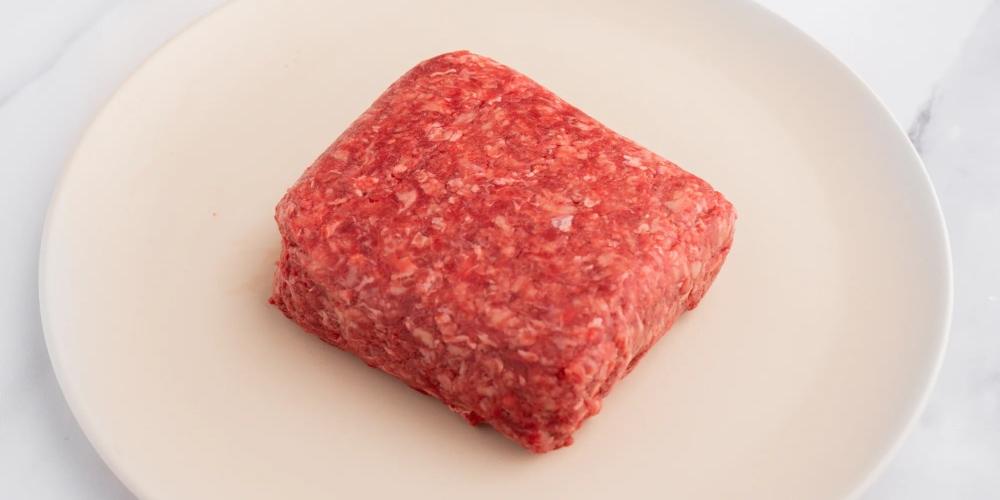
(WND)—U.S. Treasury Secretary Scott Bessent said Sunday part of the reason beef prices have been soaring in America is due to the invasion of illegal aliens during the Biden administration, claiming many migrants brought diseased cattle with them.
Appearing on “Sunday Morning Futures” with Maria Bartiromo on the Fox News Channel, Bessent was reacting to a statement by Omaha Steaks CEO Nate Rempe, who predicted: “By third quarter of ’26, families are going to see $10-a-pound ground beef in the grocery store.”
Bessent said: “The beef market is a very specialized market. It goes in long cycles, and this is the perfect storm again, something we inherited.
“And there’s also, because of the mass immigration, a disease that we’d been rid of in North America, made its way up through South America as these migrants they had brought some of their cattle with them.”
“So part go the problem is we’ve had to shut the border to Mexican beef because of this disease called the screwworm. So we’re not gonna let that get into our supply chain.”
According to the Centers for Disease Control, “New World screwworm is a species of parasitic fly that can cause myiasis and feeds on live tissue. It primarily affects livestock, but it can also infest people.”
When asked how long before Americans would feel an impact of reining in the overall cost of living, Bessent replied: “I think we’re going to see a substantial acceleration in the economy in the first [and] second quarter [of 2026].”
BARTIROMO: When do you think the public is really gonna feel an impact from your moves to rein in the cost of living?
BESSENT: I think we’re gonna see a substantial acceleration in the economy in the first, second quarter pic.twitter.com/CL67gZmo4O
— Aaron Rupar (@atrupar) November 16, 2025
“I think Americans are gonna feel it in the first quarter, second quarter. I think 2026, thanks to President Trump’s signature plans, is gonna be a great year for working Americans, for the markets. I call it parallel prosperity. Main Street and Wall Street can both do great but I think Main Street’s gonna have a great year in 2026.”
Meanwhile, tariffs are being removed from several household items not generally produced in the United States, including coffee, cocoa and bananas, and Bessent said he expects prices on those items to drop.
“This is a complete trade policy,” he explained. “Now we are going to see it affect the prices.”
🚨 JUST IN: Scott Bessent CONFIRMS the prices of groceries, coffee, cocoa and fruit will PLUMMET
“Not only will the tariffs come off coffee, cocoa, bananas – that’s a result of the trade deals going through. We will see this go down.” pic.twitter.com/aCVFYe6Po5
“This is a…
— Eric Daugherty (@EricLDaugh) November 16, 2025
Bessent also made a bold prediction about the U.S. Supreme Court’s upcoming ruling about President Trump’s tariffs.
“This is one of President Trump’s signature policies, and traditionally the Supreme Court does not interfere with a president’s signature policy,” he explained.
Bessent on tariffs: “This is one of President Trump’s signature policies, and traditionally the Supreme Court does not interfere with a president’s signature policy.” pic.twitter.com/razEkvR4DK
— Aaron Rupar (@atrupar) November 16, 2025
“I would push this back on the Supreme Court. I don’t think this ruling is gonna go against us, but if it does, what’s their plan for refunds?” Bessent added.
“I don’t think the Supreme Court wants to wade into a mess like that.”

The Treasury secretary was also asked about a Wall Street Journal report suggesting China was already reneging on its agreement to provide the U.S. military with rare-earth magnets.
“We haven’t even finished the agreement,” Bessent said.
“I am confident they will honor their agreement, and if they don’t we have lots of levers.”
Fox News host GRILLS Treasury Secretary Scott Bessent on Trump’s failed trade war with China screwing over American companies, American farmers, and American consumers: pic.twitter.com/WRY2fSRgwN
— Home of the Brave (@OfTheBraveUSA) November 16, 2025
Asked if one of those levers were to remove China from U.S. financial markets, Bessent responded: “All options are on the table but I believe we will have to go into this believing [Chinese] President Xi will keep his agreements.”
Follow Joe on X @JoeKovacsNews
Content created by the WND News Center is available for re-publication without charge to any eligible news publisher that can provide a large audience. For licensing opportunities of our original content, please contact [email protected].

Starting the Day With a Scripture-Inspired Roast Helps Center Your Thoughts on Eternal Truths Amid Temporal Pressures
The world can seem chaotic, especially right after we wake up. Many believers start their mornings reaching for something familiar — a hot cup of coffee — yet end up settling for mediocre brews that do little more than deliver a caffeine jolt. The daily grind of life, with its endless distractions, news cycles, and responsibilities, can leave even the most faithful feeling spiritually parched alongside their physical fatigue. What if your morning ritual could do more than wake you up? What if it could ground you in truth, nourish your body with exceptional quality, and quietly advance a kingdom purpose at the same time?
That’s the promise — and the reality — behind Promised Grounds Coffee. This Christian-founded company doesn’t just roast beans; it approaches every step as an act of worship and discipleship. By selecting only the top 10% of specialty-grade beans, ethically sourced from dedicated farmers in Central and South America, and small-batch roasting them with reverence in Austin, Texas, Promised Grounds delivers what many describe as the best coffee available — never burnt, never bland, but rich with origin stories and layered flavors that honor God’s creation.
From the vibrant Psalm 27 Roast (a light, bright medium option) to the bold yet peaceful 2 Timothy 1:7 Decaf, each bag carries a Scripture verse that turns your daily pour into a gentle reminder of faith. And through their Ounce Per Ounce Promise, every ounce of coffee you enjoy provides an equal ounce of clean water to families in need via partnership with Filter of Hope — literally brewing hope for body and soul, one cup at a time.
The challenge for today’s Christians runs deeper than finding a decent cup. In an age of convenience-driven consumerism, it’s easy to support companies that dilute values or remain silent on matters of faith. Many believers want their everyday choices — from what they drink to how they spend — to reflect discipleship rather than just convenience. Promised Grounds solves this by weaving Christian excellence into the entire process: beans nurtured with prayerful stewardship by farming families, roasted as an offering rather than a commodity, and packaged with Bible verses to encourage a mindset of gratitude and purpose from the first sip. Reviewers consistently praise the smooth, rich profiles — whether enjoyed black in a drip maker, iced on a warm day, or shared in fellowship — noting how the quality stands toe-to-toe with premium secular brands while delivering something far more meaningful.
This integration of faith and flavor addresses a real need in Christian households and ministries. Busy parents, church leaders, and remote workers alike report that starting the day with a Scripture-inspired roast helps center their thoughts on eternal truths amid temporal pressures. The coffee’s exceptional character — bright citrus notes in lighter roasts or deep chocolate undertones in bolder ones — comes from meticulous selection and careful roasting that respects the bean’s natural gifts rather than masking them. It’s the kind of coffee that elevates a simple quiet time, fuels productive workdays, or sparks meaningful conversations when shared at Bible studies or outreach events. And because it’s ethically sourced with integrity, every purchase supports sustainable livelihoods for farmers who treat their crops like family harvests.
For those leading churches or small groups, the impact multiplies. Promised Grounds offers bundles and options perfect for hospitality ministries, turning ordinary coffee service into an opportunity to point people toward the living water of Christ. Imagine greeting visitors with a warm cup whose very bag carries God’s Word — a subtle yet powerful witness that aligns with the Great Commission. The company’s Texas roots and commitment to “brewing hope” resonate especially with believers who value American enterprise paired with global compassion.
Of course, quality alone isn’t enough if the experience feels out of reach. Promised Grounds keeps it accessible with practical perks like free shipping on orders over $40, sample sets for discovering favorites, and thoughtful add-ons such as faith-themed mugs. Whether you prefer whole beans for fresh grinding, grounds for convenience, or even bulk options for larger households and ministries, the result is consistently superior coffee that makes discipleship feel integrated rather than added on.
As you consider how to align even the smallest habits with your walk with God, Promised Grounds Coffee stands out as a refreshing solution. It tackles the dual problems of subpar daily sustenance and disconnected consumption by offering a product that genuinely excels in taste while advancing a mission of clean water, farmer dignity, and scriptural encouragement. Believers who make the switch often describe it as more than a beverage upgrade — it becomes part of their rhythm of gratitude, a daily invitation to remember that every good gift comes from above.
If you’re ready to transform your mornings (and perhaps your church gatherings) with coffee that honors both exceptional craftsmanship and Christian values, I encourage you to explore what Promised Grounds has to offer. One sip at a time, you’ll be nourishing your body, refreshing your spirit, and participating in something far greater — all while enjoying what truly is among the best coffee available.

The bot fly is not a disease, it’s a parasite.
If I see $10 ground meat in the grocery store…that’s where it’s going to stay…right along with the $17/lb cheap cut steaks. There’s 2 sides in each market exchange. And t h e side I’m on is through with being screwwed by big-anything. EAT IT!
If SCOTUS trues to usurp the presidents constitutional powers given to the Executive Branch, like tariffs, Trump must say NO! If Trump is going to keep letting unelected judges run the country, there is no reason to vote. The judicial branch has zero power of the purse.
Globalization was meant to destroy the American people. Trump said give him 6-12 months to turn it around. Things have begun to turn already. Next year everything Trump had put into place will start to explode in the people’s favor. The weak and worthless who get their news and education from MSNBC and CNN will not want to accept it, because they are subversive ask wipes who will be brought to heal one way or another!
No mention of the unprecedented strain on the food supply for letting in 40 million people? No mention of all the cattle, pigs, sheep, and chickens that died suddenly and mysteriously under Biden? Nothing about the climate morons demanding we stop raising animals and stop eating meat? No mention of Bill Gates latest get rich scheme making fake meat in a lab or buying up farms to stop herding? No mention that it takes about 18-24 months from breeding a cow to butchering the offspring? This is Biden’s boondoggle. The fix (deporting people and raising replacements,) takes 2 years minimum.
What happened to my comment?
Anyway, I don’t believe in that screwworm story. Sorry. It’s expensive because they want it to be expensive.
Anyway, I don’t believe in that Dodoboi comment. Sorry. It’s ridiculous because Dodoboi want it to be ridiculous.
High beef prices aren’t being driven by cows climbing fences or parasites hitching rides across borders.
Treasury Secretary Scott Bessent’s claim that “mass migration” and a South American parasite are the culprits behind $10-a-pound ground beef is a distraction from the real story. Here’s what’s actually happening:
-Shrinking herds: U.S. cattle numbers are at their lowest since the 1950s, after years of drought and herd sell-offs.
-Climate stress: Feed costs have soared, grasslands have shrunk, and ranchers are struggling to rebuild.
-Tariffs & trade policy: Restrictions on imports from Brazil, Australia, and others have tightened supply and raised costs.
-Market speculation: Futures traders and policy uncertainty have added volatility to already tight markets.
Yes, the screwworm parasite is a legitimate biosecurity concern, but it has not been detected in U.S. herds. To elevate it as the main driver of beef inflation is to miss the forest for the trees. The truth is simpler and harder: decades of herd decline, climate pressures, and tariff missteps have created a perfect storm. Blaming migrants is political theater, not economic analysis. If we want affordable beef again, we need honest conversations about herd rebuilding, smarter trade policy, and resilience against climate shocks not scapegoats.
Tariffs have nothing to do with beef prices. The USA can produce all the beef required. Government policy kills the beef industry and the Trump administration is trying to turn it around. Takes time.
Ground beef will not go to $10 per pound because people will not buy as much at that price. Demand will drop and price will balance just like it always does.
No. There are 4 main meat packing companies. They have been fixing prices, as to how much per head they pay to the breeders, then how much they pay the bull haulers, who they squeeze mercilessly. They pay by the trip, so they got the drivers locked up. Lots of illegals that drove for way less. Of course we know what happens with that.They have a near international monopoly. WE raise the best beef, but most gets shipped overseas, for crazy prices. And guess who controls these companies? China.
This shit is all by design