

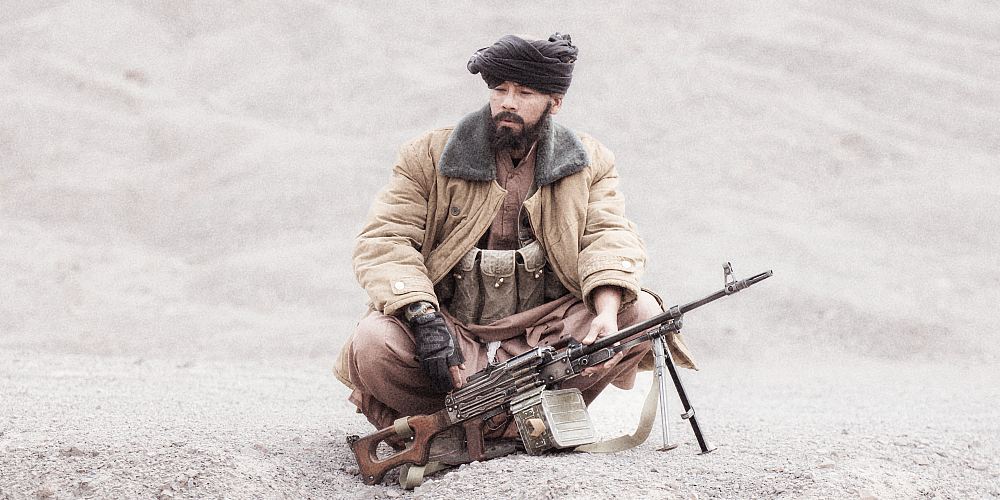
The recent report released by Texas Rep. Mike McCaul, the Republican chair of the House Foreign Affairs Committee, pulls no punches in its critique of the Biden-Harris administration’s disastrous handling of the Afghanistan withdrawal. This 600-page document meticulously dissects the military’s botched exit in 2021, revealing a shocking level of mismanagement that raises serious questions about the administration’s competence and motives.
Is this just another example of “Politics as Usual,” or is there something more sinister at play?
Now, after seemingly rushing to abandon Afghanistan, the report draws a direct line between President Biden’s past as a senator during the Vietnam War and his current foreign policy blunders. It highlights a “pattern of callous foreign policy positions and readiness to abandon strategic partners,” suggesting that this administration is not just inept but also dangerously reckless. The report challenges Biden’s claim that he was bound by the Doha agreement made by former President Trump, asserting that he had the authority to act differently. It exposes the glaring truth that state officials had no viable plan to evacuate Americans and allies while troops were still on the ground to protect them.
“pattern of callous foreign policy positions and readiness to abandon strategic partners” – Texas Rep. Mike McCaul
The findings are damning. NATO allies expressed their vehement opposition to the U.S. withdrawal, with the British Chief of the Defense staff warning that “withdrawal under these circumstances would be perceived as a strategic victory for the Taliban.”
Yet, Biden’s administration chose to ignore these warnings, keeping Zalmay Khalilzad, a Trump appointee, in place as a special representative to Afghanistan. This move signaled an endorsement of the very deal that sidelined the Afghan government, leaving them vulnerable to the Taliban’s resurgence.
Col. Seth Krummrich, chief of staff for Special Operations Command, revealed the administration’s stubbornness: “The president decided we’re going to leave, and he’s not listening to anybody.”
This refusal to heed advice from military leaders and intelligence officials raises the question: was this a calculated decision, or sheer incompetence?
“withdrawal under these circumstances would be perceived as a strategic victory for the Taliban.” – British Chief of the Defense staff
The report also highlights the State Department’s failure to act on clear warning signs that the Taliban were gaining ground. Instead of scaling back its embassy presence, the State Department built it up, demonstrating a shocking lack of foresight. Brian McKeon, Deputy Secretary of State for Management and Resources, infamously stated, “we at the State Department have a much higher risk tolerance than you guys,” a comment that Gen. Austin Miler, the longest-serving commander in Afghanistan, countered with a stark observation of “a lack of understanding of the risk.”
“The president decided we’re going to leave, and he’s not listening to anybody.” – Col. Seth Krummrich
As the situation deteriorated, former Afghanistan Ambassador Ross Wilson was “comfortable” delaying the noncombatant evacuation operation (NEO) until the Taliban had already taken control. Gen. Frank McKenzie described this as the “fatal flaw that created what happened in August.” The chaos that ensued left many Americans and allies stranded, with the U.S. government providing little guidance on evacuation procedures. The only advice given was to “not travel to the airport until you have been informed by email that departure options exist.”
“immaterial” – Ned Price
The report paints a harrowing picture of the final days in Kabul, with Consul General Jim DeHart describing the scene as “apocalyptic.”
As the Taliban advanced, U.S. intelligence tracked multiple threats, yet the administration failed to act decisively. CENTCOM records revealed that the same ISIS-K terror cell responsible for the Abbey Gate bombing had “established a base of operations located six kilometers to the west” of the airport, yet no preemptive strikes were made.
“apocalyptic.” – Jim DeHart
The long-term consequences of this withdrawal are staggering. The Taliban not only gained access to $7 billion in abandoned U.S. weapons but also up to $57 million in U.S. funds initially allocated to the Afghan government. Sirajuddin Haqqani, the Taliban’s interior minister, has since declared that relations with the U.S. are “irrelevant” to their policymaking. Meanwhile, a NATO report indicates that the Taliban is using U.S. military biometric devices to hunt down former Afghan allies, with “nearly 500 former government officials and members of the Afghan security forces were killed or forcibly disappeared.”
“nearly 500 former government officials and members of the Afghan security forces were killed or forcibly disappeared.” – NATO report
The human cost is staggering, with reports of 118 girls sold as child brides since the takeover and families waiting for buyers. The Department of Homeland Security has identified “more than 400 persons of interest from Central Asia who had illegally crossed the U.S. southern border with the help of an ISIS-related smuggling network,” raising further concerns about national security.
“118 girls have been sold as child brides since the takeover and 116 families are waiting for a buyer.” – Report
The Biden-Harris administration’s handling of the Afghanistan withdrawal is not just a failure; it is a glaring example of political negligence that has left countless lives in jeopardy. As we approach the 2024 election, one must ask: will the American people hold this administration accountable for its catastrophic decisions? The stakes have never been higher.


Starting the Day With a Scripture-Inspired Roast Helps Center Your Thoughts on Eternal Truths Amid Temporal Pressures
The world can seem chaotic, especially right after we wake up. Many believers start their mornings reaching for something familiar — a hot cup of coffee — yet end up settling for mediocre brews that do little more than deliver a caffeine jolt. The daily grind of life, with its endless distractions, news cycles, and responsibilities, can leave even the most faithful feeling spiritually parched alongside their physical fatigue. What if your morning ritual could do more than wake you up? What if it could ground you in truth, nourish your body with exceptional quality, and quietly advance a kingdom purpose at the same time?
That’s the promise — and the reality — behind Promised Grounds Coffee. This Christian-founded company doesn’t just roast beans; it approaches every step as an act of worship and discipleship. By selecting only the top 10% of specialty-grade beans, ethically sourced from dedicated farmers in Central and South America, and small-batch roasting them with reverence in Austin, Texas, Promised Grounds delivers what many describe as the best coffee available — never burnt, never bland, but rich with origin stories and layered flavors that honor God’s creation.
From the vibrant Psalm 27 Roast (a light, bright medium option) to the bold yet peaceful 2 Timothy 1:7 Decaf, each bag carries a Scripture verse that turns your daily pour into a gentle reminder of faith. And through their Ounce Per Ounce Promise, every ounce of coffee you enjoy provides an equal ounce of clean water to families in need via partnership with Filter of Hope — literally brewing hope for body and soul, one cup at a time.
The challenge for today’s Christians runs deeper than finding a decent cup. In an age of convenience-driven consumerism, it’s easy to support companies that dilute values or remain silent on matters of faith. Many believers want their everyday choices — from what they drink to how they spend — to reflect discipleship rather than just convenience. Promised Grounds solves this by weaving Christian excellence into the entire process: beans nurtured with prayerful stewardship by farming families, roasted as an offering rather than a commodity, and packaged with Bible verses to encourage a mindset of gratitude and purpose from the first sip. Reviewers consistently praise the smooth, rich profiles — whether enjoyed black in a drip maker, iced on a warm day, or shared in fellowship — noting how the quality stands toe-to-toe with premium secular brands while delivering something far more meaningful.
This integration of faith and flavor addresses a real need in Christian households and ministries. Busy parents, church leaders, and remote workers alike report that starting the day with a Scripture-inspired roast helps center their thoughts on eternal truths amid temporal pressures. The coffee’s exceptional character — bright citrus notes in lighter roasts or deep chocolate undertones in bolder ones — comes from meticulous selection and careful roasting that respects the bean’s natural gifts rather than masking them. It’s the kind of coffee that elevates a simple quiet time, fuels productive workdays, or sparks meaningful conversations when shared at Bible studies or outreach events. And because it’s ethically sourced with integrity, every purchase supports sustainable livelihoods for farmers who treat their crops like family harvests.
For those leading churches or small groups, the impact multiplies. Promised Grounds offers bundles and options perfect for hospitality ministries, turning ordinary coffee service into an opportunity to point people toward the living water of Christ. Imagine greeting visitors with a warm cup whose very bag carries God’s Word — a subtle yet powerful witness that aligns with the Great Commission. The company’s Texas roots and commitment to “brewing hope” resonate especially with believers who value American enterprise paired with global compassion.
Of course, quality alone isn’t enough if the experience feels out of reach. Promised Grounds keeps it accessible with practical perks like free shipping on orders over $40, sample sets for discovering favorites, and thoughtful add-ons such as faith-themed mugs. Whether you prefer whole beans for fresh grinding, grounds for convenience, or even bulk options for larger households and ministries, the result is consistently superior coffee that makes discipleship feel integrated rather than added on.
As you consider how to align even the smallest habits with your walk with God, Promised Grounds Coffee stands out as a refreshing solution. It tackles the dual problems of subpar daily sustenance and disconnected consumption by offering a product that genuinely excels in taste while advancing a mission of clean water, farmer dignity, and scriptural encouragement. Believers who make the switch often describe it as more than a beverage upgrade — it becomes part of their rhythm of gratitude, a daily invitation to remember that every good gift comes from above.
If you’re ready to transform your mornings (and perhaps your church gatherings) with coffee that honors both exceptional craftsmanship and Christian values, I encourage you to explore what Promised Grounds has to offer. One sip at a time, you’ll be nourishing your body, refreshing your spirit, and participating in something far greater — all while enjoying what truly is among the best coffee available.
