

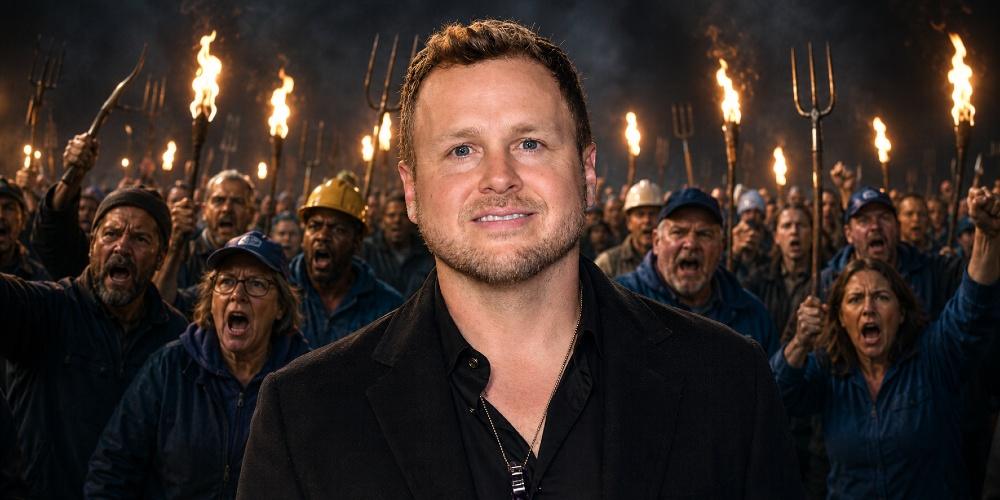
In the shadow of Los Angeles’s spiraling collapse—streets choked with human waste, open drug markets, and tent cities that mock the City of Angels—reality television star turned independent mayoral candidate Spencer Pratt is speaking a language long forgotten in City Hall: enforcement, results, and restoration. His blunt vision for reclaiming the city, laid out on the All-In podcast, has the entrenched interests scrambling.
Unions affiliated with hundreds of thousands of workers have responded not with policy debate, but with a brutal ad blitz that even stoops to the “R” bomb, branding the registered Republican as the last thing Los Angeles needs.
This is not mere campaign theater. It is the desperate flailing of a failing regime confronted by an outsider willing to name the rot. While Mayor Karen Bass and socialist Councilmember Nithya Raman cling to failed progressive dogmas, Pratt is promising swift, visible action: signs across the city within three weeks banning public nakedness, drug use, robbery, and animal abuse. Enforce the laws already on the books, he argues, and the streets will begin to breathe again.
Pratt’s diagnosis cuts through the euphemisms that have long sanitized failure. Los Angeles residents are “living in feces and drug use and dogs burning,” he observed.
His remedy is refreshingly direct: restore order first, then unleash private investment to rebuild. He has reportedly met with ten billionaires eager to back the effort, signaling that capital is ready when competence returns to City Hall. On housing, he blasts the remote-work bureaucracy and outdated systems, advocating artificial intelligence to speed approvals that currently resemble “a bad movie.”
Hollywood, too, receives a targeted prescription. Rather than pretending a mayor can dictate industry revival, Pratt cites producer Peter Chernin’s counsel: prioritize independent filmmakers and artists to generate jobs and energy the big studios cannot match. This bottom-up approach stands in stark contrast to the top-down failures that have driven production elsewhere.
The union response reveals more about their priorities than Pratt’s record. The LA County Federation of Labor, representing over 800,000 workers, released ads decrying his stance against using taxpayer dollars for new homes without accountability—“get help or get out.”
Labeling him a Republican is no accident, as political analyst Dan Schnur noted. In deep-blue Los Angeles, the “R” word remains a potent weapon, even for an independent candidate. Yet Pratt’s debate performance, where he held his own and earned overwhelming viewer approval, suggests voters are tiring of scripted narratives.
Recent polls underscore the opening: Bass leads but with significant undecideds, while Pratt sits at 11 percent and Raman trails. Bass’s decision to skip a follow-up debate, citing other commitments, only fuels perceptions of avoidance. The political machine, Pratt rightly observes, thrives on unchallenged lies. When incumbents face real scrutiny, they pivot to character attacks.
This contest transcends one election. It tests whether a city drowning in progressive experiments can still respond to common-sense governance rooted in law, order, and human dignity. For decades, leaders have treated symptoms with ever-larger budgets while ignoring root causes—disincentivized work, tolerated chaos, and bureaucratic paralysis. Pratt’s outsider status, celebrity background notwithstanding, may be precisely what forces a reckoning.
As Scripture reminds us in the book of Isaiah, “Woe unto them that call evil good, and good evil; that put darkness for light, and light for darkness.” The refusal to enforce basic standards of decency has invited darkness into Los Angeles’s public spaces. Pratt’s willingness to call for enforcement is a step toward restoring the light of ordered liberty.
The coming weeks will reveal whether Angelenos, weary of managed decline, are ready to support a fighter prepared to wield the tools already available. The unions’ ad blitz may intend to destroy momentum, but it risks amplifying the very frustrations that propelled Pratt into contention. In a city desperate for results over rhetoric, the battle lines are drawn between preservation of the status quo and the hard work of renewal.

Starting the Day With a Scripture-Inspired Roast Helps Center Your Thoughts on Eternal Truths Amid Temporal Pressures
The world can seem chaotic, especially right after we wake up. Many believers start their mornings reaching for something familiar — a hot cup of coffee — yet end up settling for mediocre brews that do little more than deliver a caffeine jolt. The daily grind of life, with its endless distractions, news cycles, and responsibilities, can leave even the most faithful feeling spiritually parched alongside their physical fatigue. What if your morning ritual could do more than wake you up? What if it could ground you in truth, nourish your body with exceptional quality, and quietly advance a kingdom purpose at the same time?
That’s the promise — and the reality — behind Promised Grounds Coffee. This Christian-founded company doesn’t just roast beans; it approaches every step as an act of worship and discipleship. By selecting only the top 10% of specialty-grade beans, ethically sourced from dedicated farmers in Central and South America, and small-batch roasting them with reverence in Austin, Texas, Promised Grounds delivers what many describe as the best coffee available — never burnt, never bland, but rich with origin stories and layered flavors that honor God’s creation.
From the vibrant Psalm 27 Roast (a light, bright medium option) to the bold yet peaceful 2 Timothy 1:7 Decaf, each bag carries a Scripture verse that turns your daily pour into a gentle reminder of faith. And through their Ounce Per Ounce Promise, every ounce of coffee you enjoy provides an equal ounce of clean water to families in need via partnership with Filter of Hope — literally brewing hope for body and soul, one cup at a time.
The challenge for today’s Christians runs deeper than finding a decent cup. In an age of convenience-driven consumerism, it’s easy to support companies that dilute values or remain silent on matters of faith. Many believers want their everyday choices — from what they drink to how they spend — to reflect discipleship rather than just convenience. Promised Grounds solves this by weaving Christian excellence into the entire process: beans nurtured with prayerful stewardship by farming families, roasted as an offering rather than a commodity, and packaged with Bible verses to encourage a mindset of gratitude and purpose from the first sip. Reviewers consistently praise the smooth, rich profiles — whether enjoyed black in a drip maker, iced on a warm day, or shared in fellowship — noting how the quality stands toe-to-toe with premium secular brands while delivering something far more meaningful.
This integration of faith and flavor addresses a real need in Christian households and ministries. Busy parents, church leaders, and remote workers alike report that starting the day with a Scripture-inspired roast helps center their thoughts on eternal truths amid temporal pressures. The coffee’s exceptional character — bright citrus notes in lighter roasts or deep chocolate undertones in bolder ones — comes from meticulous selection and careful roasting that respects the bean’s natural gifts rather than masking them. It’s the kind of coffee that elevates a simple quiet time, fuels productive workdays, or sparks meaningful conversations when shared at Bible studies or outreach events. And because it’s ethically sourced with integrity, every purchase supports sustainable livelihoods for farmers who treat their crops like family harvests.
For those leading churches or small groups, the impact multiplies. Promised Grounds offers bundles and options perfect for hospitality ministries, turning ordinary coffee service into an opportunity to point people toward the living water of Christ. Imagine greeting visitors with a warm cup whose very bag carries God’s Word — a subtle yet powerful witness that aligns with the Great Commission. The company’s Texas roots and commitment to “brewing hope” resonate especially with believers who value American enterprise paired with global compassion.
Of course, quality alone isn’t enough if the experience feels out of reach. Promised Grounds keeps it accessible with practical perks like free shipping on orders over $40, sample sets for discovering favorites, and thoughtful add-ons such as faith-themed mugs. Whether you prefer whole beans for fresh grinding, grounds for convenience, or even bulk options for larger households and ministries, the result is consistently superior coffee that makes discipleship feel integrated rather than added on.
As you consider how to align even the smallest habits with your walk with God, Promised Grounds Coffee stands out as a refreshing solution. It tackles the dual problems of subpar daily sustenance and disconnected consumption by offering a product that genuinely excels in taste while advancing a mission of clean water, farmer dignity, and scriptural encouragement. Believers who make the switch often describe it as more than a beverage upgrade — it becomes part of their rhythm of gratitude, a daily invitation to remember that every good gift comes from above.
If you’re ready to transform your mornings (and perhaps your church gatherings) with coffee that honors both exceptional craftsmanship and Christian values, I encourage you to explore what Promised Grounds has to offer. One sip at a time, you’ll be nourishing your body, refreshing your spirit, and participating in something far greater — all while enjoying what truly is among the best coffee available.
