


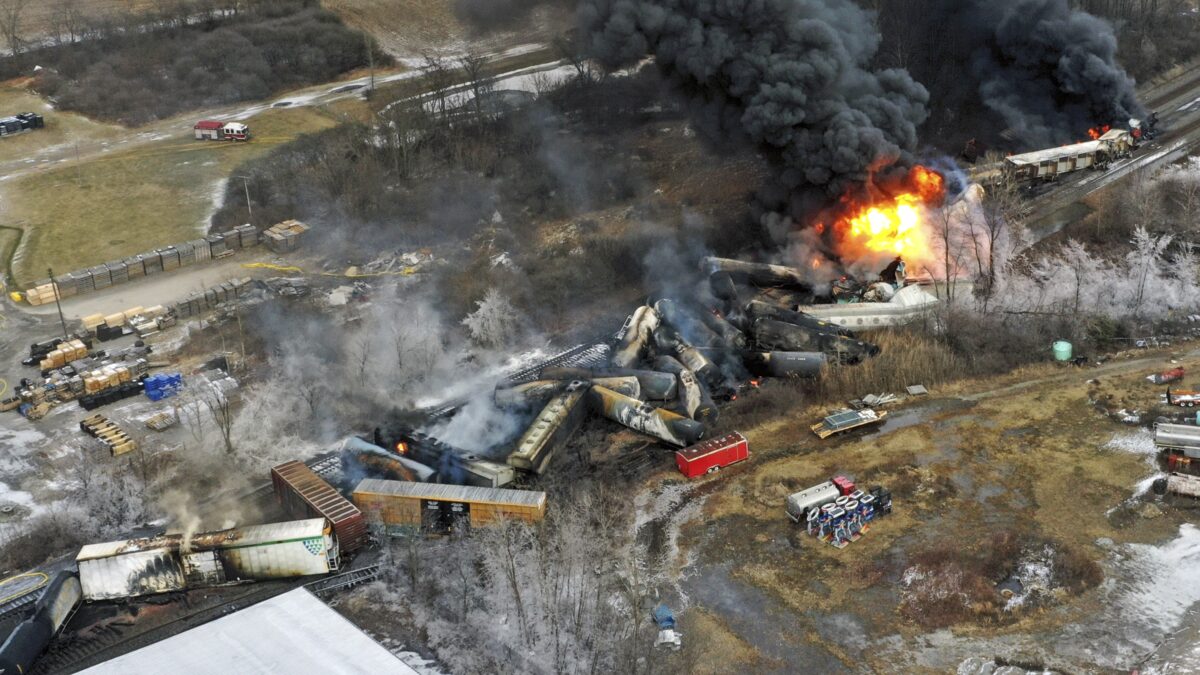
Security camera footage has emerged showing that the Ohio train that derailed in East Palestine may have been on fire for 20 miles before it finally went off the tracks and burst into flames.
The footage, which was first obtained by the Pittsburgh Post-Gazette, was taken by a security camera at an equipment plant in Salem, Ohio. East Palestine is around 20 miles away from Salem.
As the train passes the plant, what looks like flames and sparks can be seen in the video underneath the train cars.
The National Transportation Safety Board (NTSB), which is investigating the derailment, appeared to reference the video—and others—at a news conference in the days immediately after the incident took place on Feb. 3.
“We’re also looking at a lot of different footage that has been provided to the investigators out there to determine if there’s some data on footage that we have from videos and cameras that might tell us something more that what might have happened to cause this accident,” Michael Graham, a member of the NTSB, said in a Feb. 4 briefing.
‘Mechanical Issues’
At a follow-on briefing on Feb. 5, Graham said that investigators had also secured the locomotive data recorder earlier that day, along with forward- and inward-facing camera footage and audio recordings. Graham said the locomotive footage would be sent to a Washington lab for evaluation and analysis, before adding that other videos have emerged suggesting a possible problem with one of the rail car’s axles.
“We have obtained two videos which show preliminary indications of mechanical issues on one of the rail car axles,” Graham said at the Feb. 5 briefing, adding that the NTSB team was working to identify which rail car experienced the potential mechanical issue.
Graham said the train crew received an alarm from a “wayside defect detector shortly before the derailment, indicating a mechanical issue.”
“Then an emergency brake application initiated,” he continued, adding that a preliminary investigative report was expected within several weeks, though a full probe could take as long as 24 months.

Some of the footage was again referenced in a Feb. 14 update, in which the NTSB said that a surveillance video from a residence showed “what appears to be a wheel bearing in the final stage of overheat failure moments before the derailment.”
“The wheelset from the suspected railcar has been collected as evidence for metallurgical examination,” the NTSB stated.
Investigators have found the suspected overheated wheel bearing, and engineers from the NTSB Materials Laboratory in Washington would examine it.
Investigators will complete their examination of the 11 tank cars that contained hazardous materials once they’re fully decontaminated, the NTSB said.

A total of around 50 train cars derailed in East Palestine on Feb. 3, with some containing the toxic chemical vinyl chloride, which at high concentrations can be deadly.
Short-term exposure to the chemical can cause dizziness, headaches, and respiratory problems. Long-term exposure has been linked to various health problems, including liver damage, immune system dysfunction, and certain types of cancer.
The derailment prompted evacuation orders in East Palestine, a town of around 5,000.
The wreckage burned for days, and officials worried that the highly-flammable vinyl chloride could lead to an uncontrolled explosion, so crews engineered controlled detonations.
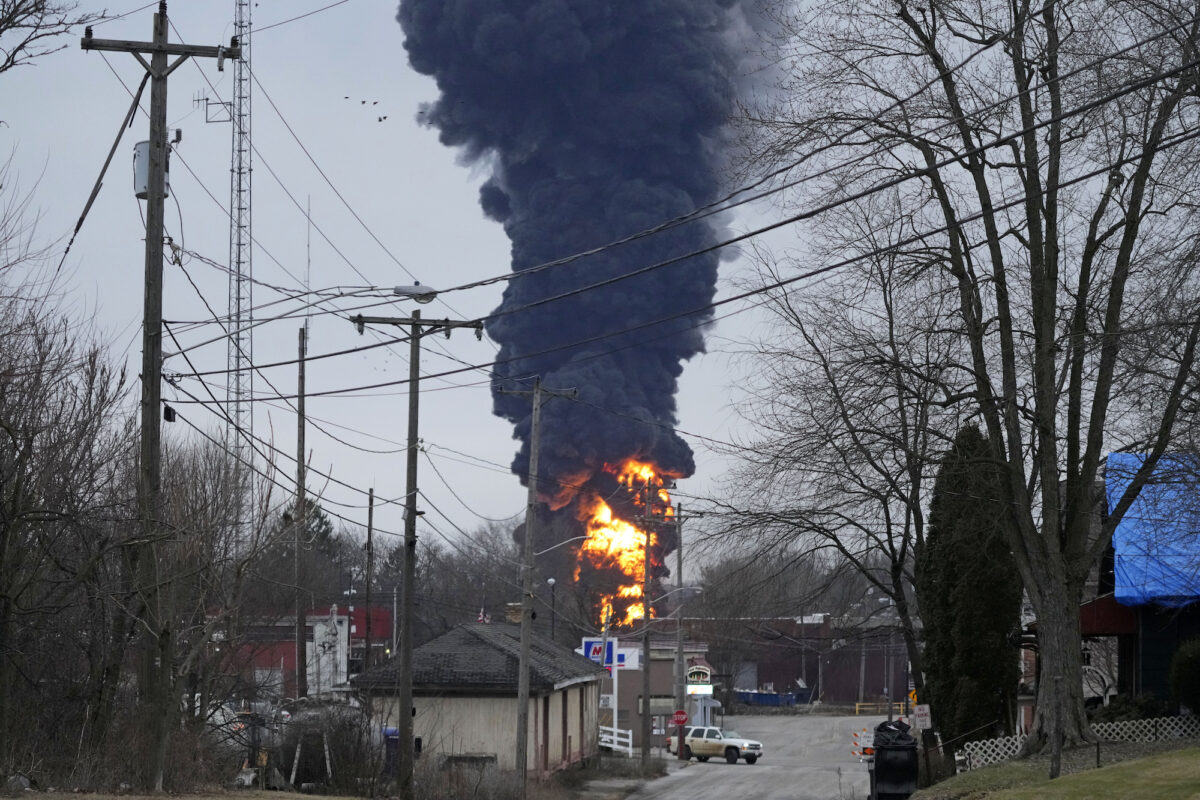
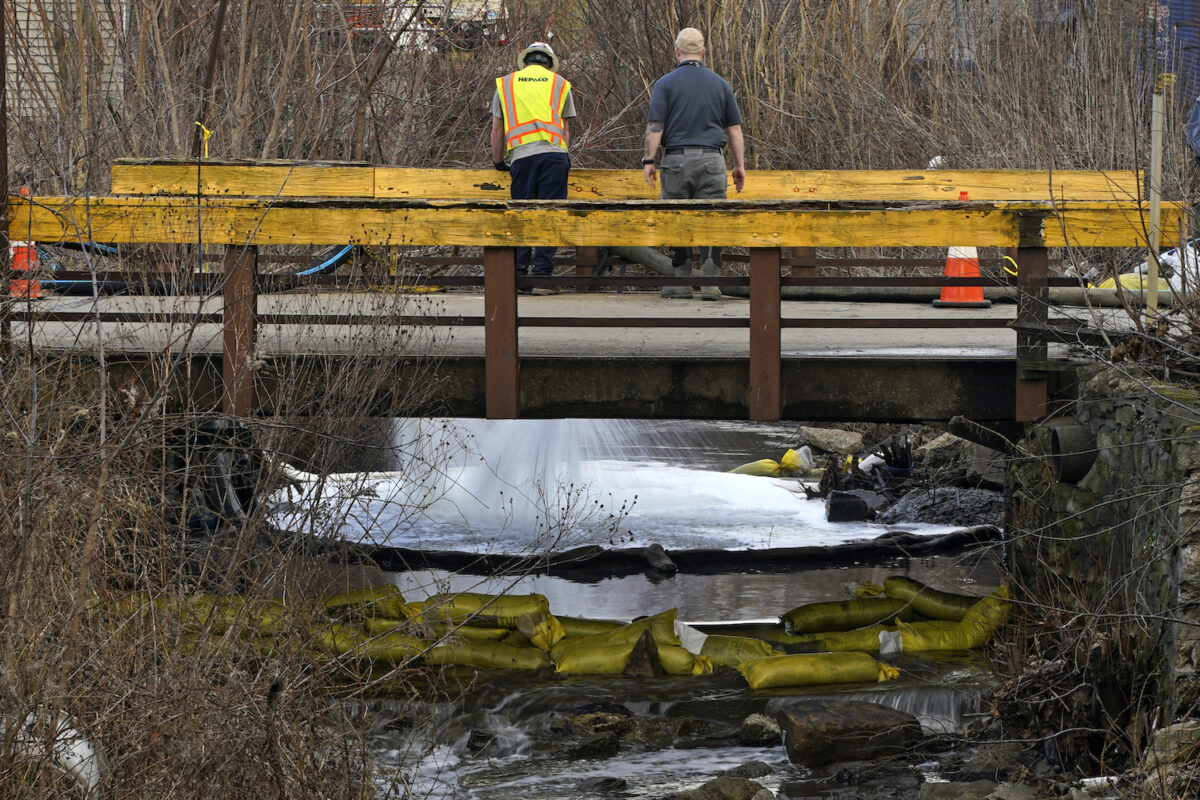
Besides being burned off in a controlled fashion, contaminants from derailed cars also spilled into waterways, with officials tracking a large “plume” of chemicals flowing down the Ohio River.
Around 3,500 fish have been killed by the chemical spill, according to an estimate by the Ohio Department of Natural Resources, with around 7 miles of streams affected by the toxins.
Tiffani Kavalec, the head of the Ohio Environmental Protection Agency’s (EPA) water management subdivision, said in a news conference on Tuesday that the plume is on its way toward Huntington, West Virginia, and that it consists mostly of “fire combustion chemicals.”

Kavalec said that the plume is moving downriver at around 1 mph and becoming increasingly more diluted, adding that the Ohio EPA doesn’t believe the chemicals pose a threat to drinking water. The Ohio River is “able to dilute the pollutants pretty quickly,” Kavalec said, adding that “we are seeing very low levels of contaminants” in the river.
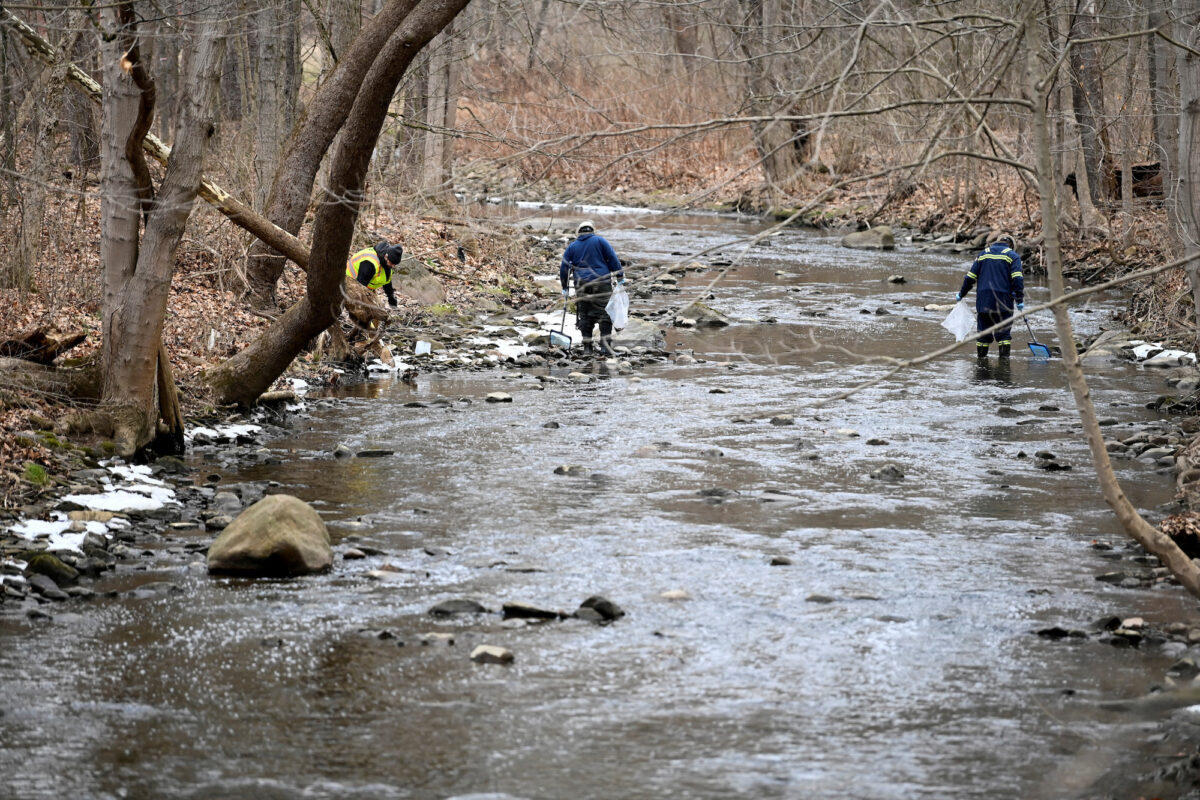
The EPA said that water sampling is being carried out at various points along the river to ensure drinking water is safe.
“State and local agencies are conducting sampling throughout the Ohio River to ensure drinking water intakes aren’t affected, and EPA is continuing to assist the state with sampling efforts at water treatment intake points along the Ohio River,” the EPA said in a Feb. 14 update.
Bottled Water Advisory
Ohio officials have urged some locals living near the train derailment site in East Palestine to only use bottled water amid concerns over the potential health impacts of hazardous chemicals that spilled into the Ohio River.
Ohio Gov. Mike DeWine told a press conference on Tuesday that the pollution did not pose a serious threat to the 5 million or so people who rely on the Ohio River for their drinking water. Still, DeWine and other Ohio officials warned that residents using private wells near the derailment should only use bottled water.
“For right now, I think bottled water’s the right answer,” Ohio Health Director Bruce Vanderhoff said at the press conference. Asked by reporters whether he would return home amid cleanup efforts, DeWine said he’d be back home but would not be drinking water from the tap.

“I think that I would be drinking the bottled water,” DeWine said. “And I would be continuing to find out what the tests were showing as far as the air.”
“I would be alert and concerned,” he continued, adding, “But I think I would probably be back in my house.”
DeWine said on Feb. 8 that it was safe for local residents to return to their homes.
Lingering Questions
People in and around East Palestine have been asking whether the air and water are safe for their families, pets, and livestock after the derailment caused a fire that sent a cloud of toxic smoke over the town.
There have been reports of sick or dead animals and persistent odors, while the EPA said that a number of hazardous chemicals were found at the site of the derailment, including vinyl chloride, ethylene glycol monobutyl ether, ethylhexyl acrylate, isobutylene, and butyl acrylate.
The EPA has been carrying out community air monitoring in East Palestine around the clock, saying in Tuesday’s update that it has “not detected any levels of health concern in the community that are attributed to the train derailment.”

As of Tuesday, the agency had screened 396 homes, and “no detections of vinyl chloride or hydrogen chloride were identified,” the EPA said.
But while the EPA has said that air monitoring hasn’t detected any hazards to health associated with the derailment, some locals have told media outlets that their health has suffered since returning home.
Jack Phillips contributed to this report. Article cross-posted from our premium news partners at The Epoch Times.
How to Prepare for Food Emergencies if You Don’t Have a Homestead or Bunker
In an unpredictable world, where supply chain disruptions, natural disasters, or economic instability can strike without warning, having a reliable food supply is more than just smart—it’s essential for survival. Whether you’re a “prepper” or not, we all know the golden rule: self-sufficiency is key. But what if you’re living in an apartment, working long hours, or simply don’t have the land to turn into a thriving homestead? Don’t worry; there’s a practical, effective way to build your food security without needing acres of soil or a fortified bunker.
The Ideal Prep: Building Your Own Food Empire
The ultimate dream for any serious prepper is controlling your own food production. Imagine waking up to a sprawling garden bursting with fresh vegetables, fruits, and herbs—tomatoes ripening on the vine, potatoes ready to harvest, and greens that provide nutrition year-round. Add in livestock like chickens for eggs and meat, and you’ve got a self-sustaining system that keeps your family fed no matter what chaos unfolds outside.
This approach isn’t just about calories; it’s about resilience. A well-maintained garden can yield hundreds of pounds of produce annually, while a small flock of chickens might produce dozens of eggs weekly. It’s empowering, cost-effective in the long run, and teaches invaluable skills like crop rotation, animal husbandry, and preservation techniques. If you have the space, time, and resources, starting small and scaling up is the best path to true independence.
The Reality Check: Not Everyone Can Homestead
But let’s face it—not all of us are in a position to go full homesteader. Urban dwellers might be limited to a balcony or community plot that’s far from sufficient for long-term needs. Busy professionals juggling jobs, families, and daily life often lack the hours required for daily tending. And for those in apartments, condos, or regions with harsh climates, raising livestock or maintaining a large garden simply isn’t feasible. Factors like zoning laws, soil quality, water access, or even physical limitations can make this ideal out of reach.
That’s where the frustration sets in. You want to be prepared, but without a homestead or bunker, how do you ensure your pantry doesn’t run dry during a prolonged crisis? The good news is, you don’t have to sacrifice your preparedness goals. There’s a smart, accessible alternative that bridges the gap: investing in high-quality, long-term storage food.
The Smart Alternative: Long-Term Storage Food from Heaven’s Harvest
Long-term storage food is designed for exactly these scenarios—providing nutrient-dense, shelf-stable meals that last for decades without refrigeration or special conditions. It’s the perfect solution for preppers who can’t rely on fresh production but still demand reliability and variety in their emergency stockpile.
At Heaven’s Harvest, they specialize in premium survival food kits that make preparedness effortless. Their products are crafted with the prepper mindset in mind: non-GMO, made in the USA, and packed with real ingredients that taste like home-cooked meals, not bland rations. Whether you’re stocking up for a short-term blackout or a long-haul SHTF event, our kits offer:
- Extended Shelf Life: Up to 25 years of storage, so you can buy once and forget about rotation worries.
- Nutritional Balance: High-protein entrees, fruits, vegetables, and dairy alternatives to keep your energy up and health intact.
- Ease of Preparation: Just add water, and you’ve got hearty meals like beef stroganoff, chili mac, or cheesy lasagna ready in minutes—no garden weeding required.
- Customizable Options: From individual buckets to family-sized kits, scale your supply to fit your needs and budget.
- Peace of Mind: Sealed in durable, waterproof containers that protect against pests, moisture, and light.
Unlike generic store-bought cans that spoil quickly or lack variety, Heaven’s Harvest focuses on quality and sustainability. Our food is freeze-dried or dehydrated to lock in flavor and nutrients, ensuring you’re not just surviving but thriving. And for those concerned about allergens or dietary preferences, we offer gluten-free and vegetarian options to keep everyone covered.
Why Wait? Secure Your Food Supply Today
Preparing for food emergencies doesn’t require a homestead or bunker—it requires action. By choosing long-term storage food from Heaven’s Harvest, you’re taking control in a way that fits your lifestyle. Start small with a 72-hour kit to test the waters, or go all-in with a year’s supply for ultimate security.
Visit Heaven’s Harvest today and use code “PATRIOT” for an exclusive discount on your order. Don’t let limitations hold you back; build your resilient future, one meal at a time. Your family will thank you when it matters most.

ANYONE who believes what the Government Weenies are saying is an idiot of the highest order.
Resign Buttigieg! NOW
Hang Buttigieg! NOW
There, fixed it for you.
Is anyone asking about the possibility of sabotage?
I think it only fair that the usual reporters from the usual agencies set up operations in one of the local hotels. Buttigieg and his family can put up at a BnB to experience local life and support East Palestinian residents. DeWine saying “he would move back”; maybe he can spend a couple of weeks there also.
that is not a ‘hot wheel’ as the news is trying to make out. the entire car is in flames on the inside and the flames are leaking out thru the side door and the floor.
The Biden puppet forced the rail unions to stop striking by threatening them all with life in prison. The rail unions were striking in November/December over something called PSR.
PSR is “Precision Scheduled Railroading”…in short, it means fewer workers, less maintenance (!), fewer days off, longer trains, and unsafe practices…all in the name of keeping the trains running at all times to maximize profits.
The profits of note were then taken by DJOOISH owned hedge funds that own the railroad companies so they can buy back their own stock (which they’ve been doing at record rates ever since PSR became common practice in the last 5-10 years, company dependent).
On Feb. 3 a train heading from Illinois to Conway station ran over a sensor that detects heat in the wheels and axles. It’s called a “hot box detector”. It gave them an alarm and TOLD THEM that they had an axle on fire. Instead of STOPPING and REPAIRING IT, they were ordered BY DISPATCHERS to continue moving towards Conway station. So they KNEW that it was on fire for 20+ miles. It wasn’t on fire and they just…DIDN’T KNOW.
They ABSOLUTELY KNEW that it was on fire.
They were ABSOLUTELY TOLD TO KEEP MOVING AT SPEED.
This wasn’t an ACCIDENT, it was INTENTIONAL.
FOR SHEKELS, folks. For shekels.
A long train of abuses