

(American Political Report)—A recent Department of Energy (DOE) venture, aimed at capturing carbon emissions from coal plants, has been labeled a “financial boondoggle” and a “disaster” by industry experts. The project, which received nearly $1 billion in government funding, was intended to pioneer a new method of carbon capture and storage (CCS) but ultimately ended in failure.
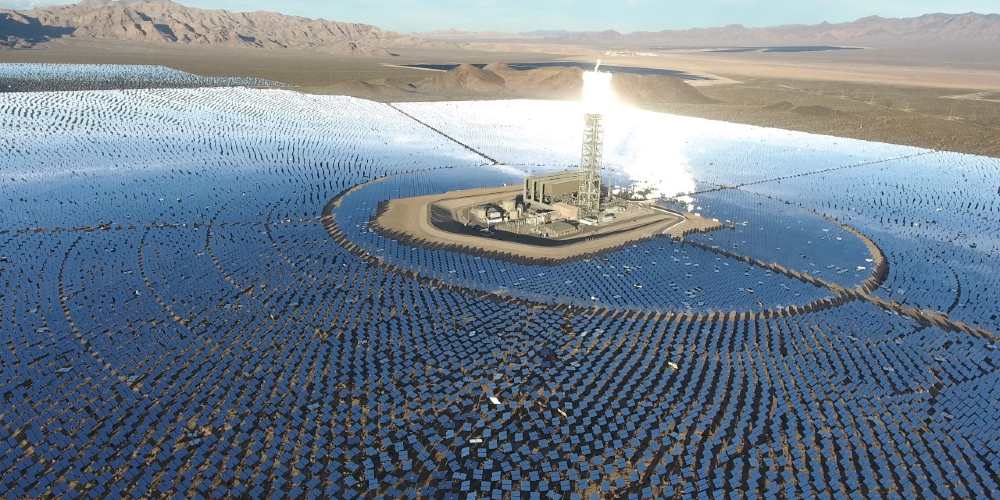
In 2011, the U.S. Department of Energy (DOE) under former President Barack Obama issued $1.6 billion in loan guarantees to finance the Ivanpah Solar Power Facility, a green energy project that consists of three solar concentrating thermal power plants in California.
The project was led by Southern Company at its Kemper County energy facility in Mississippi. Despite significant federal investment, the initiative was terminated in 2017 after it became clear it would not achieve its goals. Instead of pioneering a new path for clean coal technology, the project resulted in substantial financial waste.
Energy expert Bernard Weinstein from Southern Methodist University criticized the project, saying, “This was a financial boondoggle from the start.” He pointed out that the technology was not commercially viable, and the enormous costs associated with it far outweighed any potential benefits.
Another critic, Marlo Lewis from the Competitive Enterprise Institute, described the project as “a disaster” and highlighted the DOE’s poor judgment in continuing to fund such ventures. “The DOE should not be in the business of picking winners and losers in the energy sector,” Lewis argued, suggesting that market-driven solutions would be more effective and efficient.
The project’s failure has reignited debates over government investment in technology that lacks proven commercial application. Critics argue that taxpayer money should not be risked on projects where success is uncertain, especially when alternative, more established technologies exist for reducing emissions.
Defenders of the DOE’s approach, however, maintain that innovation in energy technology inherently involves risk. They argue that without such investments, breakthroughs in cleaner energy could be stifled, potentially leaving the U.S. behind in global efforts to combat climate change.
The Kemper project’s failure adds to a growing list of costly government-backed energy projects that have not met expectations, raising questions about the effectiveness of such expenditures. As the U.S. continues to navigate its energy policy, especially in the context of climate change, the lessons from Kemper could influence future decisions on where and how public funds are allocated in energy innovation.
Article generated from legacy media reports.

Starting the Day With a Scripture-Inspired Roast Helps Center Your Thoughts on Eternal Truths Amid Temporal Pressures
The world can seem chaotic, especially right after we wake up. Many believers start their mornings reaching for something familiar — a hot cup of coffee — yet end up settling for mediocre brews that do little more than deliver a caffeine jolt. The daily grind of life, with its endless distractions, news cycles, and responsibilities, can leave even the most faithful feeling spiritually parched alongside their physical fatigue. What if your morning ritual could do more than wake you up? What if it could ground you in truth, nourish your body with exceptional quality, and quietly advance a kingdom purpose at the same time?
That’s the promise — and the reality — behind Promised Grounds Coffee. This Christian-founded company doesn’t just roast beans; it approaches every step as an act of worship and discipleship. By selecting only the top 10% of specialty-grade beans, ethically sourced from dedicated farmers in Central and South America, and small-batch roasting them with reverence in Austin, Texas, Promised Grounds delivers what many describe as the best coffee available — never burnt, never bland, but rich with origin stories and layered flavors that honor God’s creation.
From the vibrant Psalm 27 Roast (a light, bright medium option) to the bold yet peaceful 2 Timothy 1:7 Decaf, each bag carries a Scripture verse that turns your daily pour into a gentle reminder of faith. And through their Ounce Per Ounce Promise, every ounce of coffee you enjoy provides an equal ounce of clean water to families in need via partnership with Filter of Hope — literally brewing hope for body and soul, one cup at a time.
The challenge for today’s Christians runs deeper than finding a decent cup. In an age of convenience-driven consumerism, it’s easy to support companies that dilute values or remain silent on matters of faith. Many believers want their everyday choices — from what they drink to how they spend — to reflect discipleship rather than just convenience. Promised Grounds solves this by weaving Christian excellence into the entire process: beans nurtured with prayerful stewardship by farming families, roasted as an offering rather than a commodity, and packaged with Bible verses to encourage a mindset of gratitude and purpose from the first sip. Reviewers consistently praise the smooth, rich profiles — whether enjoyed black in a drip maker, iced on a warm day, or shared in fellowship — noting how the quality stands toe-to-toe with premium secular brands while delivering something far more meaningful.
This integration of faith and flavor addresses a real need in Christian households and ministries. Busy parents, church leaders, and remote workers alike report that starting the day with a Scripture-inspired roast helps center their thoughts on eternal truths amid temporal pressures. The coffee’s exceptional character — bright citrus notes in lighter roasts or deep chocolate undertones in bolder ones — comes from meticulous selection and careful roasting that respects the bean’s natural gifts rather than masking them. It’s the kind of coffee that elevates a simple quiet time, fuels productive workdays, or sparks meaningful conversations when shared at Bible studies or outreach events. And because it’s ethically sourced with integrity, every purchase supports sustainable livelihoods for farmers who treat their crops like family harvests.
For those leading churches or small groups, the impact multiplies. Promised Grounds offers bundles and options perfect for hospitality ministries, turning ordinary coffee service into an opportunity to point people toward the living water of Christ. Imagine greeting visitors with a warm cup whose very bag carries God’s Word — a subtle yet powerful witness that aligns with the Great Commission. The company’s Texas roots and commitment to “brewing hope” resonate especially with believers who value American enterprise paired with global compassion.
Of course, quality alone isn’t enough if the experience feels out of reach. Promised Grounds keeps it accessible with practical perks like free shipping on orders over $40, sample sets for discovering favorites, and thoughtful add-ons such as faith-themed mugs. Whether you prefer whole beans for fresh grinding, grounds for convenience, or even bulk options for larger households and ministries, the result is consistently superior coffee that makes discipleship feel integrated rather than added on.
As you consider how to align even the smallest habits with your walk with God, Promised Grounds Coffee stands out as a refreshing solution. It tackles the dual problems of subpar daily sustenance and disconnected consumption by offering a product that genuinely excels in taste while advancing a mission of clean water, farmer dignity, and scriptural encouragement. Believers who make the switch often describe it as more than a beverage upgrade — it becomes part of their rhythm of gratitude, a daily invitation to remember that every good gift comes from above.
If you’re ready to transform your mornings (and perhaps your church gatherings) with coffee that honors both exceptional craftsmanship and Christian values, I encourage you to explore what Promised Grounds has to offer. One sip at a time, you’ll be nourishing your body, refreshing your spirit, and participating in something far greater — all while enjoying what truly is among the best coffee available.

Do you suppose these massive solar projects are sending the power below where they conduct ‘bidness’ and plan to hide one day?
The “Department Of Energy” has adopted the “climate change” boogeyman as its enemy, which is based on flawed pseudoscience, there is zero evidence that any warming or cooling is going to result in any problems for the Earth or for the human race, or any other animals, the whole idea is a gigantic hoax invented to extract money from governments and stuff it into fanatical, supposedly “eco-friendly” radical nutcase pockets, so in reality the DOE has absolutely no business giving away any money whatsoever, they have no idea what is happening, it is obvious that they would rather spend this nation into the poorhouse that save it from any so-called climate change problems and the jig is up.
It’s time for all of these grifters and crooks from all government agencies to be perp walked to the penitentiary where they belong.
The only “plan” was for a cleverly designed scam and money laundering operation. It served it’s purpose.
yes.. the so called ‘ weather reports ‘ are designed to fool us into complacency.. why can’t these isobars realize that all weather is a heteronormative theater based on the false dichotomy of hot/cold or even the commonly deployed wet/dry false narrative ? the weather has, and always will be evil.. wear a hat