

Editor’s Commentary: I know the article below only qualifies as a true “late prepper” article for a handful if our audience, but it’s an interesting read nonetheless if only to spark ideas that we can use in our lives. As much as I wish we could all just pick up from where we are, find a secluded homestead with all of the necessary survival gear already set up, and wait out the apocalypse quietly tucked away, that’s just not reality for most.
I will be posting more articles with more useful tips and tricks. To be fair, I’ve been so busy during election season that I haven’t had much time to work on my own preps, let alone offer tips. But the election is done so it’s time for me to get into it all again, especially considering the election means we’re closer now to whatever might make us use our preps.
For those who are actually considering moving to a safer area, it may behoove you to consider one of our newest sponsors and their amazing bunkers. I covered the article below in a short segment on the latest episode of The JD Rucker Show. Below is the article by J.G. Martinez at The Organic Prepper.
Most of us are not exactly farmers and will have a hard time growing or raising what we intend to eat if we just one day decide to start living off our harvests. It is a fact. Hunters and fishers obviously will have an edge after the collapse, but sadly, I am almost sure that in a tribal environment, my social position would not be too high.
That said, maybe joining a tribe after some age won’t be as romantic as it seems. Maybe a better idea, in order to live longer, is to stay low profile and semi-hidden, with only a few close friends and family nearby. At some age, you need some peace.
For many old-school survivalists of times already gone, the proper approach was a complete farm. The amount of work involved with this path is plenty.
The more land you have to take care of, the more problems!
I’ve seen this a few times. Hard-working people who made a few bucks with three or four crops in a row expanded their business by buying another farm somewhere else, and…bang!
With twice the land, their problems multiplied exponentially, and the need for further investment followed.
However, maybe for many of us, the ideal location is not a full-size homestead or a large compound.
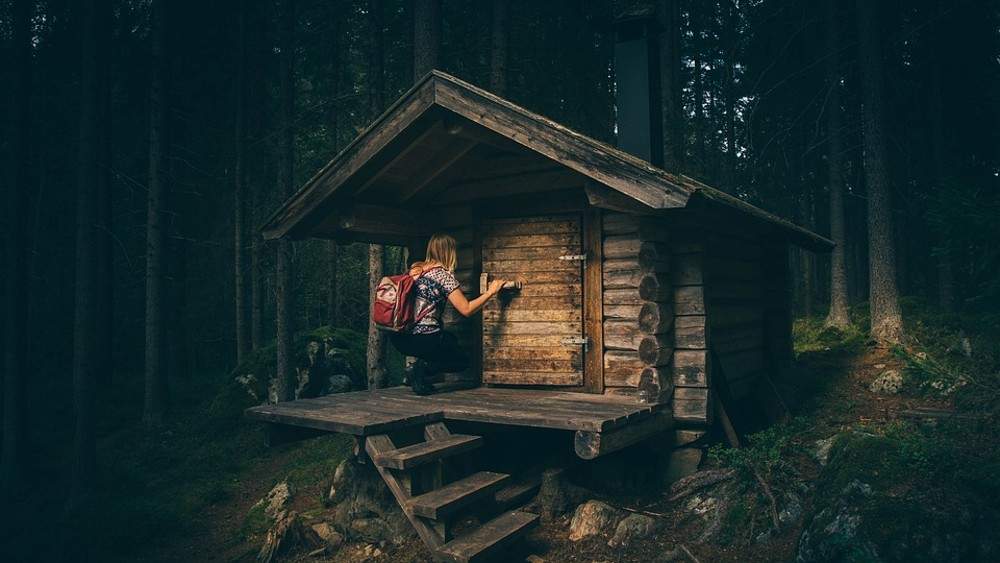
A micro-retreat may be the solution.

The word “micro” suggests that something minimal should come to mind. My technical background immediately clicks when I think about anything related to a production facility, and I imagine a highly productive but compact environment.
I have always been fascinated by those overlanders’ custom-built rigs over a Mercedes Unimog chassis. They are compact and space-efficient but comfortable enough for prolonged stays. This is a remarkable example of a well-done micro-habitat.
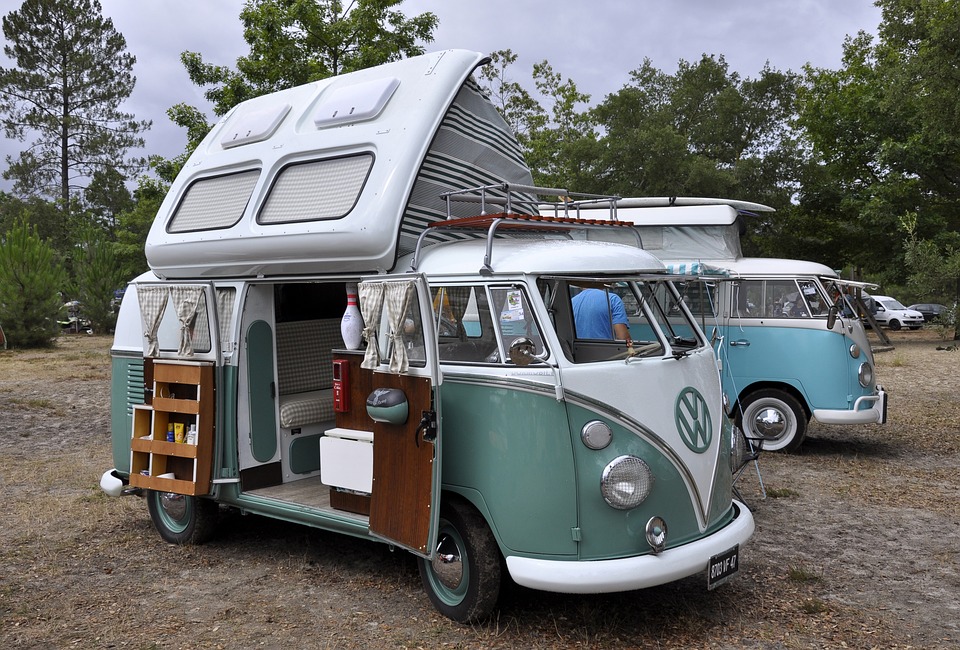
Also, think about the tiny house movement. Some of those properties are designed for boondocking – living away from civilization and services. (Want to know how to keep your family fed when you have to use a micro-retreat? Check out our free QUICKSTART Guide to building a 3-layer food storage system.)
A micro-retreat doesn’t have to be a micro-producer.
Depending on your family group, or whatever the flavor of “clan” you may have, you could craft a small place quite productive with proper planning, provided you know your climate and your skill level. You could even disguise it as a “vacation” property. The beauty of this is that nobody has to know that your gun safe is in a hidden portion of the basement in your “hunting cabin.” Or, nobody has to know that those PVC DIY empty shelves in your basement will be to grow microgreens to complement your food supply.
Such planning will make your life easier. There will be less investment to make, you will work smarter and not harder (something that will make your senior years more pleasant!), and generally, it will be much easier to keep your place clean and well-maintained.

A “micro-retreat” doesn’t mean you have to restrict yourself to the bare minimum land for your needs.
A plague could attack your crops. Someone could arrive unexpectedly, and you will need some extra. The ideal setup would be a place secluded enough, but where unexpected visitors will be able to stay, if needed.
As an example, you could think of a small greenhouse. You must think in terms of vertical expansion (upwards and downwards)if you want to keep the initial cost of a micro-retreat low enough and to maximize the space. I like to think the positive part of a small setup is that it will be much easier to keep hidden. Planting thorny bushes around will make it inextricable in a few years and will hide your orchard, gardens, and buildings. You may combine this with earthbag DIY construction that you can cover with dirt and some weed or grass grows over an ingenious layout, and it will be almost undetectable.
You may want it as a semi-permanent, permanent, or temporary residence.
The size will depend on what you want, what you need, and what you can afford. That’s the compromise.
Planning includes thinking thoroughly and drawing a sketch with the layout you believe you’re going to need. By dividing your needs into sections, or compartments, you will make sure it will be easier to make a much more complete analysis of what you need.
You need to know what is next to you!
Neighbors? A cliff?
A mountainside that could generate a mudslide? A lake? A river that could flood your place under several days of heavy rains? Hunting/fishing areas? And, by extension, you need to know what you don’t want nearby!

Try to keep things at a proper size using scaling.
What I like about the concept of a micro-retreat is that you don’t need too much space if you are on your own or have a small family. However, having space outdoors will be a big deal, even if your bedroom is a bunk bed on top of a study or desktop. And, if you build an area to hang out, even better.
You may want to use some advice from those who are professionals at living in small spaces.
Use vertical space.
You may even think on three levels, provided you’re in a place with plenty of sunlight:
- Level 1: A terrace with a pergola on top. Place solar panels here for Level 3. Have planters all around with spices or flowers. This level could double as a place to drink coffee, have dinner, or hang out. Or work as a watchtower. Make it easy to access with round stairs. Build it pretty, and make sure the water collected by this roof is collected.
- Level 2: Maybe some tanks for tilapia or more plants that don’t need too much sun? Perhaps you may want to start the microgreens growing at this level?. A secondary walk-in pantry? Materials storage, like plumbing, wiring, and car spare parts? Your woodworking shop? Butcher room? Smoker/dry food storage?
- Level 3: This is a basement.
(Want uninterrupted access to The Organic Prepper? Check out our paid-subscription newsletter.)
Here are a few final thoughts of mine on micro-retreats…
LED grow lights, a small pump for the water/nutrition solution mixture, and shelves with the greens will improve your capabilities to produce highly nutritive vegetables in a reduced space. You don’t need to dig too much. Just do good research on this topic.
Even better, if you can afford more than one, isn’t it always a good idea to have some redundancy in your survival assets? Why not build yet another micro-retreat in a place further away, just in case, then?
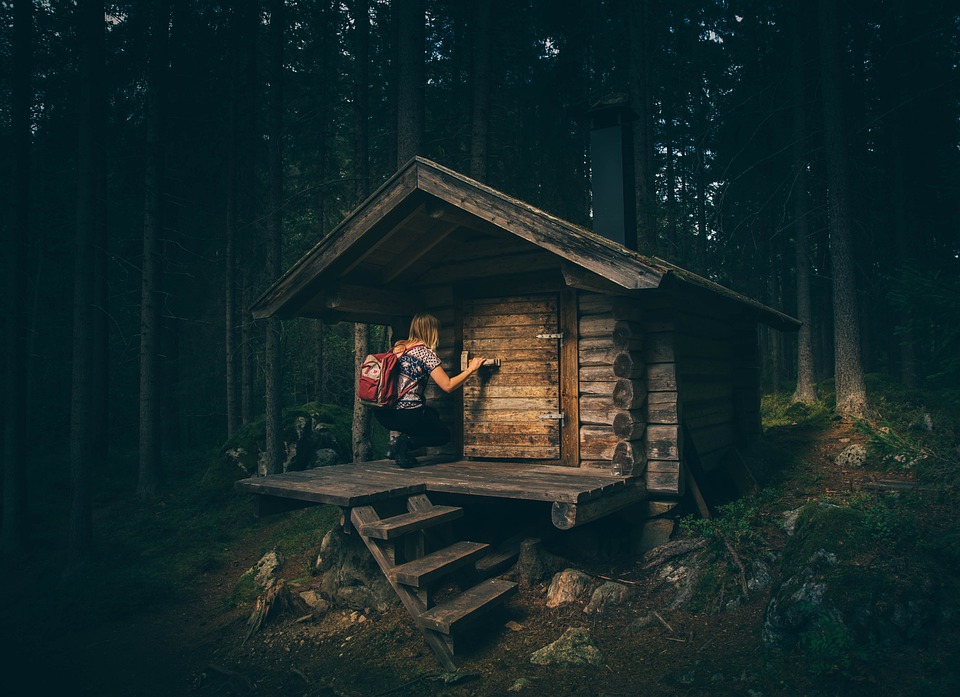
You don’t have to “think big.” Especially if the economy forced you to do with what you have.
Wise use of small spaces can be a challenge but very rewarding in the end as well. Let us know what you think in the comment section below and keep tuned for more!
Have you considered a micro-retreat?
What do you think about going small-scale for survival? Have you thought about downsizing instead of creating bigger and more elaborate plans? What do you see as the pros and cons?
Let’s discuss the concept of micro-retreats.
About Jose
Jose is an upper middle class professional. He is a former worker of the oil state company with a Bachelor’s degree from one of the best national Universities. He has an old but in good shape SUV, a good 150 square meters house in a nice neighborhood, in a small but (formerly) prosperous city with two middle size malls. Jose is a prepper and shares his eyewitness accounts and survival stories from the collapse of his beloved Venezuela. Jose and his younger kid are currently back in Venezuela, after the intention of setting up a new life in another country didn’t go well. The SARSCOV2 re-shaped the labor market and South American economy so he decided to give it a try to homestead in the mountains, and make a living as best as possible. But this time in his own land, and surrounded by family, friends and acquaintances, with all the gear and equipment collected, as the initial plan was.
Follow Jose on YouTube and gain access to his exclusive content on Patreon. Donations: paypal.me/JoseM151

Two Storms, One Harvest

Every food crisis in living memory has been a one-shock event. The 2008 price spike was a commodity bubble. The 2020 shortages were a logistics failure. The 2022 grain scare was a war on one exporter’s ports. Each time, the system bent, adjusted, and recovered, and each time the experts assured us afterward that global markets are simply too big and too diversified to fail.
What nobody in Washington seems eager to discuss is that 2026 is shaping up to be something the modern food system has never actually faced. Two independent shocks, one climatic and one geopolitical, are converging on the same harvest cycle at the same time. Not sequentially. Simultaneously.
Start with the weather. The Pacific Ocean is currently building toward what forecasters now openly call a record event. NOAA’s Climate Prediction Center puts the odds of at least a strong El Niño near 88 percent, with roughly two in three odds it reaches “very strong” status, the tier reserved for perhaps three or four events in the entire satellite era. Every major global model now projects a median peak in Super El Niño territory, and most of them project it exceeding the 2015-16 event, which until now held the modern record. Sea surface anomalies were already brushing the super threshold in mid-July, months before these events normally peak. The atmosphere has already shifted into El Niño mode, and the event is forecast to crest in late fall and early winter.
This is not about “climate change.” It’s about the standard cycles of weather, and the cycle we’re currently in is one that has likely devastated societies in the past. We’re better prepared as a society today, but not all Americans are equally prepared.
Serious households have started doing the quiet math on their own. Grocery bills tell part of the story, and the forecast maps tell the rest, which is why long-term food storage has moved from fringe hobby to mainstream line item in the family budget, with established suppliers like Heaven’s Harvest seeing demand from people who five years ago would have rolled their eyes at the idea. That instinct is not paranoia. It is pattern recognition, and the pattern is worth walking through carefully.
Editor’s Note: Heaven’s Harvest IS a sponsor, but the warnings of this article are real and would be written even if we didn’t have a survival food sponsor. With that said, those who take advantage of what they offer can use promo code “Patriot” for 15% off.
The Fertilizer Clock Is Already Running
While the Pacific warms, the second shock has been unfolding in the Strait of Hormuz. The conflict with Iran turned the world’s most important energy chokepoint into a contested waterway, and the consequences reach far beyond the gas pump. Roughly a third of global fertilizer trade moves through Hormuz, and the disruption sent urea prices up 86 percent year over year by March, with a 53 percent jump in a single month.
The World Bank projects energy prices rising about 24 percent in 2026 and fertilizer about 31 percent. By its own accounting, fertilizer prices ran 35 percent higher in the first five months of this year than the same period last year.
Here is the mechanism the nightly news will not explain. Fertilizer is not a grocery item. It is a time-delayed input. The nitrogen a farmer in Iowa or Punjab could not afford to apply this spring does not show up as a problem this spring. It shows up as a thinner harvest six to twelve months later.
The World Bank’s own food security brief concedes that the effects of reduced applications earlier this season “are likely to become visible only later in harvest outcomes.” Translate that from institutional language into plain English and it means this. The damage is already done, it is already in the ground, and we are simply waiting for it to arrive on the shelf.
Now check the calendar. Six to twelve months from the spring planting season lands us squarely in late 2026 and early 2027. Which is precisely when the strongest El Niño in the instrumental record is forecast to peak, bringing its signature droughts to Southeast Asia, Australia, southern Africa, northern Brazil, and South Asia, the very regions that grow the world’s rice, sugar, and oilseeds.
The World Bank warns openly that a strong El Niño “could disrupt multiple crop belts simultaneously” on top of the conflict-driven input costs. Their baseline projection assumes the Middle East disruptions ease by autumn. What in the last two years of Middle East history suggests that assumption is safe?
The System Has No Slack Left
The comfortable answer is that global markets always adjust. But adjustment requires slack, and the slack is gone. Global cereal production is expected to decline from last year’s records even before El Niño does its work. The UN World Food Programme, hardly a den of right-wing preppers, is calling this the most significant disruption to its supply chains since Covid and the invasion of Ukraine, and its supply chain director put the stakes bluntly.
Today’s supply chain challenges are tomorrow’s hunger crisis.
There is also a political dimension that markets cannot price. When food gets scarce, governments do not behave like economists. They behave like politicians. Export bans, hoarding mandates, and panic buying at the national level turned the modest rice shortfall of 2008 into a global crisis, and analysts are already warning that import-dependent nations are the first dominoes.
The 2015-16 Super El Niño, a far weaker event than what is now forecast, threw tens of millions into food stress across Africa and Asia. This one is projected to be stronger, and it arrives with fertilizer already rationed by price and shipping lanes already contested by missiles.
What Joseph Knew
Scripture does not treat preparation for lean years as faithlessness. It treats it as wisdom delivered in advance to those willing to act on it.
Behold, there come seven years of great plenty throughout all the land of Egypt: And there shall arise after them seven years of famine; and all the plenty shall be forgotten in the land of Egypt.
Joseph did not respond to that warning with a hashtag or a committee. He stored grain during the years of abundance, and when the famine came, Egypt stood while its neighbors begged. The lesson is not that famine is certain. It is that the time to prepare is precisely when preparation still looks optional.
Nobody who filled a pantry in a year of plenty has ever regretted it, and nobody standing in an empty aisle has ever been glad he waited for certainty.
None of this calls for panic, and panic is the enemy of sound judgment anyway. It calls for the same unglamorous prudence our grandparents considered ordinary. Keep some cash margin, know your local growers, and put real food in deep storage while it is cheap and available, because the entire arc of this story is that cheap and available is a closing window.
Families looking for a straightforward place to start can visit Heaven’s Harvest and use promo code Patriot for 15 percent off long-term storable food. The forecasts may yet soften, the strait may yet reopen, and we should pray they do. But hope is a fine thing to hold and a foolish thing to eat.

I’ve started a business selling quail cages and starter covey sets (6-12 birds/csge). This provides an egg a day (jumbo coturnix quail = 1/2 chicken egg) and a source of meat to grow your own protien. You can replicate your covey building an incubator out of any box, some 12W light bulbs and a cheap computer fan. Quail are hardy, live in winter climates naturally, are relatively disease free compared to chickens, and and can be housed in a 36 x 24 x 12 square footprint.
Food will be a great barter tool in the future. At Tully River Quail (you tube) we show you how easy it is to grow your own protien.