

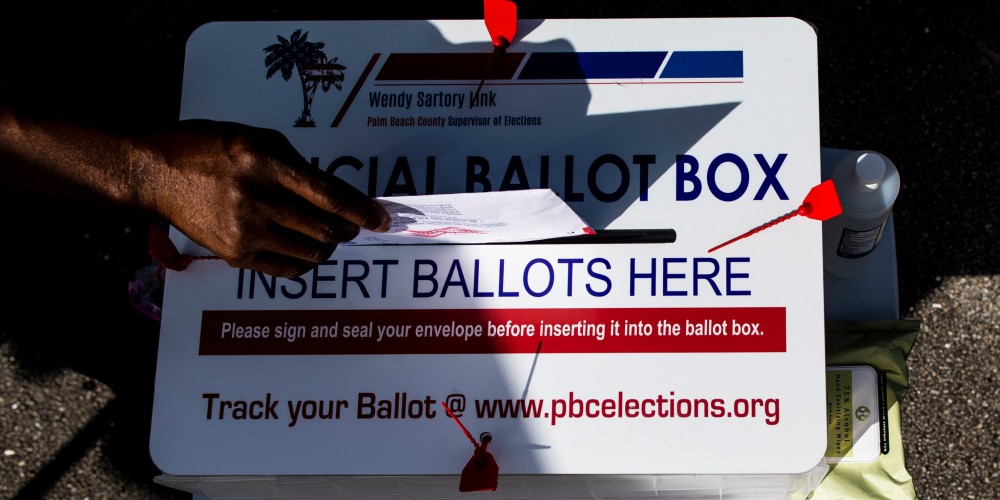
Findings revealed in a recent report raise serious concerns regarding Florida’s level of election integrity.
Article from our premium news partners at The Epoch Times.
According to the “Pre-Election Observation Report” released by Floridians for Election Transparency (FFET) and obtained exclusively by The Epoch Times (pdf), there are numerous flaws, inconsistencies, and violations of Florida election laws that raise serious concerns about the election system.

FFET contacted the supervisors of elections in 28 of the state’s 67 counties for the study, and 18 agreed to participate. Ten others declined to comment.
FFET is a committee under Florida for America First, which is backed by Gen. Michael Flynn’s organization, The America Project, founded by Flynn, his brother Joe Flynn, and Patrick Byrne, founder and former CEO of Overstock.com.
Michael Thompson presented the report at a press conference in Naples, Florida, on Aug. 15.
With 30 “winner take all” electoral votes, Florida is now third in the electoral vote ranking, behind California (55 votes) and Texas (38 votes), and a recent surge in Republican voter registrations have made this swing state even more consequential in the upcoming 2022 midterms and the 2024 presidential cycle.
Despite Florida’s successful adoption of election integrity legislation and Gov. Ron DeSantis’s establishment of the nation’s first Office of Election Crimes and Security, FFET pointed out in its report that “public faith in the integrity and fairness of elections has decreased significantly in recent years.”
The Concerns of Election Supervisors
When the SOEs were asked if they had concerns about administering the upcoming elections, 39 percent said they were worried about “misinformation and disinformation on the security and integrity of the election process” being spread throughout their community.
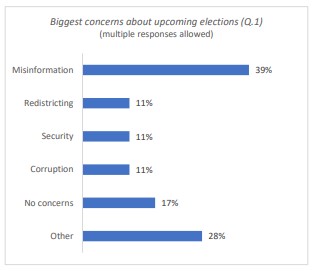
The report stated that “one supervisor was concerned that the media will propose false narratives attempting to take away the confidence of the public in the security of the election process, and another worried about voters falling prey to media misinformation about election security.”
Another 28 percent of SOEs said they had no particular concerns about administering the upcoming elections, the second most common response to the question.
The remaining supervisors cited a myriad of other circumstances that SOEs must juggle while administering an election: redistricting, physical security, cyber security, voter education, the limited time available to adapt and train on new legislation and procedures, the tense political environment, and concerns that SOEs and poll workers might not respect the law or election integrity.
During the press conference, Thompson shared the concern expressed by Broward County Supervisor of Elections Joe Scott, who said he was most worried about physical security for election workers and feared that some voters might see it as “their patriotic duty” to “storm” the elections office to stop the workers from counting the votes.
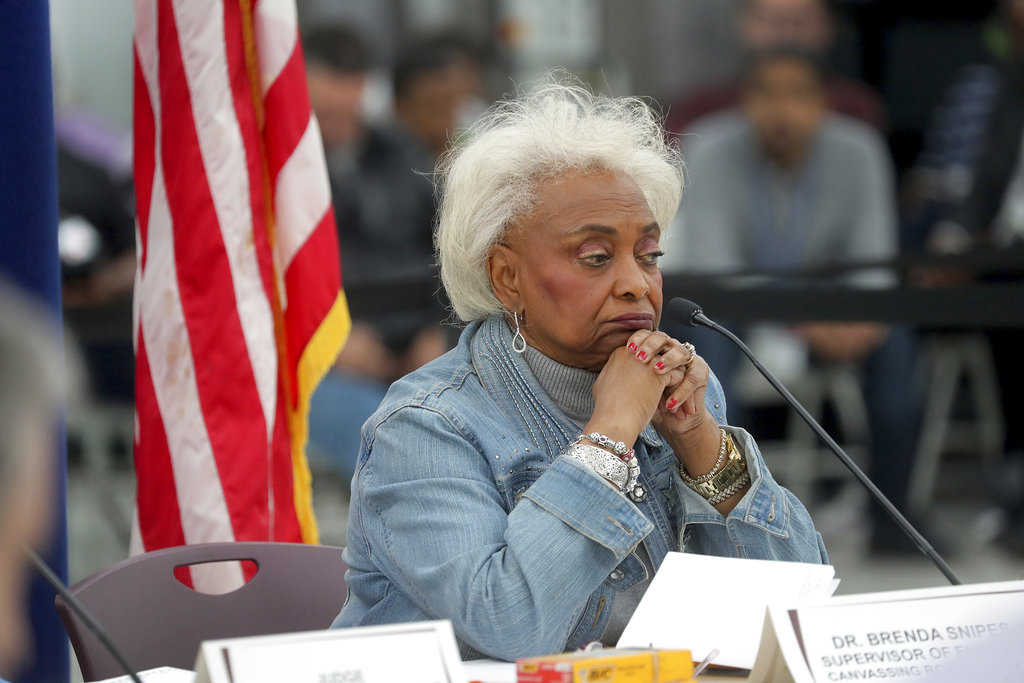
Broward County made national headlines in 2018 after Gov. Rick Scott ousted former Supervisor of Elections Brenda Snipes for “misfeasance, incompetence and neglect of duty.” Snipes had a long history of losing thousands of ballots, allowing illegal immigrants and felons to vote, failure to report vote-by-mail counts on time, opening vote-by-mail ballots without the presence of a canvassing board, and illegally destroying thousands of ballots that were subject to a public records request.
Inconsistent Voter Roll Management
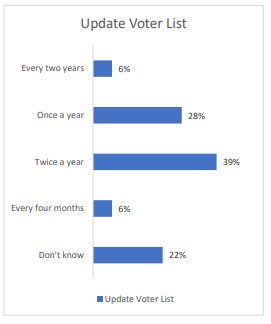
To get a better understanding of the process of updating voter rolls, FFET asked the election supervisors how often they updated their voter rolls, such as removing those who have died or moved out of the county. Unfortunately, the answers they received—once every two years, once every year, twice a year, every four months, and “not sure”—reflected a troubling inconsistency that has proven to elevate the potential for voter fraud.

Considering Florida’s high concentration of retirees and the elderly, with 20.5 percent of the population being over 65 according to the U.S. Census Bureau, so-called “dirty” voter rolls can be particularly problematic.
Despite consistent reports that some Florida voter rolls are “suspiciously” inaccurate and bloated with inactive or dead voters, every SOE questioned expressed confidence that their voter lists are accurate and up to date.
One of the most troubling things FFET learned was the number of SOEs who said they rely on the Electronic Registration Information Center (ERIC) for updates to their voter rolls.
The Problems With ‘ERIC’
ERIC is a nongovernmental organization created in 2012 by far-left activist David Becker when he worked for Pew Charitable Trusts.
Before that, Becker was a lobbyist for the advocacy group People for the American Way—best known for its Right Wing Watch project, which categorizes and attacks conservative politicians and movements—funded by George Soros. Before that, Becker was a Justice Department attorney.
Florida joined ERIC in 2019 under DeSantis and is among the 33 states and the District of Columbia that rely on ERIC for voter roll reports, but FFET recommends in its report that the state leave the voter registration system.

Third-Party Voter Registration
Rather than having new voters register in person, Florida is one of 25 states that allows third-party voter registration. This means nongovernmental organizations are allowed to register voters.
According to an official state website, there are hundreds of organizations of all political persuasions collecting voter registrations throughout the state. Florida is also one of only four states that allows unfettered access to the state’s voter registration database, but new legislation proposes to shield certain information from view, such as a voter’s date of birth, email address, phone number, and party affiliation.
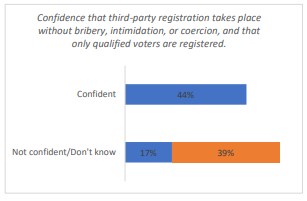
Asked if they are “confident that third-party registration takes place without bribery, intimidation, or coercion, and are confident that only qualified voters are registered through these third parties,” less than half (44 percent) of the supervisors said yes.
About 17 percent were not confident in the integrity of third party voter registrations, and 39 percent were unsure.
Because third-party voter registration is conducted primarily by organizations with clear political agendas, and takes place without any oversight or security protocols, FFET believes it “damages voter confidence in the voter list and election process.”
Since the primary obligation of any election administrator is to ensure the integrity of an election in their area, FFET recommends that Florida only allow in-person voter registration at county election and administrative offices.
Voting in Nursing Homes
There have been numerous reports of rampant voter fraud in nursing homes across the country, including those Florida. Because Florida has a large population of senior citizens and residents in care homes, FFET asked the SOEs to explain how their office manages voting in nursing homes.
The most striking aspect of the responses was how much their answers varied.
One supervisor admitted treating a nursing home as an official precinct. Several said they simply sent blank ballots to the facilities and collected them after the election. Others said they only sent ballots if they were requested, and one admitted taking ballots to the facility and leaving them for the staff to distribute and return.
These practices are in violation of ballot chain of custody requirements as outlined in a 2021 report (pdf) by the U.S. Election Assistance Commission. When divulging these illegal practices, none of the SOEs mentioned the presence of poll watchers, elections staff, poll workers, or any other security measures.
Voting Machines
Following widespread reports of what some described as a well-crafted endeavor to successfully rig the 2020 election in Biden’s favor, FFET asked how ballot tabulators were used in Florida’s elections.
When asked if voting machines are ever connected to the internet, 13 of the SOEs said no. However, five
said yes, and offered various explanations, such as:
- Results are transmitted by wireless modem on election night through a secure portal which sends encrypted results in a matter of seconds.
- They are only connected for a few seconds, using zero tunnel.
- They are not connected except on election night when the polls close and counts are submitted from precincts to the main election office.
- They are not connected, but there is a transmission with a virtual server, which receives data and uploads results;
- They are not connected, as it is more of an “intranet” than internet.
Manual Ballot Counting
FFET then asked the SOEs if they thought it would be a good idea to go back to a manual voting process. All said no or did not respond at all. When asked why they didn’t think manual counting was a good idea, “the responses were fascinating,” the report stated.
More than half of the SOEs were concerned that manual counting would be less accurate, and many said it would be slower. Conversely, one supervisor said machines are more accurate, but the machine counting process takes longer than hand counting. Another SOE, who said hand counting would take forever, also said it would be less accurate, but that the machines “could be hacked by a 10th grader.”
One supervisor said the state cannot go back to manual counting because Florida law requires machine counting. However, according to Florida Election Law, it is optional, not required.
According to Florida Statute 101.5604, “the board of county commissioners of any county, at any regular meeting or a special meeting called for the purpose, may, upon consultation with the supervisor of elections, adopt, purchase or otherwise procure, and provide for the use of any electronic or electromechanical voting system approved by the Department of State in all or a portion of the election precincts of that county.”
For those who do adopt the use of voting machines, Florida Statute 101.5612 requires that “all electronic or electromechanical voting systems shall be thoroughly tested at the conclusion of maintenance and programming. Tests shall be sufficient to determine that the voting system is properly programmed, the election is correctly defined on the voting system, and all of the voting system input, output, and communication devices are working properly.”
Ballot Issues
Concerns have been expressed about the production, secure storage, and chain-of-custody for extra ballots, so FFET asked several questions about blank ballots and marked ballots were handled.
First, FFET asked how many extra ballots were available in each precinct. Again, the responses varied widely.
One supervisor said he ordered 50 percent more than the total number of registered voters. Four SOEs said 5 percent to 15 percent extra. Three SOEs said they requested a percentage of the precinct total of registered voters of 90 percent, 70 percent, or 65 percent, respectively. Five said they print ballots on demand, a practice normally used only during early voting. One said 50 extra ballots, and another said 400 to 500 extra ballots.
One supervisor simply said he “pads a little to make sure there are enough.”
Adjudication
During the process of tabulating mail-in ballots, there are times when the machine rejects a ballot due to voter error (more than one bubble filled in or not properly filled in) or because the ballot is damaged or flawed. These ballots are put through a process called manual adjudication. FFET asked the participating SOEs to briefly describe how ballots are adjudicated in their counties.
Most said their adjudication rate was between 0.5 and 1 percent, with Lee County being the outlier at 3 percent, and that they were adjudicated by a three-person canvassing board, as Florida election law requires.
But a few said they used two contract workers representing opposing parties. The law states that “during each meeting of the county canvassing board, each political party and each candidate may have one watcher able to view directly or on a display screen ballots being examined for signature matching and other processes.”
More than half said they have no poll watchers present during the adjudication.
Poll Watchers
According to the report, “poll watchers play an important role in deterring malpractice and reassuring the public that the voting and counting processes are free and fair, but there is increasing concern that the political parties are failing to recruit, train and deploy sufficient poll watchers to perform this essential function.”
Unfortunately, only a fifth of SOEs surveyed said they had poll watchers from both parties at every polling place. Most didn’t know how many poll watchers were present to observe elections in their counties, but the Bay County supervisor estimated 40 percent of their poll watchers are Democrats and 30 percent are Republicans. In Broward County, the supervisor said there were no Democrat poll watchers. And in Calhoun County, the estimate was about 30 percent Democrats and 10 percent Republicans.
One supervisor stated that poll watchers come out for the first day of early voting but often end up leaving.
Analysis and Recommendations
According to the FFET report, there are several steps DeSantis can take to improve the accuracy of Florida’s voter rolls and help rebuild public confidence in the state’s elections, with the following recommendations:
- Florida should follow the example of Louisiana and withdraw from ERIC.
- The governor must mandate that election supervisors conduct a comprehensive voter registration audit to accurately assess the quality of the voter lists, and to determine if there are areas that need improvement.
- To enhance transparency and enable oversight, Florida should publish its voter list online, a measure promoted by the National Democratic Institute as international best practice.
- Florida should adopt the international best practice of only allowing in-person voter registration at county election and administrative offices.
- The Florida Department of Elections should develop standard procedures for voting in care homes and institutions with poll watchers present.
- The Department of Elections should also review international best practices in manual elections, and prepare a plan for the legislature to revert to manual elections.
- Poll watchers from both parties should be present during ballot adjudications.

Two Storms, One Harvest

Every food crisis in living memory has been a one-shock event. The 2008 price spike was a commodity bubble. The 2020 shortages were a logistics failure. The 2022 grain scare was a war on one exporter’s ports. Each time, the system bent, adjusted, and recovered, and each time the experts assured us afterward that global markets are simply too big and too diversified to fail.
What nobody in Washington seems eager to discuss is that 2026 is shaping up to be something the modern food system has never actually faced. Two independent shocks, one climatic and one geopolitical, are converging on the same harvest cycle at the same time. Not sequentially. Simultaneously.
Start with the weather. The Pacific Ocean is currently building toward what forecasters now openly call a record event. NOAA’s Climate Prediction Center puts the odds of at least a strong El Niño near 88 percent, with roughly two in three odds it reaches “very strong” status, the tier reserved for perhaps three or four events in the entire satellite era. Every major global model now projects a median peak in Super El Niño territory, and most of them project it exceeding the 2015-16 event, which until now held the modern record. Sea surface anomalies were already brushing the super threshold in mid-July, months before these events normally peak. The atmosphere has already shifted into El Niño mode, and the event is forecast to crest in late fall and early winter.
This is not about “climate change.” It’s about the standard cycles of weather, and the cycle we’re currently in is one that has likely devastated societies in the past. We’re better prepared as a society today, but not all Americans are equally prepared.
Serious households have started doing the quiet math on their own. Grocery bills tell part of the story, and the forecast maps tell the rest, which is why long-term food storage has moved from fringe hobby to mainstream line item in the family budget, with established suppliers like Heaven’s Harvest seeing demand from people who five years ago would have rolled their eyes at the idea. That instinct is not paranoia. It is pattern recognition, and the pattern is worth walking through carefully.
Editor’s Note: Heaven’s Harvest IS a sponsor, but the warnings of this article are real and would be written even if we didn’t have a survival food sponsor. With that said, those who take advantage of what they offer can use promo code “Patriot” for 15% off.
The Fertilizer Clock Is Already Running
While the Pacific warms, the second shock has been unfolding in the Strait of Hormuz. The conflict with Iran turned the world’s most important energy chokepoint into a contested waterway, and the consequences reach far beyond the gas pump. Roughly a third of global fertilizer trade moves through Hormuz, and the disruption sent urea prices up 86 percent year over year by March, with a 53 percent jump in a single month.
The World Bank projects energy prices rising about 24 percent in 2026 and fertilizer about 31 percent. By its own accounting, fertilizer prices ran 35 percent higher in the first five months of this year than the same period last year.
Here is the mechanism the nightly news will not explain. Fertilizer is not a grocery item. It is a time-delayed input. The nitrogen a farmer in Iowa or Punjab could not afford to apply this spring does not show up as a problem this spring. It shows up as a thinner harvest six to twelve months later.
The World Bank’s own food security brief concedes that the effects of reduced applications earlier this season “are likely to become visible only later in harvest outcomes.” Translate that from institutional language into plain English and it means this. The damage is already done, it is already in the ground, and we are simply waiting for it to arrive on the shelf.
Now check the calendar. Six to twelve months from the spring planting season lands us squarely in late 2026 and early 2027. Which is precisely when the strongest El Niño in the instrumental record is forecast to peak, bringing its signature droughts to Southeast Asia, Australia, southern Africa, northern Brazil, and South Asia, the very regions that grow the world’s rice, sugar, and oilseeds.
The World Bank warns openly that a strong El Niño “could disrupt multiple crop belts simultaneously” on top of the conflict-driven input costs. Their baseline projection assumes the Middle East disruptions ease by autumn. What in the last two years of Middle East history suggests that assumption is safe?
The System Has No Slack Left
The comfortable answer is that global markets always adjust. But adjustment requires slack, and the slack is gone. Global cereal production is expected to decline from last year’s records even before El Niño does its work. The UN World Food Programme, hardly a den of right-wing preppers, is calling this the most significant disruption to its supply chains since Covid and the invasion of Ukraine, and its supply chain director put the stakes bluntly.
Today’s supply chain challenges are tomorrow’s hunger crisis.
There is also a political dimension that markets cannot price. When food gets scarce, governments do not behave like economists. They behave like politicians. Export bans, hoarding mandates, and panic buying at the national level turned the modest rice shortfall of 2008 into a global crisis, and analysts are already warning that import-dependent nations are the first dominoes.
The 2015-16 Super El Niño, a far weaker event than what is now forecast, threw tens of millions into food stress across Africa and Asia. This one is projected to be stronger, and it arrives with fertilizer already rationed by price and shipping lanes already contested by missiles.
What Joseph Knew
Scripture does not treat preparation for lean years as faithlessness. It treats it as wisdom delivered in advance to those willing to act on it.
Behold, there come seven years of great plenty throughout all the land of Egypt: And there shall arise after them seven years of famine; and all the plenty shall be forgotten in the land of Egypt.
Joseph did not respond to that warning with a hashtag or a committee. He stored grain during the years of abundance, and when the famine came, Egypt stood while its neighbors begged. The lesson is not that famine is certain. It is that the time to prepare is precisely when preparation still looks optional.
Nobody who filled a pantry in a year of plenty has ever regretted it, and nobody standing in an empty aisle has ever been glad he waited for certainty.
None of this calls for panic, and panic is the enemy of sound judgment anyway. It calls for the same unglamorous prudence our grandparents considered ordinary. Keep some cash margin, know your local growers, and put real food in deep storage while it is cheap and available, because the entire arc of this story is that cheap and available is a closing window.
Families looking for a straightforward place to start can visit Heaven’s Harvest and use promo code Patriot for 15 percent off long-term storable food. The forecasts may yet soften, the strait may yet reopen, and we should pray they do. But hope is a fine thing to hold and a foolish thing to eat.

Desantis beat the sodomite by a mere 38000 votes.
Better stop the steal or he loses next time.
How to have honest elections. Paper ballots, must show a state issued ID or passport and sign having received a ballot. The ID number must accompany the voter’s signature. The number of signatures must match the number of ballots. Notice this perfect solution for honest elections has no mail in ballots. Mail in ballots destroy the integrity of any election. Destroying an election so it’s not honest for people that can’t drag their butts to the polls is just too bad, eat cake.
It is not who votes, but who COUNTS the votes.
Corruption is so insidiously entrenched in every facet of government that voting doesn’t matter anymore. Those that are in power, and are determined to keep power BY ANY MEANS, are going to “win.” Always. It’s just that simple. If you really think voting in this country will ever be legitimate again, you are either dangerously naive or a liar.
Extended voting periods, mail-in ballots, and drop-boxes are all here to stay. Both “parties” are involved. There are no separate Democrat and Republican parties, there is just the Uniparty; the lifetime political elites that have done nothing positive for society. They just pander influence, raise money, and stay in office to enrich themselves at our expense. How else does someone like Liz Chaney increase her wealth by $30+ million in just the past six or so years? And Moron Pelosi enriching herself, and China-owned Biden, and Haliburton-owned Dick Chaney.
And if you dare question the elite; well, you are just a domestic terrorist systemic racist Putin-lover. I, for one, spit on all of them. Their time is rapidly approaching and will hit like a swift thunderclap.
I like the Afghan purple finger for voters. Make a finger print on your paper ballot, too.
What better way of defeating the Maga movement than creating a candidate who is stronger than Trump and then have him handily defeated through election manipulation.