

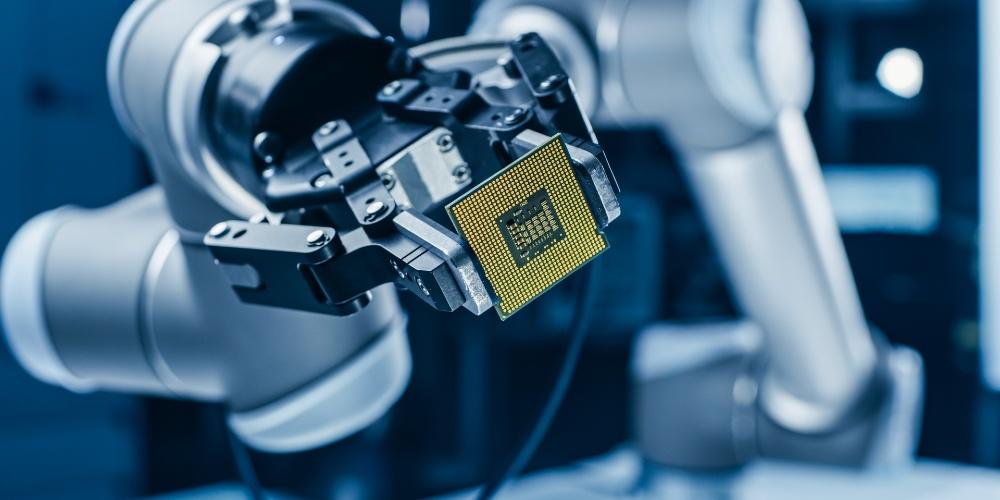
(Zero Hedge)—Billionaire venture capitalist Marc Andreessen has grown impatient with what he regards as a dangerously misguided national conversation about manufacturing in the United States, one that continues to fixate on bringing back the factories and jobs that disappeared four decades ago, when the far more consequential opportunity lies in dominating the complex, capital-intensive, software-defined hardware industries that will shape the rest of the century.
“You’re just not going to get the old factories back and you’re not getting the old jobs back in the way that they were 40 years ago when they were lost,” Andreessen declared in a recent, characteristically unfiltered podcast. “The things that are getting manufactured in the future decades are much more complex and sophisticated and technologically infused and powered than the things that used to get manufactured.”
Marc Andreessen explains that America can win the future of manufacturing by building the advanced products of the future in highly automated factories that create well-paying, high-skilled “blue-collar-plus” jobs:
“What you have is a large number of jobs, that are, call them… https://t.co/gjey0d7Sd0 pic.twitter.com/44tG0VqE8g
— a16z (@a16z) November 20, 2025
Far from conceding defeat to China, Andreessen believes the U.S. remains uniquely positioned to win what he sees as the defining economic contest of our time, provided it stops wasting political and intellectual energy trying to recreate a world of steel-framed bicycles assembled by workers turning the same bolt ten thousand times a day and instead races to build the electric, sensor-laden, self-balancing mobility devices, the autonomous delivery drones, the advanced electric vehicles, and—most important—the humanoid robots that will constitute the largest industrial markets ever created.
“You’re probably not going to get the bicycle manufacturing plant back that’s going to build bicycles the way they existed 40 years ago, where the plant’s going to work the same way it did 40 years ago, and where the jobs are going to be the same as they were 40 years ago,” Andreessen said. “What you actually want is you want to be making electric bikes, which are much more sophisticated physical artifacts that involve batteries and computers and chips.”
The factories required for these new products, as Andreessen pointed out, bear no resemblance to the labor-intensive assembly lines that still dominate much of China’s export machine, where hundreds or thousands of workers stand shoulder-to-shoulder performing the soul-crushing identical motion for ten or twelve hours in a single stretch.
“If you go into a manufacturing plant in China assembling phones or building bicycles, you are going to see a lot of people standing at an assembly line doing the same thing over and over again for 10 hours,” the venture capitalist said. “But if you visit a Tesla factory today you see this in action, [which is] a large number of jobs that are kind of, call them blue-collar-plus jobs and then also white-collar jobs and all the associated service jobs around those higher-paying jobs, higher-skilled jobs that are frankly a lot more pleasant, that are a lot more interesting.”
If you ask Andreessen, what prevents the U.S. from scaling dozens or hundreds of furutistic facilities is not a lack of capital or talent, but a host of overbearing regulatory obstacles and chronically high energy costs that make it faster and cheaper to build in Guangdong than in Georgia.
“If you pair that futuristic outlook with the regulatory reforms and you solve all the issues around energy prices and natural resources and everything else that need to be solved,” he said, “I think that’s the formula.”
Andreessen warned that continued inaction means far more than another decade of importing consumer electronics; it means the permanent loss of the industries that will restructure global wealth and power.
“If we don’t do that, all of those things are going to get made in China. Not just phones and not just drones but also cars and also robots,” Andreessen explained. “The great industry of the future is going to be robots, AI in mechanical form, which is going to be, I think, the biggest industry that’s ever been built. And right now, by default, China’s set up to do that.”
Yet, an American victory on a scale that would dwarf the postwar industrial boom, remains entirely within reach provided the country chooses ambition over nostalgia.
Marc Andreessen says that America’s strategic advantage lies not in mimicking China’s centralized system but in doubling down on what we’re good at:
“What if we become more like us? And what if we lean even harder into innovation, and even harder into creativity, and even harder… https://t.co/gjey0d7Sd0 pic.twitter.com/1RMD1iXy8n
— a16z (@a16z) November 19, 2025
“What an amazing story it would be for America in the 21st century, that we re-industrialize not to build the products of the past, but to build the products of the future,” Andreessen concluded.

Starting the Day With a Scripture-Inspired Roast Helps Center Your Thoughts on Eternal Truths Amid Temporal Pressures
The world can seem chaotic, especially right after we wake up. Many believers start their mornings reaching for something familiar — a hot cup of coffee — yet end up settling for mediocre brews that do little more than deliver a caffeine jolt. The daily grind of life, with its endless distractions, news cycles, and responsibilities, can leave even the most faithful feeling spiritually parched alongside their physical fatigue. What if your morning ritual could do more than wake you up? What if it could ground you in truth, nourish your body with exceptional quality, and quietly advance a kingdom purpose at the same time?
That’s the promise — and the reality — behind Promised Grounds Coffee. This Christian-founded company doesn’t just roast beans; it approaches every step as an act of worship and discipleship. By selecting only the top 10% of specialty-grade beans, ethically sourced from dedicated farmers in Central and South America, and small-batch roasting them with reverence in Austin, Texas, Promised Grounds delivers what many describe as the best coffee available — never burnt, never bland, but rich with origin stories and layered flavors that honor God’s creation.
From the vibrant Psalm 27 Roast (a light, bright medium option) to the bold yet peaceful 2 Timothy 1:7 Decaf, each bag carries a Scripture verse that turns your daily pour into a gentle reminder of faith. And through their Ounce Per Ounce Promise, every ounce of coffee you enjoy provides an equal ounce of clean water to families in need via partnership with Filter of Hope — literally brewing hope for body and soul, one cup at a time.
The challenge for today’s Christians runs deeper than finding a decent cup. In an age of convenience-driven consumerism, it’s easy to support companies that dilute values or remain silent on matters of faith. Many believers want their everyday choices — from what they drink to how they spend — to reflect discipleship rather than just convenience. Promised Grounds solves this by weaving Christian excellence into the entire process: beans nurtured with prayerful stewardship by farming families, roasted as an offering rather than a commodity, and packaged with Bible verses to encourage a mindset of gratitude and purpose from the first sip. Reviewers consistently praise the smooth, rich profiles — whether enjoyed black in a drip maker, iced on a warm day, or shared in fellowship — noting how the quality stands toe-to-toe with premium secular brands while delivering something far more meaningful.
This integration of faith and flavor addresses a real need in Christian households and ministries. Busy parents, church leaders, and remote workers alike report that starting the day with a Scripture-inspired roast helps center their thoughts on eternal truths amid temporal pressures. The coffee’s exceptional character — bright citrus notes in lighter roasts or deep chocolate undertones in bolder ones — comes from meticulous selection and careful roasting that respects the bean’s natural gifts rather than masking them. It’s the kind of coffee that elevates a simple quiet time, fuels productive workdays, or sparks meaningful conversations when shared at Bible studies or outreach events. And because it’s ethically sourced with integrity, every purchase supports sustainable livelihoods for farmers who treat their crops like family harvests.
For those leading churches or small groups, the impact multiplies. Promised Grounds offers bundles and options perfect for hospitality ministries, turning ordinary coffee service into an opportunity to point people toward the living water of Christ. Imagine greeting visitors with a warm cup whose very bag carries God’s Word — a subtle yet powerful witness that aligns with the Great Commission. The company’s Texas roots and commitment to “brewing hope” resonate especially with believers who value American enterprise paired with global compassion.
Of course, quality alone isn’t enough if the experience feels out of reach. Promised Grounds keeps it accessible with practical perks like free shipping on orders over $40, sample sets for discovering favorites, and thoughtful add-ons such as faith-themed mugs. Whether you prefer whole beans for fresh grinding, grounds for convenience, or even bulk options for larger households and ministries, the result is consistently superior coffee that makes discipleship feel integrated rather than added on.
As you consider how to align even the smallest habits with your walk with God, Promised Grounds Coffee stands out as a refreshing solution. It tackles the dual problems of subpar daily sustenance and disconnected consumption by offering a product that genuinely excels in taste while advancing a mission of clean water, farmer dignity, and scriptural encouragement. Believers who make the switch often describe it as more than a beverage upgrade — it becomes part of their rhythm of gratitude, a daily invitation to remember that every good gift comes from above.
If you’re ready to transform your mornings (and perhaps your church gatherings) with coffee that honors both exceptional craftsmanship and Christian values, I encourage you to explore what Promised Grounds has to offer. One sip at a time, you’ll be nourishing your body, refreshing your spirit, and participating in something far greater — all while enjoying what truly is among the best coffee available.
