

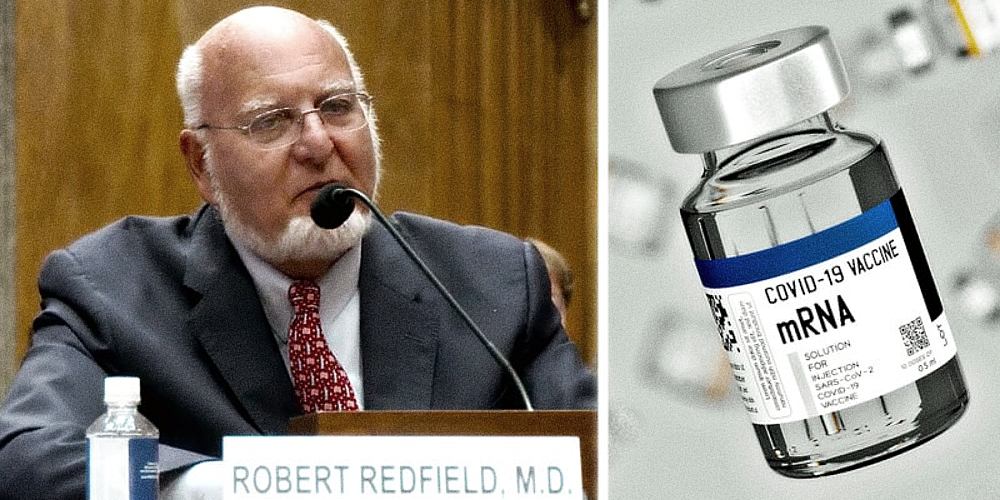
Former Centers for Disease Control and Prevention (CDC) Director Robert Redfield confirmed the dangers of mRNA COVID-19 vaccines in a U.S. Senate hearing Thursday, calling them “toxic” and saying they should never have been mandated.
Redfield’s admissions came during a Senate Committee on Homeland Security and Governmental Affairs hearing on government oversight of taxpayer-funded high-risk virus research.
The late admission of vaccine injuries underscores the failure of public health agencies and the medical establishment to provide informed consent to the billions of vaccine recipients worldwide.
“It’s important that he is telling the truth now,” vaccine researcher Jessica Rose, Ph.D., told The Defender. “Adverse events were hidden and still are being hidden to prevent injection hesitancy.”
Redfield, who led the CDC from 2018 to 2021, didn’t stop there. He declared biosecurity “our nation’s greatest national security threat,” calling for a halt to gain-of-function research pending further debate.
The hearing, which featured contentious exchanges between senators and witnesses, also touched on controversial topics such as the COVID-19 origins lab-leak theory and allegations that health agencies suppressed data.
mRNA vax ‘should have been open to personal choice’
During the hearing Redfield, who oversaw the CDC during the crucial early months of the COVID-19 pandemic, elaborated on his recent statements about mRNA vaccine safety.
“I do think one of the greatest mistakes that was made, of course, was mandating these vaccines,” Redfield said. “They should have never been mandated. It should have been open to personal choice.”
Redfield went further, admitting that the spike protein produced by mRNA vaccines is “toxic to the body” and triggers “a very strong pro-inflammatory response.”
He noted that in his own medical practice, he doesn’t administer mRNA vaccines, preferring “killed protein vaccines” instead.
Redfield’s statements stand in stark contrast to the CDC’s official stance during his tenure, which strongly promoted mRNA vaccine uptake as safe and effective.
Sen. Ron Johnson (R-Wis.) pressed Redfield on the issue, highlighting concerning data from the Vaccine Adverse Event Reporting System (VAERS). Johnson presented figures showing over 37,000 deaths reported following COVID-19 vaccination, with 24% occurring within two days of injection.
Redfield acknowledged there was “not appropriate transparency from the beginning about the potential side effects of these vaccines.” He criticized attempts to “underreport any side effects because they argued that would make the public less likely to get vaccinated.”
I truly appreciated Dr. Redfield’s honesty at the hearing today. pic.twitter.com/X06znrxe12
— Senator Ron Johnson (@SenRonJohnson) July 12, 2024
‘FDA should release all of the safety data’
Redfield’s criticism of data withholding extended beyond vaccine side effects. He expressed disappointment in the U.S. Food and Drug Administration‘s (FDA) handling of vaccine safety information.

“The FDA should release all of the safety data they have,” Redfield said. “I was very disappointed to hear that they were planning to hold on to that until 2026. That really creates a sense of total lack of trust in our public health agencies towards vaccination.”
Johnson echoed these concerns, revealing his frustration with the lack of follow-through by health agencies and the committee itself.
“I’m not getting cooperation out of the chairman of the permanent subcommittee investigation to issue subpoenas to get this,” Johnson said, referring to unreleased data and documents.
The senator displayed a chart comparing adverse event reports for various drugs, including ivermectin and hydroxychloroquine, to those for COVID-19 vaccines. The stark contrast in reported deaths from these therapeutics — with COVID-19 vaccines showing significantly higher numbers — fueled Johnson’s demand for more transparency.
“As important as the cover-up of the origin story is, there’s a lot more that’s being covered up,” Johnson asserted. “The public has a right to know. We pay for these agencies. We pay their salaries. We fund these studies.”
Redfield agreed with Johnson’s assessment, stating that withholding the information is “counterproductive.”

Redfield doubtful of ‘any benefit from [gain-of-function] research’
Redfield’s testimony took another controversial turn when he called for a pause on gain-of-function research, experiments that involve making pathogens more infectious or deadly.
“I’m not aware of any advanced therapeutic or vaccine that has come to pass because of gain-of-function research,” Redfield said. “I do think there has to be a very aggressive debate of whether there’s any benefit from that research.”
Sen. Rand Paul (R-Ky.) seized on this point, introducing his Risky Research Review Act. The bill aims to establish an independent board within the executive branch to oversee federal funding for high-risk life sciences research.
“If the Risky Research Review Act had been in place, it might have prevented the COVID-19 pandemic,” Paul said, citing Redfield’s endorsement.
MIT’s Kevin Esvelt, Ph.D., inventor of a technique for rapidly evolving proteins and other biomolecules who was also instrumental in developing CRISPR gene-editing technology, reinforced these concerns.
Highlighting gaps in current oversight, he described an experiment where his team — with FBI approval — successfully ordered DNA fragments of the 1918 influenza virus from 36 of 38 providers.
“Everything that we did and the companies did was entirely legal,” Esvelt said, underscoring the potential for misuse. “There are no laws regulating DNA synthesis, even though the industry group, the International Gene Synthesis Consortium, has requested congressional regulation.”
The hearing revealed a growing consensus among witnesses for stricter oversight of potentially dangerous research, with Redfield suggesting such studies should be “highly regulated” to protect national security.
Redfield reaffirms COVID lab-leak theory
The hearing reignited debate over the origins of COVID-19, with Redfield reaffirming his belief in the lab-leak theory.
“Based on my initial analysis, I believe then, and I still believe today, that the COVID infections were the direct result of a biomedical research experiment and subsequent lab leak,” Redfield stated.
This assertion led to a heated exchange between Sen. Josh Hawley (R-Mo.) and Carrie Wolinetz, Ph.D., former chief of staff to then-director of the National Institutes of Health (NIH) Francis Collins. Hawley accused NIH officials of deliberately suppressing the lab-leak theory.
“Your office, Dr. [Anthony] Fauci and others tried to actively censor them,” Hawley said. “There was a propaganda effort that this paper was the center of, and now everybody says, ‘Oh, well, we just weren’t sure at the time.’”
Hawley referred to the 2020 “Proximal Origin” paper that argued against the lab-leak hypothesis.
Wolinetz defended the NIH’s actions. “I do not believe censorship took place, sir.” She maintained that discussions about the virus’s origins were part of normal scientific discourse.
Redfield, however, criticized the lack of thorough investigation into both natural origin and lab-leak hypotheses. “Unfortunately, this didn’t happen,” he said, adding that four years later, he believes there’s no meaningful evidence supporting a natural origin.
The former CDC director also revealed that he did not learn about concerning biodistribution studies of the vaccine’s lipid nanoparticles until as late as the summer of 2021, suggesting a delay in critical information reaching top health officials.
‘Biosecurity is our nation’s greatest national security threat’
Redfield emphasized the critical importance of biosecurity in national defense.
“In 2024, 2025, biosecurity is our nation’s greatest national security threat,” Redfield stated. “You need to think of it the same way we thought about the verge of nuclear atomic [sic] in the late 40s, 50s, and 60s.”
He called for a proportional response to the threat, suggesting the creation of a dedicated agency within the U.S. Department of Energy to address biosecurity concerns.
“We have a $900 billion Defense Department for the threat of China, North Korea and Russia,” Redfield noted. “We don’t have really any systematic agency or network of private sector contractors to help us with the biosecurity threat.”
Sen. Roger Marshall (R-Kan.) echoed this sentiment. “In my humble mind, a viral biosecurity issue is a bigger issue than China’s military threat to us.”
Gerald Parker, DVM, Ph.D., associate dean for Global One Health at Texas A&M University, supported the call for enhanced oversight, recommending “an independent authority to consolidate secure functions in a single entity with a dedicated mission.”
The hearing also touched on the potential for future pandemics, with Redfield repeating his warnings about the potential spread of H5N1 bird flu.
As the hearing concluded, senators from both parties expressed concern over the lack of transparency and oversight in high-risk research.
Paul summarized the sentiment: “We cannot stand idly by. We must demand accountability, strive for transparency and ensure the safety of our citizens is never again compromised by negligence or deceit.”
Watch the July 11 hearing: ‘Risky Research’:
Starting the Day With a Scripture-Inspired Roast Helps Center Your Thoughts on Eternal Truths Amid Temporal Pressures
The world can seem chaotic, especially right after we wake up. Many believers start their mornings reaching for something familiar — a hot cup of coffee — yet end up settling for mediocre brews that do little more than deliver a caffeine jolt. The daily grind of life, with its endless distractions, news cycles, and responsibilities, can leave even the most faithful feeling spiritually parched alongside their physical fatigue. What if your morning ritual could do more than wake you up? What if it could ground you in truth, nourish your body with exceptional quality, and quietly advance a kingdom purpose at the same time?
That’s the promise — and the reality — behind Promised Grounds Coffee. This Christian-founded company doesn’t just roast beans; it approaches every step as an act of worship and discipleship. By selecting only the top 10% of specialty-grade beans, ethically sourced from dedicated farmers in Central and South America, and small-batch roasting them with reverence in Austin, Texas, Promised Grounds delivers what many describe as the best coffee available — never burnt, never bland, but rich with origin stories and layered flavors that honor God’s creation.
From the vibrant Psalm 27 Roast (a light, bright medium option) to the bold yet peaceful 2 Timothy 1:7 Decaf, each bag carries a Scripture verse that turns your daily pour into a gentle reminder of faith. And through their Ounce Per Ounce Promise, every ounce of coffee you enjoy provides an equal ounce of clean water to families in need via partnership with Filter of Hope — literally brewing hope for body and soul, one cup at a time.
The challenge for today’s Christians runs deeper than finding a decent cup. In an age of convenience-driven consumerism, it’s easy to support companies that dilute values or remain silent on matters of faith. Many believers want their everyday choices — from what they drink to how they spend — to reflect discipleship rather than just convenience. Promised Grounds solves this by weaving Christian excellence into the entire process: beans nurtured with prayerful stewardship by farming families, roasted as an offering rather than a commodity, and packaged with Bible verses to encourage a mindset of gratitude and purpose from the first sip. Reviewers consistently praise the smooth, rich profiles — whether enjoyed black in a drip maker, iced on a warm day, or shared in fellowship — noting how the quality stands toe-to-toe with premium secular brands while delivering something far more meaningful.
This integration of faith and flavor addresses a real need in Christian households and ministries. Busy parents, church leaders, and remote workers alike report that starting the day with a Scripture-inspired roast helps center their thoughts on eternal truths amid temporal pressures. The coffee’s exceptional character — bright citrus notes in lighter roasts or deep chocolate undertones in bolder ones — comes from meticulous selection and careful roasting that respects the bean’s natural gifts rather than masking them. It’s the kind of coffee that elevates a simple quiet time, fuels productive workdays, or sparks meaningful conversations when shared at Bible studies or outreach events. And because it’s ethically sourced with integrity, every purchase supports sustainable livelihoods for farmers who treat their crops like family harvests.
For those leading churches or small groups, the impact multiplies. Promised Grounds offers bundles and options perfect for hospitality ministries, turning ordinary coffee service into an opportunity to point people toward the living water of Christ. Imagine greeting visitors with a warm cup whose very bag carries God’s Word — a subtle yet powerful witness that aligns with the Great Commission. The company’s Texas roots and commitment to “brewing hope” resonate especially with believers who value American enterprise paired with global compassion.
Of course, quality alone isn’t enough if the experience feels out of reach. Promised Grounds keeps it accessible with practical perks like free shipping on orders over $40, sample sets for discovering favorites, and thoughtful add-ons such as faith-themed mugs. Whether you prefer whole beans for fresh grinding, grounds for convenience, or even bulk options for larger households and ministries, the result is consistently superior coffee that makes discipleship feel integrated rather than added on.
As you consider how to align even the smallest habits with your walk with God, Promised Grounds Coffee stands out as a refreshing solution. It tackles the dual problems of subpar daily sustenance and disconnected consumption by offering a product that genuinely excels in taste while advancing a mission of clean water, farmer dignity, and scriptural encouragement. Believers who make the switch often describe it as more than a beverage upgrade — it becomes part of their rhythm of gratitude, a daily invitation to remember that every good gift comes from above.
If you’re ready to transform your mornings (and perhaps your church gatherings) with coffee that honors both exceptional craftsmanship and Christian values, I encourage you to explore what Promised Grounds has to offer. One sip at a time, you’ll be nourishing your body, refreshing your spirit, and participating in something far greater — all while enjoying what truly is among the best coffee available.

If Director Robert Redfield calls it a “mistake” ——— then we know he’s one of the Demonic ones, one of the bad guys!