

Editor’s Commentary: It’s no secret I’ve been extremely skeptical of Elon Musk’s alleged adherence to free speech. Not only have I seen instances of content suppression and outright censorship on Twitter, but it has also been public — albeit underreported — knowledge that he embraces globalism, loves the Chinese Communist Party, has worked with the World Economic Forum, and believes in transhumanism.
Plugging in a high-ranking member of the globalist elite cabal as CEO should be a crystal clear warning that Twitter is a trojan horse. I don’t care if Tucker Carlson is putting his show there. I wouldn’t care of Donald Trump started Tweeting again. I do not trust Elon Musk and I definitely do not trust Twitter to be the venue for the free expression of controversial ideas. Here is one of the reasons why, detailed by Tom Parker at Reclaim The Net…
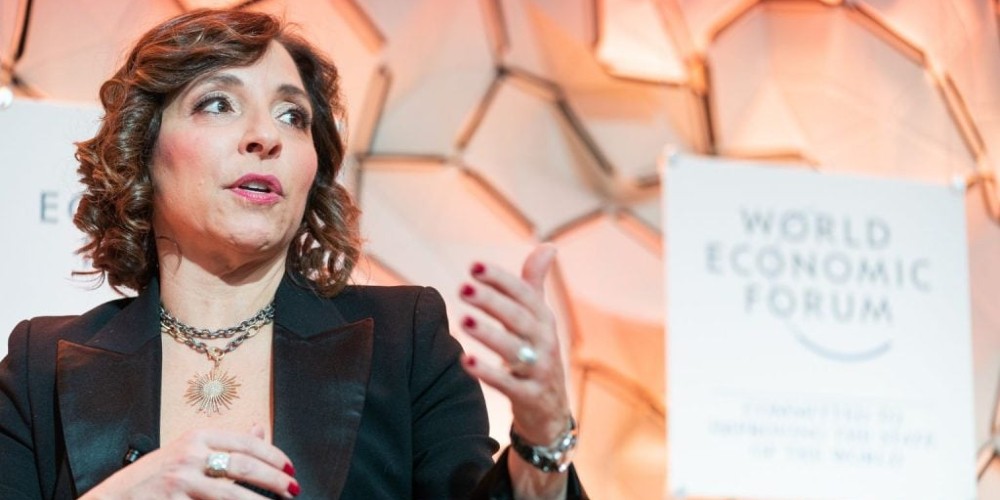
Twitter’s likely new CEO, Linda Yaccarino, a World Economic Forum Executive Chair and NBCUniversal advertising executive, recently tried to get Twitter owner Elon Musk to commit to self-censorship and urged him to allow advertisers to feel that they can “influence” Twitter.
During an April 2023 interview with Musk, Yaccarino told Musk that advertisers “need to feel there’s an opportunity for them to influence what you’re building.”
She then proceeded to pressure him to self-censor by not tweeting after 3 am. Musk agreed to try to tweet less after 3 am but partially pushed back against the attempt to influence his speech.
“If I were to say, ‘Yes, you can influence me,’ that would be wrong,” Musk said. “That would be very wrong because that would be a diminishment of freedom of speech.”
Yaccarino disagreed, claiming that “influencing” is “more of an open feedback loop” for advertisers to “help develop Twitter into a place where they will be excited about investing” in areas such as “product development, ad safety, and content moderation.”
However, Musk continued to push back:
“It’s totally cool to say that you want to have your advertising appear in certain places in Twitter and not in other places but it is not cool to try to say what Twitter will do and if that means losing advertising dollars, we lose it, but freedom of speech is paramount.”
Despite Musk making it clear that he felt it was wrong for advertisers to try and influence Twitter, Yaccarino kept trying to press the point.
She asked Musk to recommit to reinstating an “influence council” that allowed advertisers to have “recurring access” to Twitter leadership.
“I would be wary of that creating a backlash among the public,” Musk warned.
Prior to being tapped as the upcoming Twitter CEO, Yaccarino was the Chairman of Global Advertising and Partnerships at NBCUniversal. She has previously served as NBCUniversal’s Chairman of Advertising & Client Partnership and President of Cable Entertainment & Digital Advertising Sales during her almost 12-year tenure with the company.
She also has several ties to the World Economic Forum (WEF), a global group that consistently advocates for the censorship of “misinformation” and supports mass data collection.
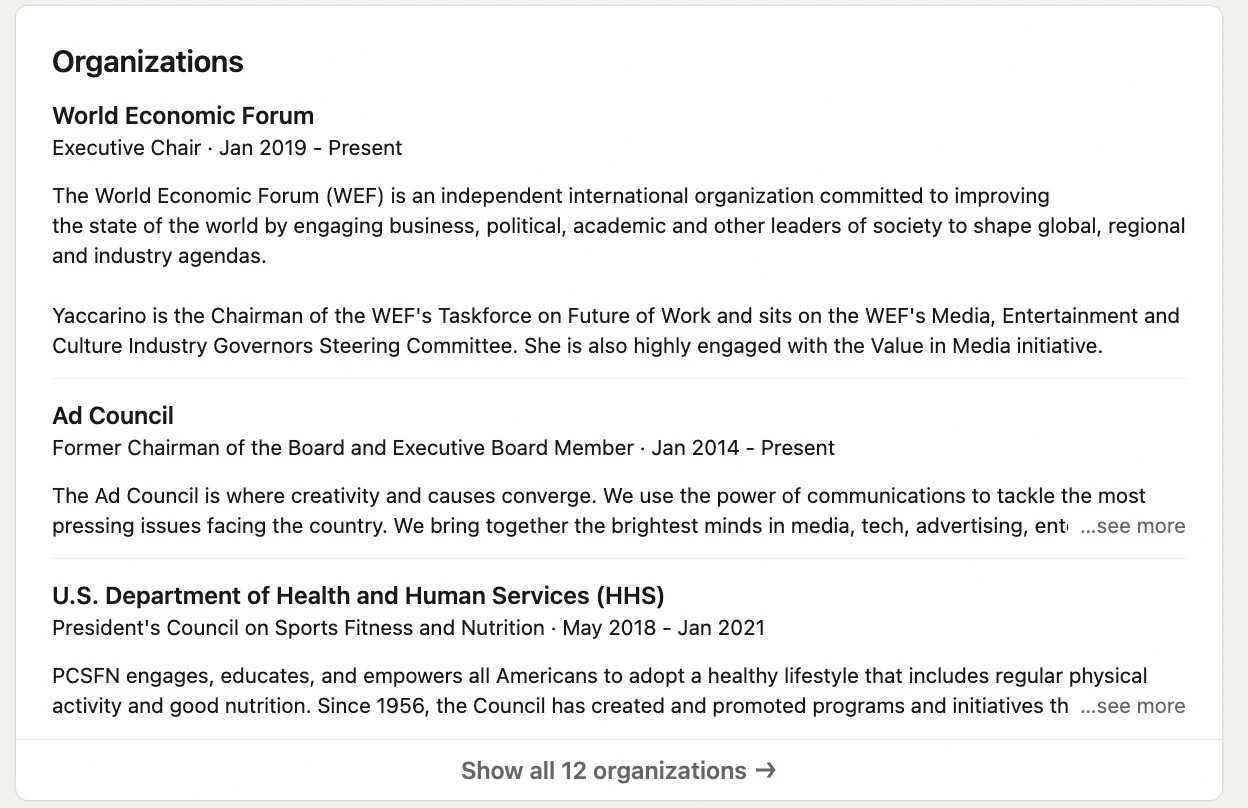
In her LinkedIn profile, Yaccarino notes that she’s been a WEF Executive Chair since January 2019. Currently, she’s the Chairman of the WEF’s Taskforce on Future of Work. She also sits on the WEF’s Media, Entertainment, and Culture Industry Governors Steering Committee. Additionally, she is highly engaged with the WEF’s Value in Media initiative. Yaccarino has spoken at the World Economic Forum’s Annual Meeting about shaping the future of media, entertainment, and culture.
Article cross-posted from Reclaim The Net. Header image CC BY-NC-SA 2.0
How to Prepare for Food Emergencies if You Don’t Have a Homestead or Bunker
In an unpredictable world, where supply chain disruptions, natural disasters, or economic instability can strike without warning, having a reliable food supply is more than just smart—it’s essential for survival. Whether you’re a “prepper” or not, we all know the golden rule: self-sufficiency is key. But what if you’re living in an apartment, working long hours, or simply don’t have the land to turn into a thriving homestead? Don’t worry; there’s a practical, effective way to build your food security without needing acres of soil or a fortified bunker.
The Ideal Prep: Building Your Own Food Empire
The ultimate dream for any serious prepper is controlling your own food production. Imagine waking up to a sprawling garden bursting with fresh vegetables, fruits, and herbs—tomatoes ripening on the vine, potatoes ready to harvest, and greens that provide nutrition year-round. Add in livestock like chickens for eggs and meat, and you’ve got a self-sustaining system that keeps your family fed no matter what chaos unfolds outside.
This approach isn’t just about calories; it’s about resilience. A well-maintained garden can yield hundreds of pounds of produce annually, while a small flock of chickens might produce dozens of eggs weekly. It’s empowering, cost-effective in the long run, and teaches invaluable skills like crop rotation, animal husbandry, and preservation techniques. If you have the space, time, and resources, starting small and scaling up is the best path to true independence.
The Reality Check: Not Everyone Can Homestead
But let’s face it—not all of us are in a position to go full homesteader. Urban dwellers might be limited to a balcony or community plot that’s far from sufficient for long-term needs. Busy professionals juggling jobs, families, and daily life often lack the hours required for daily tending. And for those in apartments, condos, or regions with harsh climates, raising livestock or maintaining a large garden simply isn’t feasible. Factors like zoning laws, soil quality, water access, or even physical limitations can make this ideal out of reach.
That’s where the frustration sets in. You want to be prepared, but without a homestead or bunker, how do you ensure your pantry doesn’t run dry during a prolonged crisis? The good news is, you don’t have to sacrifice your preparedness goals. There’s a smart, accessible alternative that bridges the gap: investing in high-quality, long-term storage food.
The Smart Alternative: Long-Term Storage Food from Heaven’s Harvest
Long-term storage food is designed for exactly these scenarios—providing nutrient-dense, shelf-stable meals that last for decades without refrigeration or special conditions. It’s the perfect solution for preppers who can’t rely on fresh production but still demand reliability and variety in their emergency stockpile.
At Heaven’s Harvest, they specialize in premium survival food kits that make preparedness effortless. Their products are crafted with the prepper mindset in mind: non-GMO, made in the USA, and packed with real ingredients that taste like home-cooked meals, not bland rations. Whether you’re stocking up for a short-term blackout or a long-haul SHTF event, our kits offer:
- Extended Shelf Life: Up to 25 years of storage, so you can buy once and forget about rotation worries.
- Nutritional Balance: High-protein entrees, fruits, vegetables, and dairy alternatives to keep your energy up and health intact.
- Ease of Preparation: Just add water, and you’ve got hearty meals like beef stroganoff, chili mac, or cheesy lasagna ready in minutes—no garden weeding required.
- Customizable Options: From individual buckets to family-sized kits, scale your supply to fit your needs and budget.
- Peace of Mind: Sealed in durable, waterproof containers that protect against pests, moisture, and light.
Unlike generic store-bought cans that spoil quickly or lack variety, Heaven’s Harvest focuses on quality and sustainability. Our food is freeze-dried or dehydrated to lock in flavor and nutrients, ensuring you’re not just surviving but thriving. And for those concerned about allergens or dietary preferences, we offer gluten-free and vegetarian options to keep everyone covered.
Why Wait? Secure Your Food Supply Today
Preparing for food emergencies doesn’t require a homestead or bunker—it requires action. By choosing long-term storage food from Heaven’s Harvest, you’re taking control in a way that fits your lifestyle. Start small with a 72-hour kit to test the waters, or go all-in with a year’s supply for ultimate security.
Visit Heaven’s Harvest today and use code “PATRIOT” for an exclusive discount on your order. Don’t let limitations hold you back; build your resilient future, one meal at a time. Your family will thank you when it matters most.

Well, there you go. There’s their definition of “stakeholder capitalism”. If we had free markets, with competition, such influence peddling would result in the destruction of the company long term. A twitter controlled by whichever advertisers are the highest bidder, is a twitter people would eventually abandon.
Reminds me of the old play on the term golden rule: “he who has the most gold, rules”
The contrast between that and the actual Golden Rule given by Jesus nearly perfectly describes the difference between their meaning and application of the word “stakeholder” and the opposite ethical meaning and application of the word.
Of course, the most ironic thing about their clever word-craft is the fact that what they’re advocating for is actually textbook fascism, up one side and down the other.
From a practical standpoint, it’s also a very counterproductive marketing practice. It creates a circular, self-dependent bubble where the only user information marketers ever receive back is that which they put in themselves through influence operations. User data becomes entirely unreliable.The only thing it accomplishes is to further ingrain their own confirmation bias. Led to wrongly believe a few outspoken twitter trolls, who happen to agree with their influence operations, represent the majority. They’re literally going around in circles.
Of course, that sort of circular stupidity is why many companies like Anheuser-Busch are now circling the drain.
Some, I believe, know and understand how destructive to business goals it is, but they keep doing it because they want to push social agendas, which at this time are mostly the desired acceptance and normalization of abominable sin. They want the rest of the world to think those twitter trolls going along with their influence operations represent the majority. Because they know most people lack the courage it takes to stand against the wickedness. Most people will go along to get along.
As long as companies can latch onto the taxpayer teet and shore up such self-destructive activity with taxpayer dollars, they’ll keep doing it and they’ll keep succeeding.
From a business perspective, for twitter, there is some measure of legitimate reasoning to it. Since large scale influence operations are going to exist, no matter what you do. There are going to be agenda-driven troll farms and such, and there’s apparently little way to stop them. And even legitimate individual users are typically there to sound off, speak up, say their peace, and to try to influence. So that works toward making the user data unreliable to start with. Given this fact, it might somewhat might make some measure of business sense to shift from a strategy of selling user data to one of auctioning off influence to the highest bidders, knowing you can’t do both. The long-term result, though, should be a significant decline in users, and ultimate decimation of the company, because that flies directly in the face of why most legitimate users are there in the first place. Nobody logs into twitter with the goal of finding out what they’re supposed to be thinking on a given day, as dictated by the highest bidder.