

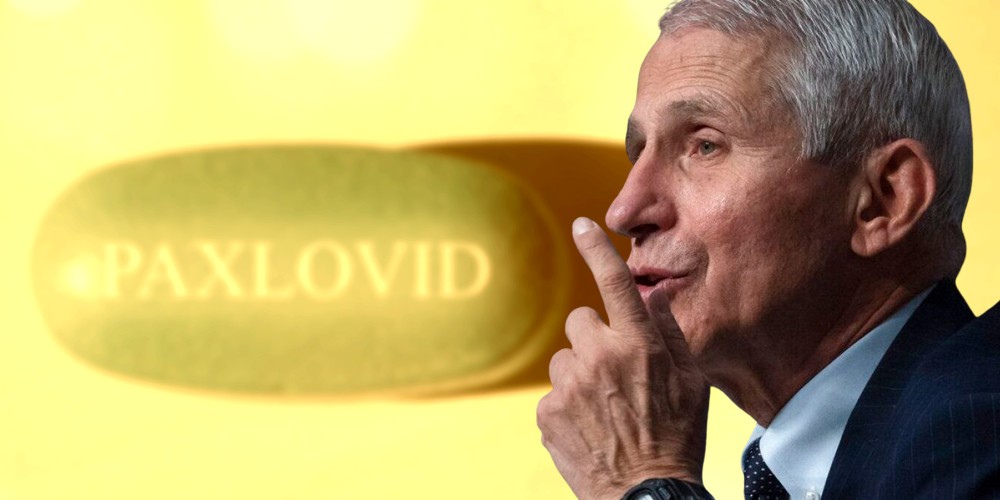
STORY AT-A-GLANCE
- The U.S. Centers for Disease Control and Prevention issued a warning about the potential for COVID-19 rebound after Paxlovid treatment
- Dr. Anthony Fauci took Paxlovid for COVID-19, tested negative, then developed worsened symptoms, known as COVID-19 rebound; he then took a second course of the drug
- People who take Paxlovid can still transmit COVID-19 to others, even if they’re asymptomatic
- Two separate studies suggest Paxlovid is causing SARS-CoV-2 to mutate and develop resistance to the drug
- Despite the many questions regarding Paxlovid’s association with rebound infections and mutations, Pfizer is moving ahead and seeking full approval of the drug from the FDA
Pfizer’s Paxlovid was granted emergency use authorization to treat mild to moderate COVID-19 in December 2021.1 The drug consists of nirmatrelvir tablets — the antiviral component — and ritonavir tablets, which are intended to slow the breakdown of nirmatrelvir.2
What started out as a slow rollout — only 40,000 or fewer prescriptions were written for the drug in the U.S. each week through April 2022 — has gained steam, with more than 160,000 Paxlovid prescriptions now being issued each week.3 As of June 30, 2022, 1.6 million courses of Paxlovid have been prescribed in the U.S. since its emergency use approval in December.4
Yet, this increase in prescribing could be contributing to one of the significant downfalls of the drug — the creation of selective pressure on SARS-CoV-2, which promotes mutations that could make it resistant to the drug.5 The U.S. Centers for Disease Control and Prevention also issued a warning to health care providers and public health departments about the potential for COVID-19 rebound after Paxlovid treatment.6
This recently happened to Dr. Anthony Fauci, director of the U.S. National Institute of Allergy and Infectious Diseases (NIAID), who experienced a return of COVID-19 symptoms after taking Paxlovid. He then took a second course of the drug, which could trigger even more mutations in the virus.
Paxlovid Triggers Fauci’s COVID-19 Rebound
Fauci said he tested positive for COVID-19, with only minimal symptoms. As his symptoms increased, he took Paxlovid for five days, after which he tested negative for three consecutive days. On the fourth day of testing, he tested positive for COVID-19 again, with symptoms worse off than they were the first time.
“It was sort of what people are referring to as a Paxlovid rebound,” he said. “… Over the next day or so I started to feel really poorly, much worse than in the first go around.”7 He was then prescribed a second course of Paxlovid.
On June 30, he stated, “I went back on Paxlovid, and right now I am on my fourth day of a five-day course of my second course of Paxlovid. Fortunately, I feel reasonably good. I mean, I’m not completely without symptoms, but I certainly don’t feel acutely ill.”8 In the CDC’s health advisory regarding COVID-19 rebound after Paxlovid treatment it’s stated:9
“Recent case reports document that some patients with normal immune response who have completed a 5-day course of Paxlovid for laboratory-confirmed infection and have recovered can experience recurrent illness 2 to 8 days later, including patients who have been vaccinated and/or boosted …
These cases of COVID-19 rebound had negative test results after Paxlovid treatment and had subsequent positive viral antigen and/or reverse transcriptase polymerase chain reaction (RT-PCR) testing.”
COVID-19 Still Spreads During Paxlovid Rebound
People who take Paxlovid can still transmit COVID-19 to others, even if they’re asymptomatic, according to a preprint study.10 Study author Dr. Michael Charness of the Veterans Administration Medical Center in Boston told CNN, “People who experience rebound are at risk of transmitting to other people, even though they’re outside what people accept as the usual window for being able to transmit.”11
The CDC12 and Pfizer13 have suggested that sometimes COVID-19 naturally comes back after a person tests negative, implying that COVID-19 rebound is spontaneous and not necessarily linked to Paxlovid. However, Charness and colleagues didn’t find this to be the case. When they analyzed 1,000 cases of COVID-19 diagnosed among members of the National Basketball Association — none of whom took Paxlovid — no cases of COVID-19 rebound were found.14
Research published in Clinical Infectious Diseases15 looked into why Paxlovid may be leading to rebound symptoms and suggests it could be the result of insufficient exposure to the drug.16 “Not enough of the drug was getting to infected cells to stop all viral replication,” UC San Diego Health reported. “They suggested this may be due to the drug being metabolized more quickly in some individuals or that the drug needs to be delivered over a longer treatment duration.”17
Pfizer Seeks FDA Approval for Paxlovid
Despite the many questions regarding Paxlovid’s association with rebound infections, Pfizer is moving ahead and seeking full approval of the drug from the FDA.18 The drug’s emergency use authorization restricts who the drug can be sold and marketed to. Once full FDA approval is granted, Pfizer can market the drug directly to consumers.
Paxlovid’s emergency use authorization allows it to be prescribed for adults and children ages 12 and older who are at high risk for progression to severe COVID-19.19 Pfizer estimates that up to 60% of the U.S. population meets these criteria and has at least one risk factor for severe illness, such as obesity or diabetes, making them eligible for the drug.20
However, concerns have risen over whether Paxlovid, which is said to cut the risk of hospitalization or death by 86% in high-risk patients, when taken within five days of symptoms starting,21 is effective in people who are not high-risk.

In fact, Pfizer stopped a large trial of Paxlovid in standard-risk patients because it didn’t show significant protection against hospitalization or death in this group.22 According to a news release from Pfizer:23
“In previously reported interim analyses, the company disclosed that the novel primary endpoint of self-reported, sustained alleviation of all symptoms for four consecutive days was not met, and a non-significant 70% relative risk reduction was observed in the key secondary endpoint of hospitalization or death (treatment arm: 3/428; placebo: 10/426).
An updated analysis from 1,153 patients enrolled through December 2021 showed a non-significant 51% relative risk reduction (treatment arm: 5/576; placebo: 10/569). A sub-group analysis of 721 vaccinated adults with at least one risk factor for progression to severe COVID-19 showed a non-significant 57% relative risk reduction in hospitalization or death (treatment arm: 3/361; placebo: 7/360).”
Is Paxlovid Triggering SARS-CoV-2 Mutations?
Initial reports have suggested that SARS-CoV-2 is not mutating and becoming resistant to Paxlovid, but some experts believe it’s only a matter of time before this occurs — and emerging research suggests it’s already happened.
David Ho, a virologist at the Aaron Diamond AIDS Research Center at Columbia University, was among the first to document resistance mutations in HIV 30 years ago and believes the same may be coming with SARS-CoV-2.24 He’s also experienced post-Paxlovid COVID-19 rebound firsthand. Bloomberg reported:25
“Ho said he came down with COVID on April 6 … His doctor prescribed Paxlovid, and within days of taking it, his symptoms dissipated and tests turned negative. But 10 days after first getting sick, the symptoms returned and his tests turned positive for another two days.
Ho said he sequenced his own virus and found that both infections were from the same strain, confirming that the virus had not mutated and become resistant to Paxlovid. A second family member who also got sick around the same time also had post-Paxlovid rebound in symptoms and virus, Ho says.
‘It surprised the heck out of me,’ he said. ‘Up until that point I had not heard of such cases elsewhere.’ While the reasons for the rebound are still unclear, Ho theorizes that it may occur when a small proportion of virus-infected cells may remain viable and resume pumping out viral progeny once treatment stops.”
Studies Show COVID-19 Virus Developing Paxlovid Resistance
Two separate studies cultured SARS-CoV-2 in a lab and exposed it to low levels of nirmatrelvir, which would kill some, but not all, of the virus. “Such tests are meant to simulate what might happen in an infected person who doesn’t take the whole regimen of the drug or an immunocompromised patient who has trouble clearing the virus,” Science reported.26
One of the studies revealed that SARS-CoV-2 developed three mutations after 12 rounds of nirmatrelvir treatment — “at positions 50, 166 and 167 in the string of amino acids that make up MPRO.”27 The mutations amounted to a 20-fold reduction in the virus’ susceptibility to nirmatrelvir.28 The other study29 also found mutations at positions 50 and 166, revealing that when they occurred together, SARS-CoV-2 became 80 times less susceptible to nirmatrelvir. According to the study:30
“Reverse genetic studies in a homologous infectious cell culture system revealed up to 80-fold resistance conferred by the combination of substitutions L50F and E166V. Resistant variants had high fitness increasing the likelihood of occurrence and spread of resistance.”
Lead study author Judith Margarete Gottwein with the University of Copenhagen told Science, “This tells us what mutations we should be looking for [in patients].”31 Ho, who was not involved in these studies, agreed that it appeared mutations were an inevitable outcome.

He told Science, “when you put pressure on the virus it escapes … Given the amount of infections out there, it’s going to come.”32 It’s also completely unknown what may happen when two courses of Paxlovid are taken in quick succession to treat COVID-19 rebound — as occurred with Fauci. It’s possible that ever-mutating COVID-19 variants could be created.
Other antivirals on the market to treat COVID-19 have also led to concerns over mutations. Molnupiravir (sold under the brand name Lagevrio) was developed by Merck and Ridgeback Therapeutics and approved by the FDA for emergency use December 23, 2021, for high-risk patients with mild to moderate COVID symptoms.
However, not only might it contribute to cancer and birth defects, it may also supercharge the rate at which the virus mutates inside the patient, resulting in newer and more resistant variants.33
Other Early COVID-19 Treatments Ignored
Using drugs that cause high rates of organ failure, like remdesivir, and drugs that cause the virus to rebound with a vengeance, like Paxlovid, and potentially trigger mutations don’t seem to be in the best interest of public health. The fact that U.S. health authorities have focused on these drugs to the exclusion of all others, including older drugs with high rates of effectiveness and superior safety profiles, sends a very disturbing message.
An investigation by Cornell University, posted on the University’s preprint server January 20, 2022, found ivermectin outperformed 10 other drugs against COVID-19, making it the most effective against the Omicron variant.34 It even outperformed Paxlovid, yet it’s been vilified by health officials and mainstream media.
Remdesivir costs between $2,340 and $3,120,35 and nirmatrelvir costs $529 per five-day treatment,36 while the average treatment cost for ivermectin is $58.37 Do you think this has anything to do with ivermectin’s vilification?
Paxlovid alone has cost U.S. taxpayers $5.29 billion,38 while safe and less expensive options exist. Dr. Pierre Kory, who is part of the group that formed the Front Line COVID-19 Critical Care Working Group (FLCCC) to advance early treatments for COVID-19, pleaded with the U.S. government early on in the pandemic to review the expansive data on ivermectin to prevent COVID-19, keep those with early symptoms from progressing and help critically ill patients recover — to no avail.39,40
However, if you’d like to learn more about its potential uses for SARS-CoV-2, FLCCC’s I-MASK+ protocol can be downloaded in full,41 giving you step-by-step instructions on how to prevent and treat the early symptoms of COVID-19.
- 1, 19 U.S. FDA December 22, 2021
- 2, 3, 5, 22, 24, 26, 28, 31, 32 Science June 29, 2022
- 4, 18, 20, 21 Forbes June 30, 2022
- 6 U.S. CDC May 24, 2022
- 7, 8 CNN June 30, 2022
- 9, 12 U.S. CDC, COVID-19 Rebound After Paxlovid Treatment May 24, 2022
- 10 Research Square May 23, 2022
- 11, 13, 14 CNN May 31, 2022
- 15 Clinical Infectious Diseases June 20, 2022
- 16, 17 UC San Diego Health June 21, 2022
- 23 Pfizer June 14, 2022
- 25 Bloomberg April 29, 2022 (Archived)
- 27, 29, 30 bioRxiv June 7, 2022
- 33 Revyuh May 1, 2022
- 34 Cornell University, January 20, 2022
- 35 AJMC June 29, 2020
- 36 Precision Vaccinations, November 19, 2021
- 37 JAMA 2022;327(6):584-587
- 38 Reuters November 18, 2021
- 39 FLCCC Alliance, Ivermectin & COVID-19
- 40 Mountain Home May 1, 2021
- 41 FLCCC Alliance, I-Mask+

Two Storms, One Harvest

Every food crisis in living memory has been a one-shock event. The 2008 price spike was a commodity bubble. The 2020 shortages were a logistics failure. The 2022 grain scare was a war on one exporter’s ports. Each time, the system bent, adjusted, and recovered, and each time the experts assured us afterward that global markets are simply too big and too diversified to fail.
What nobody in Washington seems eager to discuss is that 2026 is shaping up to be something the modern food system has never actually faced. Two independent shocks, one climatic and one geopolitical, are converging on the same harvest cycle at the same time. Not sequentially. Simultaneously.
Start with the weather. The Pacific Ocean is currently building toward what forecasters now openly call a record event. NOAA’s Climate Prediction Center puts the odds of at least a strong El Niño near 88 percent, with roughly two in three odds it reaches “very strong” status, the tier reserved for perhaps three or four events in the entire satellite era. Every major global model now projects a median peak in Super El Niño territory, and most of them project it exceeding the 2015-16 event, which until now held the modern record. Sea surface anomalies were already brushing the super threshold in mid-July, months before these events normally peak. The atmosphere has already shifted into El Niño mode, and the event is forecast to crest in late fall and early winter.
This is not about “climate change.” It’s about the standard cycles of weather, and the cycle we’re currently in is one that has likely devastated societies in the past. We’re better prepared as a society today, but not all Americans are equally prepared.
Serious households have started doing the quiet math on their own. Grocery bills tell part of the story, and the forecast maps tell the rest, which is why long-term food storage has moved from fringe hobby to mainstream line item in the family budget, with established suppliers like Heaven’s Harvest seeing demand from people who five years ago would have rolled their eyes at the idea. That instinct is not paranoia. It is pattern recognition, and the pattern is worth walking through carefully.
Editor’s Note: Heaven’s Harvest IS a sponsor, but the warnings of this article are real and would be written even if we didn’t have a survival food sponsor. With that said, those who take advantage of what they offer can use promo code “Patriot” for 15% off.
The Fertilizer Clock Is Already Running
While the Pacific warms, the second shock has been unfolding in the Strait of Hormuz. The conflict with Iran turned the world’s most important energy chokepoint into a contested waterway, and the consequences reach far beyond the gas pump. Roughly a third of global fertilizer trade moves through Hormuz, and the disruption sent urea prices up 86 percent year over year by March, with a 53 percent jump in a single month.
The World Bank projects energy prices rising about 24 percent in 2026 and fertilizer about 31 percent. By its own accounting, fertilizer prices ran 35 percent higher in the first five months of this year than the same period last year.
Here is the mechanism the nightly news will not explain. Fertilizer is not a grocery item. It is a time-delayed input. The nitrogen a farmer in Iowa or Punjab could not afford to apply this spring does not show up as a problem this spring. It shows up as a thinner harvest six to twelve months later.
The World Bank’s own food security brief concedes that the effects of reduced applications earlier this season “are likely to become visible only later in harvest outcomes.” Translate that from institutional language into plain English and it means this. The damage is already done, it is already in the ground, and we are simply waiting for it to arrive on the shelf.
Now check the calendar. Six to twelve months from the spring planting season lands us squarely in late 2026 and early 2027. Which is precisely when the strongest El Niño in the instrumental record is forecast to peak, bringing its signature droughts to Southeast Asia, Australia, southern Africa, northern Brazil, and South Asia, the very regions that grow the world’s rice, sugar, and oilseeds.
The World Bank warns openly that a strong El Niño “could disrupt multiple crop belts simultaneously” on top of the conflict-driven input costs. Their baseline projection assumes the Middle East disruptions ease by autumn. What in the last two years of Middle East history suggests that assumption is safe?
The System Has No Slack Left
The comfortable answer is that global markets always adjust. But adjustment requires slack, and the slack is gone. Global cereal production is expected to decline from last year’s records even before El Niño does its work. The UN World Food Programme, hardly a den of right-wing preppers, is calling this the most significant disruption to its supply chains since Covid and the invasion of Ukraine, and its supply chain director put the stakes bluntly.
Today’s supply chain challenges are tomorrow’s hunger crisis.
There is also a political dimension that markets cannot price. When food gets scarce, governments do not behave like economists. They behave like politicians. Export bans, hoarding mandates, and panic buying at the national level turned the modest rice shortfall of 2008 into a global crisis, and analysts are already warning that import-dependent nations are the first dominoes.
The 2015-16 Super El Niño, a far weaker event than what is now forecast, threw tens of millions into food stress across Africa and Asia. This one is projected to be stronger, and it arrives with fertilizer already rationed by price and shipping lanes already contested by missiles.
What Joseph Knew
Scripture does not treat preparation for lean years as faithlessness. It treats it as wisdom delivered in advance to those willing to act on it.
Behold, there come seven years of great plenty throughout all the land of Egypt: And there shall arise after them seven years of famine; and all the plenty shall be forgotten in the land of Egypt.
Joseph did not respond to that warning with a hashtag or a committee. He stored grain during the years of abundance, and when the famine came, Egypt stood while its neighbors begged. The lesson is not that famine is certain. It is that the time to prepare is precisely when preparation still looks optional.
Nobody who filled a pantry in a year of plenty has ever regretted it, and nobody standing in an empty aisle has ever been glad he waited for certainty.
None of this calls for panic, and panic is the enemy of sound judgment anyway. It calls for the same unglamorous prudence our grandparents considered ordinary. Keep some cash margin, know your local growers, and put real food in deep storage while it is cheap and available, because the entire arc of this story is that cheap and available is a closing window.
Families looking for a straightforward place to start can visit Heaven’s Harvest and use promo code Patriot for 15 percent off long-term storable food. The forecasts may yet soften, the strait may yet reopen, and we should pray they do. But hope is a fine thing to hold and a foolish thing to eat.

Fauci should Continue to take the drug until Cov-sars2 disappears.
He should show us all how well it works.
Those who have taken Paxlovid should be banned from the same areas as the unvaxxed. At least until we get a government that tells the truth, enforces media truth, and stops experimenting on the legal citizens of the USA. This is all fake science from Covid shots to masks. Are they now experimenting on us with all vaccines without our knowledge?
There is NO SUCH THING as “COVID 19”.
Provable in a court of law.