

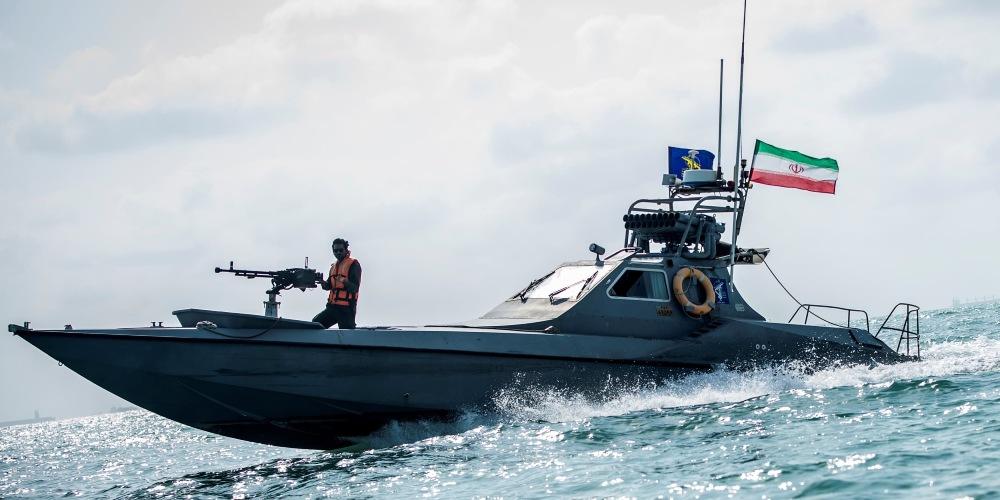
Iran’s Revolutionary Guard Corps has once again demonstrated its willingness to turn a vital international waterway into a theater of aggression. On Saturday, IRGC gunboats approached a tanker roughly 20 nautical miles northeast of Oman and opened fire without provocation. The United Kingdom Maritime Trade Organization confirmed the unprovoked assault occurred shortly after Tehran reimposed restrictions on the Strait of Hormuz, accusing the United States of violating an agreement to keep the passage open.
The tanker’s master reported the incident directly to maritime authorities. Both the vessel and its crew emerged unharmed, yet the message from Tehran was unmistakable: commercial shipping through one of the world’s most critical energy chokepoints remains subject to Iranian whims and Revolutionary Guard firepower.
This latest episode fits a pattern of Iranian escalation that has disrupted global oil flows for weeks, even amid fragile ceasefires elsewhere in the region.
This latest saber-rattling by a rogue regime is a calculated effort to weaponize energy supplies against the West and its allies while Tehran negotiates from a position of manufactured leverage. The narrow strait, squeezed between Iran and Oman, has long been a vulnerability in global commerce. When Iran throttles it, the ripple effects reach gas pumps in California, factories in Europe, and power grids across Asia. By firing on a tanker immediately after announcing a reopening, the mullahs reveal their true intent: control through chaos rather than genuine de-escalation.
The timing underscores deeper contradictions in Western policy toward Iran. Brief ceasefires in Lebanon and elsewhere have done little to restrain the regime’s maritime provocations. Hours after Iran’s foreign minister claimed the strait was fully open, parliamentary leaders scrapped the move and blamed American “piracy.” Ships attempting to transit turned back amid the confusion, confirming that Tehran never intended to relinquish its stranglehold. The Revolutionary Guard’s gunboats simply enforced the new reality with live fire.
History offers a sobering lesson here. For decades, Iran has threatened to close the Strait of Hormuz during moments of tension, yet it has rarely followed through completely—until the broader conflict of 2026 changed the calculus. Earlier this year, Iranian forces and proxies struck multiple vessels, including explosive-laden boats targeting tankers off Iraq and Oman. Ports in Oman sustained drone attacks. Commercial traffic plummeted, with some days recording near-zero transits compared to the normal flow of over a hundred vessels. Oil markets have absorbed the shock thus far, partly because strategic reserves exist and alternative routes are being explored, but sustained disruption would prove catastrophic.
Critics of firm American policy often warn that confrontation risks wider war. Yet the alternative—repeatedly rewarding Iranian aggression with sanctions relief or diplomatic concessions—has produced only more aggression. The current U.S. blockade of Iranian ports, which has already cost Tehran hundreds of millions daily, applies necessary pressure without direct invasion. President Trump’s insistence that the blockade remains until a real deal materializes, including verifiable constraints on Iran’s nuclear ambitions, reflects a realism long absent from previous administrations.
Allowing the world’s energy artery to be policed by gunboats of a theocratic dictatorship invites precisely the disorder we now witness. Nations that depend on stable shipping lanes cannot afford to treat Hormuz as Iran’s private toll road. The IRGC’s unprovoked firing on a civilian tanker is not an isolated maritime dispute; it is an assault on the principle of freedom of navigation that underpins modern trade.
The latest attack near Oman should dispel any illusion that Iran can be gently coaxed into responsible behavior. It demands clarity from Western leaders: freedom of navigation in the Strait of Hormuz is non-negotiable. Anything less hands the regime another tool of blackmail and endangers economies and lives far beyond the Persian Gulf. The world has seen enough of Iran’s maritime terrorism. The time for decisive response has arrived.

Starting the Day With a Scripture-Inspired Roast Helps Center Your Thoughts on Eternal Truths Amid Temporal Pressures
The world can seem chaotic, especially right after we wake up. Many believers start their mornings reaching for something familiar — a hot cup of coffee — yet end up settling for mediocre brews that do little more than deliver a caffeine jolt. The daily grind of life, with its endless distractions, news cycles, and responsibilities, can leave even the most faithful feeling spiritually parched alongside their physical fatigue. What if your morning ritual could do more than wake you up? What if it could ground you in truth, nourish your body with exceptional quality, and quietly advance a kingdom purpose at the same time?
That’s the promise — and the reality — behind Promised Grounds Coffee. This Christian-founded company doesn’t just roast beans; it approaches every step as an act of worship and discipleship. By selecting only the top 10% of specialty-grade beans, ethically sourced from dedicated farmers in Central and South America, and small-batch roasting them with reverence in Austin, Texas, Promised Grounds delivers what many describe as the best coffee available — never burnt, never bland, but rich with origin stories and layered flavors that honor God’s creation.
From the vibrant Psalm 27 Roast (a light, bright medium option) to the bold yet peaceful 2 Timothy 1:7 Decaf, each bag carries a Scripture verse that turns your daily pour into a gentle reminder of faith. And through their Ounce Per Ounce Promise, every ounce of coffee you enjoy provides an equal ounce of clean water to families in need via partnership with Filter of Hope — literally brewing hope for body and soul, one cup at a time.
The challenge for today’s Christians runs deeper than finding a decent cup. In an age of convenience-driven consumerism, it’s easy to support companies that dilute values or remain silent on matters of faith. Many believers want their everyday choices — from what they drink to how they spend — to reflect discipleship rather than just convenience. Promised Grounds solves this by weaving Christian excellence into the entire process: beans nurtured with prayerful stewardship by farming families, roasted as an offering rather than a commodity, and packaged with Bible verses to encourage a mindset of gratitude and purpose from the first sip. Reviewers consistently praise the smooth, rich profiles — whether enjoyed black in a drip maker, iced on a warm day, or shared in fellowship — noting how the quality stands toe-to-toe with premium secular brands while delivering something far more meaningful.
This integration of faith and flavor addresses a real need in Christian households and ministries. Busy parents, church leaders, and remote workers alike report that starting the day with a Scripture-inspired roast helps center their thoughts on eternal truths amid temporal pressures. The coffee’s exceptional character — bright citrus notes in lighter roasts or deep chocolate undertones in bolder ones — comes from meticulous selection and careful roasting that respects the bean’s natural gifts rather than masking them. It’s the kind of coffee that elevates a simple quiet time, fuels productive workdays, or sparks meaningful conversations when shared at Bible studies or outreach events. And because it’s ethically sourced with integrity, every purchase supports sustainable livelihoods for farmers who treat their crops like family harvests.
For those leading churches or small groups, the impact multiplies. Promised Grounds offers bundles and options perfect for hospitality ministries, turning ordinary coffee service into an opportunity to point people toward the living water of Christ. Imagine greeting visitors with a warm cup whose very bag carries God’s Word — a subtle yet powerful witness that aligns with the Great Commission. The company’s Texas roots and commitment to “brewing hope” resonate especially with believers who value American enterprise paired with global compassion.
Of course, quality alone isn’t enough if the experience feels out of reach. Promised Grounds keeps it accessible with practical perks like free shipping on orders over $40, sample sets for discovering favorites, and thoughtful add-ons such as faith-themed mugs. Whether you prefer whole beans for fresh grinding, grounds for convenience, or even bulk options for larger households and ministries, the result is consistently superior coffee that makes discipleship feel integrated rather than added on.
As you consider how to align even the smallest habits with your walk with God, Promised Grounds Coffee stands out as a refreshing solution. It tackles the dual problems of subpar daily sustenance and disconnected consumption by offering a product that genuinely excels in taste while advancing a mission of clean water, farmer dignity, and scriptural encouragement. Believers who make the switch often describe it as more than a beverage upgrade — it becomes part of their rhythm of gratitude, a daily invitation to remember that every good gift comes from above.
If you’re ready to transform your mornings (and perhaps your church gatherings) with coffee that honors both exceptional craftsmanship and Christian values, I encourage you to explore what Promised Grounds has to offer. One sip at a time, you’ll be nourishing your body, refreshing your spirit, and participating in something far greater — all while enjoying what truly is among the best coffee available.
