

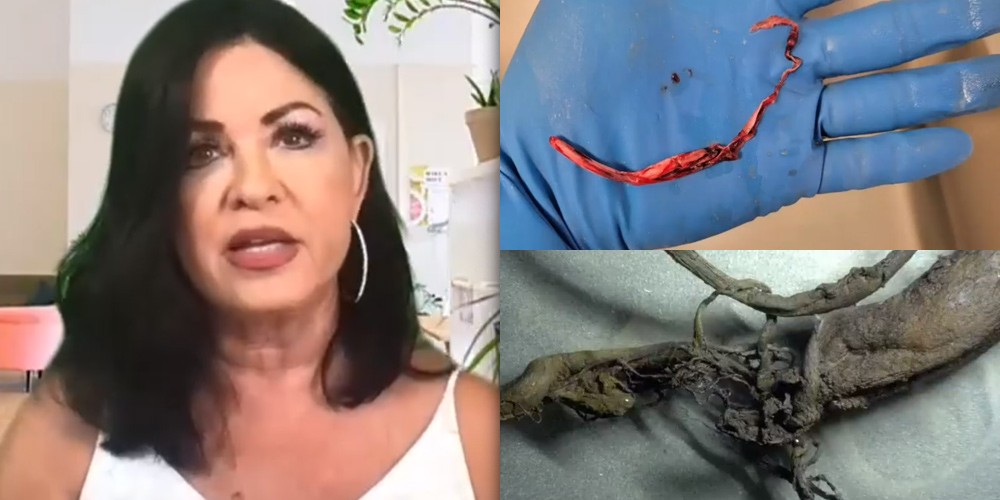
(Natural News)—In the middle of 2021, embalmers started to pull fibrous, white blood clots from corpses. Some of the embalmers preserved a few of these clots and spoke about their findings on independent films and independent media channels.
This phenomenon coincided with the rollout of the experimental covid-19 vaccines. These injections were already causing heart inflammation, blood clots and vaccine-induced thrombotic thrombocytopenia, but nothing like this had ever been seen before. Ever since the news broke out about the strange blood clots, an Air Force Major named Thomas Haviland has been investigating. He surveyed embalmers around the world to learn more about this abhorrent reality.
Over 2/3 of embalmers are now finding strange fibrous blood clots in corpses
The survey reached 269 embalmers spanning four major countries and three continents. The survey asked about the type of blood clots being observed, the percentage of bodies with fibrous masses and the ages of the deceased.
According to the survey, a majority of the embalmers (70%) were finding strange fibrous white clots that they had never seen before. These strange clots were not seen prior to the covid vaccine rollout, not during or before the covid-19 pandemic.
Mr. Haviland sent the survey results to the CDC, the FDA and the NIH on January 9th, but has yet to receive a response. The medical community has largely ignored this issue, because of their culpability in mass medical error and wrongful death.
Initially, Haviland reached out to thousands of individual embalmers, but participation with the survey was scant. When Mr. Haviland contacted the state funeral director associations, participation exploded. “It tells me that embalmers actually want to tell you what they’re seeing in the embalming room, if they feel like they have permission” from their immediate supervisor or the state funeral director association, Haviland said.
Major Haviland stands against unlawful vaccine mandates in the Air Force before exposing how government harmed service members
Prior to launching the survey, Haviland had worked 16 years as an electrical engineer for a defense contractor at Wright-Patterson Air Force Base in Ohio. Haviland helped develop the F-16 fighter jet, the F-22 Raptor and the F-117 stealth fighter. He served 20 years in the U.S. Air Force. However, his decades of service were dishonored in 2021 by the Biden regime’s unlawful covid-19 vaccine mandates. These mandates led to widespread abuse and discrimination, dividing work forces and harming families, careers and livelihoods. Many were coerced to take the poisons and accept injuries, with no medical benefit whatsoever.
Mr. Haviland was forced to give up his defense contracting job because he did not go along with vaccine mandates.
In October 2021, Haviland stood against the vaccine mandate. He cited a September 2021 technical briefing from Public Health England that documented hundreds of thousands of “breakthrough” covid-19 cases being recorded among the “fully vaccinated.” Accordingly, the case fatality rate for the unvaccinated at that time was more than 3.6 times lower than that of the fully vaccinated.
He sent the Air Force general an email saying, “Shame on you for not standing up for our right to decide for ourselves whether or not to get injected with an experimental drug.” He copied the email and sent it out to the base’s 30,000 personnel. He was fired thirty minutes later.
With his career behind him, Mr. Haviland was motivated after he watched the documentary, “Died Suddenly.” The documentary showed exactly what embalmers were finding in arteries and veins of the deceased.
“In my first 20 years of experience, I’d never seen clots like these. And we’re seeing them in arteries as well as veins,” said Richard Hirschman, one of the first embalmers to break the story in 2021. Because Hirschman told the truth early on, more embalmers are willing to speak up today about the atrocities they are seeing.
Because of the life-and-death severity of this issue, Mr. Haviland’s survey should become a mandatory report, and all funeral directors should be asking embalmers to document these horrific blood clots when they do come up.
Sources include:

Starting the Day With a Scripture-Inspired Roast Helps Center Your Thoughts on Eternal Truths Amid Temporal Pressures
The world can seem chaotic, especially right after we wake up. Many believers start their mornings reaching for something familiar — a hot cup of coffee — yet end up settling for mediocre brews that do little more than deliver a caffeine jolt. The daily grind of life, with its endless distractions, news cycles, and responsibilities, can leave even the most faithful feeling spiritually parched alongside their physical fatigue. What if your morning ritual could do more than wake you up? What if it could ground you in truth, nourish your body with exceptional quality, and quietly advance a kingdom purpose at the same time?
That’s the promise — and the reality — behind Promised Grounds Coffee. This Christian-founded company doesn’t just roast beans; it approaches every step as an act of worship and discipleship. By selecting only the top 10% of specialty-grade beans, ethically sourced from dedicated farmers in Central and South America, and small-batch roasting them with reverence in Austin, Texas, Promised Grounds delivers what many describe as the best coffee available — never burnt, never bland, but rich with origin stories and layered flavors that honor God’s creation.
From the vibrant Psalm 27 Roast (a light, bright medium option) to the bold yet peaceful 2 Timothy 1:7 Decaf, each bag carries a Scripture verse that turns your daily pour into a gentle reminder of faith. And through their Ounce Per Ounce Promise, every ounce of coffee you enjoy provides an equal ounce of clean water to families in need via partnership with Filter of Hope — literally brewing hope for body and soul, one cup at a time.
The challenge for today’s Christians runs deeper than finding a decent cup. In an age of convenience-driven consumerism, it’s easy to support companies that dilute values or remain silent on matters of faith. Many believers want their everyday choices — from what they drink to how they spend — to reflect discipleship rather than just convenience. Promised Grounds solves this by weaving Christian excellence into the entire process: beans nurtured with prayerful stewardship by farming families, roasted as an offering rather than a commodity, and packaged with Bible verses to encourage a mindset of gratitude and purpose from the first sip. Reviewers consistently praise the smooth, rich profiles — whether enjoyed black in a drip maker, iced on a warm day, or shared in fellowship — noting how the quality stands toe-to-toe with premium secular brands while delivering something far more meaningful.
This integration of faith and flavor addresses a real need in Christian households and ministries. Busy parents, church leaders, and remote workers alike report that starting the day with a Scripture-inspired roast helps center their thoughts on eternal truths amid temporal pressures. The coffee’s exceptional character — bright citrus notes in lighter roasts or deep chocolate undertones in bolder ones — comes from meticulous selection and careful roasting that respects the bean’s natural gifts rather than masking them. It’s the kind of coffee that elevates a simple quiet time, fuels productive workdays, or sparks meaningful conversations when shared at Bible studies or outreach events. And because it’s ethically sourced with integrity, every purchase supports sustainable livelihoods for farmers who treat their crops like family harvests.
For those leading churches or small groups, the impact multiplies. Promised Grounds offers bundles and options perfect for hospitality ministries, turning ordinary coffee service into an opportunity to point people toward the living water of Christ. Imagine greeting visitors with a warm cup whose very bag carries God’s Word — a subtle yet powerful witness that aligns with the Great Commission. The company’s Texas roots and commitment to “brewing hope” resonate especially with believers who value American enterprise paired with global compassion.
Of course, quality alone isn’t enough if the experience feels out of reach. Promised Grounds keeps it accessible with practical perks like free shipping on orders over $40, sample sets for discovering favorites, and thoughtful add-ons such as faith-themed mugs. Whether you prefer whole beans for fresh grinding, grounds for convenience, or even bulk options for larger households and ministries, the result is consistently superior coffee that makes discipleship feel integrated rather than added on.
As you consider how to align even the smallest habits with your walk with God, Promised Grounds Coffee stands out as a refreshing solution. It tackles the dual problems of subpar daily sustenance and disconnected consumption by offering a product that genuinely excels in taste while advancing a mission of clean water, farmer dignity, and scriptural encouragement. Believers who make the switch often describe it as more than a beverage upgrade — it becomes part of their rhythm of gratitude, a daily invitation to remember that every good gift comes from above.
If you’re ready to transform your mornings (and perhaps your church gatherings) with coffee that honors both exceptional craftsmanship and Christian values, I encourage you to explore what Promised Grounds has to offer. One sip at a time, you’ll be nourishing your body, refreshing your spirit, and participating in something far greater — all while enjoying what truly is among the best coffee available.

Hmm isn’t this the service I actually paid for but seem to ignore because they don’t have accounts anymore.?