

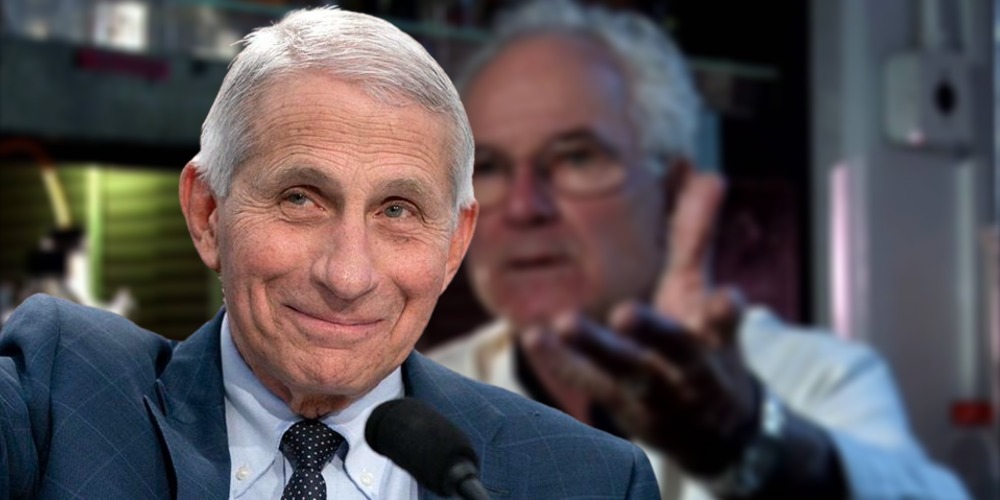
The great Ron Unz has reminded us that when RFK Jr.’s monumental book The Real Anthony Fauci, which exposed “Dr.” Anthony Fauci’s criminal career, became a best-seller, the Left subjected it to a massive smear campaign. But one section of the book was ignored. This dealt with Fauci’s barrage of vilification against Dr. Peter Duesberg. He showed by meticulous research that the Fauci-promoted “treatment” for HIV, which netted Fauci a vast amount of money, was phony. HIV doesn’t cause AIDS, which isn’t a single disease at all. Fauci responded by destroying Duesberg’s career. The Left doesn’t want you to know about that—it would be too dangerous for them.
Here is Ron Unz’s exposure of the cover-up of the AIDS section of RFK Jr.’s book: “When hostile journalists seek to destroy a candidate, they naturally direct their coverage where they believe he is most vulnerable and do their best to ignore his greatest strengths. A shrewd campaign might use such biased reporting as a road-map, one that provides the photographic negative of the issues that should be emphasized. So if the Times and other media outlets seek to avoid the Kennedy assassination conspiracies, perhaps those are exactly the right issues to discuss.
But there is another incendiary topic on which the silence surrounding Kennedy’s position has been far more absolute across both the mainstream and the alternative media, so much so that probably only the tiniest sliver of Americans are even aware of Kennedy’s views. Based upon his extremely controversial writings, the candidate would seem so tremendously vulnerable that any such media coverage would immediately destroy his campaign and his reputation. Yet not a single hostile publication has ever reported those facts, suggesting that the true situation is actually quite different from what it appears to be. Perhaps this total silence implies that the Times and other media outlets dread that subject, fearing that it could destroy their entire media establishment if the facts came out and Kennedy were proven correct.
Until late 2021 I’d been only slightly aware of Kennedy, having vaguely heard that he’d become a leading figure in the growing anti-vaxxing movement. My own views on vaccines had always been quite conventional, not too different from those advocated by the Times, but I was persuaded to read his new book in order to get his side of the story.
To my utter amazement I discovered that the main subject of his text was something entirely different than what I had been led to believe. Kennedy had devoted nearly half the length—200 pages—to promoting the theory that AIDS did not exist as a real disease and was instead merely a medical media hoax concocted by Dr. Anthony Fauci and his greedy corporate allies. But not a single one of those describing his book, whether supportive or critical, had ever hinted at this. Indeed, when I mentioned the true subject of Kennedy’s text to a couple of people, they almost seemed to think that I was delusional, considering it impossible that no one would have revealed such a startling fact.
Kennedy’s book quickly became the #1 Amazon bestseller and he soon drew extremely harsh media attacks, including a 4,000 word article produced by a large team of Associated Press journalists. But as I noted, although they denounced him on every other point none of them ever mentioned his explosive AIDS claims.”
Dr. Donald W. Miller, Jr., tells the story of Duesberg’s work exposing the AIDS myth: “Peter H. Duesberg (b.1936) is a molecular biologist. He is Professor of Molecular and Cell Biology at the University of California, Berkeley. Duesberg questions, on a submicroscopic scale, two tenets of biology. One is the germ theory of AIDS. He contends that HIV is not the cause of AIDS. The other is the gene mutation hypothesis of cancer. Duesberg claims that mutations in genes are not the cause of cancer.
Admired as a “wunderkind” in the 1970s, the NIH (National Institutes of Health) awarded him a long-term Outstanding Investigator Grant; he was a candidate for the Nobel Prize; the U.S. National Academy of Science, in 1985, invited him to join the academy, a high honor among scientists, especially for one then only 49 years old; and in 1986 he was awarded a Fogarty fellowship to spend a year at the NIH studying cancer genes. But in 1987 Duesberg ran afoul of the establishment. He published a paper in Cancer Research titled “Retroviruses as Carcinogens and Pathogens: Expectations and Reality,” followed a year later by one in Science, “HIV is Not the Cause of AIDS.” Thereafter, Duesberg was subjected to the punishment now accorded modern-day heretics. The NIH ceased giving him grants (the NIH and other federal and state funding sources have rejected his last 21 consecutive research grant applications), colleagues labeled him “irresponsible and pernicious” (David Baltimore) and his work “absolute and total nonsense” (Robert Gallo), and graduate students at Berkeley were advised not to study with Duesberg if they wanted to go on and have a successful career in biology. He was branded a “rebel,” a “maverick,” an “iconoclast,” and by one writer, in an article in Science in 1988 titled “A Rebel Without a Cause of AIDS,” a “gadfly.” Blocked from receiving grants, he obtained private funds to maintain his laboratory at UC Berkeley, and he now spends part of each year doing research in Germany.
His principle work on HIV/AIDS is Inventing the AIDS Virus, published in 1996. In this book, and in other papers he has written on the subject, Duesberg systematically dismantles, piece by piece, the germ theory of AIDS. This theory/hypothesis has two parts: 1) HIV causes AIDS, and 2) HIV is sexually transmitted.
With regard to sexual transmission, only 1 in 1,000 unprotected sexual contacts transmit HIV. One in 275 U.S. citizens has antibodies to this virus. Therefore, an uninfected person could have up to 275,000 random unprotected sexual contacts without acquiring sexually transmitted HIV. Prostitutes do not get AIDS, unless they are drug addicts; and wives of HIV-positive hemophiliacs do not contract AIDS from their husbands. Proponents of the HIV/AIDS hypothesis ignore these facts. The dire heterosexual AIDS epidemic predicted to occur in the U.S., Canada, and Europe twenty years ago has not happened, and the disease remains confined to the original two main risk groups – gay men (66 percent of all AIDS cases) and intravenous drug users, male and female (32 percent). The other 2 percent are hemophiliacs and babies born to mothers who used intravenous drugs during pregnancy. The easiest way to acquire HIV sexually is through receptive anal intercourse.
Unlike other viruses, which cause diseases such as smallpox, mumps, and herpes, a retrovirus is like a hitchhiker going along for the ride. It enters a cell, mixes its genes up with those the cell possesses and aligns its fate with that of the cell. Retroviral genes make up an estimated 8 percent of the approximately 35,000 genes in the human genome. It is not in the retrovirus’ self-interest to destroy the cell it lives in. Its survival is contingent on the host cell staying healthy. But HIV (Human Immunodeficiency Virus), a retrovirus, supposedly causes AIDS (Acquired Immunodeficiency Syndrome) by killing the T cell it infects. Without an adequate number of T cells immunodeficiency results, rendering a person susceptible to AIDS. As Duesberg points out, however, two important facts argue against this model: HIV infects, at most, only 1 in 500 T cells. And T cells infected with HIV placed in a test tube (in vitro) grow and thrive. The cells do not die. Instead, they manufacture large quantities of the virus, which providers use to detect antibodies to HIV in their patients’ blood. For these and a dozen other reasons, the germ theory of AIDS is wrong. HIV is a harmless passenger on the AIDS airplane, not its pilot.
Perhaps Duesberg’s final statement on HIV/AIDS will be “The Chemical Bases of the Various AIDS Epidemics: Recreational Drugs, Anti-viral Chemotherapy and Malnutrition,” published in 2003. Rebel he may be, as Science avers, but Duesberg is not without a cause for AIDS. He wrote this paper with Claus Koehnlein and David Rasnick. I heard Dr. Rasnick, also a Professor of Molecular and Cell Biology at UC Berkeley, present this paper at the 2003 meeting of the Doctors for Disaster Preparedness. They hypothesize that AIDS is caused by three things, singly or in combination: 1) long-term, heavy-duty recreational drug use – cocaine, amphetamines, heroin, and nitrite inhalants; 2) antiretroviral drugs doctors prescribe to people who are HIV positive – DNA chain terminators, like AZT, and protease inhibitors; and 3) malnutrition and bad water, which is the cause of “AIDS” in Africa.
AIDS appeared in young gay men in the early 1980s following an explosion of recreational drug use that began twenty years earlier in the 1960s. Male homosexuals are the highest users of recreational drugs. AZT, given to people who are HIV-positive, first used in 1987, is another cause of AIDS. As Duesberg and coauthors show in this paper, a chemical (noninfectious) basis for AIDS is supported by a lot of important data. One fact is this, which government spokespersons and the media do not report: HIV-positive people treated with antiretroviral drugs have a four to five times higher annual mortality rate compared to HIV-positive people who refuse treatment with these drugs – 6.6–8.7 percent vs. 1.4 percent. Duesberg writes, “AIDS is stabilized, even cured, if patients stop using recreational drugs or AZT – regardless of the presence of HIV. The drug hypothesis predicts that AIDS is an entirely preventable and in part curable disease.”
There are other, larger societal issues that resonate around AIDS. In AIDS: Virus or Drug Induced (1996), Duesberg writes:

The AIDS virus [HIV] also proved to be the politically correct cause of AIDS. No AIDS risk groups [e.g., gay men] could be blamed for being infected by a God-given egalitarian virus. A virus could reach all of us. Nobody would be ostracized. We are all in this together.’ Not so with drugs. The consumption of illicit psychoactive drugs implies individual and social responsibilities that nobody wanted to face… The perceived danger of an AIDS virus decimating the general public also provided the scientific and moral arguments for quick and unreflective action and for the complete dismissal of the competing drug-AIDS hypothesis.”
K. Lloyd Billingsley details Fauci’s efforts to ruin Duesberg: “Fauci earned a medical degree in 1966 but his bio shows no advanced degrees in molecular biology or biochemistry. In 1984, Fauci became head of the NIAID and in that role contended that AIDS was caused by a virus known as HIV. Peter H. Duesberg, professor of molecular and cell biology at UC Berkeley, found no scientific evidence for that claim.
As Duesberg explained in “Inventing the AIDS Virus,” HIV is “one of the many harmless passenger viruses that cause no clinical symptoms during the acute infection,” and he was hardly alone. Scientists challenging the HIV-AIDS hypothesis included Nobel laureate Kary Mullis; Charles Thomas, former professor of microbiology at Harvard University; and biologist and science historian Robert Root-Bernstein, author of “Rethinking AIDS.”
Unable to refute Duesberg scientifically, Fauci did his best to “cancel” the distinguished medical scientist. In 1988, the MacNeil/Lehrer NewsHour sent camera crews to interview Duesberg, but the PBS show pulled the interview and replaced it with a short segment of Fauci attacking Duesberg.
In 1989, Fauci complained in an editorial that Duesberg’s ideas were getting too much publicity. ABC’s “Good Morning America” flew Duesberg to New York for an in-studio interview. That same evening, the Berkeley professor got word that the interview had been cancelled. When viewers tuned in, they saw Fauci.
In 1993, Fauci tried unsuccessfully to get Duesberg cancelled from ABC’s “Day One” program. In 1994, Ted Koppel of ABC’s “Nightline” agreed to give Duesberg a hearing, but when the show finally aired, there was Fauci once again.

As Duesberg contended, Fauci was the government mouthpiece for “AIDS thought control.”
Fauci doesn’t want any public discussion of Duesberg’s views on AIDS. He said in 1994, according to a story in the Washington Post, “ “It’s extremely dangerous to all the educational efforts about safe sex and IV drug use,” Fauci said. “If they [the speakers at a conference of AIDS skeptics] were just blowing off steam and it didn’t matter, then we wouldn’t care. But these statements can take a terrible toll on the public health.”
Let’s do everything we can to support the heroic Dr. Peter Duesberg and end “Dr.” Fauci’s tyranny.
About the Author
Llewellyn H. Rockwell, Jr. [send him mail], former editorial assistant to Ludwig von Mises and congressional chief of staff to Ron Paul, is founder and chairman of the Mises Institute, executor for the estate of Murray N. Rothbard, and editor of LewRockwell.com. He is the author of Against the State and Against the Left. Follow him on Facebook and Twitter. Article cross-posted from Lew’s site.

Starting the Day With a Scripture-Inspired Roast Helps Center Your Thoughts on Eternal Truths Amid Temporal Pressures
The world can seem chaotic, especially right after we wake up. Many believers start their mornings reaching for something familiar — a hot cup of coffee — yet end up settling for mediocre brews that do little more than deliver a caffeine jolt. The daily grind of life, with its endless distractions, news cycles, and responsibilities, can leave even the most faithful feeling spiritually parched alongside their physical fatigue. What if your morning ritual could do more than wake you up? What if it could ground you in truth, nourish your body with exceptional quality, and quietly advance a kingdom purpose at the same time?
That’s the promise — and the reality — behind Promised Grounds Coffee. This Christian-founded company doesn’t just roast beans; it approaches every step as an act of worship and discipleship. By selecting only the top 10% of specialty-grade beans, ethically sourced from dedicated farmers in Central and South America, and small-batch roasting them with reverence in Austin, Texas, Promised Grounds delivers what many describe as the best coffee available — never burnt, never bland, but rich with origin stories and layered flavors that honor God’s creation.
From the vibrant Psalm 27 Roast (a light, bright medium option) to the bold yet peaceful 2 Timothy 1:7 Decaf, each bag carries a Scripture verse that turns your daily pour into a gentle reminder of faith. And through their Ounce Per Ounce Promise, every ounce of coffee you enjoy provides an equal ounce of clean water to families in need via partnership with Filter of Hope — literally brewing hope for body and soul, one cup at a time.
The challenge for today’s Christians runs deeper than finding a decent cup. In an age of convenience-driven consumerism, it’s easy to support companies that dilute values or remain silent on matters of faith. Many believers want their everyday choices — from what they drink to how they spend — to reflect discipleship rather than just convenience. Promised Grounds solves this by weaving Christian excellence into the entire process: beans nurtured with prayerful stewardship by farming families, roasted as an offering rather than a commodity, and packaged with Bible verses to encourage a mindset of gratitude and purpose from the first sip. Reviewers consistently praise the smooth, rich profiles — whether enjoyed black in a drip maker, iced on a warm day, or shared in fellowship — noting how the quality stands toe-to-toe with premium secular brands while delivering something far more meaningful.
This integration of faith and flavor addresses a real need in Christian households and ministries. Busy parents, church leaders, and remote workers alike report that starting the day with a Scripture-inspired roast helps center their thoughts on eternal truths amid temporal pressures. The coffee’s exceptional character — bright citrus notes in lighter roasts or deep chocolate undertones in bolder ones — comes from meticulous selection and careful roasting that respects the bean’s natural gifts rather than masking them. It’s the kind of coffee that elevates a simple quiet time, fuels productive workdays, or sparks meaningful conversations when shared at Bible studies or outreach events. And because it’s ethically sourced with integrity, every purchase supports sustainable livelihoods for farmers who treat their crops like family harvests.
For those leading churches or small groups, the impact multiplies. Promised Grounds offers bundles and options perfect for hospitality ministries, turning ordinary coffee service into an opportunity to point people toward the living water of Christ. Imagine greeting visitors with a warm cup whose very bag carries God’s Word — a subtle yet powerful witness that aligns with the Great Commission. The company’s Texas roots and commitment to “brewing hope” resonate especially with believers who value American enterprise paired with global compassion.
Of course, quality alone isn’t enough if the experience feels out of reach. Promised Grounds keeps it accessible with practical perks like free shipping on orders over $40, sample sets for discovering favorites, and thoughtful add-ons such as faith-themed mugs. Whether you prefer whole beans for fresh grinding, grounds for convenience, or even bulk options for larger households and ministries, the result is consistently superior coffee that makes discipleship feel integrated rather than added on.
As you consider how to align even the smallest habits with your walk with God, Promised Grounds Coffee stands out as a refreshing solution. It tackles the dual problems of subpar daily sustenance and disconnected consumption by offering a product that genuinely excels in taste while advancing a mission of clean water, farmer dignity, and scriptural encouragement. Believers who make the switch often describe it as more than a beverage upgrade — it becomes part of their rhythm of gratitude, a daily invitation to remember that every good gift comes from above.
If you’re ready to transform your mornings (and perhaps your church gatherings) with coffee that honors both exceptional craftsmanship and Christian values, I encourage you to explore what Promised Grounds has to offer. One sip at a time, you’ll be nourishing your body, refreshing your spirit, and participating in something far greater — all while enjoying what truly is among the best coffee available.
