

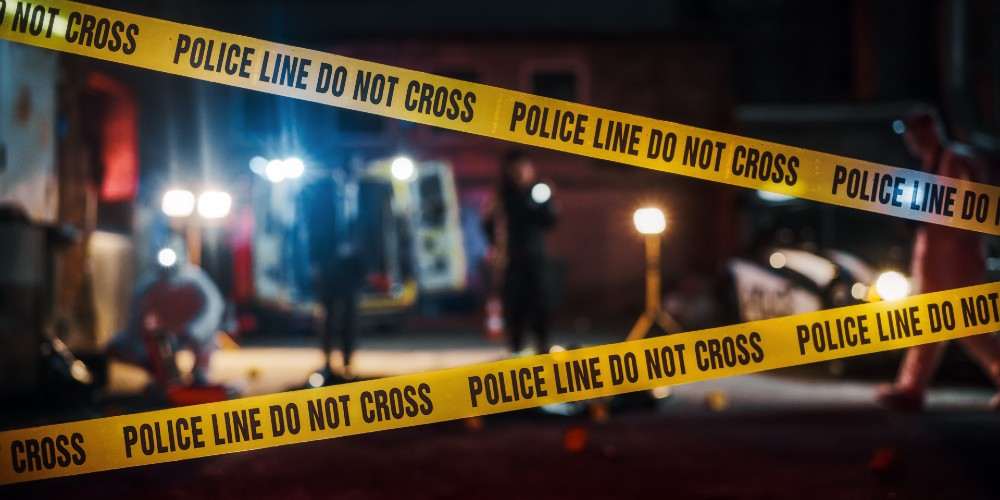
 (DCNF)—Years of left-wing governance in Washington, D.C., have allowed rampant crime and public safety problems to fester, prompting federal intervention.
President Donald Trump has deployed more law enforcement and the National Guard to D.C.’s streets and moved to federalize D.C.’s Metropolitan Police Department (MPD) in recent days, citing alarming data such as the fact that the nation’s capital has the fourth highest murder rate in the country. In the long term, the Trump administration’s legislative goals threaten to upend numerous liberal bail and sentencing policies that the overwhelmingly Democratic-voting town has long embraced while administrative challenges hampered its ability to enforce the law.
Local Democratic leaders’ comments and misleading police data fuel the narrative that D.C. crime is exaggerated, but recent cases have renewed national attention. They include a 21-year-old House intern being slain by a stray bullet, two Israeli Embassy aides being gunned down before they were set to be engaged and Democratic Rep. Henry Cuellar of Texas being carjacked at gunpoint by three men.
D.C.’s story echoes the failure of criminal justice reforms imposed in cities across the country, especially since the death of George Floyd in 2020, according to Manhattan Institute fellow Charles Lehman, who researches public safety for the conservative think tank.
“At best, they’ve done nothing,” Lehman told the Daily Caller News Foundation. “Of course, in many places … they have made the problem much worse.”
Normalizing Leniency
D.C. eliminated cash bail in most local cases in 1992, and over 90% of arrestees are typically released before trial in local court, according to D.C.’s Pretrial Service Agency. Trump said on Monday that he wants Republicans in Congress to end the policy.
“Some of it is almost certainly the judges who have a history of, shall we say, defendant-friendly rulings,” Lehman said about pretrial releases.
Local officials have also worked to reduce incarceration of criminals after conviction. Legislation passed over the past decade allows some rapists and murderers to petition for a review of their sentences and potentially walk free after 15 years behind bars if they committed the crimes while under 25 years of age. In one case, a federal jury convicted a man of gun and drug offenses that he committed in 2021 after serving 26 years in prison for three murders in D.C., according to the Department of Justice (DOJ).
The ‘Youths’
D.C.’s juvenile arrest rate is well above the national average, official data show. This results in alarming trends, including how 51% D.C. robbery suspects in 2024 were juveniles, according to police.
Juveniles are also linked to about 60% of carjackings in D.C., including one in which a former Trump administration staffer was beaten and bloodied by a mob in Dupont Circle on Aug. 3. Authorities said the man was assaulted after trying to shield a woman from suspects demanding her car, and police arrested two 15-year-olds at the scene, an incident that led Trump to threaten more federal control over D.C.
“Local ‘youths’ and gang members, some only 14, 15, and 16-years-old, are randomly attacking, mugging, maiming, and shooting innocent Citizens, at the same time knowing that they will be almost immediately released,” Trump said on social media after the assault. “They are not afraid of Law Enforcement because they know nothing ever happens to them, but it’s going to happen now!”
Washington officials have repeatedly highlighted chronic absenteeism in schools as a leading driver of juvenile crime in recent years, though the district fails to uphold truancy laws. The number of students who qualified as truant in the D.C. Public Schools system increased 110% over the past 10 years, in part due to a lack of enforcement, The Washington Post reported. Officials reportedly did not investigate more than 18,000 truancy reports in the last three school years alone.
After juvenile offenders are caught and convicted, D.C.’s sentencing laws can result in even violent offenders receiving no jail time or having their crimes shielded from potential employers if they are under 24 years old. U.S. Attorney for Washington, D.C., Jeanine Pirro, a Trump appointee, expressed her frustration with the laws on Monday by highlighting a case in which a 19-year-old who shot someone in the chest got probation under D.C.’s Youth Rehabilitation Act (YRA).
“I can’t touch you if you’re 14, 15, 16 [or] 17 years old and you have a gun,” Pirro told reporters. “I convict someone of shooting another person with an illegal gun on a public bus in the chest [with] intent to kill. What does the judge give him? Probation, says that you should go to college. We need to go after the D.C. Council and their absurd laws.”

D.C. enacted the YRA in 1985 in the name of reducing the number of juveniles who reoffend. However, a government-sanctioned study that analyzed cases settled between 2010 and 2012 found that more than half of juveniles with similar sentences under the YRA were arrested again within two years of release and 33% were convicted again, with little statistical difference from those who did not benefit from the YRA. The study came before the district amended the YRA to expand the age range of those who qualify for lenient sentences to under 24.
Understaffing and Inefficiency
The MPD has been bleeding officers for years, outpacing recruitment. The department’s Patrol Services staff, comprised of officers who monitor the streets and respond to 911 calls, decreased by 14.6% from October 2018 and October 2023, according to the Office of the District of Columbia Auditor. Patrol Services saw another 3% decline from October 2023 to September 2024, the latest MPD staffing reports show.
The loss in manpower has led to MPD officers working long hours, adding to the job’s difficulties that may contribute to officers leaving in the first place. The MPD logged more than a million overtime hours in each of the last two fiscal years. Some officers have earned more income than D.C’s mayor in a year due to the extra hours, DCist reported in 2023.
Additionally, until January, D.C’s crime lab had been stripped of its accreditation for about four years after auditors said it was systematically mishandling evidence, WTOP reported. That left law enforcement with a backlog of cases unable to be properly investigated.
Former U.S. Attorney for the District of Columbia Matthew Graves cited the crime lab issues as one reason why his office declined to prosecute 67% of federal cases in 2022, The Washington Post reported. Graves’s office announced increased federal prosecutions in D.C. the following year.
The district also passed a law in the height of the Black Lives Matter movement’s rise in 2020 that prohibited police from reviewing their own body camera footage of an incident before writing reports. Former MPD Chief Robert Contee told The Washington Post that the law increased the chances of officers’ recollections contradicting footage and made prosecutors more reluctant to pursue cases. Congress later voted to block the law, but former President Joe Biden vetoed the move in 2023.

Empty judicial seats in D.C.’s Superior Court system are another factor weakening the justice system, one that Trump and the Senate can fix by appointing more, Lehman told the DCNF. There are currently 13 vacancies in the Superior Court system and two judges on extended leave out of 62 total seats, making it much more difficult to process a large volume of cases, WTOP reported. One seat had been vacant for more than 20 years as of January, according to D.C. Witness.
While local officials have sounded the alarm about understaffing, independent auditors of the MPD have argued that more strategic placement of officers throughout the district would alleviate some of its struggles, The Washington Post reported. Lehman also told the DCNF that the MPD should send greater numbers of police to more high-crime areas. The MPD did not respond to a request for comment.
Under Trump’s directives, National Guard troops were seen on Wednesday near federal property in Anacostia, a neighborhood in a particularly dangerous ward of D.C., Fox News reported.
“The core problem is police staffing. MPD has fewer officers than they need,” Lehman said. “There are also problems with how they deploy the officers … they don’t deploy the resources in Anacostia that they really need to.”
All content created by the Daily Caller News Foundation, an independent and nonpartisan newswire service, is available without charge to any legitimate news publisher that can provide a large audience. All republished articles must include our logo, our reporter’s byline and their DCNF affiliation. For any questions about our guidelines or partnering with us, please contact [email protected].
Starting the Day With a Scripture-Inspired Roast Helps Center Your Thoughts on Eternal Truths Amid Temporal Pressures
The world can seem chaotic, especially right after we wake up. Many believers start their mornings reaching for something familiar — a hot cup of coffee — yet end up settling for mediocre brews that do little more than deliver a caffeine jolt. The daily grind of life, with its endless distractions, news cycles, and responsibilities, can leave even the most faithful feeling spiritually parched alongside their physical fatigue. What if your morning ritual could do more than wake you up? What if it could ground you in truth, nourish your body with exceptional quality, and quietly advance a kingdom purpose at the same time?
That’s the promise — and the reality — behind Promised Grounds Coffee. This Christian-founded company doesn’t just roast beans; it approaches every step as an act of worship and discipleship. By selecting only the top 10% of specialty-grade beans, ethically sourced from dedicated farmers in Central and South America, and small-batch roasting them with reverence in Austin, Texas, Promised Grounds delivers what many describe as the best coffee available — never burnt, never bland, but rich with origin stories and layered flavors that honor God’s creation.
From the vibrant Psalm 27 Roast (a light, bright medium option) to the bold yet peaceful 2 Timothy 1:7 Decaf, each bag carries a Scripture verse that turns your daily pour into a gentle reminder of faith. And through their Ounce Per Ounce Promise, every ounce of coffee you enjoy provides an equal ounce of clean water to families in need via partnership with Filter of Hope — literally brewing hope for body and soul, one cup at a time.
The challenge for today’s Christians runs deeper than finding a decent cup. In an age of convenience-driven consumerism, it’s easy to support companies that dilute values or remain silent on matters of faith. Many believers want their everyday choices — from what they drink to how they spend — to reflect discipleship rather than just convenience. Promised Grounds solves this by weaving Christian excellence into the entire process: beans nurtured with prayerful stewardship by farming families, roasted as an offering rather than a commodity, and packaged with Bible verses to encourage a mindset of gratitude and purpose from the first sip. Reviewers consistently praise the smooth, rich profiles — whether enjoyed black in a drip maker, iced on a warm day, or shared in fellowship — noting how the quality stands toe-to-toe with premium secular brands while delivering something far more meaningful.
This integration of faith and flavor addresses a real need in Christian households and ministries. Busy parents, church leaders, and remote workers alike report that starting the day with a Scripture-inspired roast helps center their thoughts on eternal truths amid temporal pressures. The coffee’s exceptional character — bright citrus notes in lighter roasts or deep chocolate undertones in bolder ones — comes from meticulous selection and careful roasting that respects the bean’s natural gifts rather than masking them. It’s the kind of coffee that elevates a simple quiet time, fuels productive workdays, or sparks meaningful conversations when shared at Bible studies or outreach events. And because it’s ethically sourced with integrity, every purchase supports sustainable livelihoods for farmers who treat their crops like family harvests.
For those leading churches or small groups, the impact multiplies. Promised Grounds offers bundles and options perfect for hospitality ministries, turning ordinary coffee service into an opportunity to point people toward the living water of Christ. Imagine greeting visitors with a warm cup whose very bag carries God’s Word — a subtle yet powerful witness that aligns with the Great Commission. The company’s Texas roots and commitment to “brewing hope” resonate especially with believers who value American enterprise paired with global compassion.
Of course, quality alone isn’t enough if the experience feels out of reach. Promised Grounds keeps it accessible with practical perks like free shipping on orders over $40, sample sets for discovering favorites, and thoughtful add-ons such as faith-themed mugs. Whether you prefer whole beans for fresh grinding, grounds for convenience, or even bulk options for larger households and ministries, the result is consistently superior coffee that makes discipleship feel integrated rather than added on.
As you consider how to align even the smallest habits with your walk with God, Promised Grounds Coffee stands out as a refreshing solution. It tackles the dual problems of subpar daily sustenance and disconnected consumption by offering a product that genuinely excels in taste while advancing a mission of clean water, farmer dignity, and scriptural encouragement. Believers who make the switch often describe it as more than a beverage upgrade — it becomes part of their rhythm of gratitude, a daily invitation to remember that every good gift comes from above.
If you’re ready to transform your mornings (and perhaps your church gatherings) with coffee that honors both exceptional craftsmanship and Christian values, I encourage you to explore what Promised Grounds has to offer. One sip at a time, you’ll be nourishing your body, refreshing your spirit, and participating in something far greater — all while enjoying what truly is among the best coffee available.
