

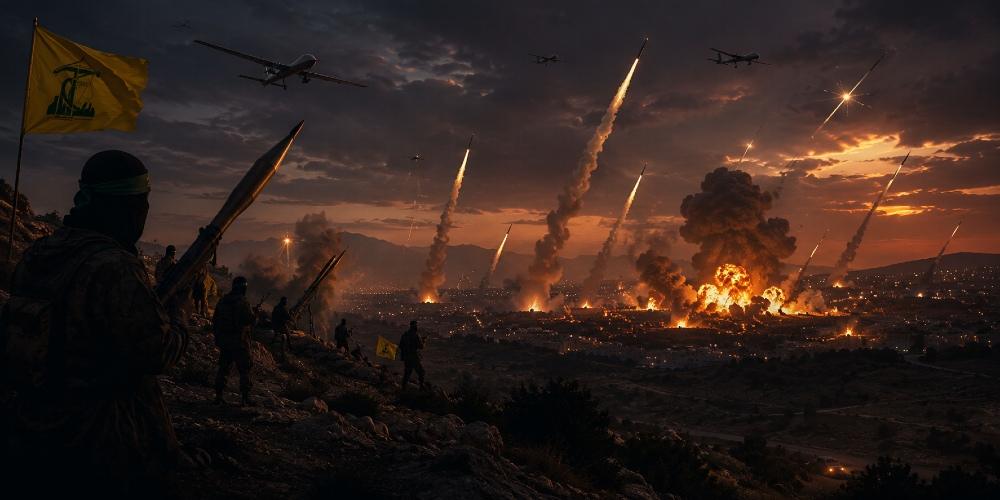
(End of the American Dream)—We are far closer to an apocalyptic scenario in the Middle East than most people realize. Hezbollah has been sending vast numbers of rockets and drones into Israel in recent months. As a result, Israeli leaders have decided that it is necessary for the IDF to push even deeper into Lebanese territory, and Israeli Prime Minister Benjamin Netanyahu is even threatening to unleash massive airstrikes on southern Beirut if the endless barrage of rockets and drones does not stop.
If Netanyahu gives the green light for airstrikes on southern Beirut, the Iranians have already told us that they are going to hit Israel really hard. Needless to say, that could potentially spark all-out war in the Middle East.
It would really help if Hezbollah would simply agree to stop sending rockets and drones into Israeli territory.
Over the past 3 months, approximately 2,500 rockets have been fired at Israel…
Since March 2, Hezbollah has fired some 5,500 rockets at IDF troops operating in the south of the country, as well as around 2,500 at Israel, according to the military. There were at least 75 rocket impact sites in Israel.
In addition, Hezbollah launched around 300 drones, of which 25 struck Israel, according to the IDF.
The IDF believes Hezbollah still possesses thousands of short-range rockets, along with hundreds of longer-range projectiles. The IDF has said that Hezbollah is launching most of its attacks from deeper within southern Lebanon, north of the Litani River, and not from areas close to the border.
Let’s put this into perspective.
If someone fired 2,500 rockets at U.S. cities over a three month period, they would get bombed into oblivion.
There is no way that we would ever put up with that.
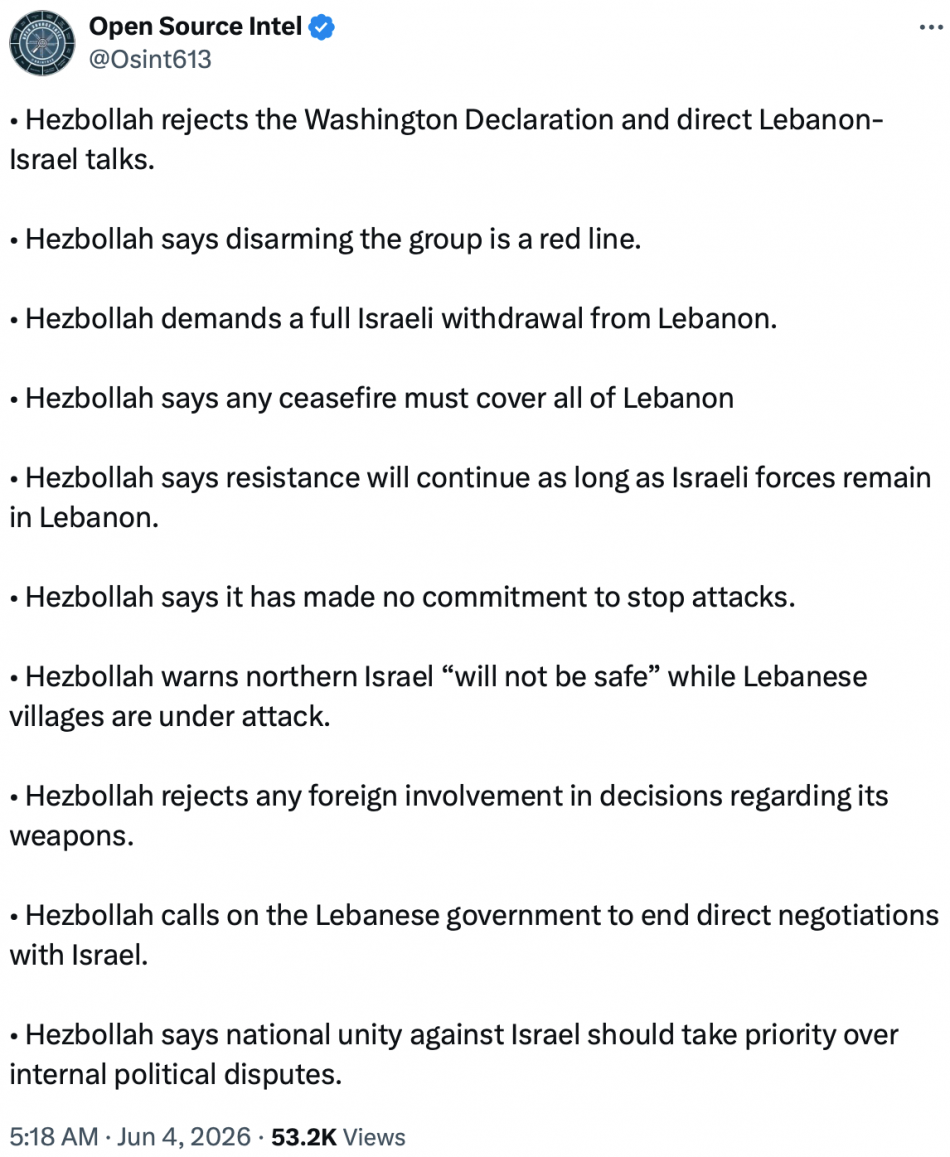
The governments of Israel and Lebanon would both like to see the fighting end. They just agreed to a comprehensive ceasefire plan, but Hezbollah has completely rejected it…
Hezbollah on Thursday rejected a ceasefire plan agreed by the Lebanese and Israeli governments in US-mediated talks, as the terror group kept up rocket and drone attacks targeting troops and northern Israel, and the IDF continued to strike in southern Lebanon.
The night before, Jerusalem and Beirut agreed on a ceasefire contingent on Hezbollah halting attacks, and planned for the Lebanese army to deploy to “pilot” zones in southern Lebanon free from both Hezbollah operatives and IDF troops.
But the terror group’s chief, Naim Qassem, rejected the deal as “surrender.” Qassem said that his group would keep bombarding northern Israel as long as strikes continue in Lebanon. Qassem also urged the Lebanese government to quit the “farce” of direct talks with Israel.
The Lebanese military is not strong enough to control Hezbollah, and so the fighting will continue.
In fact, Hezbollah has announced that the fighting will continue until all Israeli forces are out of Lebanon…
Of course Israeli forces are not going to be pulled out of southern Lebanon as long as rockets and drones are raining down on Israeli communities.
So it looks like we have an unsolvable problem on our hands.
Israeli troops now control a very large portion of southern Lebanon, but Hezbollah forces have effectively fought back “using drones that are controlled through thin fiber-optic cables to evade electronic jamming”…
The relentless drone attacks by Hezbollah, the Iran-backed Lebanese militant group, have exposed cracks in Israel’s defenses, shocking its public and forcing a rushed search for solutions by its military and political leaderships.
They have sown fear among Israeli ground troops in Lebanon and challenged Israel’s longstanding air superiority in Lebanese skies. The drones have also revealed a shortcoming in Israel’s strategy to seize territory in southern Lebanon, build a buffer zone and displace Hezbollah militants beyond the range of antitank missiles that have plagued tens of thousands of civilians living in northern Israel.
The drone onslaught, however, was no surprise: As early as 2024, military officers warned that Hezbollah would likely start using drones that are controlled through thin fiber-optic cables to evade electronic jamming, according to three Israeli officials who insisted on anonymity because they were not authorized to speak with the media. Fiber-optic drones have also become commonplace on the battlefield in Ukraine.
These drones have been a major headache for the IDF, because at this point Israel does not have any way to defend against them.

What we are witnessing is a major showdown between Israel and Hezbollah.
And if Hezbollah continues to pummel northern Israel with rockets and drones, Israeli Prime Minister Benjamin Netanyahu is pledging that very powerful airstrikes on southern Beirut will be unleashed…
Israeli Prime Minister Benjamin Netanyahu confirmed the agreement. But he said strikes on Beirut would go ahead “if Hezbollah does not stop attacking our cities and civilians”, and that Israeli forces would still operate in south Lebanon.
Do you remember what happened to Gaza City?
The same thing could soon happen to southern Beirut.
If Israeli jets start flattening southern Beirut, Iranian Foreign Minister Abbas Araghchi says that it will mean all-out war…
Iranian Foreign Minister Abbas Araghchi said Wednesday that Israeli attacks on Beirut would lead to a return to all-out war, linking the fate of that conflict with the future of the U.S.-Iran ceasefire.
Araghchi didn’t stop there.

During that same interview, he ominously warned that Iranian forces “are ready to strike Israel if it attacks Beirut”…
Iranian Foreign Minister Abbas Araghchi warned on Wednesday that any attack on Lebanese capital Beirut would trigger a “full-scale resumption” of the Middle East war, as Israel pressed its attacks in southern Lebanon.
“Any attack on Beirut will have grave consequences and will lead to a full-scale resumption of the war,” the Tasnim news agency quoted Araghchi as telling Lebanon’s Al Mayadeen TV.
“Our armed forces are ready to strike Israel if it attacks Beirut.”
If Iranian missiles are fired at Israeli cities, the U.S. would likely feel compelled to intervene and the Israelis would respond with overwhelming force.
And once missiles are flying back and forth again, just about anything could happen.
The IAEA is warning us that the probability that the Iranians are pursuing nuclear weapons is higher now than when the war began…
The risk that Iran is covertly pursuing nuclear weapons is higher today than before the US and Israel launched their first military attacks on the Islamic Republic a year ago, according to western officials who cited new data circulated by the United Nations atomic watchdog.
The International Atomic Energy Agency has warned member countries about new nuclear proliferation dangers posed by Iran’s large inventory of near-bomb-grade uranium, according to a restricted document seen by Bloomberg. Before the June 2025 air assault that began a 12-day-war, that material was subject to weekly IAEA inspection to ensure it wasn’t diverted for weapons. That’s no longer the case.
The IAEA’s report underscores how the US-Israeli war on Iran has created new nuclear dilemmas that didn’t previously exist, according to two senior diplomats familiar with the report, who asked not to be identified discussing sensitive data. The longer the material remains outside of IAEA safeguards, the higher the risks grow that the material could be diverted for non-peaceful uses, they said.
Of course there are others that believe that Iran already possesses nuclear weapons and is prepared to conduct a demonstration.
We have entered such a dangerous time, but there is no turning back now.
Hezbollah is not going to stop launching rockets and drones at Israel, and Israel is going to keep escalating matters in an attempt to stop the bombardment.
Once the airstrikes on southern Beirut start, the Iranians will have an important decision to make.
Unfortunately, I don’t think that the Iranians are bluffing, and that means that all-out war could be just around the corner.
Michael’s new book entitled “10 Prophetic Events That Are Coming Next” is available in paperback and for the Kindle on Amazon.com, and you can subscribe to his Substack newsletter at michaeltsnyder.substack.com.

Starting the Day With a Scripture-Inspired Roast Helps Center Your Thoughts on Eternal Truths Amid Temporal Pressures
The world can seem chaotic, especially right after we wake up. Many believers start their mornings reaching for something familiar — a hot cup of coffee — yet end up settling for mediocre brews that do little more than deliver a caffeine jolt. The daily grind of life, with its endless distractions, news cycles, and responsibilities, can leave even the most faithful feeling spiritually parched alongside their physical fatigue. What if your morning ritual could do more than wake you up? What if it could ground you in truth, nourish your body with exceptional quality, and quietly advance a kingdom purpose at the same time?
That’s the promise — and the reality — behind Promised Grounds Coffee. This Christian-founded company doesn’t just roast beans; it approaches every step as an act of worship and discipleship. By selecting only the top 10% of specialty-grade beans, ethically sourced from dedicated farmers in Central and South America, and small-batch roasting them with reverence in Austin, Texas, Promised Grounds delivers what many describe as the best coffee available — never burnt, never bland, but rich with origin stories and layered flavors that honor God’s creation.
From the vibrant Psalm 27 Roast (a light, bright medium option) to the bold yet peaceful 2 Timothy 1:7 Decaf, each bag carries a Scripture verse that turns your daily pour into a gentle reminder of faith. And through their Ounce Per Ounce Promise, every ounce of coffee you enjoy provides an equal ounce of clean water to families in need via partnership with Filter of Hope — literally brewing hope for body and soul, one cup at a time.
The challenge for today’s Christians runs deeper than finding a decent cup. In an age of convenience-driven consumerism, it’s easy to support companies that dilute values or remain silent on matters of faith. Many believers want their everyday choices — from what they drink to how they spend — to reflect discipleship rather than just convenience. Promised Grounds solves this by weaving Christian excellence into the entire process: beans nurtured with prayerful stewardship by farming families, roasted as an offering rather than a commodity, and packaged with Bible verses to encourage a mindset of gratitude and purpose from the first sip. Reviewers consistently praise the smooth, rich profiles — whether enjoyed black in a drip maker, iced on a warm day, or shared in fellowship — noting how the quality stands toe-to-toe with premium secular brands while delivering something far more meaningful.
This integration of faith and flavor addresses a real need in Christian households and ministries. Busy parents, church leaders, and remote workers alike report that starting the day with a Scripture-inspired roast helps center their thoughts on eternal truths amid temporal pressures. The coffee’s exceptional character — bright citrus notes in lighter roasts or deep chocolate undertones in bolder ones — comes from meticulous selection and careful roasting that respects the bean’s natural gifts rather than masking them. It’s the kind of coffee that elevates a simple quiet time, fuels productive workdays, or sparks meaningful conversations when shared at Bible studies or outreach events. And because it’s ethically sourced with integrity, every purchase supports sustainable livelihoods for farmers who treat their crops like family harvests.
For those leading churches or small groups, the impact multiplies. Promised Grounds offers bundles and options perfect for hospitality ministries, turning ordinary coffee service into an opportunity to point people toward the living water of Christ. Imagine greeting visitors with a warm cup whose very bag carries God’s Word — a subtle yet powerful witness that aligns with the Great Commission. The company’s Texas roots and commitment to “brewing hope” resonate especially with believers who value American enterprise paired with global compassion.
Of course, quality alone isn’t enough if the experience feels out of reach. Promised Grounds keeps it accessible with practical perks like free shipping on orders over $40, sample sets for discovering favorites, and thoughtful add-ons such as faith-themed mugs. Whether you prefer whole beans for fresh grinding, grounds for convenience, or even bulk options for larger households and ministries, the result is consistently superior coffee that makes discipleship feel integrated rather than added on.
As you consider how to align even the smallest habits with your walk with God, Promised Grounds Coffee stands out as a refreshing solution. It tackles the dual problems of subpar daily sustenance and disconnected consumption by offering a product that genuinely excels in taste while advancing a mission of clean water, farmer dignity, and scriptural encouragement. Believers who make the switch often describe it as more than a beverage upgrade — it becomes part of their rhythm of gratitude, a daily invitation to remember that every good gift comes from above.
If you’re ready to transform your mornings (and perhaps your church gatherings) with coffee that honors both exceptional craftsmanship and Christian values, I encourage you to explore what Promised Grounds has to offer. One sip at a time, you’ll be nourishing your body, refreshing your spirit, and participating in something far greater — all while enjoying what truly is among the best coffee available.
