

(Alt-Market)—The purpose of NATO involvement in the Ukraine War has, to me, always appeared obvious. Ukraine has nothing to do with the interests of the western public, nothing to do with the security of Europe and nothing to do with the economic advancement of the United States. Yet, NATO and the globalists have been politically interfering in the region since at least 2014 and preparing the ground for an eventual war with Russia.
To be clear, I don’t favor Russia any more than I favor Ukraine. The Kremlin has long had its own ties to the globalists, as I have outlined in numerous articles. How deep those ties go is up for debate – Maybe the honeymoon is over and Russia is truly done trying to get a seat at the globalist table. What I do know is that western elites want a world war and they have done everything in their power to start one.
Look at it this way: What if you were to make a list of all the covert and overt NATO operations in Ukraine and then flipped script? What if Russia was pursuing all the same agendas of destabilization, control and arms proliferation in Mexico (as the Soviets did in Cuba in the 1960s)? If the US invaded Mexico preemptively it would be completely understandable.
Whether or not Putin is acting in the best interests of Russia doesn’t really matter. The war was inevitable anyway because NATO made sure it was impossible to avoid. But what purpose does such a proxy war serve? Well, it doesn’t serve much purpose at all…unless the goal is to instigate a wider world war between the East and the West. In that scenario the globalists benefit greatly.
They get a scapegoat for the economic collapse they’ve already set in motion. They multiply the global fear factor and make the public desperate for the political elites to step in and solve all their problems. And, they can get rid of their domestic enemies (conservatives and patriots) by accusing them of “working with Russia” to undermine the war effort if they dare to rebel against unconstitutional mandates.
Beyond that, they also get an opportunity to send young men (who might rebel) off to the meat grinder in Ukraine so that there’s no new generation of freedom fighters to deal with. World War III is a win-win-win for the Davos crowd, as long as it doesn’t go full-on nuclear holocaust and wipe out their carefully crafted surveillance states.
But how do they turn the proxy war into a world war without looking like the bad guys? That’s the trick, isn’t it?
The proxy (in this case, Ukraine) would have to take actions that provoke Russia into an explosive outburst. Russia would have to utilize tactics or weaponry that puts a vast number of civilians at risk, requiring greater NATO involvement and perhaps even UN intervention. They need Russia to level a major city containing hundreds of thousands of civilians. They need Russia to drop MOABs or nukes. They need a dramatic war crime; otherwise, the western public is not going to support boots on the ground or agree to a military draft.
Popular support for monetary and military aid in Ukraine is waning quickly and Ukraine knows they are about to lose. The Kursk offensive looks like an act of desperation triggered by this reality.
The Kursk region has almost no modern strategic value. It’s a rural agricultural area with a limited industrial base. It does have natural gas pipelines that send energy to Europe, but that doesn’t help Ukraine. They’re already in trouble with Germany for blowing up the Nordstream pipeline. There is also a nuclear power plant in the area but it’s too far away for Ukraine’s troops to seize it (They could try to destroy it with drones and cause a nuclear incident, but this would have to be done covertly without Ukraine taking direct credit).
Mainstream strategists argue that the Kursk operation was designed to force Russia to move crack troops away from the Donbas front where they are making impressive gains. This would allegedly slow down Russia’s attrition based offensive and change the direction of the war. But if that was the plan, it failed miserably.
Ukraine’s troops in Kursk have reportedly been contained. Using NATO-style maneuver tactics to invade Kursk has also done nothing to slow Russia’s advance as they are now primed to take the key city of Toretsk. They are also approaching Pokrovsk (the main staging ground for Ukraine’s forces in the east). These areas are heavily defended with long term entrenchments, but Russia is rolling right through them. The lines beyond these cities are thin or non-existent. Ukraine would immediately be forced to negotiate a cease fire.
Russia also launched the largest missile and drone strikes of the war in fifteen Ukrainian oblasts, causing even greater disruptions to utilities. This proves two things: The Russian military has NOT been diminished or crippled and they still have ample long range ordnance, despite what NATO officials originally claimed
There’s a reason why Kursk was so lightly defended by Russia – It’s not worth anything to Ukraine in terms of winning the war. That said, I would like to offer an alternative theory on why Ukraine made such a move…

The moment Ukraine crossed onto Russian soil the media and political narrative changed. The word today is that the Kremlin’s “red lines” are meaningless and that Ukraine has proven that Putin is “all talk” when it comes to nuclear weapons and metropolitan strikes. The discussion has turned to the use of US and European long range missiles deep into Russian territory. The Ukrainian government (with NATO behind it) is demanding that US and European officials allow them access to the big-boy toys.
Again, the Biden Administration has to at least appear resistant to this idea. They know if they openly give the green light to offensive ATACM strikes on Russian soil beyond the front that they will be seen as stepping over the line of logistical “support” into the realm of direct warfare with the Russians. Yes, I’m well aware that NATO intel and “advisers” have been on the ground in Ukraine since before the war began. The point is, it’s not official policy because the public would not accept it.
Long range strikes into Russia, I believe, will set in motion more Russian strikes on major cities in the west of Ukraine where the majority of the population lives. These areas have gone largely untouched during the duration of the war. Putin, despite what the media claims, has been careful to limit the targeting of larger civilian centers. That will end if NATO missiles hit Russian cities.
Kursk may have been an attempt to embarrass Russia into wild strikes on civilian targets, thereby giving NATO a reason to intervene. That’s one theory. Another theory is that the Kursk operation is designed to convince western policy makers and the public that there will be no nuclear repercussions; that Putin is all bluster and Ukraine should be given more advanced tools to bomb Moscow.
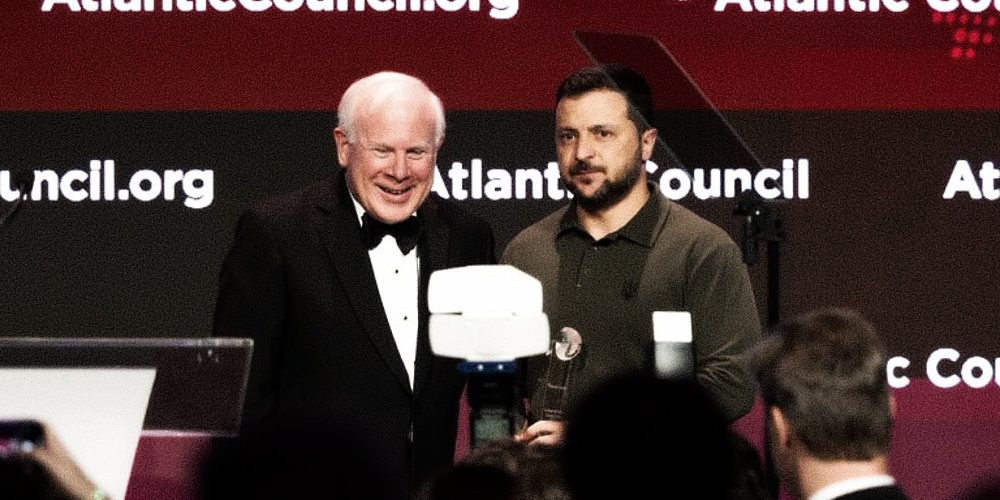
This narrative is largely promoted by the Atlantic Council, a globalist think-tank with ties to the World Economic Forum and the “Three Seas Initiative.” The Atlantic Council directly advises the Ukrainian government on all aspect of the war, including strategy through their Eurasian Center. They also advise NATO through their Scowcroft Center. As their website notes:
“The Eurasia Center has worked tirelessly to respond to the Kremlin’s full-scale invasion of Ukraine, using our well-respected and high-visibility platform and leveraging relationships in government, civil society, and the media to have great impact. The Eurasia Center offers recommendations directly to the U.S. administration and Congress, senior Ukrainian officials, European leadership, international media, and civil society. The Center tracks the military and political situation within Ukraine and advocates for stronger, faster measures to stall and mitigate the damage of the Kremlin’s war on Ukraine.”

I would argue that the Atlantic Council is the primary globalist “influencer” in the Ukraine war – The source for the majority of strategic decisions and propaganda. Their support of the ‘Three Seas Initiative” since 2014 has been the driving force in the effort to bring Ukraine into the EU and NATO (the primary reason why the war started in the first place).
Lindsay Graham, a Neo-Con and rabid proponent of using Ukraine as a proxy to ignite a war with Russia, has been participating in Atlantic Council projects since at least 2010.
It’s the Atlantic Council and their media contacts, in my opinion, that are pushing for large scale missile strikes into Russia. They are also the source for the claim that Putin’s red lines are a fake out. They state on their website:
“Ukraine’s offensive is now posing serious questions about the credibility of Russia’s saber-rattling and the rationality behind the West’s abundance of caution. After all, the Ukrainian army’s current invasion of Russia is surely the reddest of all red lines. If Russia was at all serious about a possible nuclear escalation, this would be the moment to make good on its many threats. In fact, Putin has responded by seeking to downplay the invasion while pretending that everything is still going according to plan.”
This is the same propaganda that has been spreading into most establishment media platforms in recent weeks. (As a side note, the Atlantic Council was also heavily involved in the funding of covid mandate and vaccine propaganda during the pandemic scare).
The idea that ballistic volleys into Russia using NATO supplied missiles won’t result in Putin using MOABs or nukes is truly insane. Keep in mind, long range strikes into Russia will do nothing to change the conditions on the ground in the Donbas.
Even if the globalists can’t convince western populations to give the thumbs up for ballistic attacks on Russia using weapons paid for with our tax dollars, the powers-that-be have a contingency plan. Ukraine has recently announced that they have developed their OWN long range ballistic missile, and those weapons supposedly don’t fall under the supervision of the US and Europe.
Eventually these kinds of strikes will lead to a Russian response that will appear brutal; and western warhawks will squeeze that event for all it’s worth. They’ll run with it straight to the Pentagon and demand a plan for US military conscription. If this is the agenda then they’ll need to make it happen BEFORE the elections in November.
Donald Trump is looking increasingly likely to be the winner of the presidential race. I have long held that the globalists will wrap up an economic collapse or a world war and throw it in Trump’s lap. They already tried to do the same thing with the covid pandemic and the inflationary crisis.
The timing of the Kursk offensive and the call for missile strikes on Russia is not a coincidence. Trump claims that his intention is to end the Ukraine war as quickly as possible once he enters office. This will likely mean a leveraged peace settlement that will involve Ukraine giving up the Donbas region to Russia. If Trump is sincere, then there are many elites in the Atlantic Council, the WEF and NATO that will not be happy.
They need to escalate the war into something bigger, something that can’t be undone. Right now, the war can be ended – All it takes is some diplomacy and forcing Ukraine to understand that they’re not going to get the Donbas or Crimea back no matter how many lives they sacrifice. But if there are massive civilian casualties on either side, the situation becomes irreversible. I suspect this is what the globalists want.
If you would like to support the work that Alt-Market does while also receiving content on advanced tactics for defeating the globalist agenda, subscribe to our exclusive newsletter The Wild Bunch Dispatch. Learn more about it HERE.

Starting the Day With a Scripture-Inspired Roast Helps Center Your Thoughts on Eternal Truths Amid Temporal Pressures
The world can seem chaotic, especially right after we wake up. Many believers start their mornings reaching for something familiar — a hot cup of coffee — yet end up settling for mediocre brews that do little more than deliver a caffeine jolt. The daily grind of life, with its endless distractions, news cycles, and responsibilities, can leave even the most faithful feeling spiritually parched alongside their physical fatigue. What if your morning ritual could do more than wake you up? What if it could ground you in truth, nourish your body with exceptional quality, and quietly advance a kingdom purpose at the same time?
That’s the promise — and the reality — behind Promised Grounds Coffee. This Christian-founded company doesn’t just roast beans; it approaches every step as an act of worship and discipleship. By selecting only the top 10% of specialty-grade beans, ethically sourced from dedicated farmers in Central and South America, and small-batch roasting them with reverence in Austin, Texas, Promised Grounds delivers what many describe as the best coffee available — never burnt, never bland, but rich with origin stories and layered flavors that honor God’s creation.
From the vibrant Psalm 27 Roast (a light, bright medium option) to the bold yet peaceful 2 Timothy 1:7 Decaf, each bag carries a Scripture verse that turns your daily pour into a gentle reminder of faith. And through their Ounce Per Ounce Promise, every ounce of coffee you enjoy provides an equal ounce of clean water to families in need via partnership with Filter of Hope — literally brewing hope for body and soul, one cup at a time.
The challenge for today’s Christians runs deeper than finding a decent cup. In an age of convenience-driven consumerism, it’s easy to support companies that dilute values or remain silent on matters of faith. Many believers want their everyday choices — from what they drink to how they spend — to reflect discipleship rather than just convenience. Promised Grounds solves this by weaving Christian excellence into the entire process: beans nurtured with prayerful stewardship by farming families, roasted as an offering rather than a commodity, and packaged with Bible verses to encourage a mindset of gratitude and purpose from the first sip. Reviewers consistently praise the smooth, rich profiles — whether enjoyed black in a drip maker, iced on a warm day, or shared in fellowship — noting how the quality stands toe-to-toe with premium secular brands while delivering something far more meaningful.
This integration of faith and flavor addresses a real need in Christian households and ministries. Busy parents, church leaders, and remote workers alike report that starting the day with a Scripture-inspired roast helps center their thoughts on eternal truths amid temporal pressures. The coffee’s exceptional character — bright citrus notes in lighter roasts or deep chocolate undertones in bolder ones — comes from meticulous selection and careful roasting that respects the bean’s natural gifts rather than masking them. It’s the kind of coffee that elevates a simple quiet time, fuels productive workdays, or sparks meaningful conversations when shared at Bible studies or outreach events. And because it’s ethically sourced with integrity, every purchase supports sustainable livelihoods for farmers who treat their crops like family harvests.
For those leading churches or small groups, the impact multiplies. Promised Grounds offers bundles and options perfect for hospitality ministries, turning ordinary coffee service into an opportunity to point people toward the living water of Christ. Imagine greeting visitors with a warm cup whose very bag carries God’s Word — a subtle yet powerful witness that aligns with the Great Commission. The company’s Texas roots and commitment to “brewing hope” resonate especially with believers who value American enterprise paired with global compassion.
Of course, quality alone isn’t enough if the experience feels out of reach. Promised Grounds keeps it accessible with practical perks like free shipping on orders over $40, sample sets for discovering favorites, and thoughtful add-ons such as faith-themed mugs. Whether you prefer whole beans for fresh grinding, grounds for convenience, or even bulk options for larger households and ministries, the result is consistently superior coffee that makes discipleship feel integrated rather than added on.
As you consider how to align even the smallest habits with your walk with God, Promised Grounds Coffee stands out as a refreshing solution. It tackles the dual problems of subpar daily sustenance and disconnected consumption by offering a product that genuinely excels in taste while advancing a mission of clean water, farmer dignity, and scriptural encouragement. Believers who make the switch often describe it as more than a beverage upgrade — it becomes part of their rhythm of gratitude, a daily invitation to remember that every good gift comes from above.
If you’re ready to transform your mornings (and perhaps your church gatherings) with coffee that honors both exceptional craftsmanship and Christian values, I encourage you to explore what Promised Grounds has to offer. One sip at a time, you’ll be nourishing your body, refreshing your spirit, and participating in something far greater — all while enjoying what truly is among the best coffee available.
