

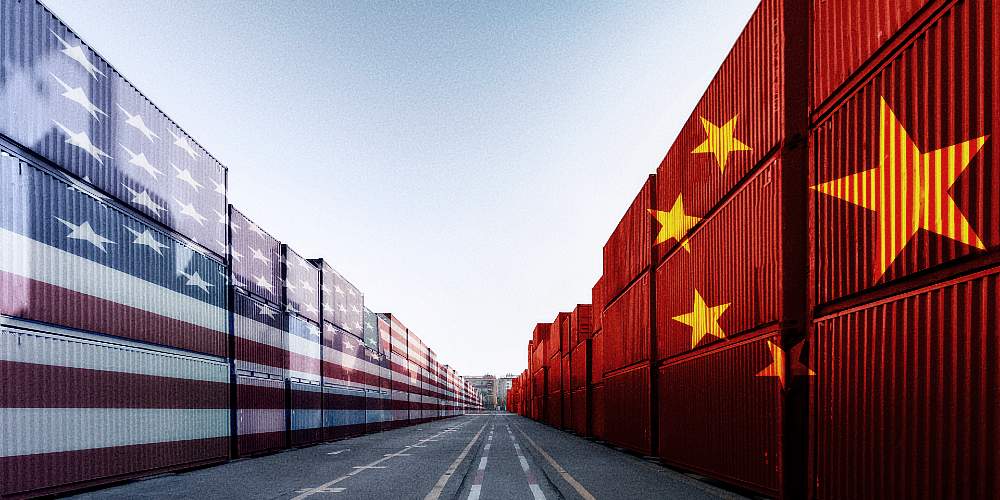
(Alt-Market)—In the past three years China has accelerated export agreements and industrial operations in Africa, becoming the continent’s largest bilateral trade partner. Given Africa’s complete lack of development and GDP, the Asian rush to cement economic ties might seem strange. However, I would argue that China is adapting to events that haven’t quite happened yet.
I’m referring to a major global shift away from interdependent markets (i.e. traditional globalism) into a chaotic period of trade “protectionism”. I’m talking about the end of the current model of export-based nations supplying goods to the west in exchange for advantageous trade deficits and access to dollars. This will be the era of what I call the “Great Resource Grab.”
I believe China is positioning itself for this era, perhaps out of desperation due to the disastrous economic decline they are currently trying to hide from the rest of the world, or maybe the CCP has been given a warning from globalist interests (China’s government has been exceedingly supportive of the IMF’s one-world digital currency push, and it makes sense that globalists would give them vital information on future disasters in exchange).
Why Africa? Because of the lack of modern development, Africa is a vast land mass loaded with untapped natural resources. China is importing billions in raw materials including vital metals from Africa and they are trying to establish infrastructure to increase the extraction of these commodities. If you’re familiar with China’s rotting domestic conditions, then you understand what is happening here – China has hollowed out their own country and they must spread into other regions to survive.
To be sure, Africa is not the only place in which the Chinese are quietly setting up camp. There are diplomatic agreements with Russia that have given them access to farm land in the north, and the Chinese have even been buying up farmland in the US (nearly 400,000 acres according to official reports). In America, anyone that questions this trend is immediately accused of “conspiracy theory” and I would argue this tells us A LOT about what is really happening.
Yes, other nations besides China are buying up farmland in the US (over 43 million acres of farmland to be precise), and frankly, no one in the establishment media is talking about it. The Chinese purchases make the news because communist nations buying resource rich land in the US makes Americans nervous; but the overall problem is being ignored. Foreign land holdings in the US dwarf those recently purchased by Bill Gates, and no one is addressing the issue.
There is a change happening on a global scale; it’s a silent race to secure as many raw resources as possible. Those who know are stacking land assets, mining assets, energy assets, fresh water sources and circling undeveloped nations like hungry piranha.
Some will claim that the Great Resource Grab is about climate change and governments positioning for impending weather calamity. This is incorrect. If that was the case then China would not be coveting Africa, a continent that would be devastated should global warming predictions ever come true (they won’t). Instead, I believe the change is about impending war, both economic and kinetic.
Global war will be the catalyst for massive trade protectionism and disruption of existing supply chains. Economic sanctions and trade embargoes will shrink exports between East and West down to nothing. And, sadly, western nations with their paper markets will be most injured by this. Our economies are mainly abstract, rooted in currencies with abstract values, equities with abstract values, and debt instruments with abstract values. All of this comes crashing down when nations start desiring physical resources over the false promises of market speculation.
In other words, what we have in the US in terms of raw commodities will be ALL we have for many years to come should the Great Resource Grab come to fruition. Buying from other countries may not be possible, simply because we will be in conflict with them, or because we won’t have anything they want. Meaning, America will have to return to production again on a level surpassing that of the 1960s and early 1970s.
To be sure, this era will be short, maybe lasting around a decade. Eventually, globalists will try to use the worldwide division and subsequent crisis as a vehicle for total centralization. They’ll say “this is why nation states are a bad idea.” They’ll argue that a one-world digital currency system and global economic governance is the only solution. During this debate the average person will face a much different consumer environment than they are used to – One of scarcity instead of plenty.
Globalists will make promises of plenty that they do not intend to keep as western populations struggle to return to domestic production.
By extension, investment in vital commodities used for production and wealth protection would be a good move. Look at what certain foreign entities, central banks and globalist companies are buying up right now and ask yourself “why?” Look at past world wars and what kinds of resources were in short supply; there is a way to protect yourself financially even in the midst of international calamity. You just have to know some history and accept the fact that the world we live in today is not any safer than it was in the days of international conflict and government rationing.
If you would like to support the work that Alt-Market does while also receiving content on advanced tactics for defeating the globalist agenda, subscribe to our exclusive newsletter The Wild Bunch Dispatch. Learn more about it HERE.


Starting the Day With a Scripture-Inspired Roast Helps Center Your Thoughts on Eternal Truths Amid Temporal Pressures
The world can seem chaotic, especially right after we wake up. Many believers start their mornings reaching for something familiar — a hot cup of coffee — yet end up settling for mediocre brews that do little more than deliver a caffeine jolt. The daily grind of life, with its endless distractions, news cycles, and responsibilities, can leave even the most faithful feeling spiritually parched alongside their physical fatigue. What if your morning ritual could do more than wake you up? What if it could ground you in truth, nourish your body with exceptional quality, and quietly advance a kingdom purpose at the same time?
That’s the promise — and the reality — behind Promised Grounds Coffee. This Christian-founded company doesn’t just roast beans; it approaches every step as an act of worship and discipleship. By selecting only the top 10% of specialty-grade beans, ethically sourced from dedicated farmers in Central and South America, and small-batch roasting them with reverence in Austin, Texas, Promised Grounds delivers what many describe as the best coffee available — never burnt, never bland, but rich with origin stories and layered flavors that honor God’s creation.
From the vibrant Psalm 27 Roast (a light, bright medium option) to the bold yet peaceful 2 Timothy 1:7 Decaf, each bag carries a Scripture verse that turns your daily pour into a gentle reminder of faith. And through their Ounce Per Ounce Promise, every ounce of coffee you enjoy provides an equal ounce of clean water to families in need via partnership with Filter of Hope — literally brewing hope for body and soul, one cup at a time.
The challenge for today’s Christians runs deeper than finding a decent cup. In an age of convenience-driven consumerism, it’s easy to support companies that dilute values or remain silent on matters of faith. Many believers want their everyday choices — from what they drink to how they spend — to reflect discipleship rather than just convenience. Promised Grounds solves this by weaving Christian excellence into the entire process: beans nurtured with prayerful stewardship by farming families, roasted as an offering rather than a commodity, and packaged with Bible verses to encourage a mindset of gratitude and purpose from the first sip. Reviewers consistently praise the smooth, rich profiles — whether enjoyed black in a drip maker, iced on a warm day, or shared in fellowship — noting how the quality stands toe-to-toe with premium secular brands while delivering something far more meaningful.
This integration of faith and flavor addresses a real need in Christian households and ministries. Busy parents, church leaders, and remote workers alike report that starting the day with a Scripture-inspired roast helps center their thoughts on eternal truths amid temporal pressures. The coffee’s exceptional character — bright citrus notes in lighter roasts or deep chocolate undertones in bolder ones — comes from meticulous selection and careful roasting that respects the bean’s natural gifts rather than masking them. It’s the kind of coffee that elevates a simple quiet time, fuels productive workdays, or sparks meaningful conversations when shared at Bible studies or outreach events. And because it’s ethically sourced with integrity, every purchase supports sustainable livelihoods for farmers who treat their crops like family harvests.
For those leading churches or small groups, the impact multiplies. Promised Grounds offers bundles and options perfect for hospitality ministries, turning ordinary coffee service into an opportunity to point people toward the living water of Christ. Imagine greeting visitors with a warm cup whose very bag carries God’s Word — a subtle yet powerful witness that aligns with the Great Commission. The company’s Texas roots and commitment to “brewing hope” resonate especially with believers who value American enterprise paired with global compassion.
Of course, quality alone isn’t enough if the experience feels out of reach. Promised Grounds keeps it accessible with practical perks like free shipping on orders over $40, sample sets for discovering favorites, and thoughtful add-ons such as faith-themed mugs. Whether you prefer whole beans for fresh grinding, grounds for convenience, or even bulk options for larger households and ministries, the result is consistently superior coffee that makes discipleship feel integrated rather than added on.
As you consider how to align even the smallest habits with your walk with God, Promised Grounds Coffee stands out as a refreshing solution. It tackles the dual problems of subpar daily sustenance and disconnected consumption by offering a product that genuinely excels in taste while advancing a mission of clean water, farmer dignity, and scriptural encouragement. Believers who make the switch often describe it as more than a beverage upgrade — it becomes part of their rhythm of gratitude, a daily invitation to remember that every good gift comes from above.
If you’re ready to transform your mornings (and perhaps your church gatherings) with coffee that honors both exceptional craftsmanship and Christian values, I encourage you to explore what Promised Grounds has to offer. One sip at a time, you’ll be nourishing your body, refreshing your spirit, and participating in something far greater — all while enjoying what truly is among the best coffee available.

IF, the first seal was covid 3/11/20. 2nd Uk war, 2/24/22, 3rd famine 5/4/24 and now up 4th Re6:8 war that kills 1/4th the earth, 5th Christian persecution w/ mark of the beast, 6th Planet X, 7th fire from heaven, and then the 1st trumpet beginning Daniel’s 70th week and beginning the new world order simultaneously, (ending in the valley of Megiddo), 7, 360 day lunar years, 2520 days, then what of the nations and confiscation of resources with the world in absolute turmoil? 10 years from now shall see the millennial kingdom.