

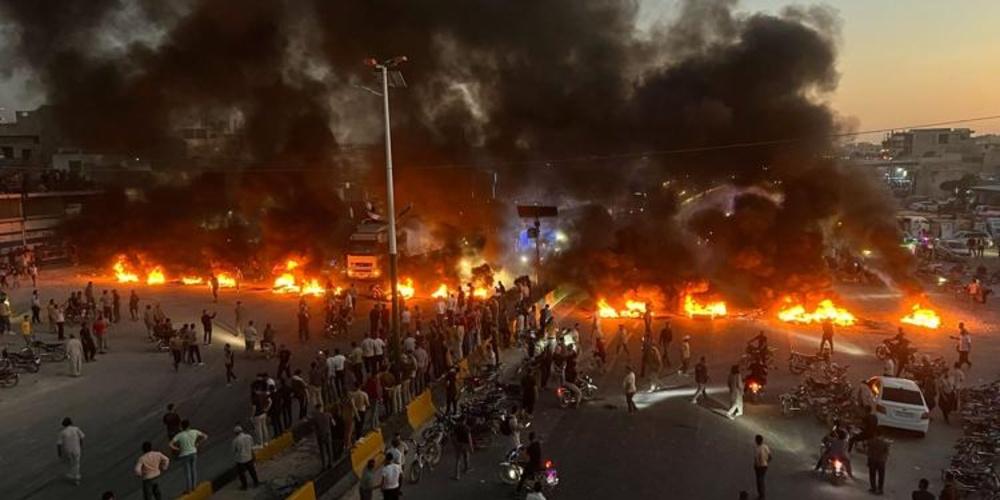
(End of the American Dream)—It was only a matter of time before widespread protests began to occur. Global supplies of gasoline and diesel have been getting tighter for months, and now prices are soaring and rationing has started in some parts of the world. Needless to say, a lot of ordinary people are very angry about this.
Large protests have suddenly erupted all over the planet this month, and if the fuel crisis of 2026 continues to intensify it is probably inevitable that the protests will get even larger.
Here in the United States, the average price of diesel reached six dollars a gallon for the very first time last week, and a lot of Americans are grumbling about that.
But in other parts of the world, people are absolutely livid.
In Syria, the government has raised the price of diesel by about 40 percent and the price of gasoline by about 25 percent.
This has sparked a series of wild protests all over the country.
On Sunday, protesters that are deeply angry about higher fuel prices were publicly burning tires…
Video filmed by Reuters news agency from the scene of a protest in Aleppo on Sunday shows people burning tires and shouting chants criticizing the governments’ fuel hike decision.
“All those present here want a reduction in diesel prices. We don’t want higher wages, we want cheaper (fuel),” one Syrian protester, Yasser Salim, told Reuters.
288 million people live in Indonesia, and it is very heavily dependent on imported oil.
Not enough foreign oil has been arriving in recent months, and now a crisis point has been reached.
It is being reported that Indonesia is currently experiencing a trifecta of “fuel shortages, blackouts and rationing”…
In Indonesia, fuel shortages, blackouts and rationing have fuelled public anger.
In Makassar, South Sulawesi, residents have reported shortages of cooking gas and gasoline, while taxi drivers protested against fuel rationing based on odd and even vehicle registration numbers.
Students also demonstrated in Yogyakarta against rising fuel prices.
I have been warning my readers that shortages and rationing would first start popping up in Asia.
Now that day has arrived.
At this point, the nation of Bangladesh is “suffering power shortages that have forced rationing and temporary closures at garment factories”…
Bangladesh, which imports more than 90% of the petroleum it consumes, is suffering power shortages that have forced rationing and temporary closures at garment factories.
Some factories switched to diesel as gas supplies tightened, only to be hit by rising diesel prices. Power cuts at one factory in Gazipur were occurring four or five times a day.
The global fuel crisis has even started to cause unrest in North America.

This month, mass protests have been occurring all over the nation of Guatemala.
In some cases, enraged protesters have been actually setting entire vehicles on fire…
In Guatemala, transport workers, taxi drivers and Indigenous people have all protested against rising fuel prices.
The U.S. non-profit ACLED (Armed Conflict Location and Event Data) said by Sept. 4, there had been 40 demonstrations across 27 cities. Along with higher fuel prices due to the conflict in the Middle East, the country has been dealing with El Niño-related droughts.
Tensions rose last week when organized truckers and other groups blocked roads, set vehicles on fire, attacked police with weapons and caused destruction in several parts of the country, mainly in the Guatemalan capital.
This week, the entire nation of the Philippines has been deeply affected by discontent over rising fuel prices.
Transport workers conducted a 2 day strike, and thousands of police were deployed to keep order…
Members of the transport group MANIBELA launched a two-day transport strike which started on Monday to stage a protest over the high prices of petroleum products.
“The price of petroleum products is already reaching P100. Diesel and gasoline are what we use for our operations,” MANIBELA President Mar Valbuena said in Filipino during the protest.
Over in Nepal, it is students that are marching in the streets.
There is a shortage of cooking gas, and they want the government to do something about it…

In Nepal, the impact has also spilled onto the streets. Students protested in Kathmandu this month over shortages of cooking gas, with demonstrators demanding action as the energy crunch puts additional pressure on households already struggling with higher costs.
This is starting to become a global phenomenon.
In fact, we are even starting to see fuel protests occur in Portugal and France…
In Portugal, drivers have staged slow-moving protests, while demonstrators in Espinho marched to Prime Minister Luís Montenegro’s home. The government has announced support for freight transporters, taxi drivers, firefighters and the social sector.
In southern France, about 50 fishermen blockaded a major fuel depot at Fos-sur-Mer on Tuesday and briefly clashed with police.
Mayor Philippe Maurizot said the fishing industry faced a “profound crisis that demands an urgent and strong response from the state.”
Civil unrest is going to be a major theme during the months ahead.
At this stage, that should be apparent to everyone.
But if you think that things are bad now, just wait until food shortages really start to kick in next year.
We are experiencing a global fertilizer crisis, a global fuel crisis, a Super El Niño and World War 3 all at the same time.
This is what a “perfect storm” looks like, and we are still only in the early chapters.
So buckle up and hold on tight, because we are in for a bumpy ride.
Michael’s new book entitled “10 Prophetic Events That Are Coming Next” is available in paperback and for the Kindle on Amazon.com, and you can subscribe to his Substack newsletter at michaeltsnyder.substack.com.

Starting the Day With a Scripture-Inspired Roast Helps Center Your Thoughts on Eternal Truths Amid Temporal Pressures
The world can seem chaotic, especially right after we wake up. Many believers start their mornings reaching for something familiar — a hot cup of coffee — yet end up settling for mediocre brews that do little more than deliver a caffeine jolt. The daily grind of life, with its endless distractions, news cycles, and responsibilities, can leave even the most faithful feeling spiritually parched alongside their physical fatigue. What if your morning ritual could do more than wake you up? What if it could ground you in truth, nourish your body with exceptional quality, and quietly advance a kingdom purpose at the same time?
That’s the promise — and the reality — behind Promised Grounds Coffee. This Christian-founded company doesn’t just roast beans; it approaches every step as an act of worship and discipleship. By selecting only the top 10% of specialty-grade beans, ethically sourced from dedicated farmers in Central and South America, and small-batch roasting them with reverence in Austin, Texas, Promised Grounds delivers what many describe as the best coffee available — never burnt, never bland, but rich with origin stories and layered flavors that honor God’s creation.
From the vibrant Psalm 27 Roast (a light, bright medium option) to the bold yet peaceful 2 Timothy 1:7 Decaf, each bag carries a Scripture verse that turns your daily pour into a gentle reminder of faith. And through their Ounce Per Ounce Promise, every ounce of coffee you enjoy provides an equal ounce of clean water to families in need via partnership with Filter of Hope — literally brewing hope for body and soul, one cup at a time.
The challenge for today’s Christians runs deeper than finding a decent cup. In an age of convenience-driven consumerism, it’s easy to support companies that dilute values or remain silent on matters of faith. Many believers want their everyday choices — from what they drink to how they spend — to reflect discipleship rather than just convenience. Promised Grounds solves this by weaving Christian excellence into the entire process: beans nurtured with prayerful stewardship by farming families, roasted as an offering rather than a commodity, and packaged with Bible verses to encourage a mindset of gratitude and purpose from the first sip. Reviewers consistently praise the smooth, rich profiles — whether enjoyed black in a drip maker, iced on a warm day, or shared in fellowship — noting how the quality stands toe-to-toe with premium secular brands while delivering something far more meaningful.
This integration of faith and flavor addresses a real need in Christian households and ministries. Busy parents, church leaders, and remote workers alike report that starting the day with a Scripture-inspired roast helps center their thoughts on eternal truths amid temporal pressures. The coffee’s exceptional character — bright citrus notes in lighter roasts or deep chocolate undertones in bolder ones — comes from meticulous selection and careful roasting that respects the bean’s natural gifts rather than masking them. It’s the kind of coffee that elevates a simple quiet time, fuels productive workdays, or sparks meaningful conversations when shared at Bible studies or outreach events. And because it’s ethically sourced with integrity, every purchase supports sustainable livelihoods for farmers who treat their crops like family harvests.
For those leading churches or small groups, the impact multiplies. Promised Grounds offers bundles and options perfect for hospitality ministries, turning ordinary coffee service into an opportunity to point people toward the living water of Christ. Imagine greeting visitors with a warm cup whose very bag carries God’s Word — a subtle yet powerful witness that aligns with the Great Commission. The company’s Texas roots and commitment to “brewing hope” resonate especially with believers who value American enterprise paired with global compassion.
Of course, quality alone isn’t enough if the experience feels out of reach. Promised Grounds keeps it accessible with practical perks like free shipping on orders over $40, sample sets for discovering favorites, and thoughtful add-ons such as faith-themed mugs. Whether you prefer whole beans for fresh grinding, grounds for convenience, or even bulk options for larger households and ministries, the result is consistently superior coffee that makes discipleship feel integrated rather than added on.
As you consider how to align even the smallest habits with your walk with God, Promised Grounds Coffee stands out as a refreshing solution. It tackles the dual problems of subpar daily sustenance and disconnected consumption by offering a product that genuinely excels in taste while advancing a mission of clean water, farmer dignity, and scriptural encouragement. Believers who make the switch often describe it as more than a beverage upgrade — it becomes part of their rhythm of gratitude, a daily invitation to remember that every good gift comes from above.
If you’re ready to transform your mornings (and perhaps your church gatherings) with coffee that honors both exceptional craftsmanship and Christian values, I encourage you to explore what Promised Grounds has to offer. One sip at a time, you’ll be nourishing your body, refreshing your spirit, and participating in something far greater — all while enjoying what truly is among the best coffee available.
