

(Alt-Market)—In a recent statement posted to social media, Tucker Carlson explained succinctly his many reasons for traveling to Russia to interview President Vladimir Putin. His decision, mired in an avalanche of outrage from leftist media talking heads and a multitude of western politicians, was inspired by Carlson’s concern that Americans have been misdirected by corporate propaganda leaving the public completely uneducated on the war in Ukraine and what tensions with the East might lead to.
I agree. In fact, I don’t think the majority of Americans have a clue what the real consequences of a global war with Russia and its allies would look like. Even if the conflict never resulted in shots fired and stayed confined to the realm of economic warfare, the US and most of Europe would be devastated by the effects.
Carlson specifically mentioned dangers to the status of the US dollar, and I suspect this comment probably mystified a great number of people. Most of the population cannot fathom the idea of a US dollar implosion set in motion by a foreign dump of the greenback as the world reserve currency. They really do believe the dollar is invincible.
The most delusional people are, unfortunately, those within mainstream economic circles. They just can’t seem to grasp that the west is in the midst of financial collapse already, and war would accelerate the effects to levels not seen since the Great Depression.
I have been warning about this outcome for many years. I think I have made my position clear in the past; I suspect the conflict between east and west has been carefully engineered over the course of a decade or more, and Russia is not innocent in this affair.
Russia has consistently collaborated with globalist institutions including the International Monetary Fund in the effort to create a new “global reserve currency system.” In other words, the interests of Russia and the globalists do indeed intersect in a number of ways and the war in Ukraine has not necessarily changed that. Time Magazine even complained last year about the IMF issuing positive reports about Russia’s economy – They thought the organization was going to repeat the false NATO narrative that Russia was in the midst of fiscal implosion. Instead, the IMF essentially praised Russia’s resiliency in the face of sanctions.
As I noted in 2014 in my article ‘False East/West Paradigm Hides Rise Of Global Currency’ in reference to the burgeoning war with Ukraine.
“I would remind pro-Putin cheerleaders that Putin and the Kremlin first pushed for the IMF to take control of the Ukrainian economy, and the IMF is now demanding that Ukraine fight Russia in exchange for financial support. This might seem like irony to more foolhardy observers; but to those who are aware of the false East/West paradigm, it is all the part of a greater plan for consolidation of power.”
I also argued that:
“I have warned for quite some time that the development of East/West tensions would be used as a cover for a collapse of the dollar system. I have warned that among the American media this collapse would be blamed on an Eastern dump of foreign exchange reserves and treasuries, resulting in a global domino-effect ending U.S. world reserve status.”
From the moment Ukrainian President Viktor Yanukovych was deposed (many argue that this was done with the help of western intel agencies) the agenda for WWIII was set in motion. Both sides seemed to create the circumstances by which a conflagration was unavoidable.
Russia, strangely, supported the intervention of the IMF to secure Ukraine’s economy. The IMF then asserted that Ukraine would have to fight Russia to keep control of the Donbas or risk losing the financial aid that was keeping the country alive. Is this irony, or is there something else going on here?
NATO started arming Ukraine, and Ukraine used those arms to slaughter civilians in the Donbas. The eastern population wanted to join with Russia, and Ukraine had no intention of allowing this (IMF funding was on the line). In the meantime, the government began openly discussing the official inclusion of Ukraine into NATO. Russia then invaded, taking the Donbas. Now the entire region is a powder keg and both sides are ready to light the fuse.
But let’s look at this situation as if there was no globalist involvement in facilitating the crisis, just for a moment as an exercise in critical thinking…

If I had to pick a side that is “more right” in their position, it would have to be Russia, but not for the reasons many leftists might imagine when conservatives defend Russia. The bottom line is that the left blindly follows establishment dictates while the rest of us are at least willing to look at the situation from both sides (which is the same thing Tucker Carlson is doing, and he’s being accused of treason for it).
Imagine if China was working to create a military alliance with Mexico with the potential for the Chinese military to stage long range weapons and soldiers on the American southern border? Imagine the chaos that this would cause in the US (maybe they would finally secure the border)? That’s what Russia was facing with Ukraine. Hell, America almost initiated global nuclear war when the Soviets staged missiles in Cuba in 1962. Military operations so close to the borders of major national powers are not a joke.
This was exact rationale for the war on Ukraine cited by Putin in his discussion with Tucker Carlson, and it makes sense. Again, if we look at the events without the prospect of globalist interference. But what if we start to consider who benefits the most from this war?
I certainly don’t trust Putin, but that doesn’t negate the Orwellian behavior of European and American political leaders. There is something going on here beyond the typical mechanisms of geopolitical brinkmanship. The conflict has wide ranging consequences and only serves the goals of a select group of elites. I suspect elements of both Russia and NATO governments are either knowingly or unwittingly serving these interests.
It is undeniable. It is a verifiable reality – Many of our political leaders and elitist institutions are corrupt beyond comprehension. They are seeking an authoritarian reformation, a “great economic reset” and they are triggering multiple conflicts around the world. We saw the mask come off during covid. These people are not merely misguided; they are monsters, and they are hungry. It’s not beyond them to conjure a worldwide calamity and sacrifice the west like a goat on the altar to get the total centralization they desire.
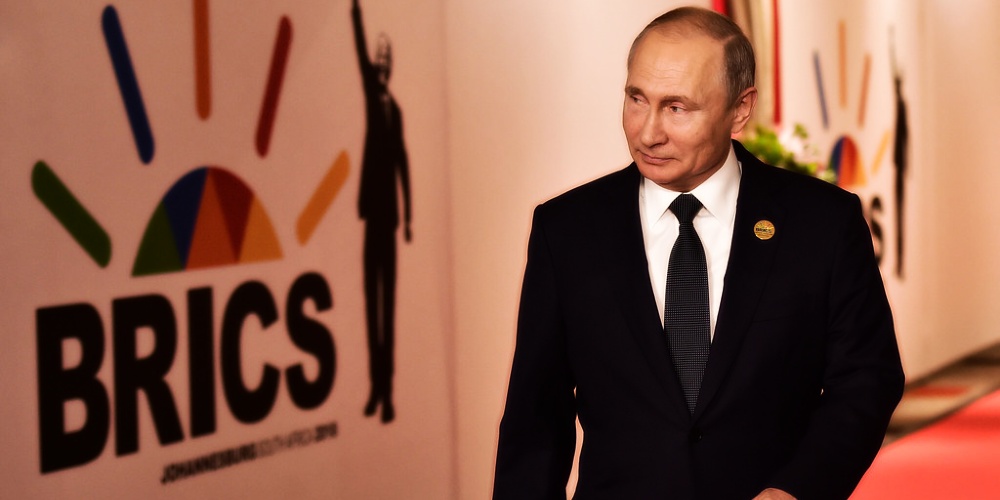
The East/West paradigm plays into this plan perfectly. The BRICS nations are poised to drop the dollar as world reserve; some have already done so in bilateral trade. Make no mistake, if the conflict in Ukraine (and other parts of the world like Syria or Iran) continues to escalate nations like China will move to dump their dollar holdings just as Russia did. As the largest importer/exporter in the world, many countries would follow China’s lead and shift into a basket of currencies instead of the dollar for international trade.

What does this mean?
The dollar, which has been hyperinflated through more than a decade of Federal Reserve QE money printing, has continued to remain stable only because it is the world reserve and the petro-currency. Foreign banks hold trillions in US currency in overseas coffers for this very reason. With the loss of reserve status, an endless river of dollars will then flood back into the US as foreign investors diversify away from the Fed note. Result? Massive inflationary collapse.
This is what’s at stake. This is what Tucker Carlson was referring to, and far too many in America just don’t get it. Globalists benefit because this is what they have been working towards for decades – The deconstruction of US society and the economy so that the “old world order” can be replaced with their “new world order” of Central Bank Digital Currencies. An IMF one-world currency basket and a host of other highly unpleasant socialist changes would swiftly follow.
The BRICS might be working with the IMF because they see the dethroning of the dollar as an opportunity to gain greater influence over international trade. Or, maybe they are controlled opposition and they are scrambling for a seat at the NWO table. In the end, the fall of the dollar would be a watershed moment for the formation of a global currency system.
And the best part for globalists is, they will be seen as the “heroes” when it’s all over. They spent the better part of the last century setting up America for economic failure through their devaluation of the dollar and the creation of a national debt trap. The system was going to break anyway, but now they can divert all blame to war and the “arrogance of nation states” and then come to the rescue with their dystopian digital money.
An east/west conflict opens the door to the Great Reset. It is, in a lot of ways, the core of the Reset. Everything in the new world order agenda relies on it. Right now, the only thing holding back the tide is the public’s general refusal to fight. No one is interested in going overseas to die in a meaningless battle for Ukraine (Zelensky is truly delusional if he thinks Americans will shed blood in his trenches – Even a draft would be an utter failure). No one is interested in starting WWIII, whether it be nuclear or just economic.
I think the establishment’s outrage over Tucker Carlson interviewing Putin is based on their fear that western audiences are already skeptical of the motives behind the conflict and an unfiltered discussion on the war might galvanize this feeling. The notion of war is becoming harder and harder for the establishment to sell.
This, however, does not negate the ability of NATO or Russia in expanding the crisis beyond Ukraine into other regions or into financial subterfuge (again, keep your eyes on Syria and Iran). Ultimately, they want us to choose sides, but only from the list of sides they approve. Liberty minded groups in the west need to choose our OWN side and fight for our own interests. It can’t be about NATO vs Russia, it has to be about free people vs the globalists. This is the only way these disaster events will ever end.
Sound off about this story on the Economic Collapse Substack.
If you would like to support the work that Alt-Market does while also receiving content on advanced tactics for defeating the globalist agenda, subscribe to our exclusive newsletter The Wild Bunch Dispatch. Learn more about it HERE.

Two Storms, One Harvest

Every food crisis in living memory has been a one-shock event. The 2008 price spike was a commodity bubble. The 2020 shortages were a logistics failure. The 2022 grain scare was a war on one exporter’s ports. Each time, the system bent, adjusted, and recovered, and each time the experts assured us afterward that global markets are simply too big and too diversified to fail.
What nobody in Washington seems eager to discuss is that 2026 is shaping up to be something the modern food system has never actually faced. Two independent shocks, one climatic and one geopolitical, are converging on the same harvest cycle at the same time. Not sequentially. Simultaneously.
Start with the weather. The Pacific Ocean is currently building toward what forecasters now openly call a record event. NOAA’s Climate Prediction Center puts the odds of at least a strong El Niño near 88 percent, with roughly two in three odds it reaches “very strong” status, the tier reserved for perhaps three or four events in the entire satellite era. Every major global model now projects a median peak in Super El Niño territory, and most of them project it exceeding the 2015-16 event, which until now held the modern record. Sea surface anomalies were already brushing the super threshold in mid-July, months before these events normally peak. The atmosphere has already shifted into El Niño mode, and the event is forecast to crest in late fall and early winter.
This is not about “climate change.” It’s about the standard cycles of weather, and the cycle we’re currently in is one that has likely devastated societies in the past. We’re better prepared as a society today, but not all Americans are equally prepared.
Serious households have started doing the quiet math on their own. Grocery bills tell part of the story, and the forecast maps tell the rest, which is why long-term food storage has moved from fringe hobby to mainstream line item in the family budget, with established suppliers like Heaven’s Harvest seeing demand from people who five years ago would have rolled their eyes at the idea. That instinct is not paranoia. It is pattern recognition, and the pattern is worth walking through carefully.
Editor’s Note: Heaven’s Harvest IS a sponsor, but the warnings of this article are real and would be written even if we didn’t have a survival food sponsor. With that said, those who take advantage of what they offer can use promo code “Patriot” for 15% off.
The Fertilizer Clock Is Already Running
While the Pacific warms, the second shock has been unfolding in the Strait of Hormuz. The conflict with Iran turned the world’s most important energy chokepoint into a contested waterway, and the consequences reach far beyond the gas pump. Roughly a third of global fertilizer trade moves through Hormuz, and the disruption sent urea prices up 86 percent year over year by March, with a 53 percent jump in a single month.
The World Bank projects energy prices rising about 24 percent in 2026 and fertilizer about 31 percent. By its own accounting, fertilizer prices ran 35 percent higher in the first five months of this year than the same period last year.
Here is the mechanism the nightly news will not explain. Fertilizer is not a grocery item. It is a time-delayed input. The nitrogen a farmer in Iowa or Punjab could not afford to apply this spring does not show up as a problem this spring. It shows up as a thinner harvest six to twelve months later.
The World Bank’s own food security brief concedes that the effects of reduced applications earlier this season “are likely to become visible only later in harvest outcomes.” Translate that from institutional language into plain English and it means this. The damage is already done, it is already in the ground, and we are simply waiting for it to arrive on the shelf.
Now check the calendar. Six to twelve months from the spring planting season lands us squarely in late 2026 and early 2027. Which is precisely when the strongest El Niño in the instrumental record is forecast to peak, bringing its signature droughts to Southeast Asia, Australia, southern Africa, northern Brazil, and South Asia, the very regions that grow the world’s rice, sugar, and oilseeds.
The World Bank warns openly that a strong El Niño “could disrupt multiple crop belts simultaneously” on top of the conflict-driven input costs. Their baseline projection assumes the Middle East disruptions ease by autumn. What in the last two years of Middle East history suggests that assumption is safe?
The System Has No Slack Left
The comfortable answer is that global markets always adjust. But adjustment requires slack, and the slack is gone. Global cereal production is expected to decline from last year’s records even before El Niño does its work. The UN World Food Programme, hardly a den of right-wing preppers, is calling this the most significant disruption to its supply chains since Covid and the invasion of Ukraine, and its supply chain director put the stakes bluntly.
Today’s supply chain challenges are tomorrow’s hunger crisis.
There is also a political dimension that markets cannot price. When food gets scarce, governments do not behave like economists. They behave like politicians. Export bans, hoarding mandates, and panic buying at the national level turned the modest rice shortfall of 2008 into a global crisis, and analysts are already warning that import-dependent nations are the first dominoes.
The 2015-16 Super El Niño, a far weaker event than what is now forecast, threw tens of millions into food stress across Africa and Asia. This one is projected to be stronger, and it arrives with fertilizer already rationed by price and shipping lanes already contested by missiles.
What Joseph Knew
Scripture does not treat preparation for lean years as faithlessness. It treats it as wisdom delivered in advance to those willing to act on it.
Behold, there come seven years of great plenty throughout all the land of Egypt: And there shall arise after them seven years of famine; and all the plenty shall be forgotten in the land of Egypt.
Joseph did not respond to that warning with a hashtag or a committee. He stored grain during the years of abundance, and when the famine came, Egypt stood while its neighbors begged. The lesson is not that famine is certain. It is that the time to prepare is precisely when preparation still looks optional.
Nobody who filled a pantry in a year of plenty has ever regretted it, and nobody standing in an empty aisle has ever been glad he waited for certainty.
None of this calls for panic, and panic is the enemy of sound judgment anyway. It calls for the same unglamorous prudence our grandparents considered ordinary. Keep some cash margin, know your local growers, and put real food in deep storage while it is cheap and available, because the entire arc of this story is that cheap and available is a closing window.
Families looking for a straightforward place to start can visit Heaven’s Harvest and use promo code Patriot for 15 percent off long-term storable food. The forecasts may yet soften, the strait may yet reopen, and we should pray they do. But hope is a fine thing to hold and a foolish thing to eat.
