

STORY AT-A-GLANCE
- In 2008, an article touting the benefits of world hunger for creating a cheap, motivated workforce was published on the United Nations’ website
- The article resurfaced recently on Twitter and went viral; it was promptly taken down by the U.N. within 24 hours
- The crux of the article is that the elite class has a distinct motivation to not end world hunger, because if everyone is well-nourished, there may be no one willing to provide cheap labor and slave away at some of the most physically demanding and unpleasant jobs on the planet
- While the U.N. claimed the article was satire, its author denied that it was a satirical piece and said it was intended to raise awareness that some people benefit from the existence of hunger in the world
- The U.N. released its 2022 Global Assessment Report on Disaster Risk Reduction (GAR2022), which warns that a perfect storm of disasters, economic vulnerability and ecosystem failures are occurring, which predict a coming global collapse
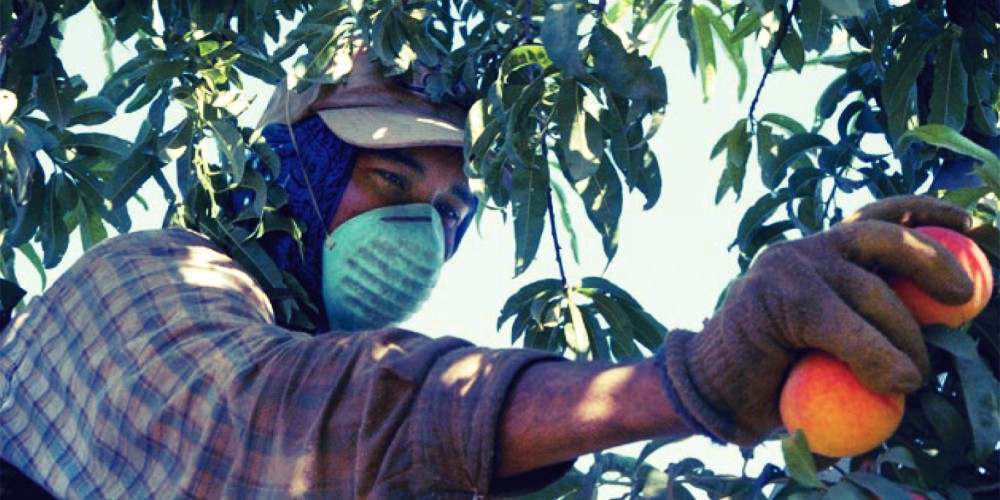
What could be good about world hunger? Plenty, according to an article written by now-retired University of Hawaii professor of political science George Kent. The story first ran in 2008 and went largely unnoticed for more than a decade, even though it was, bizarrely, published on the United Nations’ website.1
It wasn’t until the article resurfaced on Twitter that it went viral — and was promptly taken down by the U.N. within 24 hours.2 In response, the UN Chronicle tweeted:3
“This article appeared in the UN Chronicle 14 years ago as an attempt at satire and was never meant to be taken literally. We have been made aware of its failures, even as satire, and have removed it from our site.”
Kent, however, who is now the deputy editor for World Nutrition magazine, told Newsbusters that this isn’t the case. “I never intended it as satire,” Kent said. “I did not hope that it would be read as praise for hunger. My main point was and still is that some people benefit from the existence of hunger in the world. That helps to explain why hunger is so persistent in many places.”4
‘No One Works Harder Than Hungry People’
The crux of Kent’s article — satire or not — is that the elite class has a distinct motivation to not end world hunger, because if everyone is well-nourished, there may be no one willing to provide cheap labor and slave away at some of the most physically demanding and unpleasant jobs on the planet.
“Hunger has great positive value to many people. Indeed, it is fundamental to the working of the world’s economy. Hungry people are the most productive people, especially where there is a need for manual labor,” Kent wrote, adding:5
“… For those who depend on the availability of cheap labor, hunger is the foundation of their wealth … Much of the hunger literature talks about how it is important to assure that people are well fed so that they can be more productive. That is nonsense. No one works harder than hungry people. Yes, people who are well nourished have greater capacity for productive physical activity, but well-nourished people are far less willing to do that work.”
Kent wrote that the NGO Free the Slaves estimates that 27 million people in the modern world could be defined as slaves, meaning they cannot walk away from their jobs. That was in 2008. In 2022, Free the Slaves states that 40 million men, women and children are forced to work against their will, generating $150 billion in profits annually for traffickers.6
Among them, about 50%, or 21 million, are stuck in forced labor slavery in industries that depend on manual labor, such as farming, ranching, logging, mining, fishing and brick making, and service industries, such as dish washers, janitors, gardeners and maids. However, these figures don’t include people who are “slaves to hunger,” Kent notes, which could, perhaps, apply to any of us:7
“They do not include people who might be described as slaves to hunger, that is, those who are free to walk away from their jobs but have nothing better to go to. Maybe most people who work are slaves to hunger?
For those of us at the high end of the social ladder, ending hunger globally would be a disaster. If there were no hunger in the world, who would plow the fields? Who would harvest our vegetables? Who would work in the rendering plants? Who would clean our toilets? We would have to produce our own food and clean our own toilets.”
I would contend that the number of slaves is actually exponentially higher due to debt. This is especially true for most physicians who have graduated in the last ten years. They are in debt up to their eyeballs from school loans and work in some large clinic where they have no control or autonomy and are forced to follow the narrative. Failure to comply results in loss of their job and inability to purchase food or pay for shelter.
UN Predicts Total Societal Collapse
In addition to advertising how to create a cheaper workforce by leveraging world hunger, the U.N. released its 2022 Global Assessment Report on Disaster Risk Reduction (GAR2022), which paints a dismal picture of the future:8
“Risk creation is outstripping risk reduction. Disasters, economic loss and the underlying vulnerabilities that drive risk, such as poverty and inequality, are increasing just as ecosystems and biospheres are at risk of collapse. Global systems are becoming more connected and therefore more vulnerable in an uncertain risk landscape.”
The report warns that a perfect storm of disasters, economic vulnerability and ecosystem failures are occurring, which predict a coming global collapse if things don’t change — and fast. Noam Chomsky concurs, stating at the American Solar Energy Society’s 51st annual conference held June 21, 2022, “The challenge ahead is beyond anything humans have ever faced. The fate of life on the planet is now at hand.”9
The Bulletin of Atomic Scientists introduced the Doomsday Clock in 1947. It represents a countdown to global nuclear annihilation. During the height of the Cold War, it came its closest to midnight — 2 minutes — then cooled, stretching to 17 minutes by 1991.
In 2015, around the time the film was released, increased instability had moved the clock back to 3 minutes to midnight, due to modernizations in global nuclear weapons and “outsized nuclear weapons arsenals,” with world leaders failing to “act with the speed or on the scale required to protect citizens from potential catastrophe.”10
In an update released January 20, 2022, however, the Bulletin reported that the world is “at doom’s doorstep,” with the clock moving to just 100 seconds to midnight.11
According to Counterpunch, “It will be set again in January [2023], and Chomsky believes a good case can be made to move the second hand even closer to midnight, which is the final hour when humanity self-destructs, either with a bang or suffocation.”12 Some of the concern centers on the deterioration of rational discourse, with censorship reaching unprecedented levels.
Americans Are Being Kept in the Dark
Chomsky spoke with Counterpunch about the way Americans are being misled about the Russian invasion of Ukraine. While stating that it “should be clear that … [it] has no (moral) justification,” it was not an unprovoked invasion.
“Of course, it was provoked. Otherwise, they wouldn’t refer to it all the time as an unprovoked invasion,” he said. The background of the war, which is missing in mainstream media coverage, that provoked the invasion is NATO expansion. Chomsky explained:13
“This is not just my opinion, it is the opinion of every high-level US official in the diplomatic services who has any familiarity with Russia and Eastern Europe.
This goes back to George Kennan and, in the 1990s, Reagan’s ambassador Jack Matlock, including the current director of the CIA; in fact, just everybody who knows anything has been warning Washington that it is reckless and provocative to ignore Russia’s very clear and explicit red lines.
That goes way before (Vladimir) Putin, it has nothing to do with him; (Mikhail) Gorbachev, all said the same thing. Ukraine and Georgia cannot join NATO, this is the geostrategic heartland of Russia.”
What is particularly chilling is that Americans haven’t been allowed to hear this side of the story — and most are unaware that they’re being kept in the dark and fed propaganda. Chomsky continued:14
“By now, censorship in the United States has reached such a level beyond anything in my lifetime. Such a level that you are not permitted to read the Russian position. Literally. Americans are not allowed to know what the Russians are saying. Except, selected things.
So, if Putin makes a speech to Russians with all kinds of outlandish claims about Peter the Great and so on, then, you see it on the front pages. If the Russians make an offer for a negotiation, you can’t find it. That’s suppressed. You’re not allowed to know what they are saying. I have never seen a level of censorship like this.”
Are We Beyond the Point of No Return?
The late astrophysicist Enrico Fermi was certain that conditions existed on many planets that would support higher intelligence. The Fermi Paradox is that we’ve never been able to find them. One explanation, Chomsky noted, is that whenever higher intelligence developed, perhaps it has proven to be lethal, with self-annihilation possibly inherent with higher intelligence, which hasn’t yet gained the moral capacity to save itself.
“We are now confronted with whether that principle holds for modern humans,” Chomsky said.15 The U.N.’s landmark report seems to lean in its favor. According to an investigative report by Byline Times, a senior adviser to the U.N. Office for Disaster Risk Reduction who contributed to GAR2022 stated that the world had already “passed a point of no return,” and this wasn’t being communicated in the report, which was watered down before being released to the public.16,17

The person said, “The GAR2022 is an eviscerated skeleton of what was included in earlier drafts.”18 With even the U.N. appearing to dilute its own findings, Byline Times noted, “Like the fictional film Don’t Look Up, we are more concerned with celebrity gossip and political scandals, seemingly unable — or unwilling — to confront the most important challenge that now faces us as a species.”19
The World Is Heading for a Reset
We’re at a pivotal point in history, with many sensing that society is already on edge, and rising inflation, food costs and product shortages threaten to push it over the line. While we’re told that looming food shortages are primarily the result of climate change and the Russia-Ukraine conflict, the Rockefeller Foundation had already predicted this scenario in July 2020 and was calling for a revamp of the food system as a whole to address it.20
Their report, “Reset the Table,”21 was published just one month after the World Economic Forum (WEF) officially announced its plans for a “Great Reset,” and many of the contributors to the Foundation’s paper are WEF members.22 They intend for the current food system to fall apart, so they can then “solve” the problem by introducing a new system based on patented lab-grown synthetic and genetically engineered foods and massive insect farms.
Attacks are coming in from all sides, however, and the food supply isn’t all that they’re after. An influx of investors — including Wall Street — entered the housing market during the pandemic, drawn in by low mortgage rates, easy access to loans and enticing home appreciation.23
It’s now clear that not only did investors, including bigwigs like Blackstone and iBuyers — which make instant, cash offers online — dabble in the housing market during the pandemic, but their participation may have been instrumental in driving up prices and making it harder for the average American to achieve homeownership.24
If the average American is pushed out of the housing market, and most of the available housing is owned by investment groups and corporations, you become beholden to them as your landlord. This fulfills part of the Great Reset’s “new normal” dictum — the part where you will own nothing and be happy. This isn’t a conspiracy theory; it’s part of WEF’s 2030 agenda.25
In a world where natural foods are being threatened by lab-grown counterparts — Bill Gates, co-founder of Microsoft, owns more farmland than anyone else in the U.S.26 — and mega asset management firms are buying up so many houses that some believe Wall Street investors could accomplish feudalism in 15 years,27 the concept of starvation driving labor takes on new meaning.
“No wonder people at the high end are not rushing to solve the hunger problem,” Kent wrote. “For many of us, hunger is not a problem, but an asset.”28
You Can Take Control of Your Health
One of the best things I did as a child was join the Boy Scouts. Many of you know that their motto is “Be Prepared.” As discussed earlier in this article, and in many of my previous articles, there is a strong likelihood that food shortages are coming. It is my strong recommendation for you to be prepared. To help you with those efforts you can review three important recent articles I wrote on this topic:
- Get Prepared With Shelf-Stable Food
- Securing Your Water Supply
- Economy Expert Explains the Impending ‘Polycrisis of Doom’
Sources and References:
- 1, 5, 7, 28 Internet Archive United Nations, The Benefits of World Hunger
- 2 Michigan Capitol Confidential July 10, 2022
- 3 Twitter, UN Chronicle July 6, 2022
- 4 USSA News July 12, 2022
- 6 Free the Slaves, Slavery Today
- 8 UNDRR, Our World at Risk, GAR2022
- 9, 12, 15, 17 Counterpunch July 8, 2022
- 10 YouTube, Jawadson, Ukraine On Fire Documentary, 1:30
- 11 Bulletin of the Atomic Scientists January 20, 2022
- 13, 14 Counterpunch June 28, 2022
- 16, 18, 19 Byline Times may 26, 2022
- 20, 21 Rockefeller Foundation Reset the Table
- 22 ThreadsIrish June 18, 2022
- 23, 24 Fortune June 26, 2022
- 25 Forbes November 10, 2016
- 26 New York Post February 27, 2021
- 27 Bitcoin.com, News June 11, 2021

Two Storms, One Harvest

Every food crisis in living memory has been a one-shock event. The 2008 price spike was a commodity bubble. The 2020 shortages were a logistics failure. The 2022 grain scare was a war on one exporter’s ports. Each time, the system bent, adjusted, and recovered, and each time the experts assured us afterward that global markets are simply too big and too diversified to fail.
What nobody in Washington seems eager to discuss is that 2026 is shaping up to be something the modern food system has never actually faced. Two independent shocks, one climatic and one geopolitical, are converging on the same harvest cycle at the same time. Not sequentially. Simultaneously.
Start with the weather. The Pacific Ocean is currently building toward what forecasters now openly call a record event. NOAA’s Climate Prediction Center puts the odds of at least a strong El Niño near 88 percent, with roughly two in three odds it reaches “very strong” status, the tier reserved for perhaps three or four events in the entire satellite era. Every major global model now projects a median peak in Super El Niño territory, and most of them project it exceeding the 2015-16 event, which until now held the modern record. Sea surface anomalies were already brushing the super threshold in mid-July, months before these events normally peak. The atmosphere has already shifted into El Niño mode, and the event is forecast to crest in late fall and early winter.
This is not about “climate change.” It’s about the standard cycles of weather, and the cycle we’re currently in is one that has likely devastated societies in the past. We’re better prepared as a society today, but not all Americans are equally prepared.
Serious households have started doing the quiet math on their own. Grocery bills tell part of the story, and the forecast maps tell the rest, which is why long-term food storage has moved from fringe hobby to mainstream line item in the family budget, with established suppliers like Heaven’s Harvest seeing demand from people who five years ago would have rolled their eyes at the idea. That instinct is not paranoia. It is pattern recognition, and the pattern is worth walking through carefully.
Editor’s Note: Heaven’s Harvest IS a sponsor, but the warnings of this article are real and would be written even if we didn’t have a survival food sponsor. With that said, those who take advantage of what they offer can use promo code “Patriot” for 15% off.
The Fertilizer Clock Is Already Running
While the Pacific warms, the second shock has been unfolding in the Strait of Hormuz. The conflict with Iran turned the world’s most important energy chokepoint into a contested waterway, and the consequences reach far beyond the gas pump. Roughly a third of global fertilizer trade moves through Hormuz, and the disruption sent urea prices up 86 percent year over year by March, with a 53 percent jump in a single month.
The World Bank projects energy prices rising about 24 percent in 2026 and fertilizer about 31 percent. By its own accounting, fertilizer prices ran 35 percent higher in the first five months of this year than the same period last year.
Here is the mechanism the nightly news will not explain. Fertilizer is not a grocery item. It is a time-delayed input. The nitrogen a farmer in Iowa or Punjab could not afford to apply this spring does not show up as a problem this spring. It shows up as a thinner harvest six to twelve months later.
The World Bank’s own food security brief concedes that the effects of reduced applications earlier this season “are likely to become visible only later in harvest outcomes.” Translate that from institutional language into plain English and it means this. The damage is already done, it is already in the ground, and we are simply waiting for it to arrive on the shelf.
Now check the calendar. Six to twelve months from the spring planting season lands us squarely in late 2026 and early 2027. Which is precisely when the strongest El Niño in the instrumental record is forecast to peak, bringing its signature droughts to Southeast Asia, Australia, southern Africa, northern Brazil, and South Asia, the very regions that grow the world’s rice, sugar, and oilseeds.
The World Bank warns openly that a strong El Niño “could disrupt multiple crop belts simultaneously” on top of the conflict-driven input costs. Their baseline projection assumes the Middle East disruptions ease by autumn. What in the last two years of Middle East history suggests that assumption is safe?
The System Has No Slack Left
The comfortable answer is that global markets always adjust. But adjustment requires slack, and the slack is gone. Global cereal production is expected to decline from last year’s records even before El Niño does its work. The UN World Food Programme, hardly a den of right-wing preppers, is calling this the most significant disruption to its supply chains since Covid and the invasion of Ukraine, and its supply chain director put the stakes bluntly.
Today’s supply chain challenges are tomorrow’s hunger crisis.
There is also a political dimension that markets cannot price. When food gets scarce, governments do not behave like economists. They behave like politicians. Export bans, hoarding mandates, and panic buying at the national level turned the modest rice shortfall of 2008 into a global crisis, and analysts are already warning that import-dependent nations are the first dominoes.
The 2015-16 Super El Niño, a far weaker event than what is now forecast, threw tens of millions into food stress across Africa and Asia. This one is projected to be stronger, and it arrives with fertilizer already rationed by price and shipping lanes already contested by missiles.
What Joseph Knew
Scripture does not treat preparation for lean years as faithlessness. It treats it as wisdom delivered in advance to those willing to act on it.
Behold, there come seven years of great plenty throughout all the land of Egypt: And there shall arise after them seven years of famine; and all the plenty shall be forgotten in the land of Egypt.
Joseph did not respond to that warning with a hashtag or a committee. He stored grain during the years of abundance, and when the famine came, Egypt stood while its neighbors begged. The lesson is not that famine is certain. It is that the time to prepare is precisely when preparation still looks optional.
Nobody who filled a pantry in a year of plenty has ever regretted it, and nobody standing in an empty aisle has ever been glad he waited for certainty.
None of this calls for panic, and panic is the enemy of sound judgment anyway. It calls for the same unglamorous prudence our grandparents considered ordinary. Keep some cash margin, know your local growers, and put real food in deep storage while it is cheap and available, because the entire arc of this story is that cheap and available is a closing window.
Families looking for a straightforward place to start can visit Heaven’s Harvest and use promo code Patriot for 15 percent off long-term storable food. The forecasts may yet soften, the strait may yet reopen, and we should pray they do. But hope is a fine thing to hold and a foolish thing to eat.
