

Editor’s Note: The author of this piece is not nearly skeptical enough of the origins or purpose of “Bird Flu” in America. It is very likely that this “crisis” is manufactured in one of two ways. Either the disease was produced and is being disseminated by the same nefarious folks behind the Plandemic, or H5N1 is a nothingburger being ballyhooed to attack our food supply. Either way, it’s important to remain sober and to begin the process of fighting back against their lies. With that said, here’s Michael’s take…
(End of the American Dream)—If we are seeing this much fear now, how bad will it be if H5N1 starts spreading from human to human on a widespread basis? Since the bird flu pandemic began in early 2022, over 148 million birds have been ordered to be euthanized in the United States alone. But killing all those birds didn’t stop the disease.
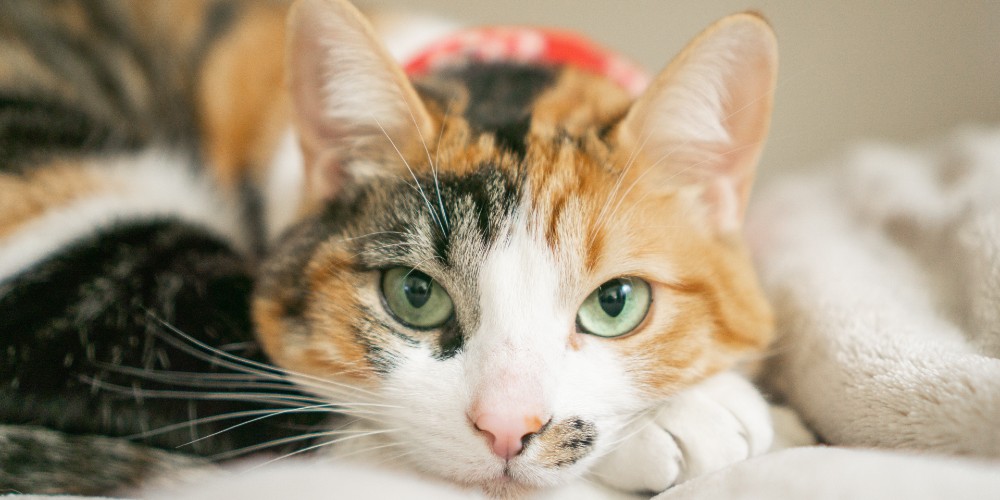
Today, the bird flu pandemic is worse than ever. In recent months, H5N1 has really been spreading among our cattle herds, and the Los Angeles Times has reported on the “piles of dead cattle” in California. Needless to say, that is very bad news for our food supply. On top of everything else, now cats are being put down after getting infected. According to Reuters, two house cats in the state of Oregon were just killed “after testing positive for bird flu”…
Two house cats in Oregon were euthanized after testing positive for bird flu linked to their consumption of pet food made from raw chicken, state agriculture officials said on Friday.
The virus has infected millions of poultry since the nation’s worst-ever outbreak began in 2022, along with thousands of dairy cattle and almost 70 people since April. The CDC has said the risk to the general public is low.
Both cats that tested positive ate the same brand of pet food, Wild Coast Raw, before becoming ill, Oregon’s agriculture department said. Testing confirmed the presence of bird flu in the cats and food samples, according to the department.
These cats could have potentially recovered.
Apparently a decision was made to euthanize them in order to help prevent the spread of the disease.
But if H5N1 mutates into a form that can spread easily among humans, there isn’t going to be much that we can do about it.
Earlier today, we learned that a woman in the state of Wyoming that has tested positive has had to be hospitalized…
A woman in Wyoming was hospitalized with H5N1 bird flu, according to health officials who say she was likely infected by handling sickened birds in a backyard flock.
According to a statement from Wyoming’s public health department, the woman is “an older adult” and has “other health conditions,” which may have made her more susceptible to the disease. She is being treated in another state.
This marks the first human case of bird flu in Wyoming and the 70th human case in the United States since 2024.
I don’t see any reason to panic at this stage. But once health authorities start telling us that person to person contact can spread H5N1, panic will spread like wildfire.
Meanwhile, chickens and turkeys continue to drop dead at a staggering rate, and it is being reported that some egg farmers feel “that the fight against the avian flu is unwinnable”…
Egg farmers are starting to worry that the fight against the avian flu is unwinnable.
Producers across the country are bleeding millions of dollars to invest in biosecurity efforts to rebuild their rapidly dying flocks — all while protecting humans from catching the deadly disease, according to a report.
“I call this virus a terrorist. And we are in a battle and losing, at the moment,” Greg Herbruck, the CEO of Herbruck’s Poultry Ranch in Michigan, told the San Antonio Express-News.
Earlier this month, I wrote about the new strain of H5N1 that is just ripping through flocks from coast to coast.
As a result, some major retailers are now rationing eggs, and the price of a dozen eggs has soared into the stratosphere…
While Americans have gotten used to sticker shock over the past couple of years under President Biden as prices for food, gas and other everyday items surged, many shoppers had to look twice when they bought a couple of eggs lately.
The average price for a dozen Grade A large eggs climbed to $4.95 last month according to the U.S. Bureau of Labor Statistics, up from just $2.52 twelve months earlier.
According to the latest CPI report, overall egg prices rose by more than 50 percent over the past year.
Needless to say, this is not the only health scare that we are facing right now.
An outbreak of Ebola is causing a great deal of alarm in central Africa, and on Sunday some media sources were reporting that there were two potential cases of Ebola in New York City…
Two suspected Ebola patients were transported from a New York City urgent care facility to a hospital for treatment after they exhibited symptoms of the deadly and incurable disease.
The patients were transported from a City MD on East 125th Street and Lexington Avenue around 11:16 a.m. ET on Sunday, the New York City Fire Department told DailyMail.com.
Images showed first responders wearing face coverings and gloves as they moved the patients into ambulances on the rainy Upper East Side street.
Thankfully, it appears that this may have been a false alarm.

At this point, authorities are telling us that the two patients probably just have the flu. Hopefully that is true.
Switching gears, I wanted to mention the magnitude 5.0 earthquake that just hit the state of Texas…
A 5.0 magnitude earthquake was recorded in West Texas late Friday evening, according to the U.S. Geological Survey, and could be felt by residents more than 150 miles away in El Paso.
The earthquake struck near the border of Culberson and Reeves counties at 11:23 p.m. CST with an epicenter about 33 miles northwest of Toyah, Texas. Three smaller aftershocks also occurred within minutes of the first quake. There have been no immediate reported deaths or injuries associated with the quakes. And economic losses are expected to be minimal.
It is being reported that this was the sixth most powerful earthquake in the entire recorded history of the state…
Friday’s earthquake is tied for the sixth strongest in Texas history, according to the website Earthquake Track. Texas has also experienced two magnitude 5.1 earthquakes in the past six months, both tying for the fifth strongest in state history.
On the west coast, yet another very alarming earthquake swarm hit southern California on Saturday…
An earthquake with a preliminary magnitude of 3.5, the third above 3.0 in Southern California in the last several hours, struck the Inland Empire on Saturday afternoon.
According to the U.S. Geological Survey, the quake struck at 2:16 p.m. with an epicenter 11 miles south of Idyllwild, near Hemet.
The quake marked the third in the region on Saturday, after two hit the Malibu area in the early hours of Saturday. A 3.8 magnitude was recorded just before midnight while a 3.5 rattled the area at about 6:30 a.m.
We have seen several earthquake swarms strike the state of California so far this year, and this has prompted Newsweek to publish an article entitled “Could California Face ‘Big One’ Earthquake Soon?”…
Seismologists are closely monitoring California’s fault lines as concerns grow about the possibility that the “Big One” could happen soon.
The “Big One” refers to a massive earthquake that could occur along the San Andreas Fault, one of the state’s most significant and active fault lines. Scientists predict that this earthquake could reach a magnitude of 7.8 or higher, causing widespread destruction across Southern California or the San Francisco Bay Area depending on the rupture location.
To answer Newsweek’s question, the answer is yes.

California could definitely be hit by the “Big One” soon.
I have been warning people about this in my books and in my articles over and over again.
It is just a matter of time before an absolutely enormous earthquake permanently alters the geography of the California coastline.
When it finally happens, nobody will be able to say that they were not warned.
Michael’s new book entitled “Why” is available in paperback and for the Kindle on Amazon.com, and you can subscribe to his Substack newsletter at michaeltsnyder.substack.com.

Two Storms, One Harvest

Every food crisis in living memory has been a one-shock event. The 2008 price spike was a commodity bubble. The 2020 shortages were a logistics failure. The 2022 grain scare was a war on one exporter’s ports. Each time, the system bent, adjusted, and recovered, and each time the experts assured us afterward that global markets are simply too big and too diversified to fail.
What nobody in Washington seems eager to discuss is that 2026 is shaping up to be something the modern food system has never actually faced. Two independent shocks, one climatic and one geopolitical, are converging on the same harvest cycle at the same time. Not sequentially. Simultaneously.
Start with the weather. The Pacific Ocean is currently building toward what forecasters now openly call a record event. NOAA’s Climate Prediction Center puts the odds of at least a strong El Niño near 88 percent, with roughly two in three odds it reaches “very strong” status, the tier reserved for perhaps three or four events in the entire satellite era. Every major global model now projects a median peak in Super El Niño territory, and most of them project it exceeding the 2015-16 event, which until now held the modern record. Sea surface anomalies were already brushing the super threshold in mid-July, months before these events normally peak. The atmosphere has already shifted into El Niño mode, and the event is forecast to crest in late fall and early winter.
This is not about “climate change.” It’s about the standard cycles of weather, and the cycle we’re currently in is one that has likely devastated societies in the past. We’re better prepared as a society today, but not all Americans are equally prepared.
Serious households have started doing the quiet math on their own. Grocery bills tell part of the story, and the forecast maps tell the rest, which is why long-term food storage has moved from fringe hobby to mainstream line item in the family budget, with established suppliers like Heaven’s Harvest seeing demand from people who five years ago would have rolled their eyes at the idea. That instinct is not paranoia. It is pattern recognition, and the pattern is worth walking through carefully.
Editor’s Note: Heaven’s Harvest IS a sponsor, but the warnings of this article are real and would be written even if we didn’t have a survival food sponsor. With that said, those who take advantage of what they offer can use promo code “Patriot” for 15% off.
The Fertilizer Clock Is Already Running
While the Pacific warms, the second shock has been unfolding in the Strait of Hormuz. The conflict with Iran turned the world’s most important energy chokepoint into a contested waterway, and the consequences reach far beyond the gas pump. Roughly a third of global fertilizer trade moves through Hormuz, and the disruption sent urea prices up 86 percent year over year by March, with a 53 percent jump in a single month.
The World Bank projects energy prices rising about 24 percent in 2026 and fertilizer about 31 percent. By its own accounting, fertilizer prices ran 35 percent higher in the first five months of this year than the same period last year.
Here is the mechanism the nightly news will not explain. Fertilizer is not a grocery item. It is a time-delayed input. The nitrogen a farmer in Iowa or Punjab could not afford to apply this spring does not show up as a problem this spring. It shows up as a thinner harvest six to twelve months later.
The World Bank’s own food security brief concedes that the effects of reduced applications earlier this season “are likely to become visible only later in harvest outcomes.” Translate that from institutional language into plain English and it means this. The damage is already done, it is already in the ground, and we are simply waiting for it to arrive on the shelf.
Now check the calendar. Six to twelve months from the spring planting season lands us squarely in late 2026 and early 2027. Which is precisely when the strongest El Niño in the instrumental record is forecast to peak, bringing its signature droughts to Southeast Asia, Australia, southern Africa, northern Brazil, and South Asia, the very regions that grow the world’s rice, sugar, and oilseeds.
The World Bank warns openly that a strong El Niño “could disrupt multiple crop belts simultaneously” on top of the conflict-driven input costs. Their baseline projection assumes the Middle East disruptions ease by autumn. What in the last two years of Middle East history suggests that assumption is safe?
The System Has No Slack Left
The comfortable answer is that global markets always adjust. But adjustment requires slack, and the slack is gone. Global cereal production is expected to decline from last year’s records even before El Niño does its work. The UN World Food Programme, hardly a den of right-wing preppers, is calling this the most significant disruption to its supply chains since Covid and the invasion of Ukraine, and its supply chain director put the stakes bluntly.
Today’s supply chain challenges are tomorrow’s hunger crisis.
There is also a political dimension that markets cannot price. When food gets scarce, governments do not behave like economists. They behave like politicians. Export bans, hoarding mandates, and panic buying at the national level turned the modest rice shortfall of 2008 into a global crisis, and analysts are already warning that import-dependent nations are the first dominoes.
The 2015-16 Super El Niño, a far weaker event than what is now forecast, threw tens of millions into food stress across Africa and Asia. This one is projected to be stronger, and it arrives with fertilizer already rationed by price and shipping lanes already contested by missiles.
What Joseph Knew
Scripture does not treat preparation for lean years as faithlessness. It treats it as wisdom delivered in advance to those willing to act on it.
Behold, there come seven years of great plenty throughout all the land of Egypt: And there shall arise after them seven years of famine; and all the plenty shall be forgotten in the land of Egypt.
Joseph did not respond to that warning with a hashtag or a committee. He stored grain during the years of abundance, and when the famine came, Egypt stood while its neighbors begged. The lesson is not that famine is certain. It is that the time to prepare is precisely when preparation still looks optional.
Nobody who filled a pantry in a year of plenty has ever regretted it, and nobody standing in an empty aisle has ever been glad he waited for certainty.
None of this calls for panic, and panic is the enemy of sound judgment anyway. It calls for the same unglamorous prudence our grandparents considered ordinary. Keep some cash margin, know your local growers, and put real food in deep storage while it is cheap and available, because the entire arc of this story is that cheap and available is a closing window.
Families looking for a straightforward place to start can visit Heaven’s Harvest and use promo code Patriot for 15 percent off long-term storable food. The forecasts may yet soften, the strait may yet reopen, and we should pray they do. But hope is a fine thing to hold and a foolish thing to eat.

Fear Porn.
Perhaps you should be a democrat.
You’re writing Fear Porn.
Perhaps you should be a democrat.
Fear is a tool used by the CDC and WHO to keep people in line.
And meanwhile in Mexico eggs are about 2 bucks, go figure.
Let the Hatian’s do it.
Dont let the lessons of 1360 AD affect your decision making. Killing the cats led to more rats led to more fleas. That certainly would not apply now.
The Pope ordered the cat killings because cats are “demonic.” No argument there. But it led to a bloom of the black rats that carried the fleas that caused the “ring around the rosie” that led to “a pocket full of posies” that led to “ashes, ashes, all fall down.” Read Daniel DeFoe’s A Journal of the Plague Year for an interesting compilation of stories about the last plague to strike London.
People are killing cats and other people are complaining about it? What has this world come to?!!!
Why wasn’t the Lady that caught the Bird Flu not put down?