

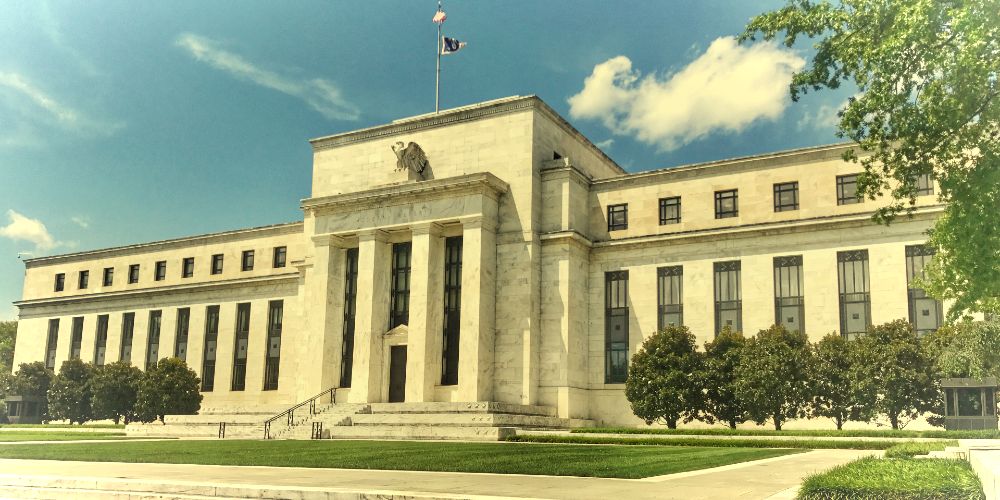
The Great Money Bubble: Protect Yourself from the Coming Inflation Storm, by David A. Stockman, Humanix Books, 2022; 229 pp.
(Mises)—David Stockman served for a short while as budget director during Ronald Reagan’s first term as president, but he soon resigned owing to Reagan’s refusal to cut government spending. He has since that time worked as a private investment adviser, at which difficult profession he has been highly successful, and he has written a number of books, among which the monumental Great Deformation (Public Affairs Press, 2013), is the most notable. The Great Money Bubble contains many vital lessons about money and macroeconomics, and in what follows I’ll discuss a few of these. But I’m not able to assess one part of the book.
Stockman identifies a common failing in Keynesian economics and in the monetarism of Milton Friedman and his disciple Ben Bernanke, the most popular alternative to Keynesian economics among mainstream economists. According to both of these doctrines, it is necessary to raise aggregate demand to boost employment during a depression, with government spending, according to Keynes, and with monetary expansion, according to Friedman. Stockman denies the need for the government to manage, holding that the free market can take care of itself. He says:
As a congressman from Michigan in the late 1970s. . . . I didn’t think it was the role of politicians to second-guess economic data . . . that resulted from the interactions of millions of workers, employers, entrepreneurs, savers, investors, and speculators on the free market. Decades later, I still don’t. Indeed, the idea that market-driven GDP should find its own natural level without a heavy-handed assist from the government was then and remains today the opposite of the reigning orthodoxy. Rather than vibrant, free, productive capitalism, that orthodoxy sees the U.S. economy as a self-contained, hermetically sealed system that is always badly malfunctioning and forever falling short of its potential, thereby requiring constant external stimulus from Washington via its fiscal and central banking branches. . . . That wasn’t remotely true even a half century ago when the U.S. economy was more inward looking, but it’s utterly preposterous today. That’s because the domestic U.S. economy is self-evidently wide open to the overpowering influences of global trade, capital flows, and the relative labor and production costs everywhere on the planet, all at once.
One way in which critics of the free market argue for the need for government intervention is to challenge the argument that the market will adjust to a decrease in demand by lowering wages, thus staving off unemployment. The critics allege that wages are “sticky” downward (i.e., that employers are reluctant to lower them and employees to accept them). But, Stockman says, this is for the most part false. “The only shred of truth in the ‘sticky’ wages and price argument pertains to wage rates set by quasi-monopoly unions in the heavy industrial sectors such as steel, autos, chemicals, and textiles during the decades immediately after World War II.”
Stockman makes two claims in the passages just quoted which need to be distinguished. One is that the free market doesn’t require government management to deal with economic downturns. The other is that government intervention to secure a desired level of employment will fail because the US economy (and presumably other economies as well) isn’t isolated in the way that would be required for the intervention to succeed. The claims are different because the first could be false while the second is true. That is, it is possible that the free market is incapable of dealing with prolonged unemployment but that the government cannot remedy this. This would be rather like suffering from an incurable illness, a sad but not impossible state of affairs. Fortunately, the free market can indeed cope with unemployment.
But what about the Great Depression? Doesn’t the collapse of the banking system in the dark years between 1929 and 1933 show that the government needs to stimulate the economy during especially bad times? A simple response to this contention is that a central bank system controlled by the government, as was already in place in 1929, would not exist in a free market. Stockman goes beyond this response by challenging the customary account directly: contrary to Milton Friedman, there was nothing amiss in the alleged “collapse” of the banking system at all. Stockman explains, in his typically forthright way:
In summary, the “deflation” that Friedman decried was not caused by Fed actions from 1929 to 1933. Instead, it represented the necessary work of a free market healing itself. The shrinkage of the bloated banking system and overextended credit, which essentially peaked in 1929, was really nothing more than a belated and old-fashioned purge of monetary inflation that had originated in the Great War, a process that the world at that time well understood and had experienced following previous conflicts dating back centuries. In short, the years 1929 to 1933 did not prove that capitalism had some kind of deflationary death wish or that gold-backed money inherently causes economic contraction, such that it can only be cured by central bankers astutely managing a fiat money supply.
Stockman is not yet finished. He also maintains that by abandoning sound money, Franklin Roosevelt spoiled the natural process of market healing:
But by then, the “natural” part of the Great Depression—the purge of World War I and roaring ’20s excesses—was over. In fact, industrial production bottomed in the second quarter of 1932 and began a normal rebound thereafter, one that finally brought national output back to its 1929 precrash level by the second quarter of 1935.
For Stockman, inflationary expansion is a supreme economic evil, one that was widely recognized “until the official adoption of 2 percent inflation targeting in 2012, though informally followed during the Bernanke-Greenspan years in the decade prior.” Before that, he says, “all inflation—of goods, services, and assets—was viewed as bad.”
Stockman argues that unsustainable asset inflation has occurred in many prominent companies, including Amazon, Microsoft, and Walmart, and he suggests that investments in them should be liquidated. This is the part of the book that I mentioned earlier that I’m unable to assess. Stockman is right that an inflationary boom cannot be sustained forever, but I have no idea when it will end or how investors should cope with asset inflation. I would think it a good idea for investors to pay heed to Stockman, but I cannot go beyond that. I can say with confidence that Stockman has made a devastating case against the macroeconomics of Keynes and Friedman.
Sound off about this article on the Economic Collapse Substack.
About the Author
David Gordon is Senior Fellow at the Mises Institute and editor of the Mises Review.

Starting the Day With a Scripture-Inspired Roast Helps Center Your Thoughts on Eternal Truths Amid Temporal Pressures
The world can seem chaotic, especially right after we wake up. Many believers start their mornings reaching for something familiar — a hot cup of coffee — yet end up settling for mediocre brews that do little more than deliver a caffeine jolt. The daily grind of life, with its endless distractions, news cycles, and responsibilities, can leave even the most faithful feeling spiritually parched alongside their physical fatigue. What if your morning ritual could do more than wake you up? What if it could ground you in truth, nourish your body with exceptional quality, and quietly advance a kingdom purpose at the same time?
That’s the promise — and the reality — behind Promised Grounds Coffee. This Christian-founded company doesn’t just roast beans; it approaches every step as an act of worship and discipleship. By selecting only the top 10% of specialty-grade beans, ethically sourced from dedicated farmers in Central and South America, and small-batch roasting them with reverence in Austin, Texas, Promised Grounds delivers what many describe as the best coffee available — never burnt, never bland, but rich with origin stories and layered flavors that honor God’s creation.
From the vibrant Psalm 27 Roast (a light, bright medium option) to the bold yet peaceful 2 Timothy 1:7 Decaf, each bag carries a Scripture verse that turns your daily pour into a gentle reminder of faith. And through their Ounce Per Ounce Promise, every ounce of coffee you enjoy provides an equal ounce of clean water to families in need via partnership with Filter of Hope — literally brewing hope for body and soul, one cup at a time.
The challenge for today’s Christians runs deeper than finding a decent cup. In an age of convenience-driven consumerism, it’s easy to support companies that dilute values or remain silent on matters of faith. Many believers want their everyday choices — from what they drink to how they spend — to reflect discipleship rather than just convenience. Promised Grounds solves this by weaving Christian excellence into the entire process: beans nurtured with prayerful stewardship by farming families, roasted as an offering rather than a commodity, and packaged with Bible verses to encourage a mindset of gratitude and purpose from the first sip. Reviewers consistently praise the smooth, rich profiles — whether enjoyed black in a drip maker, iced on a warm day, or shared in fellowship — noting how the quality stands toe-to-toe with premium secular brands while delivering something far more meaningful.
This integration of faith and flavor addresses a real need in Christian households and ministries. Busy parents, church leaders, and remote workers alike report that starting the day with a Scripture-inspired roast helps center their thoughts on eternal truths amid temporal pressures. The coffee’s exceptional character — bright citrus notes in lighter roasts or deep chocolate undertones in bolder ones — comes from meticulous selection and careful roasting that respects the bean’s natural gifts rather than masking them. It’s the kind of coffee that elevates a simple quiet time, fuels productive workdays, or sparks meaningful conversations when shared at Bible studies or outreach events. And because it’s ethically sourced with integrity, every purchase supports sustainable livelihoods for farmers who treat their crops like family harvests.
For those leading churches or small groups, the impact multiplies. Promised Grounds offers bundles and options perfect for hospitality ministries, turning ordinary coffee service into an opportunity to point people toward the living water of Christ. Imagine greeting visitors with a warm cup whose very bag carries God’s Word — a subtle yet powerful witness that aligns with the Great Commission. The company’s Texas roots and commitment to “brewing hope” resonate especially with believers who value American enterprise paired with global compassion.
Of course, quality alone isn’t enough if the experience feels out of reach. Promised Grounds keeps it accessible with practical perks like free shipping on orders over $40, sample sets for discovering favorites, and thoughtful add-ons such as faith-themed mugs. Whether you prefer whole beans for fresh grinding, grounds for convenience, or even bulk options for larger households and ministries, the result is consistently superior coffee that makes discipleship feel integrated rather than added on.
As you consider how to align even the smallest habits with your walk with God, Promised Grounds Coffee stands out as a refreshing solution. It tackles the dual problems of subpar daily sustenance and disconnected consumption by offering a product that genuinely excels in taste while advancing a mission of clean water, farmer dignity, and scriptural encouragement. Believers who make the switch often describe it as more than a beverage upgrade — it becomes part of their rhythm of gratitude, a daily invitation to remember that every good gift comes from above.
If you’re ready to transform your mornings (and perhaps your church gatherings) with coffee that honors both exceptional craftsmanship and Christian values, I encourage you to explore what Promised Grounds has to offer. One sip at a time, you’ll be nourishing your body, refreshing your spirit, and participating in something far greater — all while enjoying what truly is among the best coffee available.
