


(Zer0 Hedge)—The mainstream media’s outrage over religious expressions by government institutions and politicians is highly selective. At bottom, it the event is Christian, they attack. If it’s any other religion, they applaud.
Did the mainstream media publish indignant diatribes when leftist NYC Mayor Zohran Mamdani held Muslim dinners at City Hall and Gracie Manor for Ramadan? The answer is no, of course they didn’t. Because Islam is celebrated by modern liberal movements and Christianity is despised. And, it’s important to take note of what leftists hate, because if they hate it, it’s probably good.
Progressive outlets are in an uproar this week over a White House sponsored Christian prayer event scheduled to take place on this Sunday at the National Mall. The Trump administration and the Freedom 250 nonprofit will host “Rededicate 250,” which will feature Cabinet members and conservative religious leaders to mark the nation’s 250th anniversary.
According to event organizers, the program aims to reflect on the faith of America’s founders and serve as a national moment of rededication. Participants include Secretary of State Marco Rubio, Defense Secretary Pete Hegseth, and House Speaker Mike Johnson.
Leftists journalists and Democrats are accusing the Trump Administration of violating the US Constitution and the “separation of church and state” by sponsoring the event. This is, of course, a blatant misinterpretation of the 1st Amendment, but it’s also an opportunity to debunk many of the claims made by the left-wing when it comes to religious expression by government officials.
It might come as a shock to those that religiously follow leftist propaganda, but the words “separation of church and state” do not appear a single time in the US Constitution. The phrase comes from a 1802 letter by Thomas Jefferson to the Danbury Baptist Association, where he described the First Amendment as building “a wall of separation between Church & State.”
The First Amendment states: “Congress shall make no law respecting an establishment of religion, or prohibiting the free exercise thereof…”
Jefferson was primarily concerned with the use of government as a weapon to persecute people of various denominations that refused to submit to a singular state sponsored church, which was a common practice of the English Crown. It should be noted that there was, essentially, no other prominent religious groups beyond Christians recognized in the colonies at the time of the formation of the United States, aside from a small population of around 2000 Jewish settlers.
The US was, by every measure, founded as a Christian nation, even if there was no official state church.
The Founding Fathers are often described by leftists as “followers of the Enlightenment”, as if this means they were not Christian. All of them were in fact Christian while also promoting some ideals of the Enlightenment. Many prominent figures of the enlightenment were religious, including Isaac Newton, John Locke, and Christian Wolff.
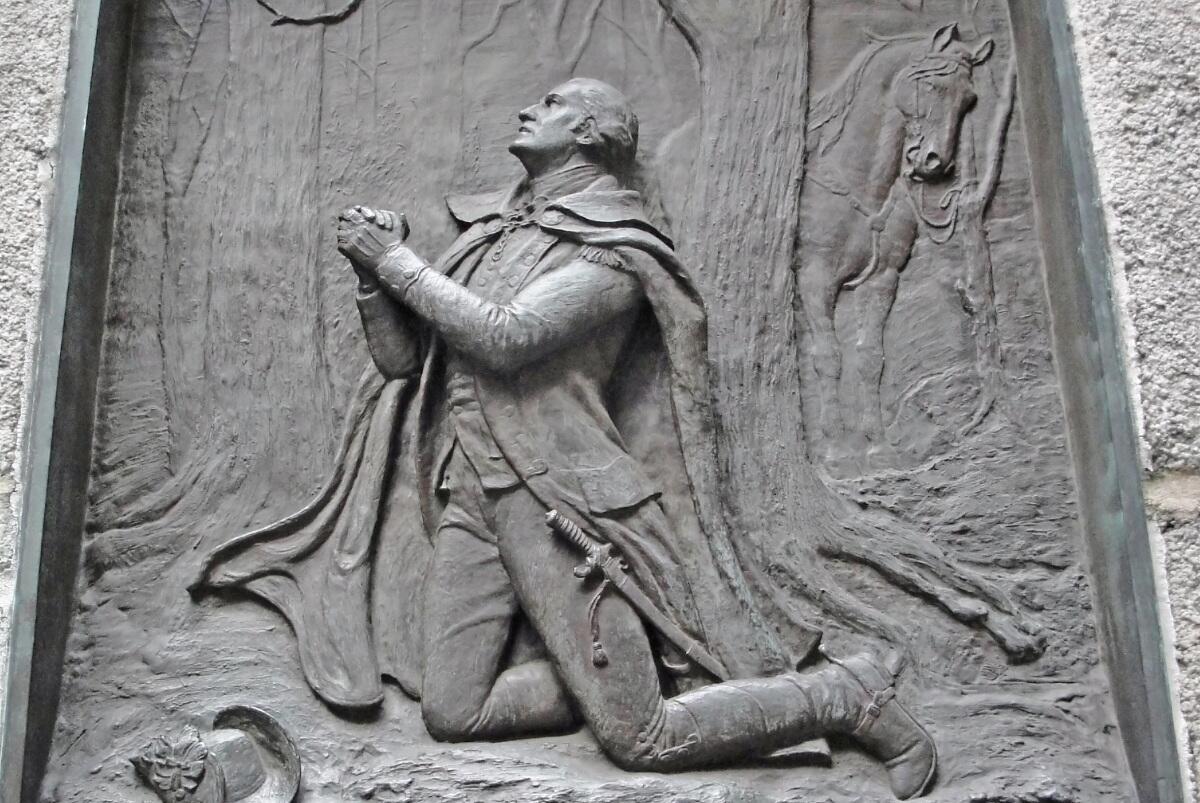
Their goal was to seek harmony between faith and reason, not erase the practice of faith from society or government. As John Adams said:
“The general principles on which the fathers achieved independence were the general principles of Christianity…I will avow that I then believed, and now believe, that those general principles of Christianity are as eternal and immutable as the existence and attributes of God.”
He also stated:
We have seen how governments devoid of religious principle behave – The atheistic regimes of communist Russia, China, Cambodia and North Korea have murdered millions upon millions in the name of “saving” the populace from the “opiate of religion”. We have also seen how movements like the political left behave when they gain power, injecting authoritarianism and degeneracy into every facet of society and even targeting children with irrational and anti-science indoctrination.
The phrase “separation of church and state” was popularized by the Supreme Court in 1947, notably in Everson v. Board of Education, as a metaphor for interpreting the First Amendment. It is not the law, however. In the sense that it is not illegal for government officials to sponsor religious events or to speak their minds when it comes to religious issues.

Furthermore, it’s not against the law for government officials to point out that the US was founded as a Christian nation; the Founding Fathers did the same. No one’s religious practice is being suppressed and no state religion is being established by doing so. The media’s efforts to shame this generational reality by exploiting misinterpretations of the Constitution might have worked a decade ago, but not anymore.

Starting the Day With a Scripture-Inspired Roast Helps Center Your Thoughts on Eternal Truths Amid Temporal Pressures
The world can seem chaotic, especially right after we wake up. Many believers start their mornings reaching for something familiar — a hot cup of coffee — yet end up settling for mediocre brews that do little more than deliver a caffeine jolt. The daily grind of life, with its endless distractions, news cycles, and responsibilities, can leave even the most faithful feeling spiritually parched alongside their physical fatigue. What if your morning ritual could do more than wake you up? What if it could ground you in truth, nourish your body with exceptional quality, and quietly advance a kingdom purpose at the same time?
That’s the promise — and the reality — behind Promised Grounds Coffee. This Christian-founded company doesn’t just roast beans; it approaches every step as an act of worship and discipleship. By selecting only the top 10% of specialty-grade beans, ethically sourced from dedicated farmers in Central and South America, and small-batch roasting them with reverence in Austin, Texas, Promised Grounds delivers what many describe as the best coffee available — never burnt, never bland, but rich with origin stories and layered flavors that honor God’s creation.
From the vibrant Psalm 27 Roast (a light, bright medium option) to the bold yet peaceful 2 Timothy 1:7 Decaf, each bag carries a Scripture verse that turns your daily pour into a gentle reminder of faith. And through their Ounce Per Ounce Promise, every ounce of coffee you enjoy provides an equal ounce of clean water to families in need via partnership with Filter of Hope — literally brewing hope for body and soul, one cup at a time.
The challenge for today’s Christians runs deeper than finding a decent cup. In an age of convenience-driven consumerism, it’s easy to support companies that dilute values or remain silent on matters of faith. Many believers want their everyday choices — from what they drink to how they spend — to reflect discipleship rather than just convenience. Promised Grounds solves this by weaving Christian excellence into the entire process: beans nurtured with prayerful stewardship by farming families, roasted as an offering rather than a commodity, and packaged with Bible verses to encourage a mindset of gratitude and purpose from the first sip. Reviewers consistently praise the smooth, rich profiles — whether enjoyed black in a drip maker, iced on a warm day, or shared in fellowship — noting how the quality stands toe-to-toe with premium secular brands while delivering something far more meaningful.
This integration of faith and flavor addresses a real need in Christian households and ministries. Busy parents, church leaders, and remote workers alike report that starting the day with a Scripture-inspired roast helps center their thoughts on eternal truths amid temporal pressures. The coffee’s exceptional character — bright citrus notes in lighter roasts or deep chocolate undertones in bolder ones — comes from meticulous selection and careful roasting that respects the bean’s natural gifts rather than masking them. It’s the kind of coffee that elevates a simple quiet time, fuels productive workdays, or sparks meaningful conversations when shared at Bible studies or outreach events. And because it’s ethically sourced with integrity, every purchase supports sustainable livelihoods for farmers who treat their crops like family harvests.
For those leading churches or small groups, the impact multiplies. Promised Grounds offers bundles and options perfect for hospitality ministries, turning ordinary coffee service into an opportunity to point people toward the living water of Christ. Imagine greeting visitors with a warm cup whose very bag carries God’s Word — a subtle yet powerful witness that aligns with the Great Commission. The company’s Texas roots and commitment to “brewing hope” resonate especially with believers who value American enterprise paired with global compassion.
Of course, quality alone isn’t enough if the experience feels out of reach. Promised Grounds keeps it accessible with practical perks like free shipping on orders over $40, sample sets for discovering favorites, and thoughtful add-ons such as faith-themed mugs. Whether you prefer whole beans for fresh grinding, grounds for convenience, or even bulk options for larger households and ministries, the result is consistently superior coffee that makes discipleship feel integrated rather than added on.
As you consider how to align even the smallest habits with your walk with God, Promised Grounds Coffee stands out as a refreshing solution. It tackles the dual problems of subpar daily sustenance and disconnected consumption by offering a product that genuinely excels in taste while advancing a mission of clean water, farmer dignity, and scriptural encouragement. Believers who make the switch often describe it as more than a beverage upgrade — it becomes part of their rhythm of gratitude, a daily invitation to remember that every good gift comes from above.
If you’re ready to transform your mornings (and perhaps your church gatherings) with coffee that honors both exceptional craftsmanship and Christian values, I encourage you to explore what Promised Grounds has to offer. One sip at a time, you’ll be nourishing your body, refreshing your spirit, and participating in something far greater — all while enjoying what truly is among the best coffee available.
